
Qatar Teams Up With Saudi Arabia And More As GCC AI Tourism Gains Momentum With Nearly 30% New Tech Innovations For Travellers
Qatar Teams Up With Saudi Arabia And More As GCC AI Tourism Gains Momentum With Nearly 30% New Tech Innovations For Travellers

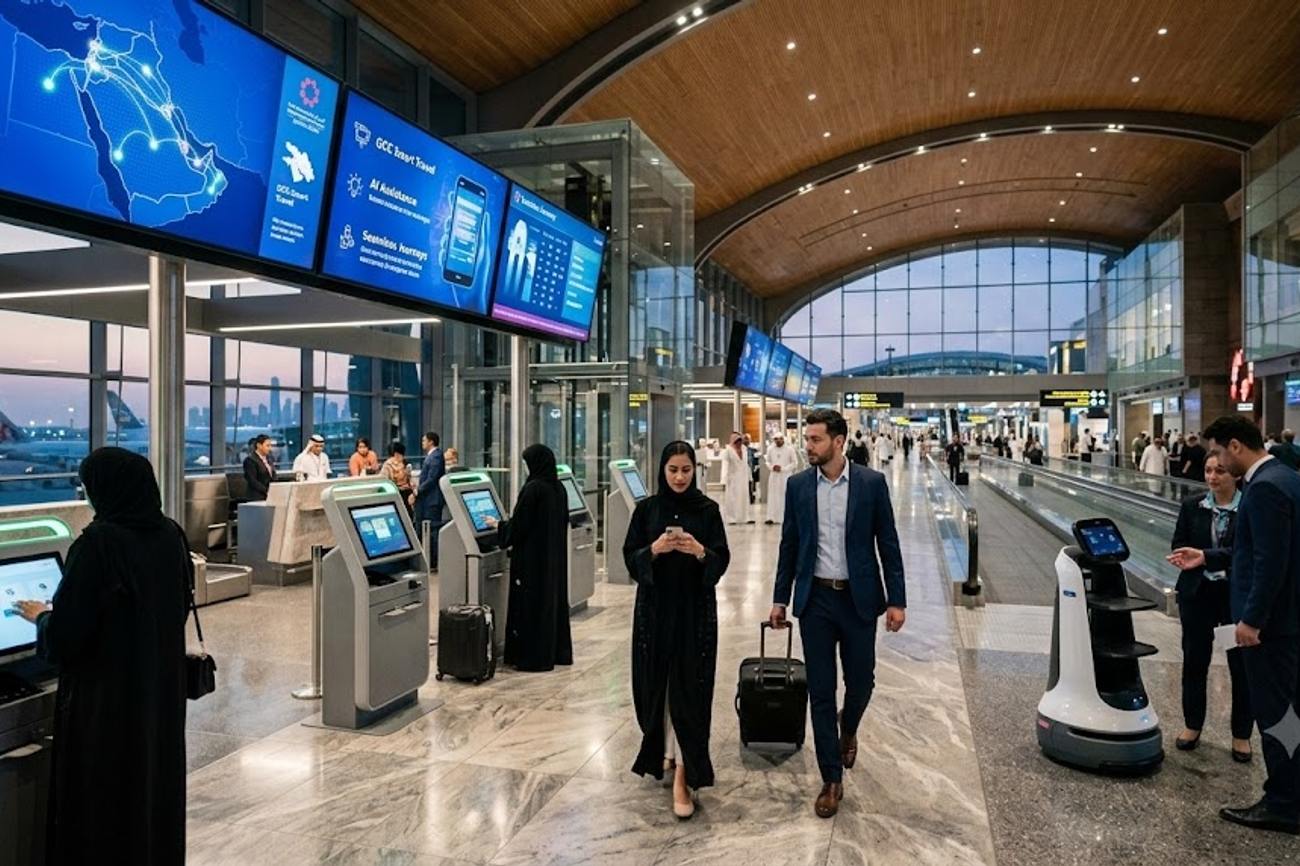
Image generated by AI
[Manama, October 2025] — The six Gulf Cooperation Council (GCC) nations are launching a comprehensive integration of artificial intelligence (AI) across their tourism sectors by 2026 to establish a unified, "smart" travel ecosystem. This regional pivot aims to replace traditional visitor services with data-driven, personalized experiences designed to accelerate economic diversification and increase the volume of international arrivals across the Arabian Peninsula.
The initiative involves a coordinated effort between the governments of Bahrain, Kuwait, Oman, Qatar, Saudi Arabia, and the United Arab Emirates. By synchronizing tourism policies with advanced technology, these nations intend to create a seamless digital corridor, allowing travelers to navigate multiple Gulf destinations using interconnected AI platforms. The strategy focuses on five primary pillars: automated visitor assistance, predictive data-driven planning, intelligent destination management, smart digital platforms, and hyper-personalized marketing.
The Catalyst for AI Integration
The shift toward AI tourism is driven by a regional mandate to move away from oil-dependency and toward knowledge-based economies. While the GCC has not released a single unified metric for AI growth, industry data indicates that AI adoption within tourism services is currently experiencing double-digit growth momentum.
Governments are investing heavily in "smart city" infrastructure to handle the projected surge in visitors. The primary goal is to eliminate friction in the traveler's journey—from the moment of booking to the final departure—by utilizing predictive analytics to forecast visitor demand and automate the logistical hurdles of international travel. This transformation is not merely about convenience but is a strategic move to position the Gulf as a global leader in the "TravelTech" sector.
Regional Implementation and Market Impact
The deployment of AI varies by nation, reflecting the specific tourism goals of each member state. The following breakdown details the specific focus areas and intended impacts across the GCC:
| Country | Primary AI Focus | Key Implementation Goals |
|---|---|---|
| Qatar | Digital Visitor Journeys | AI-powered recommendations, smart tourism platforms, and behavior-tracking data systems. |
| Saudi Arabia | Mass Scale Management | AI visitor assistance, predictive demand analytics, and smart destination operations. |
| UAE | Smart City Ecosystems | Predictive tourism analytics, automated customer support, and intelligent travel assistants. |
| Bahrain | Regional Integration | Data sharing between GCC states, digital tourism services, and tech-partnership hubs. |
| Oman | Sustainable Eco-Tourism | Visitor flow monitoring, smart eco-management, and digital heritage experiences. |
| Kuwait | Digital Foundations | Automated tourism services, visitor data analysis, and smart information platforms. |
Qatar is positioning itself as a hub for high-value sectors, using AI to attract business travelers, sports enthusiasts, and conference attendees. By integrating AI into its hospitality and entertainment sectors, Doha aims to create a "smarter" visitor journey that connects travelers to cultural sites via intelligent systems.
Saudi Arabia is utilizing AI as a critical tool for its massive tourism expansion. Given the scale of its new developments, the Kingdom is deploying AI to manage immense visitor volumes for religious, cultural, and leisure travel. The focus here is on operational efficiency and the ability to predict demand spikes to prevent infrastructure bottlenecks.
The United Arab Emirates, specifically through the hubs of Dubai and Abu Dhabi, is weaving AI into its existing smart-city fabric. The UAE is prioritizing predictive analytics and automated support to maintain its status as a premier global transit and luxury destination.
Bahrain is acting as the diplomatic bridge for this technology. Recent meetings of tourism ministers in Manama have emphasized that AI will be the primary tool for regional cooperation, allowing GCC countries to share digital knowledge and create a connected travel experience.
Oman is taking a distinct approach by applying AI to nature-based tourism. The Sultanate is using technology to monitor visitor flows in deserts and mountains, ensuring that the growth of adventure tourism does not lead to environmental degradation.
Kuwait is focusing on the foundational elements of the digital shift, strengthening its data analysis and marketing platforms to ensure it remains a viable part of the integrated GCC travel circuit.
Practical Traveler Advisory and Strategic Insights
For the individual traveler, the "AI Tourism 2026" push translates to a shift from static travel planning to dynamic, real-time curation. Here is the plain-language impact:
Hyper-Personalized Itineraries: Instead of generic "Top 10" lists, travelers will encounter AI systems that suggest destinations, restaurants, and events based on their real-time behavior, preferences, and previous travel history.
Reduced Friction: The integration of AI-powered visitor assistance means a significant reduction in wait times at airports and attractions. Automated support systems will handle routine queries, while smart destination management will optimize crowd flow to reduce congestion.
Seamless Multi-Country Trips: The push for "connected Gulf destinations" means that digital visas, payment systems, and travel permits are likely to become more integrated. A traveler visiting the UAE may find their preferences and documentation automatically recognized when crossing into Saudi Arabia or Qatar.
Enhanced Sustainable Travel: In destinations like Oman, AI will be used to steer tourists away from overcrowded sites toward under-visited gems, improving the quality of the experience while protecting the environment.
The Road to 2026
The next 18 months will see a transition from pilot programs to full-scale deployment. The GCC nations are currently focusing on the "data-sharing" phase, where the Gulf Cooperation Council framework will be used to align technology standards.
Expect to see the rollout of unified AI travel assistants that can book flights, hotels, and tours across all six nations simultaneously. The timeline suggests that by 2026, the "Smart Gulf" experience will be the standard, with AI managing everything from airport biometric entry to personalized museum guides.
The success of this initiative depends on the ability of these six nations to synchronize their data privacy laws and technical infrastructures. If successful, the GCC will have created the world's first fully integrated, AI-driven regional tourism zone.
FAQ: GCC AI Tourism 2026
Will I need a special app to use these AI services? While many services will be integrated into existing government and tourism portals, the goal is a seamless experience. Most AI features will be accessible via mobile browsers or unified regional travel platforms currently under development.
How will my personal data be used by these AI systems? The GCC nations are developing data-driven tourism planning systems. Your data will likely be used to provide personalized recommendations and to help governments manage crowd control and infrastructure demand.
Does AI tourism mean fewer human guides and staff? AI is being deployed to handle routine tasks and logistics (like ticketing and basic info). However, the focus remains on enhancing the human experience, particularly in cultural and heritage sites where human expertise is still valued.
Will these AI tools be available in multiple languages? Yes. A primary goal of the AI push is to make the Gulf more accessible to global travelers. AI-powered translation and assistance tools will be a core part of the "smart visitor journey."
The Gulf is no longer just selling destinations; it is selling a digitally optimized experience.
Related Travel Guides
- Australia Introduces NAB Travel as Banking App Adds New Expedia Powered Travel Booking Experience
- Walt Disney World Tests AI Travel Planning Tool to Simplify Resort Booking and Guest Experiences
- You can now traverse the distance between Zurich and Barcelona while sleeping in a fully flat bed, reducing your carbon footprint by up to 91% compared to flying. This is not a luxury train or a first-class flight, but a reimagined approach to the overnight coach, designed to turn transit hours into actual rest.
Disclaimer
This article is for informational and educational purposes only. It does not constitute legal, financial, or professional advice. While we strive to provide accurate and up-to-date information, travel policies, regulations, and conditions change rapidly. Always verify information with official sources before making travel decisions. Nomad Lawyer makes no representations about the accuracy, reliability, completeness, or suitability of the information provided. Readers should consult qualified professionals for advice specific to their circumstances. The views expressed in this article are those of the author and do not necessarily reflect the views of Nomad Lawyer.
Raushan Kumar
Founder & Lead Developer
Full-stack developer with 11+ years of experience and a passionate traveller. Raushan built Nomad Lawyer from the ground up with a vision to create the best travel and law experience on the web.
Learn more about our team →