
Japan Tourism Gains New Attraction with Edo Tokyo Open Air Museum Historic Buildings
Japan Tourism Gains New Attraction with Edo Tokyo Open Air Museum Historic Buildings

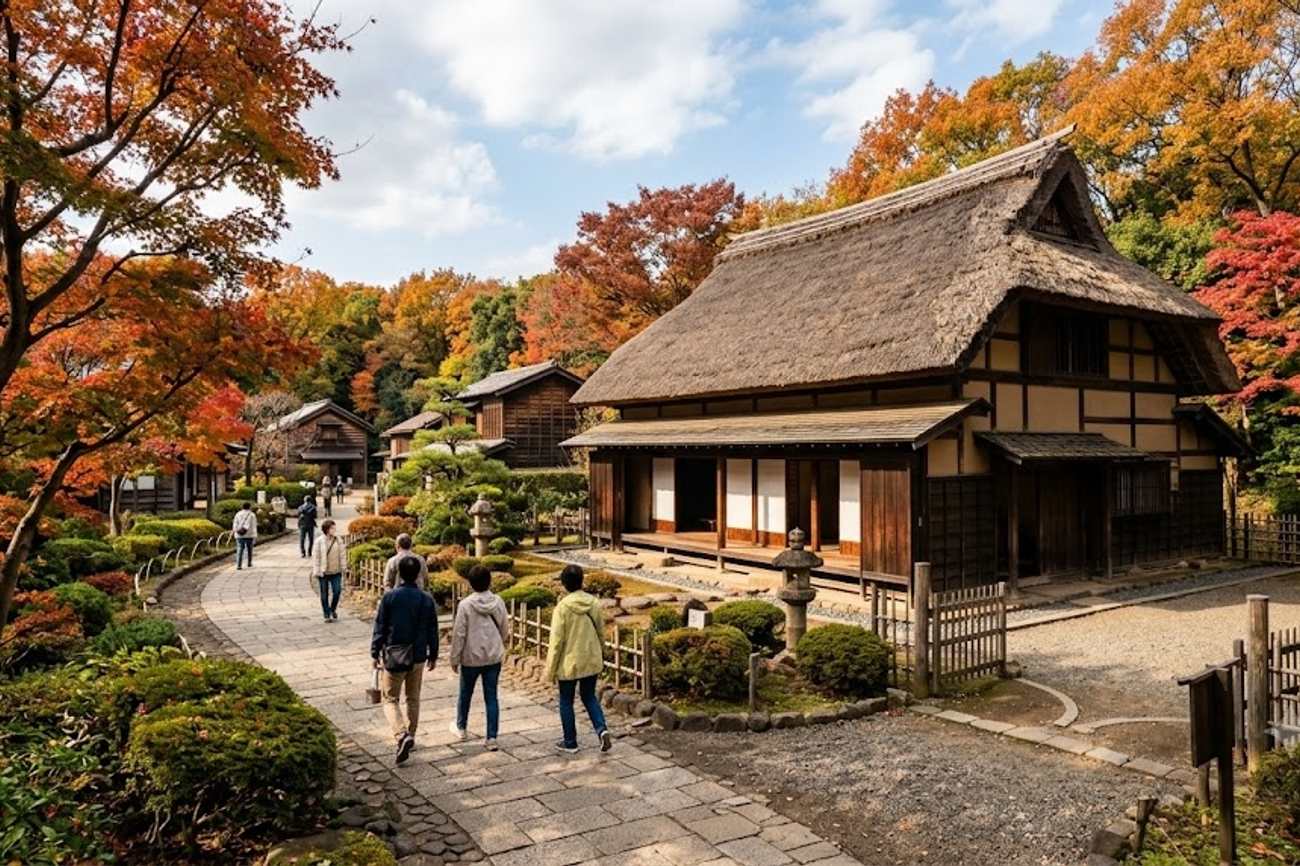
Image generated by AI
Japan's international visitor arrivals surged to 31.88 million in 2023, a staggering increase from the 2019 pre-pandemic peak of 31.89 million, signaling a total recovery of the inbound market within a single calendar year. This rapid return of global travelers has triggered a strategic shift in the Japan Tourism Agency’s approach, moving away from "overtourism" hubs like Kyoto and central Tokyo toward decentralized, high-value cultural assets such as the Edo-Tokyo Open Air Architectural Museum in Koganei Park.
The Architecture of Decentralization: The Edo-Tokyo Data Set
The movement of tourists toward the western periphery of Tokyo is not accidental but a calculated response to urban congestion. The Edo-Tokyo Open Air Architectural Museum functions as a critical pressure valve for the city's tourism infrastructure. By relocating and restoring structures that span from the Edo period through the early Showa era, the museum transforms static history into an immersive, spatial experience.
The economic accessibility of the site is a primary driver of its current growth. While many "premium" Tokyo attractions have seen price hikes to manage crowds, the Edo-Tokyo Open Air Architectural Museum maintains a low-barrier entry model. The current pricing structure is as follows:
- Adults: 400 yen
- Visitors aged 65 and above: 200 yen
- College and vocational students: 320 yen
- High school students: 200 yen
- Junior high school students and younger: Free
From a data perspective, an adult ticket price of 400 yen is significantly lower than the average admission for major national museums in Japan, which often range between 600 and 1,500 yen. This pricing strategy suggests a goal of high-volume, diverse demographic penetration rather than high-margin profit per visitor.
Regional Benchmarks and Market Shifts
When comparing the Edo-Tokyo Open Air Architectural Museum to traditional indoor museum models, there is a clear shift toward "experience-based" tourism. According to data from the World Tourism Organization (UNWTO), there is a global rise in demand for authentic, immersive heritage sites over curated gallery exhibits. The Edo-Tokyo model aligns with this trend by allowing physical entry into restored residences and commercial spaces, removing the "glass barrier" typical of urban museums.
The museum's operational hours also reflect a seasonal adaptation strategy common in Japanese public facilities to optimize energy use and staffing.
| Season | Opening Hours | Daily Window |
|---|---|---|
| April to September | 9:30 AM to 5:30 PM | 8 Hours |
| October to March | 9:30 AM to 4:30 PM | 7 Hours |
This one-hour reduction in winter operations is a standard benchmark for open-air sites in the Kanto region, ensuring that visitor flow concludes before the rapid sunset typical of Japanese winters.
The shift toward western Tokyo (Koganei) represents a broader trend in the IATA reported travel patterns, where "slow travel" and suburban exploration are increasing. By utilizing Koganei Park as a buffer, the museum offers a contrast to the high-density urbanism of Shinjuku or Shibuya, appealing to the "wellness" and "quiet luxury" segments of the travel market.
Practical Traveler Advisory and Strategic Insights
For the modern traveler, the data indicates that the Edo-Tokyo Open Air Architectural Museum is a high-yield, low-cost addition to a Tokyo itinerary. Because it is located in Koganei Park, away from the central transit hubs, it requires a more intentional travel plan.
If you are planning a visit, the following data-driven recommendations apply:
- Budget Allocation: At 400 yen for adults, this is one of the most cost-effective cultural experiences in the metropolitan area. It is an ideal "buffer activity" to balance the high costs of dining and shopping in central Tokyo.
- Timing the Visit: Entry is permitted until 30 minutes before closing. To maximize the 8-hour window available from April to September, arrival by 11:00 AM is recommended to allow for the extensive walking required to navigate the open-air layout.
- Scheduling Constraints: The museum is closed on Mondays and during the New Year holiday period. Travelers should cross-reference their itineraries with the Japanese public holiday calendar, as Monday closures may shift if a holiday occurs.
The Edo-Tokyo Open Air Architectural Museum preserves historic structures that showcase the evolution of Japanese urban life from the Edo period to the mid-20th century. Visitors can explore these relocated buildings to gain deeper insights into the country's cultural heritage as promoted by the Japan National Tourism Organization. 4. Logistics: Because this site is a "day trip" from central Tokyo, travelers should allocate at least 4-6 hours for the round trip and exploration to justify the transit time.
Forward Projection: The Rise of the "Peripheral Hub"
Based on current tourism trajectories and the Japan Tourism Agency's push for regional dispersion, we can project that sites like the Edo-Tokyo Open Air Architectural Museum will see a steady increase in international footfall. The transition from "sightseeing" (observing) to "experiencing" (interacting) is the dominant trend in the 2024-2026 travel cycle.
As central Tokyo continues to face saturation, the "Peripheral Hub" model—where high-quality cultural assets are located in suburban parks—will become the primary method for managing tourist volume. We expect to see more integrated transport packages linking central hotels directly to these suburban cultural zones to further incentivize the move away from the city center.
Furthermore, the focus on "craftsmanship" and "wooden construction" mentioned in the museum's offerings aligns with a growing global interest in sustainable architecture. This positions the museum not just as a historical site, but as a case study for future architectural trends focusing on natural materials and spatial efficiency.
FAQ: Edo-Tokyo Architectural Trends 2024
Will admission prices increase soon? While there is a general trend of inflation in Tokyo, the current 400 yen adult fee is heavily subsidized to encourage cultural education. Significant hikes are unlikely in the short term, making it a stable budget option for 2024-2025.
Is this a good alternative to central Tokyo museums? Yes. Data shows a growing preference for open-air environments to avoid the crowds of central districts. It offers a higher "space-per-visitor" ratio than indoor galleries in the city center.
Which transport options are best for reaching Koganei Park? Travelers should utilize the JR lines and local bus connections from central Tokyo. Given the museum's location in western Tokyo, planning the trip around a "West Tokyo" day itinerary is the most efficient use of time.
Is the museum accessible for elderly travelers? Yes. With a reduced admission fee of 200 yen for those 65 and above and a layout based in a public park, it is designed for a slower pace of exploration compared to the hectic nature of urban landmarks.
The shift from the neon lights of Ginza to the wooden eaves of Koganei is more than a change in scenery—it is a strategic migration toward a more sustainable and authentic form of global tourism.
Related Travel Guides
- Baltimore Links Washington DC, Philadelphia and New York as Northeast Corridor Holiday Turns Four Cities Into One Journey
- Qatar Teams Up With Saudi Arabia And More As GCC AI Tourism Gains Momentum With Nearly 30% New Tech Innovations For Travellers
- Australia Introduces NAB Travel as Banking App Adds New Expedia Powered Travel Booking Experience
Disclaimer
This article is for informational and educational purposes only. It does not constitute legal, financial, or professional advice. While we strive to provide accurate and up-to-date information, travel policies, regulations, and conditions change rapidly. Always verify information with official sources before making travel decisions. Nomad Lawyer makes no representations about the accuracy, reliability, completeness, or suitability of the information provided. Readers should consult qualified professionals for advice specific to their circumstances. The views expressed in this article are those of the author and do not necessarily reflect the views of Nomad Lawyer.
Kunal K Choudhary
Co-Founder & Contributor
A passionate traveller and tech enthusiast. Kunal contributes to the vision and growth of Nomad Lawyer, bringing fresh perspectives and driving the community forward.
Learn more about our team →