
Top 10 Instagrammable Spots in Singapore 2026: A Guide to the City's Most Photogenic Landmarks
Explore the most photogenic locations in Singapore, from the 40-meter Rain Vortex at Jewel Changi to the rustic Bukit Timah Railway Station, for the ultimate 2026 travel itinerary.

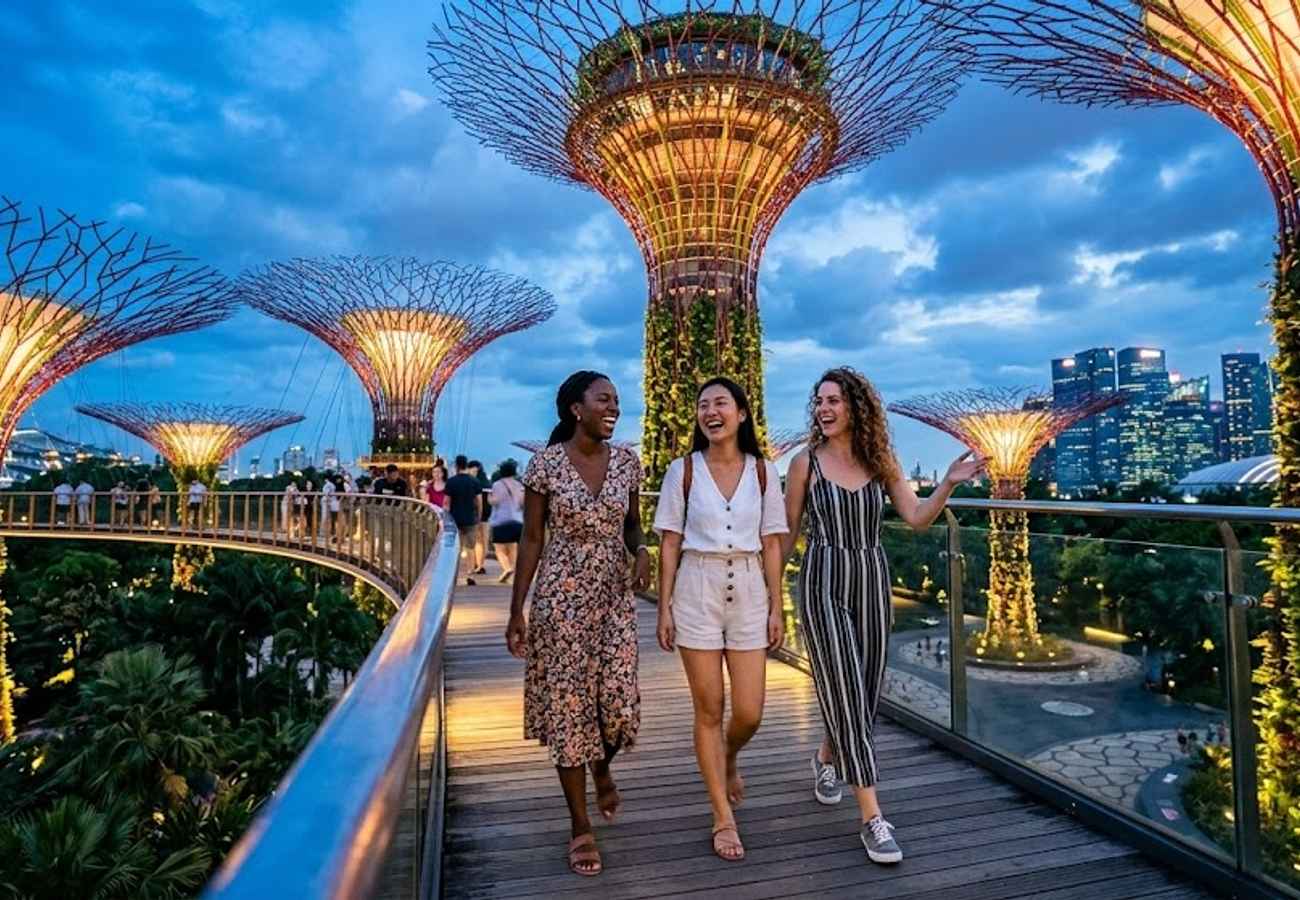
Image generated by AI
The 40-meter Rain Vortex at Jewel Changi is just the beginning; Singapore has evolved into a global benchmark for "architectural theater" where nature and urban design collide.
The Local Trend Revealed: The Rise of "Architectural Theater"
Singapore is no longer just a stopover hub; it has become a primary destination for creators and cultural tourists. The current trend is a shift toward "architectural theater"—spaces designed specifically to evoke awe through a blend of futuristic engineering and lush greenery.
Visitors are moving away from traditional sightseeing and toward immersive environments. The city-state has mastered the art of the "visual hook," creating landmarks that serve as both functional infrastructure and high-impact backdrops. From the biometric-driven exhibits of the ArtScience Museum to the sustainable verticality of the Supertree Grove, the city is a living gallery of what 2026 urbanism looks like.
Cultural & Environmental Value: Beyond the Lens
For the visitor, the real impact of these sites is the realization of Singapore's "City in Nature" vision. This isn't just about aesthetics; it is a deliberate effort by the Singapore Tourism Board and regional conservation bodies to integrate biodiversity into the urban core.
When you walk through the Cloud Forest, you aren't just seeing a waterfall; you are experiencing a controlled ecosystem designed to educate the public on climate change and montane biodiversity. Similarly, the preservation of the Bukit Timah Railway Station serves as a tactile reminder of the island's colonial history and its transition into a global financial powerhouse. The value lies in the contrast: the sterile perfection of Marina Bay versus the rustic, weathered textures of the old railway lines.
The Definitive Visual Guide to Singapore 2026
| Location | Key Visual Highlight | Best Time for Photography |
|---|---|---|
| Jewel Changi Airport | 40-meter tall Rain Vortex | Early morning (less crowded) |
| ArtScience Museum | Space Exhibit (Future World) | Mid-day for high-contrast lighting |
| Gardens by the Bay | Supertree Grove | During the nightly light show |
| Cloud Forest | Highest indoor waterfall | Morning for soft, diffused light |
| Helix Bridge | 360-degree Bayfront views | Blue hour (just after sunset) |
| Singapore Flyer | City skyline and harbor views | Golden hour/Sunset |
| Marina Bay Sands | Water and light show | Evening (8 PM or 9 PM) |
| Chinatown | Pagoda Street lanterns | Late afternoon/Evening |
| Bukit Timah Station | Rustic, unused railway tracks | Overcast days for moody tones |
| MacRitchie Reservoir | 820-foot suspension bridge | Sunrise for forest mist |
Visitor Insider Tips
To capture the best images without the crowds, follow these local protocols:
- The "Golden Hour" Strategy: For the Helix Bridge and Marina Bay Sands, arrive 30 minutes before sunset. The "Blue Hour" provides a natural gradient that complements the neon city lights.
- Cultural Etiquette in Chinatown: When photographing the traditional buildings and lanterns on Pagoda Street, always ask permission before taking close-up portraits of local shop owners.
- Hidden Perspective: At the MacRitchie Reservoir, the 820-foot suspension bridge is stunning, but the real "hidden" shot is the canopy walk further into the secondary forest.
- Dining with a View: If booking the 4-course Sky Dining meal on the Singapore Flyer, request a pod facing the harbor for the most expansive skyline shots.
- Eco-Tip: Use the MRT (Mass Rapid Transit) to get to Gardens by the Bay. It is the most sustainable way to navigate the city and avoids the heavy traffic around the Bayfront area.
Tourism Outlook
The long-term trajectory for Singapore is a deeper integration of "smart tourism." Expect more augmented reality (AR) overlays at historical sites like Bukit Timah and Chinatown, allowing visitors to see the locations as they were decades ago. The focus is shifting toward high-value, low-impact tourism that prioritizes the preservation of green spaces while continuing to build world-class architectural marvels. As the city continues to lean into its eco-futurist identity, the demand for sustainable, walkable tourism circuits will only grow.
Capture the future, respect the past, and leave only footprints in the Garden City.
Related Travel Guides
Disclaimer
This article is for informational and educational purposes only. It does not constitute legal, financial, or professional advice. While we strive to provide accurate and up-to-date information, travel policies, regulations, and conditions change rapidly. Always verify information with official sources before making travel decisions. Nomad Lawyer makes no representations about the accuracy, reliability, completeness, or suitability of the information provided. Readers should consult qualified professionals for advice specific to their circumstances. The views expressed in this article are those of the author and do not necessarily reflect the views of Nomad Lawyer.
Preeti Gunjan
Contributor & Community Manager
A passionate traveller and community builder. Preeti helps grow the Nomad Lawyer community, fostering engagement and bringing the reader experience to life.
Learn more about our team →