
High-Speed Rejected Takeoff Analysis: How Pilot Braking Systems Prevent Runway Disasters in 2026
An analysis of high-speed rejected takeoffs reveals how decisive pilot action and advanced braking systems prevent catastrophic runway incursions and collisions during commercial flight departures.

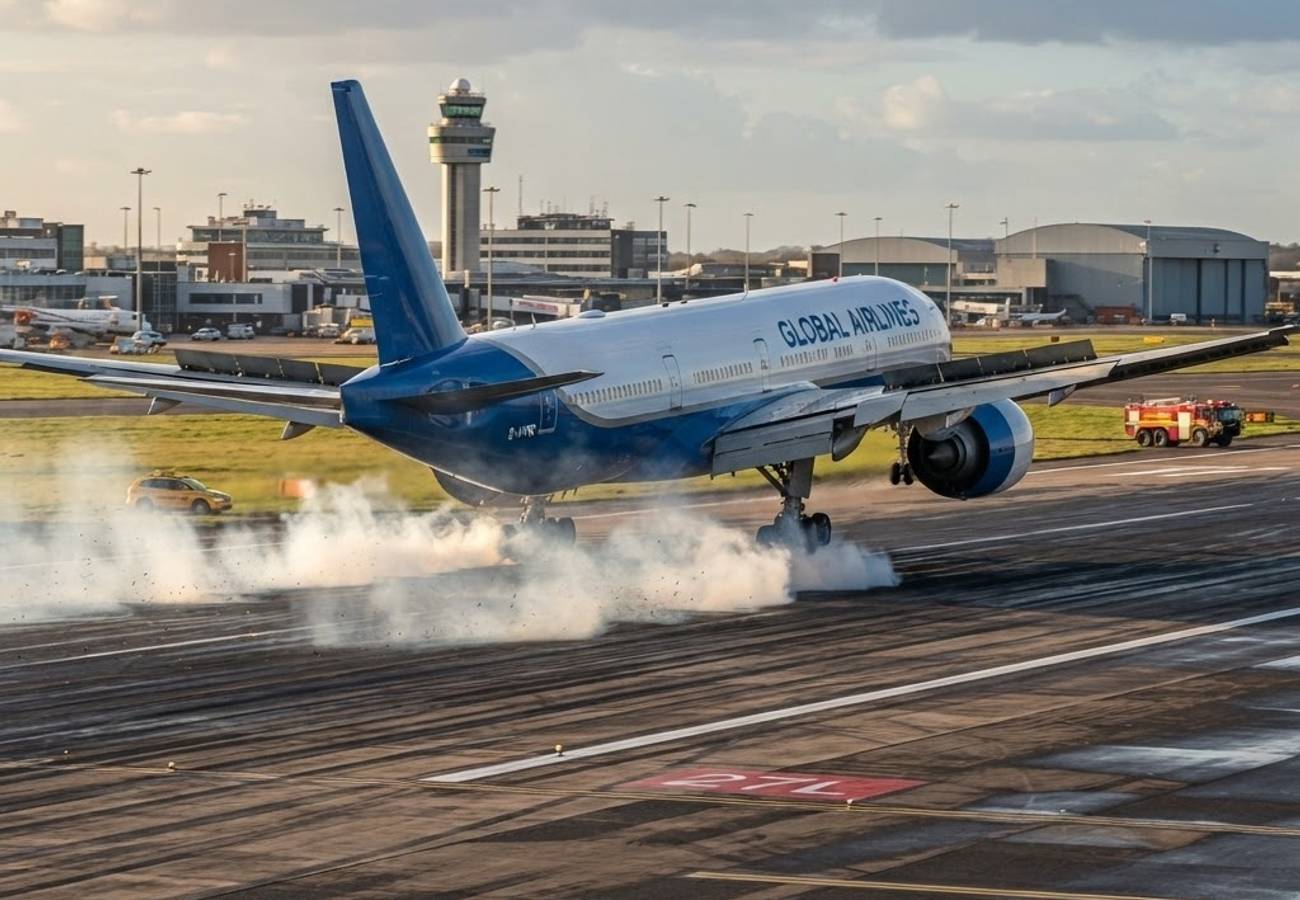
Image generated by AI
Commercial flight crews are increasingly utilizing high-speed rejected takeoffs to avoid runway collisions, relying on aggressive braking and reverse thrust to halt aircraft just short of potential disaster.
A series of recent incidents involving "slam-on-the-brakes" decelerations has highlighted the thin margin between a safe abort and a runway excursion. In these events, aircraft accelerating for departure are brought to a rapid stop, often near the end of the runway, after crews detect critical anomalies or runway conflicts.
Passenger accounts describe intense deceleration, seat belts digging in, and a dipping nose sensation. While these moments are jarring for travelers, they represent the execution of rigorous safety protocols designed to prevent collisions with other aircraft or ground vehicles.
The Mechanics of a High-Speed Abort
When a pilot initiates a rejected takeoff (RTO), the process involves a simultaneous sequence of high-energy actions:
- Throttle Closure: Immediate reduction of engine power to idle.
- Maximum Braking: Application of full brake pressure to the wheels.
- Reverse Thrust: Deployment of thrust reversers to push air forward, assisting in deceleration.
- Spoiler Deployment: Raising wing spoilers to dump lift and put more weight on the wheels for better traction.
Because these maneuvers generate extreme heat in the wheel assemblies, ground crews and fire trucks frequently move into position as a precaution. Post-incident procedures require brake temperature monitoring and cooling periods before the aircraft can be cleared for a subsequent departure.
Decision Speed (V1) and Human Factors
Aviation training centers the RTO maneuver around a specific metric known as "decision speed" (V1). This figure is calculated before every flight based on aircraft weight, runway length, and environmental conditions.
- Below V1: Pilots are trained to stop for a wide array of anomalies, including warning lights, strange vibrations, or cockpit alerts.
- Above V1: The aircraft is generally committed to flight, as there may be insufficient runway remaining to stop safely.
However, industry data indicates that pilots may still choose to reject a takeoff above V1 if they suspect catastrophic failure, such as severe engine damage, bird strikes, or a confirmed runway incursion. In these high-stakes scenarios, decisive braking has been documented to stop aircraft hundreds or even a thousand feet before a potential conflict point.
Runway Risk and Mitigation Technologies
The necessity for last-second braking often stems from runway incursions—situations where an aircraft or vehicle occupies a runway without authorization. Safety board reports cite loss of situational awareness and miscommunication as primary drivers of these risks.
To reduce the reliance on emergency braking, the industry is deploying several technological upgrades:
- Surface Radar: Enhanced monitoring of all ground movements.
- Improved Signage: High-visibility lighting and markers to prevent crossing errors.
- Cockpit Alerts: Real-time warnings that notify crews of runway occupancy before they reach V1.
Why This Matters: The Logistical Reality
From a logistical perspective, a rejected takeoff is not merely a "scary moment" for passengers; it is a high-energy event that puts immense stress on the aircraft's hardware. For travelers on these routes, the real impact is often a significant delay or a complete flight cancellation. Many passengers choose to disembark immediately due to the psychological stress of the event.
Our analysis of flight data suggests that the "fear" felt in the cabin—the sensation that the plane is about to run off the runway—is often a byproduct of the extreme G-forces involved in maximum braking, rather than a lack of available runway. Performance calculations are intentionally conservative, providing a safety buffer beyond the minimum required stopping distance.
Industry Outlook
The focus is shifting from "how to stop" to "how to avoid the need to stop." Expect a wider rollout of AI-integrated ground surveillance and revised phraseology for runway crossing clearances. While the "slam-on-the-brakes" maneuver remains a vital safety net, the goal for 2026 and beyond is the total elimination of runway incursions through better data sharing between controllers and flight decks.
Safety margins are designed to be invisible until the moment they become essential.
Related Travel Guides
Disclaimer
This article is for informational and educational purposes only. It does not constitute legal, financial, or professional advice. While we strive to provide accurate and up-to-date information, travel policies, regulations, and conditions change rapidly. Always verify information with official sources before making travel decisions. Nomad Lawyer makes no representations about the accuracy, reliability, completeness, or suitability of the information provided. Readers should consult qualified professionals for advice specific to their circumstances. The views expressed in this article are those of the author and do not necessarily reflect the views of Nomad Lawyer.
Preeti Gunjan
Contributor & Community Manager
A passionate traveller and community builder. Preeti helps grow the Nomad Lawyer community, fostering engagement and bringing the reader experience to life.
Learn more about our team →