
Turkish Airlines to Launch Direct Istanbul to Chengdu Route via Boeing 787-9 in Winter 2026
Turkish Airlines expands its China network with a new nonstop service between Istanbul and Chengdu Tianfu International Airport starting November 2026.

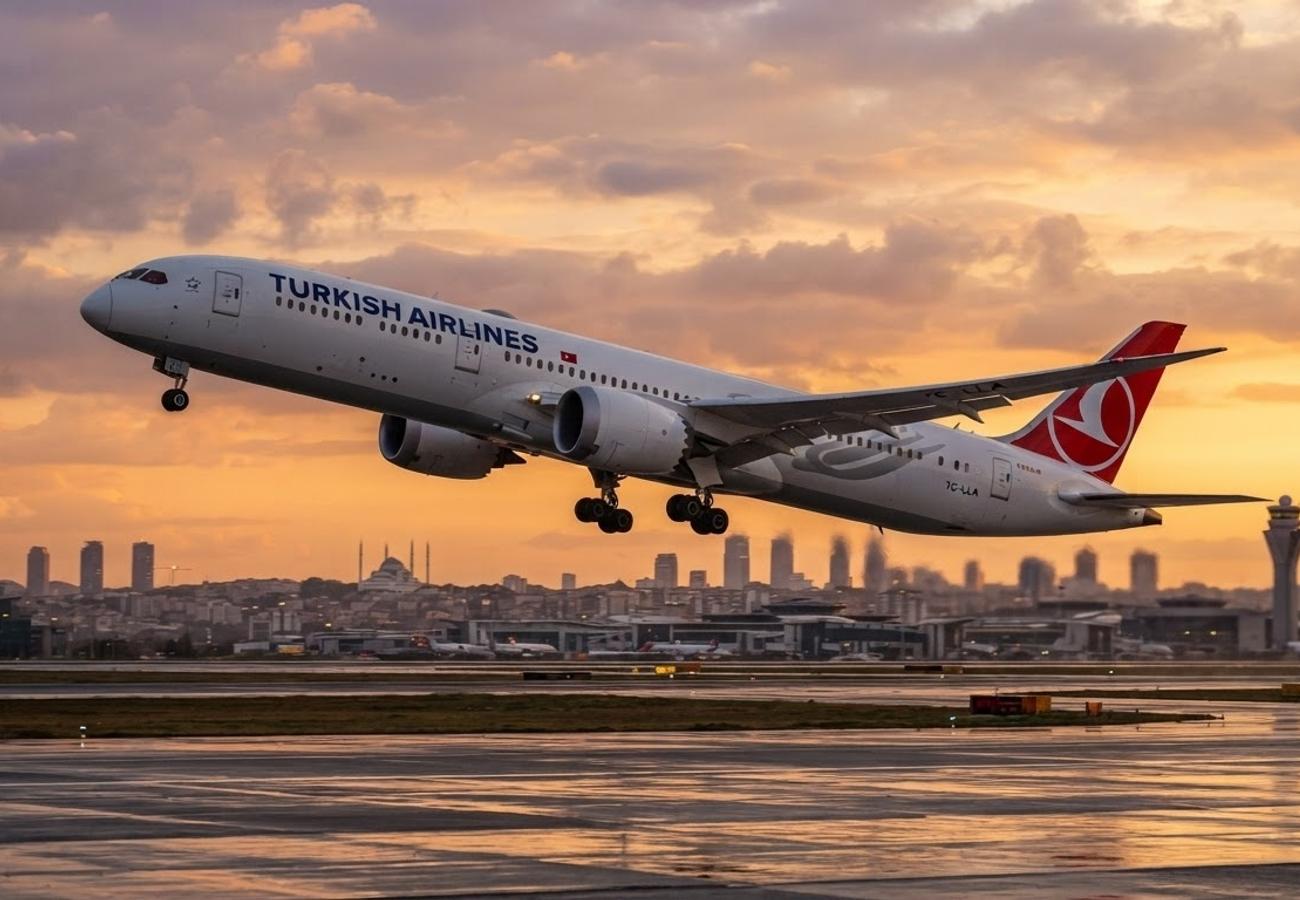
Image generated by AI
Turkish Airlines is expanding its footprint in Western China with the launch of a nonstop service between Istanbul and Chengdu for the 2026/27 winter season.
The carrier has opened reservations for the new corridor connecting Istanbul Airport (IST) and Chengdu Tianfu International Airport (TFU). The service is slated to begin in November 2026, following the airline's standard seasonal rollout for long-haul expansions.
This strategic move signals a shift from partnership-reliance to "own-metal" operations in the region. While Turkish Airlines previously utilized codeshare agreements with Sichuan Airlines to serve this market, the introduction of dedicated flights allows the carrier full control over pricing, capacity, and product consistency.
Flight Schedule and Operational Logistics
The service will operate three times weekly, specifically on Wednesdays, Fridays, and Sundays. The airline has assigned flight numbers TK226 and TK227 to the route.
Flight TK226 (Istanbul to Chengdu):
- Departure: 02:05 (IST)
- Arrival: 15:40 (TFU)
Flight TK227 (Chengdu to Istanbul):
- Departure: 00:45 (TFU)
- Arrival: 05:55 (IST)
The flight duration is approximately eight and a half hours. The early morning arrival in Istanbul is specifically timed to feed into the airline's primary connection banks, facilitating rapid transfers to European capitals, North American gateways, and African destinations.
Aircraft and Cabin Specifications
Turkish Airlines will deploy the Boeing 787-9 Dreamliner on this route. This aircraft choice aligns with the carrier's current fleet strategy of utilizing new-generation widebodies to reduce fuel burn on emerging long-haul markets.
Key features of the 787-9 deployment include:
- Business Class: Lie-flat seating designed for overnight transit.
- Economy Class: High-capacity configuration suited for both corporate and leisure traffic.
- Efficiency: Lower fuel consumption and improved range compared to legacy widebody aircraft.
Route Connectivity Data
| Flight Number | Origin | Destination | Departure Time | Arrival Time | Frequency | Aircraft |
|---|---|---|---|---|---|---|
| TK226 | Istanbul (IST) | Chengdu (TFU) | 02:05 | 15:40 | 3x Weekly | Boeing 787-9 |
| TK227 | Chengdu (TFU) | Istanbul (IST) | 00:45 | 05:55 | 3x Weekly | Boeing 787-9 |
Why This Matters: Industry Analysis
From a logistical perspective, the selection of Chengdu Tianfu International Airport over the city's older hub is a calculated move. TFU is the primary gateway for recent intercontinental expansions in China, offering better infrastructure for widebody operations.
Our analysis of the route map suggests this is less about point-to-point travel and more about capturing the "Western China to Global" flow. Chengdu is a massive economic engine for Sichuan province, with growing tech and manufacturing sectors. By bypassing the congested hubs of Beijing and Shanghai, Turkish Airlines provides a streamlined one-stop alternative for travelers from inland China heading toward the Mediterranean, Middle East, and Africa.
For the traveler, the real impact is the reduction of reliance on third-party carriers. A dedicated Turkish Airlines flight ensures a seamless experience from booking to boarding, avoiding the fragmented service levels often found in codeshare itineraries.
Forward Outlook
Market trends suggest that if initial load factors remain high during the 2026/27 winter season, Turkish Airlines will likely increase frequency beyond three times weekly.
As air travel between Europe and China continues to normalize, Istanbul is positioning itself as the premier transit point. The addition of Chengdu strengthens this "bridge" strategy, potentially forcing competitors to re-evaluate their inland China connectivity. We expect to see further expansion into secondary Chinese cities as Turkish Airlines continues to diversify its Asian portfolio.
The shift to own-metal operations in Chengdu marks a definitive end to the pandemic-era recovery phase and the start of an aggressive growth cycle in Western China.
Related Travel Guides
Disclaimer
This article is for informational and educational purposes only. It does not constitute legal, financial, or professional advice. While we strive to provide accurate and up-to-date information, travel policies, regulations, and conditions change rapidly. Always verify information with official sources before making travel decisions. Nomad Lawyer makes no representations about the accuracy, reliability, completeness, or suitability of the information provided. Readers should consult qualified professionals for advice specific to their circumstances. The views expressed in this article are those of the author and do not necessarily reflect the views of Nomad Lawyer.
Preeti Gunjan
Contributor & Community Manager
A passionate traveller and community builder. Preeti helps grow the Nomad Lawyer community, fostering engagement and bringing the reader experience to life.
Learn more about our team →