
Phuket International Airport (HKT) Arrival Guide: Transport, Customs, and Logistics for 2026
A comprehensive logistics guide to navigating Phuket International Airport (HKT) in 2026, covering terminal layouts, updated taxi fares, Grab/Bolt ride-hailing, and the Phuket Smart Bus system.

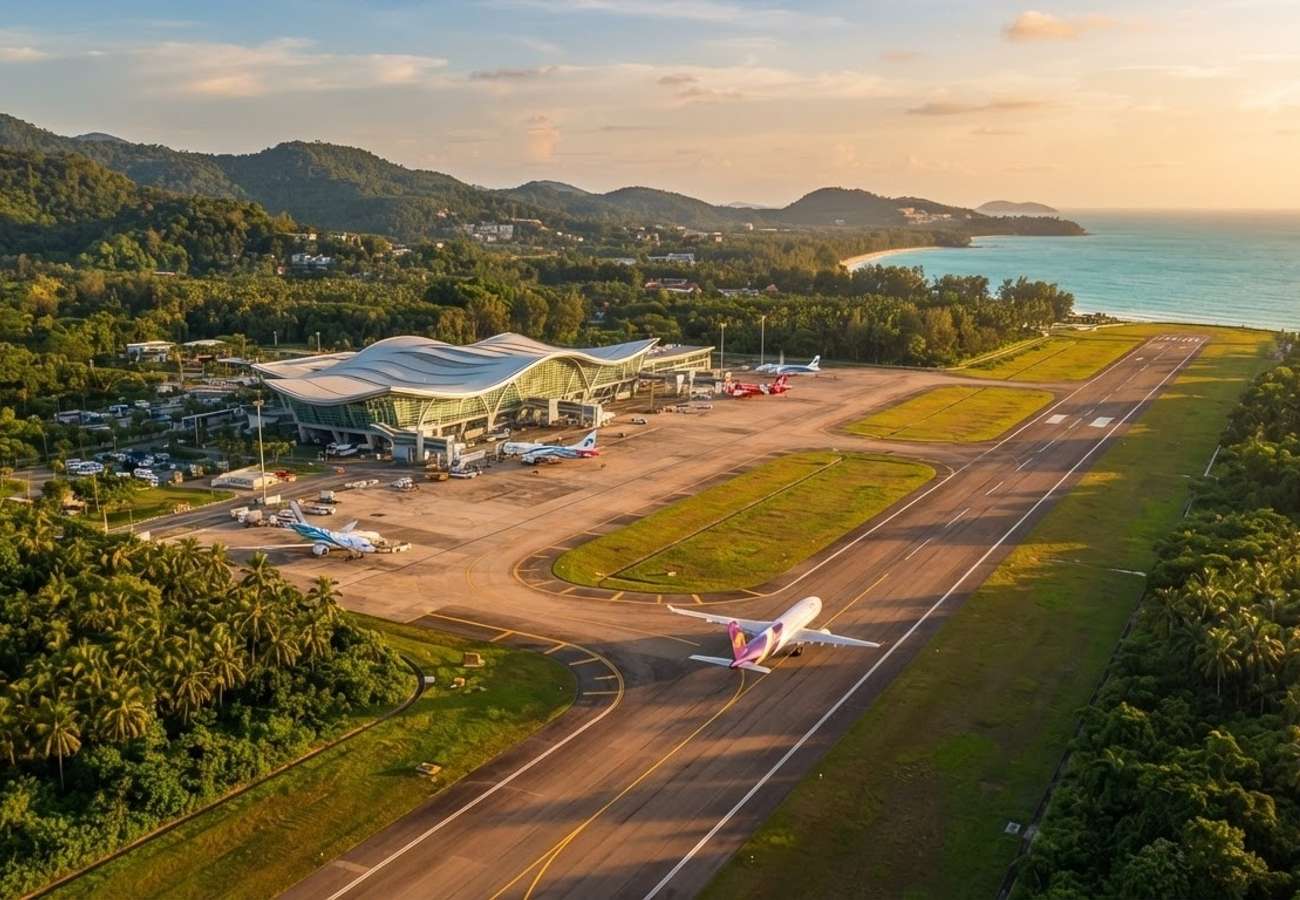
Image generated by AI
Landing at Phuket International Airport (HKT) in 2026 requires a strategic approach to avoid common tourist pitfalls, specifically regarding transport pricing and terminal navigation.
Airport Layout and Terminal Logistics
Phuket International Airport (HKT) serves as the primary gateway to the island, located on the northwest coast near Mai Khao Beach. For those heading to the primary west coast hubs, the distance is approximately 35 kilometers to Patong and 45 kilometers to Kata and Karon. Depending on traffic density, travelers should budget 45 to 60 minutes for these transfers.
The facility operates via two distinct terminals:
- International Terminal: A modern facility handling all flights arriving from outside Thailand.
- Domestic Terminal: A modernized hub for flights from Bangkok, Chiang Mai, and other regional cities.
For passengers connecting between the two, a covered outdoor walkway connects the terminals with a walking time of five to ten minutes. Most ground transport—including official taxi counters, rental desks, and shared minibus operators—is concentrated at the arrivals level of both terminals, though the domestic side typically hosts a higher density of services.
Immigration and Customs Protocols
International arrivals must clear immigration before baggage claim. During peak high-season periods in 2026, processing times typically range from 30 to 60 minutes.
Critical Documentation Requirements:
- Passport with a minimum of six months' validity.
- Completed arrival card (if required by the carrier).
- Proof of onward travel or hotel booking confirmation (standard for Patong, Kata, and Karon visitors).
Following baggage claim, travelers pass through customs. While the "green lane" is standard for most, Thai authorities maintain strict enforcement against vaping devices, e-cigarettes, weapons, and counterfeit goods.
Immediate Post-Arrival Essentials:
- Currency: ATMs are available inside and outside the arrivals hall. Due to high foreign card fees, our analysis suggests making one larger withdrawal rather than several small ones.
- Connectivity: AIS, DTAC, and True operate counters in the arrivals area. Typical 2026 tourist SIM packages offer 7 to 15 days of unlimited data for a few hundred baht.
Ground Transportation Analysis
The transition from HKT to hotel accommodation is the most variable part of the arrival experience. In 2026, the options break down by cost and convenience.
Official Airport Taxis
These operate on a fixed-zone pricing model managed by Airports of Thailand (AOT) counters. This system eliminates haggling and reduces the risk of scams.
| Destination | Estimated Fare (Standard Car) |
|---|---|
| Patong | 800 Baht |
| Karon | 900 - 1,000 Baht |
| Kata | 900 - 1,000 Baht |
Ride-Hailing Apps (Grab and Bolt)
Both Grab and Bolt are widely utilized in 2026. Market trends indicate that Bolt often provides lower pricing, while Grab typically maintains higher vehicle availability.
- Estimated Fares (to Patong): 350 to 600 Baht.
- Logistics: Drivers meet passengers at designated zones. Users must check the app for specific "International" or "Domestic" pickup points.
Shared Minibuses and Public Transit
For budget-conscious travelers, two primary alternatives exist:
- Shared Minibuses: Cost approximately 200 to 300 Baht per person. These vans depart only when full, leading to wait times of 15 to 30 minutes and total travel times of 60 to 90 minutes due to multiple hotel drops.
- Phuket Smart Bus: The most economical option with a flat fare of 100 Baht per person. Route 1 connects the airport to Bang Tao, Surin, Kamala, Patong, Karon, Kata, and Rawai. Buses generally operate every 60 to 90 minutes.
Why This Matters: Industry Implication
From a logistical perspective, the disparity between official taxi fares (800+ Baht) and ride-hailing apps (350-600 Baht) represents a significant "convenience tax." For the solo traveler, the Phuket Smart Bus is a disruptor to the taxi monopoly, offering a 90% cost reduction compared to a private taxi to Kata.
However, for families or those arriving late at night, the reliability of the AOT fixed-price counters outweighs the cost savings of ride-hailing, as app availability can fluctuate wildly during peak flight arrival windows. Our analysis of the route map suggests that those staying in Rawai or Kata should prioritize the Smart Bus if arriving during daylight hours to avoid the high-cost taxi zones.
Forward Outlook
As Phuket continues to scale its tourism infrastructure, expect further integration of digital payment systems at AOT counters. Travelers should anticipate tighter enforcement of e-cigarette laws at customs, as Thailand continues to treat these as prohibited items. The Smart Bus is likely to increase frequency in 2026 to alleviate the congestion caused by private hire vehicles on the west coast arteries.
Efficient transit from HKT is the difference between a stressful start and a seamless vacation.
Related Travel Guides
Disclaimer
This article is for informational and educational purposes only. It does not constitute legal, financial, or professional advice. While we strive to provide accurate and up-to-date information, travel policies, regulations, and conditions change rapidly. Always verify information with official sources before making travel decisions. Nomad Lawyer makes no representations about the accuracy, reliability, completeness, or suitability of the information provided. Readers should consult qualified professionals for advice specific to their circumstances. The views expressed in this article are those of the author and do not necessarily reflect the views of Nomad Lawyer.
Raushan Kumar
Founder & Lead Developer
Full-stack developer with 11+ years of experience and a passionate traveller. Raushan built Nomad Lawyer from the ground up with a vision to create the best travel and law experience on the web.
Learn more about our team →