
Philippines and Vietnam Enter a New Golden Era After 50 Years With Bigger Tourism, Trade and Economic Growth Plans
Philippines and Vietnam Enter a New Golden Era After 50 Years With Bigger Tourism, Trade and Economic Growth Plans

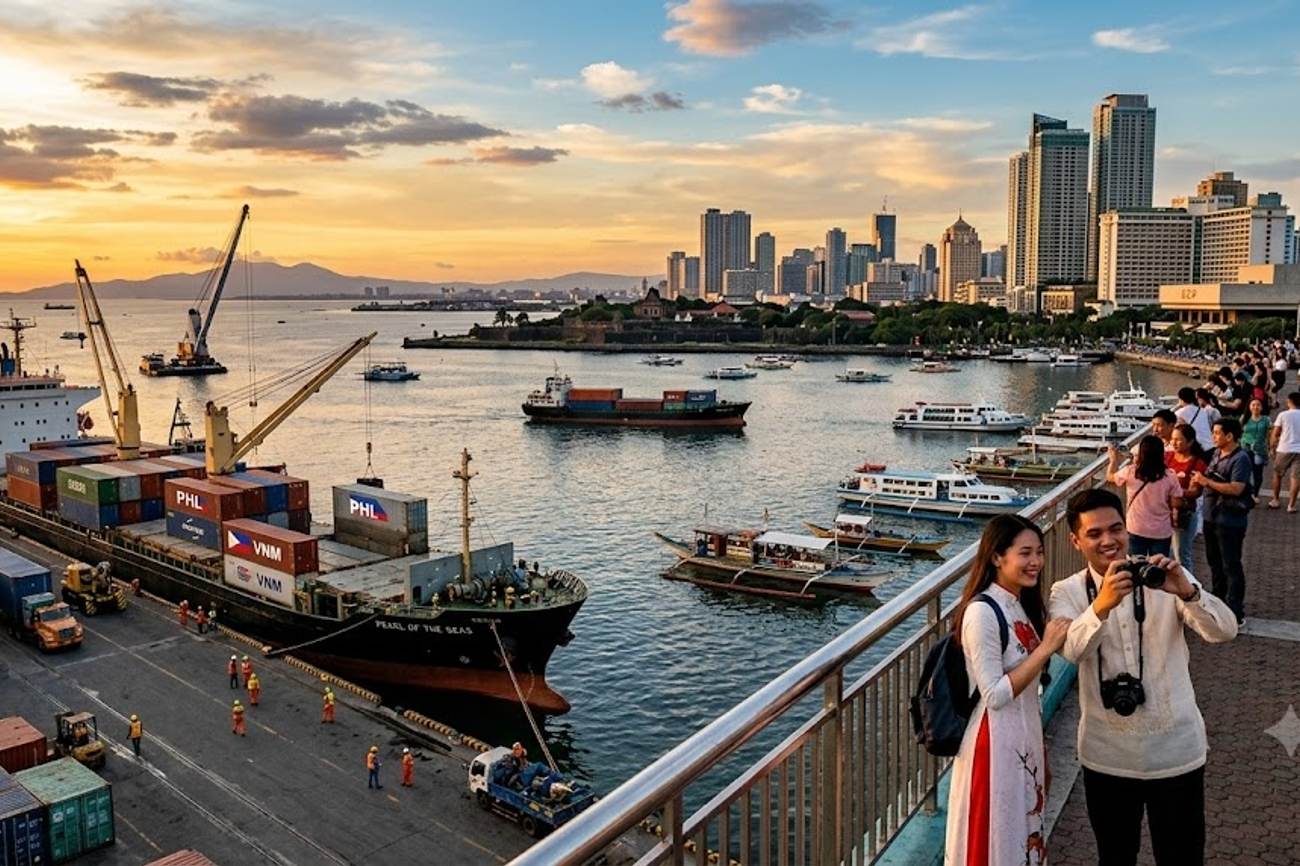
Image generated by AI
[Manila, September 2025] — The Philippines and Vietnam are upgrading their diplomatic relationship to a comprehensive strategic partnership as they approach the 50th anniversary of formal ties. This elevation marks a shift toward deeper economic integration, with bilateral trade volumes hitting nearly US$8 billion in 2025.
The transition follows a series of high-level diplomatic meetings, including Vietnam’s 81st National Day celebrations in Manila. The two Southeast Asian nations, which established official relations in July 1976, are now prioritizing the creation of resilient supply chains and the expansion of renewable energy projects to mitigate shared climate risks.
The Drivers of Diplomatic Elevation
The push for a "new chapter" in bilateral relations is triggered by a mutual need for economic resilience in a volatile global market. Since 1976, the relationship has evolved from basic diplomatic recognition during the Cold War era into a multifaceted alliance. The current acceleration is driven by three primary catalysts:
First, the complementarity of the two economies allows for a more robust production network. By integrating manufacturing and agricultural sectors, both nations aim to reduce dependence on external markets and stabilize regional supply chains.
Second, shared environmental vulnerabilities are forcing a collaborative approach to survival. Both the Philippines and Vietnam are frequently hit by severe storms and flooding. This has led to a new mandate for cooperation in disaster risk reduction and the development of climate-resilient infrastructure.
Third, the shift toward "green growth" is now a central pillar of their diplomatic dialogue. The two governments are moving beyond traditional trade metrics to focus on renewable energy and green technology, ensuring that economic growth does not come at the expense of environmental stability.
Markets and Sectors Under Expansion
The strategic partnership targets specific industries and demographics to maximize the impact of the US$8 billion trade relationship.
- Energy & Infrastructure: Focus on renewable energy grids and disaster-proof construction.
- Agriculture & Manufacturing: Streamlining market access to allow for faster movement of goods and raw materials.
- Tourism & Aviation: Increasing flight frequencies and simplifying travel requirements to boost passenger traffic.
- Education: Expanding student exchange programs to foster long-term professional networks.
- Defense & Security: Strengthening political dialogue to maintain regional stability within the Association of Southeast Asian Nations (ASEAN).
Practical Traveler Advisory and Strategic Insights
For the average traveler or business professional, this diplomatic elevation translates into tangible changes in how they move between Manila, Hanoi, and Ho Chi Minh City.
Increased Flight Availability The commitment to "enhance connectivity" typically signals a push for more open-skies agreements. Travelers can expect an increase in direct flight options and more competitive pricing as airlines expand their footprints to support the growing volume of business and leisure travel. Those booking flights via Philippine Airlines or Vietnam Airlines may see new routes or increased frequencies on existing corridors.
Simplified Border Crossing While specific visa waivers are still under negotiation, the drive for "people-to-people exchanges" usually precedes the easing of visa restrictions. Travelers should monitor official embassy updates for potential streamlined e-visa processes or shortened processing times for business and tourist entries.
New Tourism Corridors The focus on cultural exchanges means a likely increase in joint tourism packages and promotional campaigns. Travelers will find more curated experiences that link Filipino and Vietnamese destinations, supported by better infrastructure and localized tourism services.
The Roadmap to 2026
As the 50th anniversary in July 2026 approaches, the timeline for implementation will focus on institutionalizing these agreements. The next 12 months will likely see the signing of several Memorandums of Understanding (MoUs) specifically targeting green technology and agricultural trade.
Both nations are utilizing established diplomatic mechanisms to ensure these goals are not merely symbolic. The focus is now on "operationalizing" the partnership—moving from high-level rhetoric to the actual deployment of renewable energy projects and the expansion of trade hubs. This phase is critical for ensuring that the economic gains of 2025 are sustained through the next half-century of cooperation.
FAQ: Philippines-Vietnam Travel 2025-2026
Will flights between the Philippines and Vietnam become cheaper? Increased connectivity and the push for higher passenger volumes often lead to more airline competition. While not guaranteed, the strategic focus on tourism expansion typically results in more flight options and competitive pricing for travelers.
Are there new visa requirements for visiting Vietnam or the Philippines? Currently, standard visa rules apply. However, the new strategic partnership emphasizes "people-to-people connections," which often leads to simplified visa processes. Check the Department of Foreign Affairs (Philippines) for the latest updates.
What are the best cities for business travel under this new partnership? Manila, Hanoi, and Ho Chi Minh City remain the primary hubs. However, the focus on "green growth" and "renewable energy" may open up new business opportunities in secondary cities and coastal regions focused on sustainable infrastructure.
How does this partnership affect regional stability for travelers? Stronger ties between two major ASEAN members generally lead to increased regional security and more stable diplomatic environments, making travel within the Southeast Asian corridor more predictable and safe.
A half-century of diplomacy now pivots from survival to strategic synergy.
Related Travel Guides
- American Airlines Joins United and More to Expand Managua Air Access as Nicaragua Targets Stronger Tourism Growth: All You Need to Know
- USA Travel Shift: Houston Birth Tourism Case Raises Questions for International Visitors
- Cambodia Unveils Siem Reap Tourism Plan 2026–2030 for the Smart Heritage Destination Growth
Disclaimer
This article is for informational and educational purposes only. It does not constitute legal, financial, or professional advice. While we strive to provide accurate and up-to-date information, travel policies, regulations, and conditions change rapidly. Always verify information with official sources before making travel decisions. Nomad Lawyer makes no representations about the accuracy, reliability, completeness, or suitability of the information provided. Readers should consult qualified professionals for advice specific to their circumstances. The views expressed in this article are those of the author and do not necessarily reflect the views of Nomad Lawyer.
Preeti Gunjan
Contributor & Community Manager
A passionate traveller and community builder. Preeti helps grow the Nomad Lawyer community, fostering engagement and bringing the reader experience to life.
Learn more about our team →