
Beyond Machu Picchu: Peru Expands Lake Titicaca and Colca Canyon for China's High-End Travelers

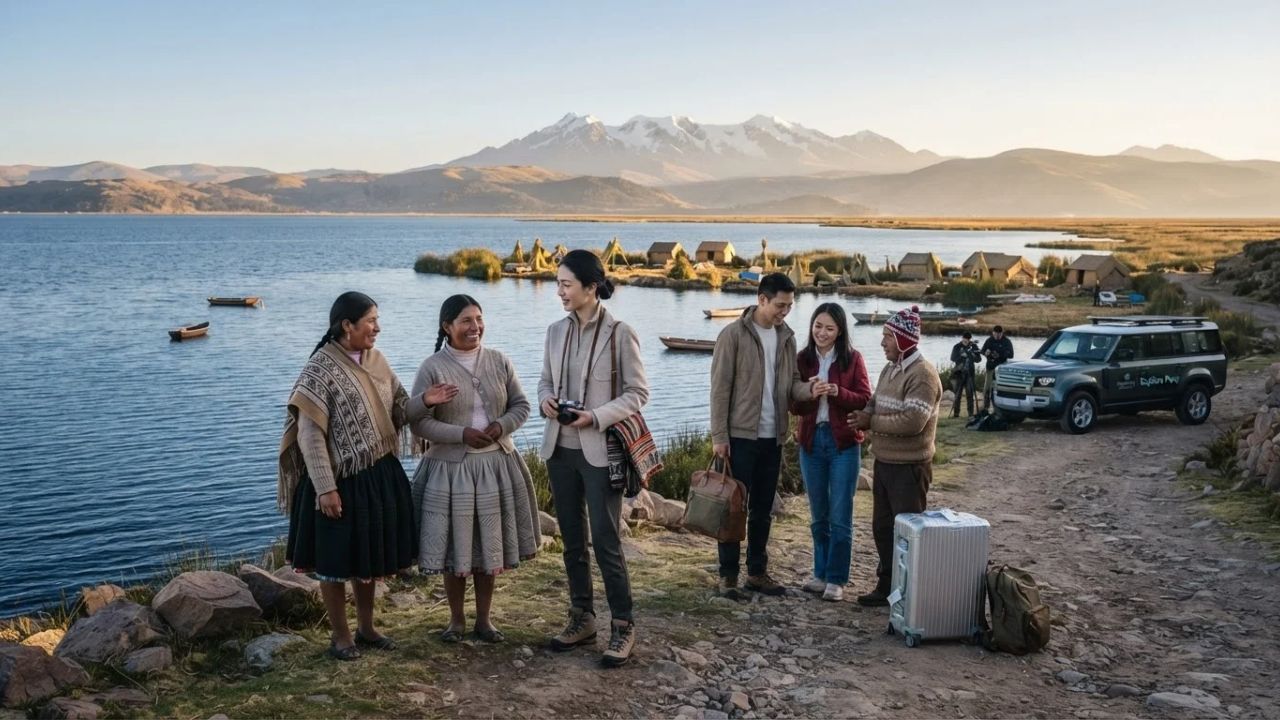
Looking far beyond the classic day-trip circuit of Machu Picchu, Peru is repositioning its tourism offerings to capture China’s high-yield long-haul travelers with expansive 20- to 25-day expeditions across the high Andes and the Pacific coast. Unveiled at ITB China, the strategy targets discerning voyagers prepared to invest significant time and capital into immersive journeys combining Lake Titicaca, Colca Canyon, the enigmatic Nazca Lines, and Lima's world-class culinary scene.
The pivot reflects an evolving dynamic in Asian outbound tourism toward South America. Because crossing the Pacific involves substantial transit logistics, elite Chinese travelers are increasingly rejecting brief stopovers in favor of deep cultural immersion and regional cross-border itineraries linking Peru with Argentina, Brazil, or Chile. By highlighting living Aymara and Quechua traditions alongside jaw-dropping geographic wonders, Peruvian destination specialists are transforming the nation into Latin America’s ultimate slow-travel gateway.
The Local Trend Revealed: Premium 20- to 25-Day Transcontinental Expeditions
Speaking at ITB China on September 13, 2026, Javier Kinones, executive director of leading inbound operator Bpak Travel, outlined how high-net-worth Asian travelers are reshaping travel programming across Peru.
Kinones noted that while the 15th-century Inca citadel of Machu Picchu remains Peru's preeminent international calling card, it serves primarily as the emotional anchor for much longer regional explorations. Recognizing that transpacific flights demand significant time commitments, premium tour designers are crafting comprehensive 20- to 25-day itineraries that distribute visitor foot traffic across multiple distinct regions of the country.
This long-stay model directly challenges the historic hit-and-run approach to South American sightseeing. Instead of rushing between airport gates, affluent travelers spend multiple days acclimatizing at high-altitude alpine lakes, boarding slow luxury sleeper trains, and exploring coastal archaeological enigmas before connecting to neighboring South American hubs like Buenos Aires, Rio de Janeiro, or Santiago.
Signature Highlights of Peru's Extended Long-Haul Circuit
| Travel Corridor | Primary Gateway | Unique Geographic & Cultural Signature | Strategic Visitor Value |
|---|---|---|---|
| Machu Picchu & Cusco | Alejandro Velasco Astete Airport (CUZ) | Imperial Incan stonework and sacred Andean mountain sanctuaries | Cultural foundation and gateway to ancient civil engineering |
| Lake Titicaca | Inca Manco Cápac Airport, Juliaca (JUL) | World's highest navigable lake (3,812m) and living Uros reed islands | Authentic immersion in Aymara traditions and UNESCO textile arts |
| Colca Canyon | Rodríguez Ballón Airport, Arequipa (AQP) | One of the world's deepest canyons and natural Andean condor habitats | Thermal spring wellness retreats and dramatic volcanic ravines |
| Nazca Lines & Paracas | Maria Reiche Neuman Airport (NZC) | Giant pre-Columbian geoglyphs etched into coastal desert plateaus | World-class aerial archaeology and Pacific marine wildlife reserves |
| Metropolitan Lima | Jorge Chávez International Airport (LIM) | Colonial heritage architecture and internationally ranked culinary temples | Deep immersion in modern Peruvian gastronomy and coastal culture |
Beyond the Inca Citadel: Lake Titicaca, Colca Canyon, and Nazca
Expanding the geographic scope of Peruvian travel uncovers extraordinary historical depth and ecological variety across the southern circuit.
Lake Titicaca: Living Waters of the High Altiplano
Resting at 3,812 meters (12,500 feet) above sea level in the Puno region, Lake Titicaca holds profound sacred significance as the mythological birthplace of the Inca civilization. Travelers exploring the lake by private solar-assisted catamaran discover traditional communities living on floating totora reed islands constructed by the indigenous Uros people.
Further offshore, on the terraced island of Taquile, visitors encounter a unique cultural heritage: Taquile’s male textile tradition, where men hand-knit intricate woolen caps (chullos) indicating civil and marital status, a practice formally inscribed on UNESCO’s Representative List of the Intangible Cultural Heritage of Humanity.
Colca Canyon: Soaring Condors and Terraced Volcanic Vistas
Located north of Arequipa, the "White City" built from volcanic sillar stone, Colca Canyon plunges more than 3,200 meters deep—over twice the depth of the Grand Canyon. Beyond its dramatic terraced slopes cultivated since pre-Inca Collagua and Cabana civilizations, the canyon provides an extraordinary natural spectacle.
At the Mirador Cruz del Cóndor, visitors observe giant Andean condors with three-meter wingspans catching rising morning thermal air currents, soaring just meters above spectators.
The Nazca Lines: Aerial Wonders in the Ica Desert
South of Lima along the arid Pacific coastal shelf, the Nazca Lines remain one of archaeology's greatest enduring mysteries. Etched into the iron-oxide-coated desert floor between 500 BCE and 500 CE, these massive geoglyphs depict stylized hummingbirds, monkeys, spiders, and geometric spirals stretching across hundreds of square meters.
High-end travelers experience these colossal drawings through private scenic aerial flights departing from Pisco or Nazca, gaining a bird's-eye perspective impossible to appreciate from the ground.
Lima as a Culinary Destination: The Rise of High-Altitude Gastronomy
The capital city of Lima has evolved far beyond a routine transit layover into South America's undisputed culinary capital.
Peruvian gastronomy owes its global acclaim to its remarkable agro-ecological diversity, spanning 28 distinct climate zones from coastal marine currents to Amazonian cloud forests. Acclaimed dining temples such as Central, Maido, and Astrid y Gastón take diners on sensory journeys across precise vertical altitudes.
For high-end Asian travelers with sophisticated culinary traditions, Lima’s celebrated Nikkei cuisine (the historic fusion of Japanese culinary discipline with Peruvian ingredients) and Chifa (Peruvian-Chinese heritage dining) create an immediate cultural resonance. Master chefs transform fresh Pacific catches into citrus-infused ceviches and tiraditos, paired with native Andean tubers and fragrant Amazonian herbs.
Cultural & Environmental Value: Supporting Indigenous Communities and Slow Travel
Extending travel itineraries from one week to nearly a month yields substantial environmental and socioeconomic benefits for local host populations.
Mitigating Overtourism at Machu Picchu
Concentrating international visitors exclusively at Machu Picchu has historically generated severe trail erosion and logistical strain on the delicate citadel. By distributing visitor flow toward Puno, Arequipa, and the southern coast, extended itineraries alleviate congestion at primary archaeological ruins while funneling economic prosperity into rural agricultural regions that rarely benefit from traditional mass tourism.
Direct Community Equity on Lake Titicaca
On islands like Amantaní and Taquile in Lake Titicaca, tourism operates under community-controlled cooperatives. Island councils rotate traveler hosting duties among indigenous families, ensuring that tourism revenues are distributed equitably across the community. Proceeds directly finance village solar water heaters, potable water filtration systems, and bilingual Quechua-Aymara schooling for local children.
Visitor Insider Tips: High-Altitude Luxury, Rail Travel, and Dining Reservations
For travelers embarking on an extended journey through Peru's southern circuit, these local specialist recommendations maximize comfort and cultural insight:
- Board the Belmond Andean Explorer: For the ultimate scenic transit between Cusco, Lake Titicaca, and Arequipa, reserve a cabin aboard South America’s premier luxury sleeper train. The multi-day rail journey crosses the high Andean plains (altiplano) at 4,300 meters elevation, featuring open-air observation cars, oxygen-enriched suites, and gourmet dining cars celebrating local Andean ingredients.
- Mastering High Elevations in Puno and Colca: Lake Titicaca (3,812m) is considerably higher than Cusco (3,400m). Plan your itinerary sequentially: start in Lima at sea level, spend three nights acclimatizing in the Sacred Valley (2,870m), visit Machu Picchu (2,430m), continue to Cusco, and only then proceed to Puno and Colca Canyon. Drink plenty of fresh water and muña tea, and avoid heavy meals upon initial arrival on the Altiplano.
- Securing Lima Fine-Dining Tables: Top-tier restaurants in Lima release reservations up to three to four months in advance. Secure table bookings at Central (Barranco) or Maido (Miraflores) the moment your flight dates are finalized; lunch services often provide better natural lighting for photographing elaborate multi-course tasting menus.
- Scenic Flights Over the Nazca Lines:
- Schedule your scenic overflight for the early morning departure bank (between 7:30 AM and 10:00 AM). Desert winds pick up significantly in the afternoon, creating thermal turbulence and blowing dust that can obscure visibility of the geoglyphs.
- Take a mild motion sickness tablet 30 minutes before boarding; the specialized small aircraft perform steep banking maneuvers to provide passengers on both sides clear views of each figure.
- Cultural Etiquette on Lake Titicaca:
- When visiting Taquile or the Uros floating reed islands, dress modestly and always greet island community elders with warmth (Kamisaraki in Aymara or Allillanchu in Quechua).
- Purchase woven textiles directly from island cooperative halls rather than street vendors in Puno; each textile on Taquile is stamped with the weaver's personal artisan seal guaranteeing authenticity.
Tourism Outlook: Peru as the Premier Gateway to Latin America
The proactive promotion of extended, multi-region itineraries at ITB China signals a mature new phase for South American tourism. As long-haul travelers from China and global markets seek authenticity over hurried tick-the-box tours, Peru’s remarkable combination of ancient history, biodiverse geography, and culinary brilliance positions it as Latin America's primary cultural destination.
By integrating iconic archaeological wonders with living indigenous traditions across Lake Titicaca, Colca Canyon, and Lima, travel operators are building a resilient, sustainable tourism model. These 20- to 25-day grand tours prove that Machu Picchu is merely the opening chapter of an extraordinary, life-affirming journey across the high Andes.
Related Travel Guides
Peru Travel Advisory 2026: Safety Updates for Machu Picchu, Cusco, and Andean Trekking
Sustainable Luxury in Peru: How Cusco and the Sacred Valley Are Redefining South American Travel
Disclaimer
This article is for informational and educational purposes only. It does not constitute legal, financial, or professional advice. While we strive to provide accurate and up-to-date information, travel policies, regulations, and conditions change rapidly. Always verify information with official sources before making travel decisions. Nomad Lawyer makes no representations about the accuracy, reliability, completeness, or suitability of the information provided. Readers should consult qualified professionals for advice specific to their circumstances. The views expressed in this article are those of the author and do not necessarily reflect the views of Nomad Lawyer.
Raushan Kumar
Founder & Lead Developer
Full-stack developer with 11+ years of experience and a passionate traveller. Raushan built Nomad Lawyer from the ground up with a vision to create the best travel and law experience on the web.
Learn more about our team →