
Peru Unites With Colombia, Chile & Regional Nations to Spark Historic Lake Tourism Boom Across South America in 2026
Seven South American nations launch coordinated lake tourism initiative transforming remote glacial basins and high-altitude lagoons into sustainable travel destinations while preserving indigenous heritage and biodiversity.

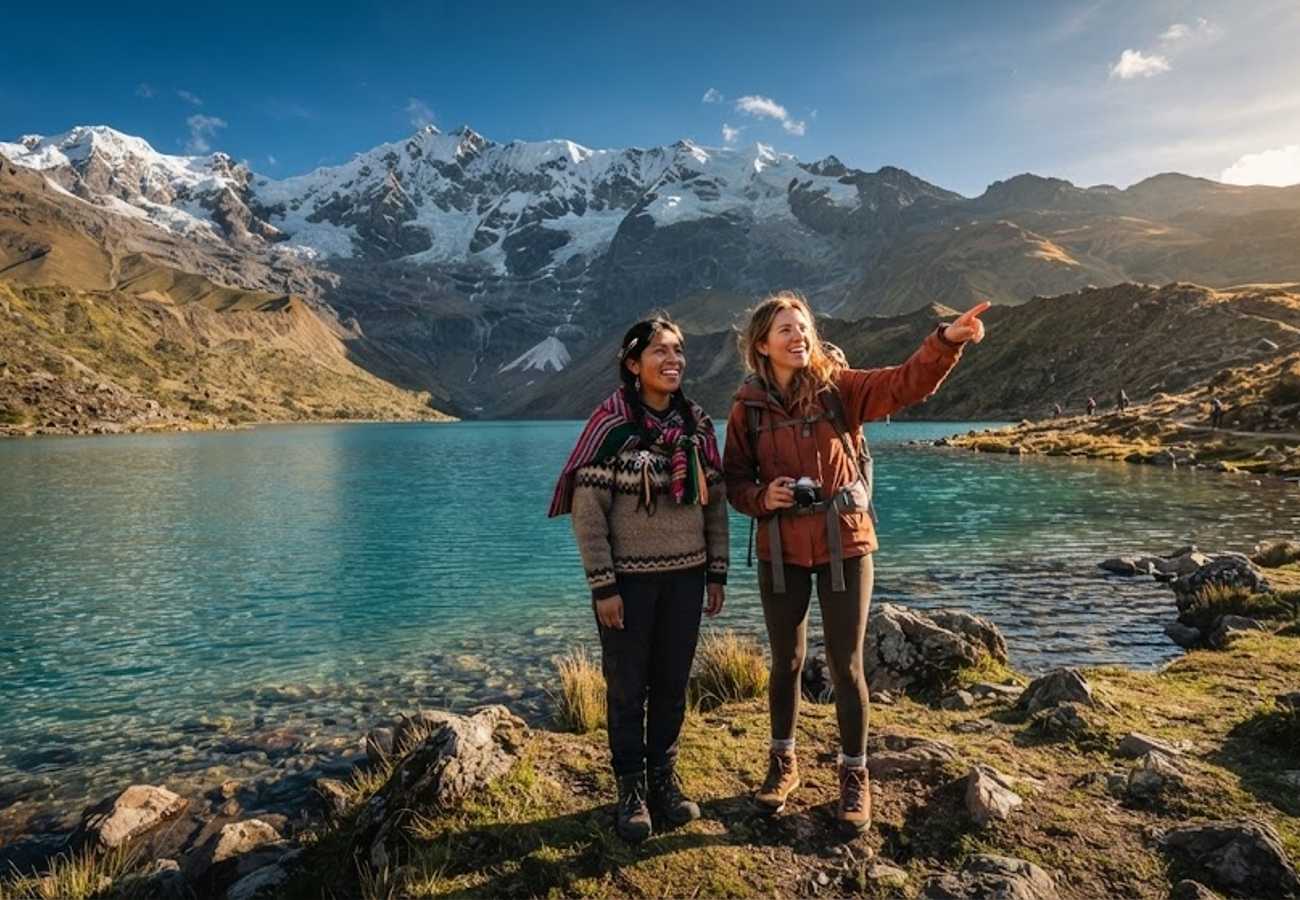
Image generated by AI
A Continental Shift: Seven Nations Redefine South American Adventure
Something unprecedented is happening across South America. Peru, Colombia, Chile, Bolivia, Brazil, Venezuela, and Argentina have joined forces in a coordinated regional initiative that's fundamentally reshaping how the world discovers the continent's most spectacular aquatic landscapes.
This isn't another tourism marketing campaign. It's a unified declaration that high-altitude glacial mirrors, salt-encrusted mineral basins, and pristine tropical lagoons—once scattered across remote wilderness—are now positioned as the centerpiece of sustainable, authentic adventure travel.
Reddit: "Finally someone's talking about the lakes beyond Titicaca. Peru's got some insane water destinations that the tour operators barely mention." — r/SouthAmericaTravel
The catalyst? A fundamental shift in traveller expectations. Today's explorers demand authenticity over Instagram checkboxes. They want raw biodiversity, indigenous cultural immersion, and transparent conservation practices. The old model of isolated national tourism campaigns couldn't deliver this. A coordinated regional framework can.
Why This Partnership Changes Everything
The collaborative mechanism ensures responsible stewardship replaces extractive tourism. By harmonizing regional policies on water management, visitor capacity, and heritage protection, these seven nations have created something resembling a continental protected gateway system.
Consider the logistics: a traveller visiting Lake Titicaca in Peru can now seamlessly transition to Lake General Carrera in Chile, then explore Bolivia's Laguna Colorada, all within an integrated tourism ecosystem with consistent environmental standards and indigenous benefit-sharing agreements.
This strategic alignment transforms once-isolated destinations into accessible cultural exchange hubs while keeping extraction pressures manageable. The model prioritizes long-term preservation over short-term revenue spikes.
Argentina's Glacial Crown: Where Ice Meets Innovation
Lake Nahuel Huapi near Bariloche anchors Argentina's lake district as a benchmark for sophisticated wilderness tourism. Visitors experience premium fly-fishing operations, nautical navigation, and some of South America's most refined outdoor hospitality infrastructure.
The real spectacle lies further south. Lake Argentino within Los Glaciares National Park delivers cryo-tourism experiences where visitors witness massive icebergs calving from the Perito Moreno Glacier—a primal encounter with planetary forces that no photograph captures adequately.
Beyond the iconic peaks, Lake Viedma and the remote Lake San Martín provide uncompromising wilderness immersion for hikers seeking genuine isolation. Meanwhile, Mar Chiquita in Córdoba hosts massive flamingo populations that transform saline landscapes into living art installations.
Indigenous stewardship matters here too. The Mapuche people continue their ancestral land stewardship around Lake Huechulafquen, sharing sacred histories with respectful visitors interested in ethno-eco tourism models.
Chile's Volcanic Theatre: Fire and Water
Chilean lake tourism thrives on dramatic contrasts. Active volcanoes stand sentinel over pristine basins in a landscape where geological violence and ecological serenity coexist.
Lake Llanquihue, perfectly framed by the Osorno Volcano, blends 19th-century European-influenced architecture with modern adventure sports. Windsurfing here reaches championship standards, attracting international athletes who return for the combination of heritage and adrenaline.
The Aysén region reveals nature's sculptural mastery through Lake General Carrera's famous Marble Cathedrals—eroded rock formations where turquoise water and limestone create an ever-shifting natural light show. This destination epitomizes the partnership's promise: accessibility meets pristine wilderness.
Deeper south, Lake Todos los Santos serves as both ecological corridor and scenic maritime highway for Andes mountain crossings. Lake Villarrica offers a rare fusion—luxury thermal spas coexist with jet-skiing adventures, all within earshot of an active volcano's constant rumble.
For those seeking prehistoric silence, Lake Conguillío and the extreme altitude reflections of Chungará Lake deliver profound connections to the untamed geological forces that shaped our planet.
Peru's Ancient Waters: History Carved in Stone and Ice
Lake Titicaca remains non-negotiable on any serious South America itinerary. At 3,812 meters elevation, it's the world's highest navigable lake and the spiritual core of Andean civilization. The Uros people's hand-woven reed islands represent living heritage—a sustainable tourism model where visitors fund cultural preservation directly.
In Peru's coastal desert, Huacachina Lagoon defies every expectation. This palm-fringed oasis emerges impossibly from massive sun-scorched sand dunes near Ica, attracting sandboarders and explorers seeking surreal landscape contrasts.
The mountainous Ancash region contains twin glaciological treasures: Lake Parón's electric-cyan waters and Lake Palcacocha's immense geological significance. These high-altitude basins attract serious mountaineers and climate researchers studying glacial recession patterns.
Venture into the Amazon, and Lake Sandoval within the Tambopata Reserve offers immersive wildlife encounters—river otters, caimans, and dense jungle biodiversity in protected sanctuary conditions. Further east, the mist-shrouded Laguna de los Cóndores guards ancient Chachapoyas mummies in cloud forest mystique, blending archaeological adventure with verdant wilderness.
Bolivia's Surreal High-Altitude Landscape
Bolivia occupies a unique space in continental lake tourism—offering experiences that challenge conventional definitions of landscape itself.
The Isla del Sol (Island of the Sun) on sacred Lake Titicaca connects visitors with ancient Inca archaeological sites while providing some of Earth's clearest, star-filled night skies. This combination of historical immersion and astronomical wonder proves increasingly rare.
Laguna Colorada presents a pigment-rich kaleidoscope born from unique mineral and algae interactions—landscapes so surreal they seem digitally fabricated. Nearby, the mineral-heavy Laguna Verde completes a chromatic journey through Bolivia's high-altitude mineral basins.
Climate change has transformed Lake Poopó into a site for sociological tourism rather than traditional recreation. Visitors now witness firsthand how local fishing communities demonstrate resilience against environmental change, converting ecological crisis into educational opportunity.
The extreme Laguna Glacial remains a prestigious mountaineering objective, while the tropical, river-fed Laguna Cáceres functions as a wildlife-rich sanctuary supporting diverse bird populations and ecosystem services.
Colombia's Northern Gateways: Emerging Frontiers
Colombia's lake destinations remain comparatively underdeveloped in global tourism consciousness—precisely why they represent the partnership's greatest untapped potential.
High-altitude lagoons in the Páramo ecosystems offer biodiversity found nowhere else on Earth. These fragile, cloud-wrapped basins support endemic species while maintaining critical water regulation functions for downstream populations across six countries.
The coordination framework ensures Colombia's lakes receive managed visitation growth rather than exploitative resource extraction, positioning the nation as a leader in conservation-driven tourism economics.
Protecting Waters for Future Generations
This regional partnership succeeds only through transparent conservation practices. Each nation commits to visitor capacity limits, water chemistry monitoring, and indigenous benefit-sharing mechanisms that transform tourism from extraction to stewardship.
The model acknowledges a hard truth: pristine wilderness cannot survive unlimited visitation. By coordinating regional policies, these nations prove that responsible exploration generates sustainable economic benefits while preserving the very ecosystems that justify visitation.
This isn't altruism. It's enlightened self-interest. Destinations that protect their natural and cultural assets remain valuable indefinitely. Those that prioritize short-term extraction become degraded, abandoned relics within a generation.
The future of South American exploration belongs to those willing to tread lightly—and this continental alliance just wrote the playbook for everyone watching.
Related Travel Guides
Disclaimer
This article is for informational and educational purposes only. It does not constitute legal, financial, or professional advice. While we strive to provide accurate and up-to-date information, travel policies, regulations, and conditions change rapidly. Always verify information with official sources before making travel decisions. Nomad Lawyer makes no representations about the accuracy, reliability, completeness, or suitability of the information provided. Readers should consult qualified professionals for advice specific to their circumstances. The views expressed in this article are those of the author and do not necessarily reflect the views of Nomad Lawyer.
Raushan Kumar
Founder & Lead Developer
Full-stack developer with 11+ years of experience and a passionate traveller. Raushan built Nomad Lawyer from the ground up with a vision to create the best travel and law experience on the web.
Learn more about our team →