
Cozumel Palancar Reef Scuba Diving Guide: Drift Diving, Wall Depths, and Coral Zones 2026
An expert analysis of scuba diving at Palancar Reef, Cozumel, covering drift conditions, wall topography, and site-specific depth ranges for certified divers in 2026.

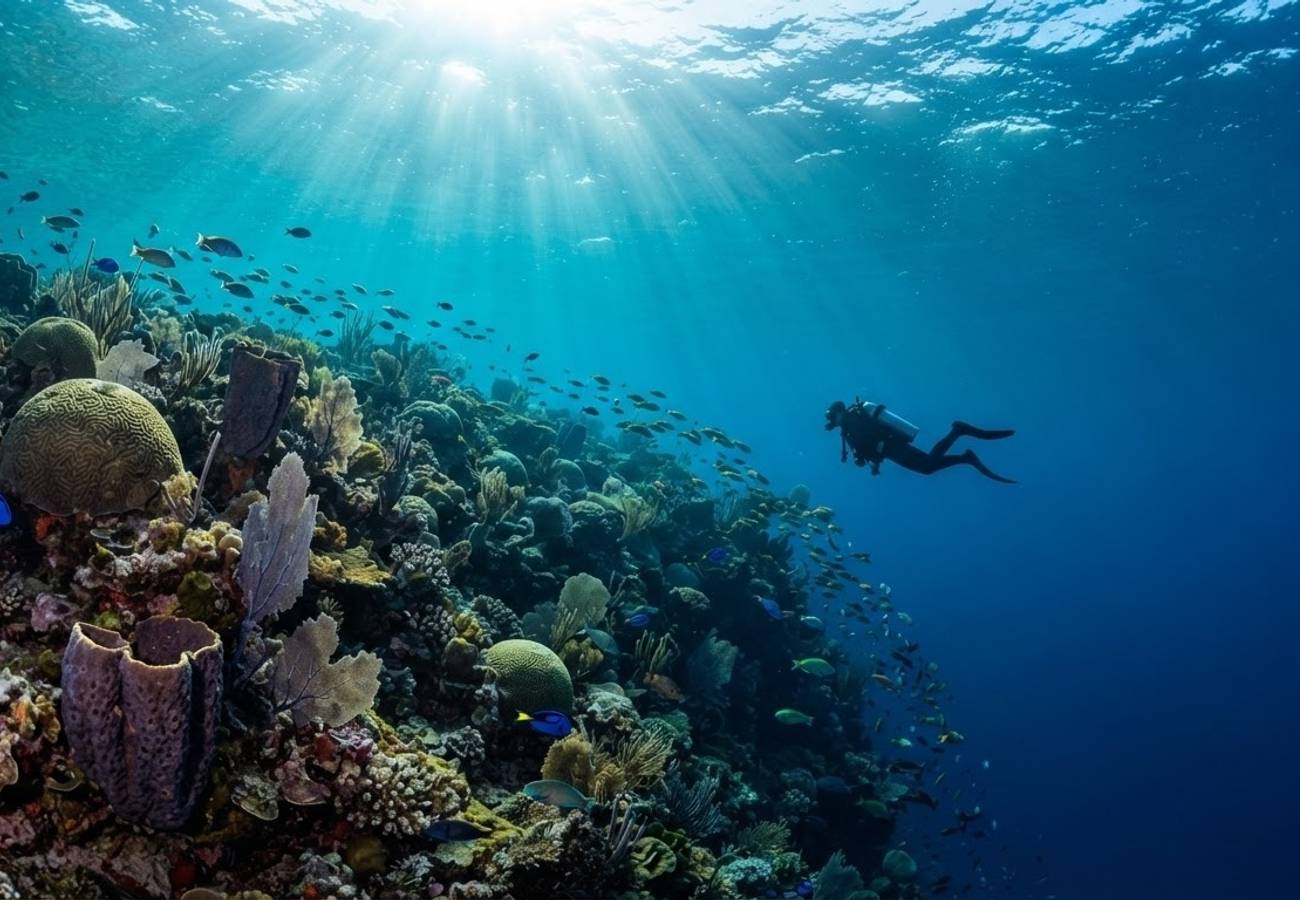
Image generated by AI
Palancar Reef, located off Cozumel’s southwest coast, remains a cornerstone of Caribbean diving due to its high visibility and effortless drift profiles. For certified divers, the reef offers a scalable experience ranging from shallow coral gardens to dramatic vertical drops.
The Palancar Reef Ecosystem
Situated within the Arrecifes de Cozumel National Park and the broader Mesoamerican Barrier Reef system, Palancar Reef is a sprawling network of dive sites rather than a single location. Access typically requires a 25 to 45-minute boat ride from the San Miguel pier zone.
The area is defined by its "spur-and-groove" topography—parallel coral ridges separated by sandy channels. This layout creates natural highways for divers, allowing for a seamless flow along the reef. Because the site is part of a protected marine park, strict regulations govern mooring buoy use and group sizes to preserve the fragile hard corals and sponges.
Technical Dive Conditions
Our analysis of the local environment indicates that Palancar is ideal for those looking to refine their buoyancy and trim.
- Visibility: Typically ranges from 70 to 100 feet, though it can exceed this in calm conditions.
- Temperature: Water temperatures generally fluctuate between the upper 70s and low 80s Fahrenheit.
- Gear Recommendation: A 3 mm full suit is standard; "shorties" are sufficient during peak summer.
- Currents: Generally light to moderate, flowing north to south, though local eddies can cause unpredictable upwellings or downwellings near the wall edges.
Site-Specific Profiles and Depth Ranges
Palancar is divided into distinct sectors. Matching the site to your certification level is essential for safety and enjoyment.
Shallow Reefs (40–60 Feet)
Palancar Gardens is the primary recommendation for Open Water divers or those easing into their first Cozumel trip. These dives focus on dense brain corals, sea fans, and sandy swim-throughs. Common sightings include splendid toadfish and nurse sharks.
Intermediate Walls (60–90 Feet)
Palancar Caves offers a transition from reef to wall. Divers typically start at 60 feet and descend via ledges to 80 or 90 feet, navigating overhangs populated by snappers and grunts.
Deep Drop-offs (70–100+ Feet)
Palancar Horseshoe and Palancar Bricks are designed for Advanced Open Water divers. The "Horseshoe" is characterized by a massive indentation in the reef where divers follow an arc at 70 to 90 feet, with the abyss falling away sharply. These sites are prime locations for spotting eagle rays and sea turtles.
Operational Logistics
Several established operators manage trips to this sector, including:
- Scuba Mau
- Dive Palancar
- ScubaTony
- Aldora Divers
Most operators run two-tank morning trips to maximize light penetration and avoid the rougher afternoon sea states.
Dive Site Summary Table
| Site Name | Primary Feature | Typical Depth Range | Experience Level |
|---|---|---|---|
| Palancar Gardens | Coral gardens, swim-throughs | 40 – 60 ft | Open Water |
| Palancar Caves | Ledges, overhangs, caverns | 60 – 90 ft | Open Water / Advanced |
| Palancar Horseshoe | Deep arc, vertical wall | 70 – 100 ft | Advanced |
| Palancar Bricks | Stronger currents, deep wall | 70 – 100 ft | Advanced |
Why This Matters: Industry Analysis
From a logistical perspective, Palancar Reef represents the "gold standard" of drift diving. Unlike destination dives that rely on a single wreck or pinnacle, Palancar’s modular nature allows operators to pivot based on real-time current strength and diver skill levels.
For the traveler, the real impact is the reduced physical exertion. Because the current acts as a conveyor belt, divers can extend their bottom time by minimizing finning. However, this creates a high dependency on "trim"—the horizontal position of the diver. Poor trim in a drift environment leads to "silting out" the reef or accidentally descending too deep on a wall. For those booking these trips, we suggest prioritizing operators who group divers by gas consumption and experience to ensure the group maintains a cohesive pace.
Forward Outlook
As marine park management tightens, expect an increase in the use of permanent mooring buoys and a stricter enforcement of "no-touch" policies. Divers should anticipate more rigorous pre-dive briefings regarding current hand signals. As Cozumel continues to be a hub for certification, the trend is shifting toward "specialty-led" trips, where divers specifically seek out drift or deep-wall certifications before visiting the Palancar sector.
Mastering buoyancy is the only way to truly experience the weightlessness of the Palancar drift.
Related Travel Guides
Disclaimer
This article is for informational and educational purposes only. It does not constitute legal, financial, or professional advice. While we strive to provide accurate and up-to-date information, travel policies, regulations, and conditions change rapidly. Always verify information with official sources before making travel decisions. Nomad Lawyer makes no representations about the accuracy, reliability, completeness, or suitability of the information provided. Readers should consult qualified professionals for advice specific to their circumstances. The views expressed in this article are those of the author and do not necessarily reflect the views of Nomad Lawyer.
Kunal K Choudhary
Co-Founder & Contributor
A passionate traveller and tech enthusiast. Kunal contributes to the vision and growth of Nomad Lawyer, bringing fresh perspectives and driving the community forward.
Learn more about our team →