
California High-Speed Rail Targets Late 2026 Track Installation and Private Capital Injection
The California High-Speed Rail Authority prepares for a multibillion-dollar track and systems contract in the Central Valley by late 2026 while seeking private investment to bridge funding gaps.

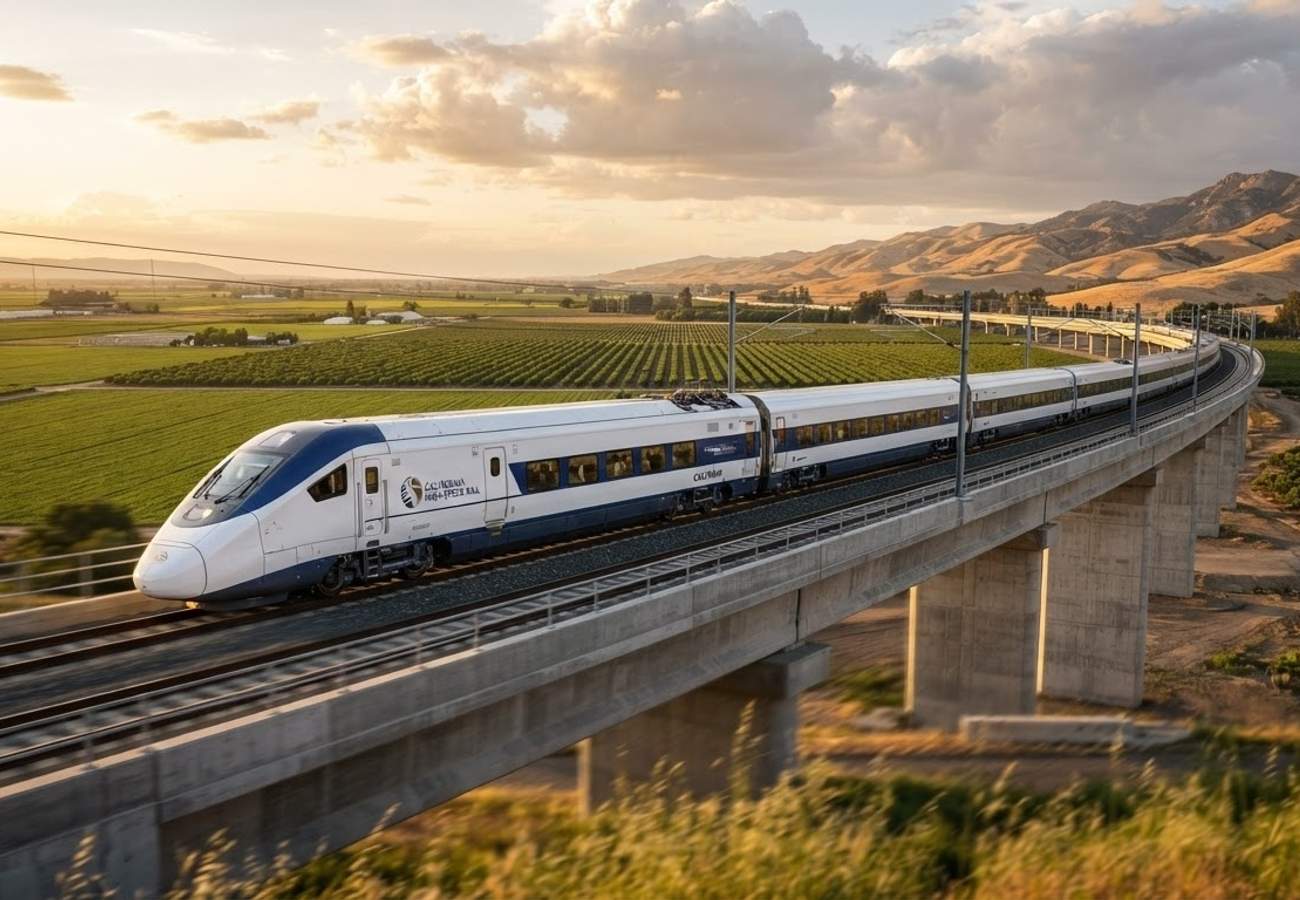
Image generated by AI
California’s bullet train program is transitioning from civil engineering to rail installation, with a multibillion-dollar systems contract set to trigger visible track work in the Central Valley by late 2026.
Central Valley Infrastructure Progression
The California High-Speed Rail Authority is currently prioritizing a 171-mile operational segment connecting Merced and Bakersfield. Analysis of project data confirms that 119 miles of guideway are already under active construction within the Central Valley.
To date, construction has focused on heavy civil works, including the completion of viaducts, bridges, and grade separations. Project documentation indicates that these structures across Madera, Fresno, Kings, Tulare, and Kern counties are now being certified as ready for the track-laying phase.
Our analysis of the current timeline shows the following milestones:
- Late 2026: Anticipated commencement of physical track installation.
- Late 2020s: Targeted window for train testing on the Central Valley line.
- End of Decade: Estimated window for the launch of initial passenger services.
Track and Systems Procurement Timeline
The shift to an operational railway depends on the Track & Systems Construction Contract. This procurement package covers the high-speed track structure, rail and ballast installation, and the deployment of the overhead contact system (OCS).
The Authority's procurement roadmap includes:
- Mid-2024: Advancement of design contracts for track and overhead electrical systems for the 171-mile stretch.
- June 2026: Targeted board approval for the full Track & Systems Construction Contract.
- Mid-2026: Competitive bidding and contract award process.
- Late 2026: Execution of the first notice to proceed, initiating intensive track installation.
Supporting contracts for systems integration, construction management, and independent safety assessments are scheduled for advertisement between late 2024 and 2026 to ensure a synchronized rollout of power and signaling.
Financial Analysis: Public Funding vs. Private Capital
The project has historically relied on a combination of state bond funds, federal grants, and cap-and-trade revenues. Total committed funding currently stands at approximately $17 billion.
Public Funding Breakdown:
- Federal Contributions: Over $3.4 billion secured in the first half of the 2020s, supplemented by a multibillion-dollar commitment announced in late 2023.
- State Contributions: Voter-approved Proposition 1A bonds and ongoing proceeds from the greenhouse-gas cap-and-trade program.
Despite these figures, oversight reports indicate a significant funding gap. An inspector general review suggests that existing funds could be depleted by 2027 without new capital injections, particularly as the project moves into the expensive systems and rolling stock phases.
Shift Toward Private Sector Participation
To address the capital shortfall, the Authority's 2024 business plan introduces a strategy to attract private investment. The transition from conceptual planning to active construction on the Central Valley segment is intended to make the project more attractive to institutional investors.
The Authority is exploring several private-sector engagement models:
- Availability Payments: Long-term payments to private partners based on infrastructure availability.
- Value Capture: Generating revenue from increased property values near rail stations.
- Federal Loan Programs: Utilizing the Railroad Rehabilitation and Improvement Financing (RRIF) and the Transportation Infrastructure Finance and Innovation Act (TIFIA).
- Operating Concessions: Potential partnerships for the long-term operation and maintenance of the Central Valley line.
Passenger Rights and Travel Advisory
For the future passenger, the transition to a private-public partnership (PPP) model may influence ticketing structures and service levels. While the infrastructure is public, the operational entity may be a private concessionaire.
Our analysis of similar global high-speed rail frameworks suggests the following implications for travelers:
- Fare Structures: Private operators often implement dynamic pricing models similar to airline ticketing.
- Service Guarantees: Under standard transit policies, passengers should expect clear compensation frameworks for delays, though these will be defined by the final operating agreement.
- Intermodal Connectivity: The focus on the Merced-Bakersfield corridor means passengers will likely need "last-mile" transit solutions to reach final destinations until the system expands to the Bay Area and Southern California.
The move to seek private capital at this stage is a strategic necessity. By securing the "civil works" phase with public money, the Authority has reduced the risk for private investors who generally avoid the uncertainty of land acquisition and environmental litigation.
However, the 2027 funding cliff remains a critical risk. The success of the late-2026 track installation depends entirely on the Authority's ability to execute the Track & Systems contract without a liquidity crisis. If private capital fails to materialize, the timeline for passenger service at the end of the decade will likely slip.
The transition from concrete viaducts to steel rails marks the most significant psychological and physical milestone for California's rail ambitions since inception.
Related Travel Guides
Disclaimer
This article is for informational and educational purposes only. It does not constitute legal, financial, or professional advice. While we strive to provide accurate and up-to-date information, travel policies, regulations, and conditions change rapidly. Always verify information with official sources before making travel decisions. Nomad Lawyer makes no representations about the accuracy, reliability, completeness, or suitability of the information provided. Readers should consult qualified professionals for advice specific to their circumstances. The views expressed in this article are those of the author and do not necessarily reflect the views of Nomad Lawyer.
Kunal K Choudhary
Co-Founder & Contributor
A passionate traveller and tech enthusiast. Kunal contributes to the vision and growth of Nomad Lawyer, bringing fresh perspectives and driving the community forward.
Learn more about our team →