
Vegas Flight Chaos: 250+ Delays Paralyze Harry Reid Airport Amid Nationwide Aviation Crisis
Over 250 flights delayed at Las Vegas' Harry Reid International Airport on April 11, 2026, as nationwide aviation disruption spreads across North America. Travelers face cascading cancellations, missed connections, and extended waits.

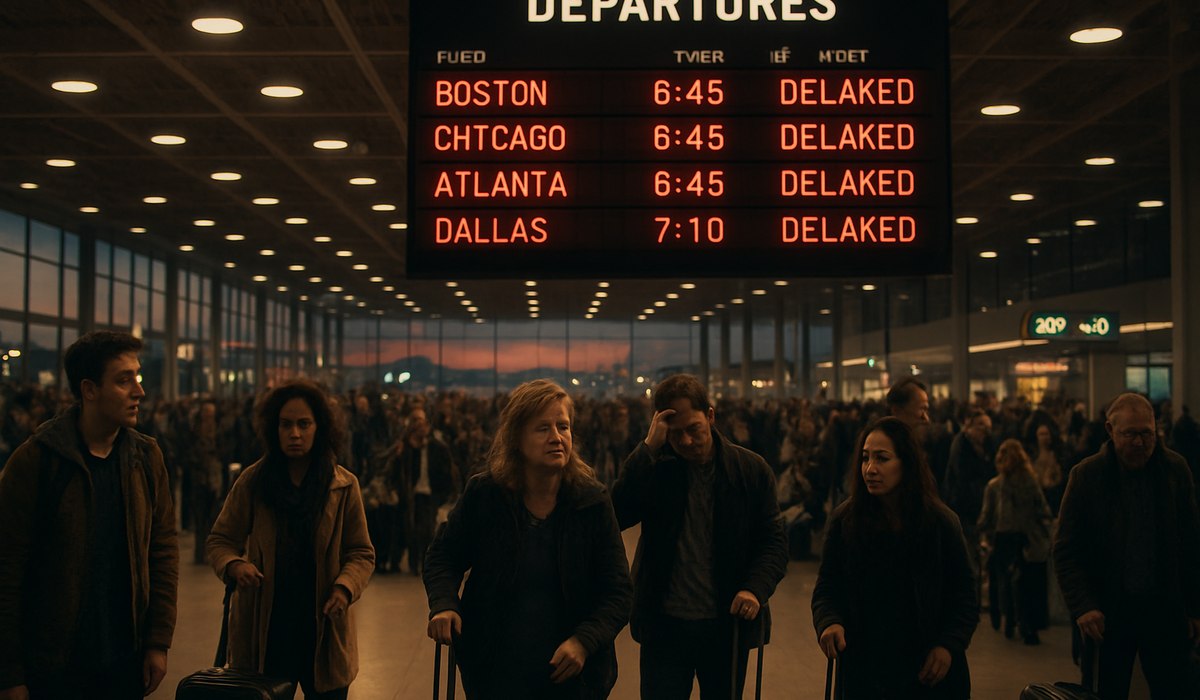
Image generated by AI
Breaking: Vegas Flight Chaos Engulfs Harry Reid International Airport
Harry Reid International Airport in Las Vegas ground to a standstill on April 11, 2026, with more than 250 flights delayed and multiple cancellations leaving thousands of passengers stranded across terminals. The disruption marks one of the most severe operational crises at the nation's largest leisure travel hub, rippling through major routes connecting Las Vegas to key U.S. and Canadian destinations. This latest surge in vegas flight chaos reflects a cascading nationwide aviation disruption wave that has stressed airport capacity and crew scheduling across North America.
Unprecedented Disruption at Las Vegas Hub
Harry Reid International Airport, one of America's busiest airports serving the Las Vegas Strip and surrounding region, recorded approximately 251 delayed departures throughout April 11, alongside at least two flight cancellations. This represents a dramatic spike above typical operational norms, placing Las Vegas among the most disrupted U.S. airports during the broader national aviation crisis unfolding across April 2026.
The scale of vegas flight chaos at Harry Reid underscores the airport's vulnerability to network-wide pressures. With hundreds of passengers occupying departure lounges and gate assignments changing repeatedly, the airport's tightly synchronized schedule collapsed under the strain. Both domestic and international flights experienced delays, highlighting Harry Reid's critical role connecting visitors to casino properties, convention centers, and onward destinations.
Travel tracking platforms monitoring real-time flight data documented the cascading impact throughout the day. Aircraft arriving late into Las Vegas squeezed turnaround times, eliminating buffers that normally absorb routine congestion. As crew duty limits approached and maintenance windows shifted, additional departures faced pushback delays, creating a domino effect that extended into evening operations.
Ripple Effects Across U.S. and Canadian Routes
The flight delays originating at Harry Reid International spread across North America's most critical air corridors. Services to Los Angeles, Denver, Chicago, Toronto, and New York-area airports all experienced extended hold times as Las Vegas disruptions propagated downstream.
Short- and medium-haul domestic routes bore the heaviest burden, since even single-hour delays on these shorter flights trigger cascade effects at connection points. Travelers with tight itineraries heading to Denver or Los Angeles faced extended airport waits as departure times shifted multiple hours. Cross-border services to Canada added complexity, with international coordination challenges compounding the operational strain.
Long-haul passengers using Las Vegas as a one-stop connection faced jeopardy to their onward journeys. When feeder flights slip by ninety minutes or more, long-haul departures depart before connecting passengers arrive, forcing costly last-minute rebookings or missed travel entirely. Airlines initially committed to operating most scheduled flights, but reduced network resilience meant fewer options for accommodating schedule changes.
Crew Schedules and Airspace Congestion Blamed
Industry analysts pinpoint crew scheduling constraints and congested airspace as primary culprits behind the sustained vegas flight chaos. With aircraft utilization running at high levels across the U.S. network, spare crew members and backup aircraft are scarce. When a major airport like Harry Reid experiences delays, crew members quickly approach federally mandated duty-time limits, preventing reassignment to other flights.
Airspace congestion around Las Vegas adds another compounding factor. The airport's location within a complex system of restricted airspace serving military installations creates inherent capacity ceilings. When demand spikes during peak travel periods—like spring break season—controllers manage flow by spacing departures further apart, extending ground delays.
Weather patterns across the western United States during April 2026 contributed to system-wide strain. Thunderstorm activity near major hubs diverted traffic toward alternative routes, concentrating departures at Harry Reid during peak hours. This confluence of crew exhaustion, airspace limits, and weather diversion created a perfect storm for flight cancellations and extended waits.
What Travelers Should Know Now
Passengers affected by vegas flight chaos at Harry Reid International should take immediate action to protect their travel plans. Use real-time flight tracking tools to monitor schedule changes rather than relying on outdated airline communications. Airlines prioritize digital rebooking through mobile apps, reducing wait times compared to crowded ticket counters.
Check your airline's policy on rebooking to earlier or alternative flights at no additional charge—this applies to delays caused by airline operational issues, not weather. Document all delay times and expenses for potential compensation claims under Department of Transportation regulations. Consider purchasing trip insurance for future travel to protect against similar disruptions.
For current travelers at Harry Reid, request meal vouchers for delays exceeding three hours and hotel accommodations if overnight delays occur. Airlines often waive these without customers asking, but you must request them explicitly. Remain flexible on routing; accepting a connection through a different hub may get you to your destination faster than waiting for your original flight.
Traveler Action Checklist
- Check FlightAware for real-time flight status and departure time updates
- Contact your airline via mobile app or website rather than phone lines to secure rebooking options
- Document delay duration and request written confirmation of airline-caused disruption
- Request meal vouchers for delays over three hours and hotel accommodations for overnight delays
- Take photos of departure boards showing delay times for compensation documentation
- Check DOT regulations at US DOT Consumer Protection regarding your rights
- File compensation claims within the timeframe specified by your airline's policy
- Monitor weather and airspace congestion through FAA Flight Information for secondary flight changes
- Follow your airline's official social media for real-time operational updates
- Verify rebooking confirmations before leaving the airport or closing the app
Key Impact Data
| Metric | Details |
|---|---|
| Total Delayed Flights | 251+ departures at Harry Reid International Airport |
| Flight Cancellations | Minimum 2 confirmed cancellations on April 11, 2026 |
| Primary Airports Affected | Los Angeles, Denver, Chicago, Toronto, New York-area hubs |
| Delay Duration | Multiple flights shifted 90+ minutes; some extended to 4+ hours |
| Passenger Impact | Thousands stranded; cascading missed connections at downstream hubs |
| System-Wide Context | Part of nationwide disruption affecting Atlanta, Houston, New York, Los Angeles |
| Root Causes | Crew scheduling constraints, airspace congestion, high spring demand, weather diversion |
| Network Resilience | Minimal spare aircraft and crews amplified delay cascade effects |
What This Means for Travelers
The unprecedented vegas flight chaos on April 11 reveals systemic vulnerabilities in North American aviation capacity during peak demand periods. Airlines operating with minimal spare aircraft have reduced flexibility to manage disruptions, meaning even routine delays cascade into major schedule collapses.
Business travelers should build twelve-hour buffers into tight connection windows when Las Vegas figures into their itinerary. Families planning Las Vegas vacations should book flights with at least two-hour layover windows domestically and four hours internationally. Consider flying on less popular day-of-week departures (typically Tuesday, Wednesday, or Saturday) to access more flexible crew scheduling.
The FAA continues managing national airspace to reduce congestion, but capacity ceilings near major airports like Las Vegas remain structural constraints. Future disruptions will likely occur during spring and summer peak seasons. Purchase trip insurance, monitor FAA alerts, and maintain flexibility in booking to withstand similar disruptions affecting your travel plans.
FAQ
Q: What caused vegas flight chaos at Harry Reid Airport on April 11, 2026?
Crew scheduling limits, air
Disclaimer
This article is for informational and educational purposes only. It does not constitute legal, financial, or professional advice. While we strive to provide accurate and up-to-date information, travel policies, regulations, and conditions change rapidly. Always verify information with official sources before making travel decisions. Nomad Lawyer makes no representations about the accuracy, reliability, completeness, or suitability of the information provided. Readers should consult qualified professionals for advice specific to their circumstances. The views expressed in this article are those of the author and do not necessarily reflect the views of Nomad Lawyer.
Kunal K Choudhary
Co-Founder & Contributor
A passionate traveller and tech enthusiast. Kunal contributes to the vision and growth of Nomad Lawyer, bringing fresh perspectives and driving the community forward.
Learn more about our team →