
Ontario and Miami Ignite America’s Explosive Sports Tourism Race as Billion-Dollar Venues Set to Reshape Travel in 2026
Ontario and Miami Ignite America’s Explosive Sports Tourism Race as Billion-Dollar Venues Set to Reshape Travel in 2026. Latest travel news, updates, and expert analysis.

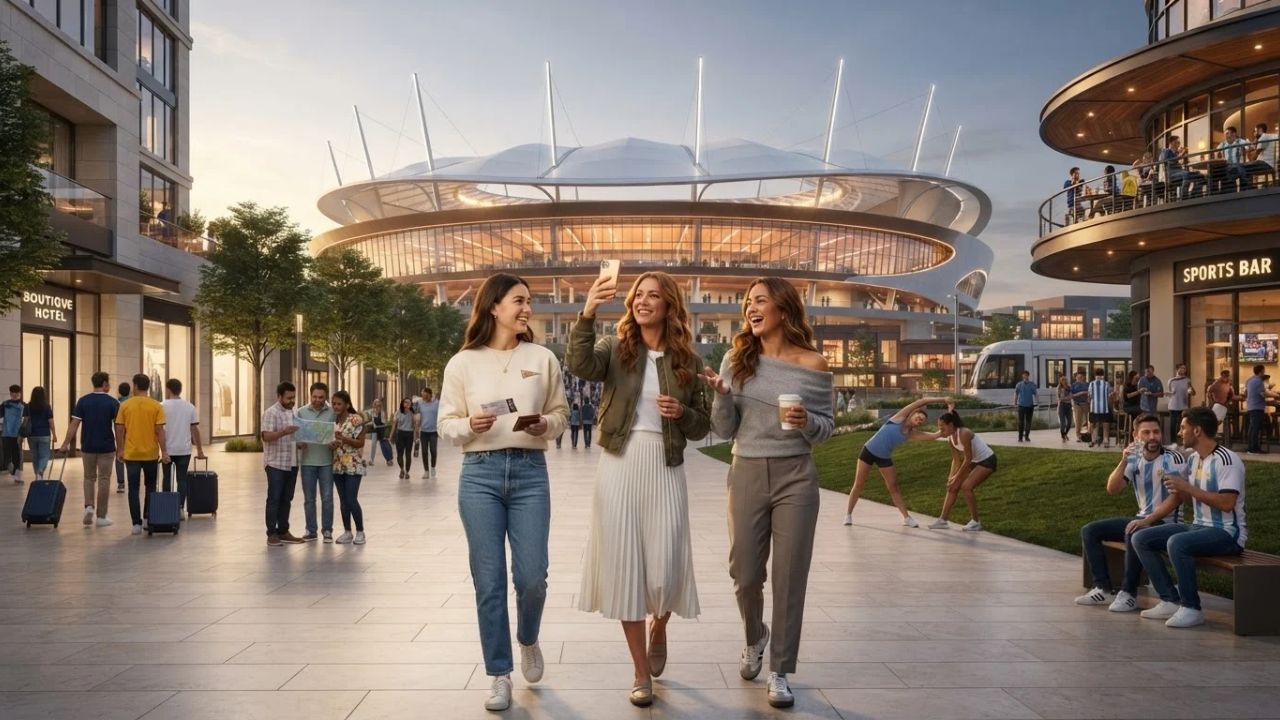
Image generated by AI
The era of the isolated concrete arena that sits vacant between match days has vanished, superseded by massive mixed-use developments like the $1 billion Miami Freedom Park and Southern California’s sprawling Ontario Sports Empire opening in late fall 2026. United States metropolitan areas and secondary regional centers are pouring historic capital into integrated athletic entertainment hubs designed to generate steady traveler spending 365 days a year. Spurred by preparations for the 2026 FIFA World Cup, cities are no longer simply hosting occasional weekend tournaments; they are designing full-scale leisure ecosystems where sports, hospitality, dining, and cutting-edge digital shared reality converge.
Beyond Match Day: The Billion-Dollar Pivot to 365-Day Sports Destinations
The American visitor economy is experiencing a fundamental realignment as athletic infrastructure evolves from basic civic recreation into a primary driver of domestic and international tourism. Data tracked across national operators, including The Sports Facilities Companies, shows that communities are moving aggressively away from single-sport facilities toward comprehensive, multi-venue sports districts. Rather than relying on transient gate receipts, these destinations are engineered to attract youth travel leagues, adult amateur circuits, corporate delegations, and global spectators whose spending sustains surrounding hotels, restaurants, and retail corridors year-round.
The most prominent urban anchor in this national wave is unfolding in South Florida. Miami is advancing the $1 billion Miami Freedom Park mixed-use development, anchored by a state-of-the-art soccer stadium and surrounded by public parkland, commercial entertainment spaces, hotels, and dining pavilions. For a destination that already commands international acclaim through Greater Miami Convention & Visitors Bureau campaigns, Freedom Park expands Miami’s visitor footprint away from coastal beachfronts and into an active sports-centered urban district.
Concurrently on the West Coast, Ontario, California, is preparing for the late fall 2026 debut of the Ontario Sports Empire. Situated in the rapidly expanding Inland Empire, this multi-field athletic complex represents a massive capital commitment to tournament tourism promoted via Visit California. Designed to host regional championships, national youth showcases, and traveling sports academies, the complex provides Southern California with dedicated infrastructure capable of lodging, feeding, and entertaining traveling athletic families without requiring them to navigate coastal traffic corridors.
This nationwide infrastructure race is accelerated by the 2026 FIFA World Cup, with American host cities—including Atlanta, Kansas City, Dallas, Houston, Miami, and the New York/New Jersey metropolitan area—utilizing tournament preparations to upgrade airport transit links, expand hotel capacity, and revitalize downtown entertainment corridors. The legacy of these investments extends far beyond the final championship match, leaving each host with modernized transit and hospitality assets engineered to capture major global events for decades to come.
Regional Innovators and Immersive Tech: What Makes Each Hub Distinct
The sports tourism surge is not confined to premier World Cup host metropolises; it is fundamentally transforming mid-tier and regional American cities through distinct developmental models.
- Paducah, Kentucky: Demonstrating the power of regional sports tourism, the city marked an economic milestone with the grand opening of the Paducah Sports Park. By establishing modern outdoor tournament diamonds and multi-sport surfaces, Paducah has positioned itself as an accessible gathering point for youth travel leagues across the mid-South, funneling hotel occupancy and dining traffic into historic Ohio River communities.
- Lockport, New York: In western New York, construction has advanced on the New Kenan Civic Center, addressing severe regional demand for flexible indoor competition space. In northern climates where winter blizzards traditionally shutter amateur leagues for months, climate-controlled multi-use fieldhouses ensure uninterrupted athletic schedules, insulating regional hospitality businesses from harsh seasonal revenue drops.
- Cleveland, Ohio: Taking an innovative technological approach, Cleveland has broken ground on Cosm Cleveland, an immersive shared-reality venue. Utilizing massive wraparound LED displays, spatial audio, and luxury culinary service, Cosm allows patrons to experience live premier sports events as if sitting courtside or on the pitch, blurring the boundary between live attendance and immersive media.
- Ontario and Miami: In Ontario, the sheer spatial scale of the Sports Empire caters to weekend tournament caravans of thousands of traveling families. In contrast, Miami Freedom Park represents high-density urban integration, linking mass transit, international soccer heritage, and corporate hospitality within minutes of Miami International Airport.
Visitor Insider Tips: Navigating the New Sports Districts
- Transit and Arrival Timing: When heading to major sporting events in South Florida, bypass congested expressways like the Palmetto (SR 826) and Dolphin (SR 836). Utilize regional passenger rail networks such as Brightline to connect between downtown Miami, Fort Lauderdale, and West Palm Beach, or board the Metrorail Orange Line directly to the airport junction. In Ontario, arrive via Ontario International Airport (ONT) rather than Los Angeles International (LAX) to avoid two-hour highway gridlocks.
- Where to Base Yourself: For events at Miami Freedom Park, consider basing yourself in Coral Gables or Coconut Grove for quiet tree-lined streets, independent bistros, and walkable historic avenues, rather than staying trapped in airport hotel clusters. When traveling to tournaments in Ontario, seek accommodations in neighboring Rancho Cucamonga near Victoria Gardens to access walkable open-air shopping and dining.
- Local Culinary Traditions: In Miami, celebrate post-match victories with authentic pressed Cuban sandwiches (cubanos) and hot guava pastries (pastelitos) from neighborhood bakeries in Little Havana. In Southern California’s Inland Empire, explore regional citrus heritage and Mexican-American culinary institutions along Route 66, sampling slow-cooked carnitas and hand-pressed corn tortillas. In Cleveland, visit the historic West Side Market in Ohio City for artisanal bratwurst and pierogis before evening entertainment events.
- Booking Tournament Travel Windows: For youth tournament organizers and traveling parents heading to regional complexes like Paducah or Lockport, reserve hotel room blocks five to six months in advance. Regional hotel supply tightens rapidly during multi-state championship weekends, pushing late bookers to rural properties thirty miles away.
Urban Density, Environmental Impact, and Neighborhood Preservation
The rapid expansion of billion-dollar athletic districts brings critical urban planning and environmental considerations to the forefront. Large-scale sports venues demand extensive land footprints, and historical stadium models were notorious for generating vast asphalt heat islands, surface runoff, and game-day traffic paralysis in surrounding residential neighborhoods.
Modern 2026 developments are taking a more balanced approach. Miami Freedom Park integrates public green parklands, pedestrian greenways, and water-retention features designed to preserve urban tree canopies and manage tropical stormwater. In Ontario, the athletic complex utilizes native drought-tolerant landscaping and reclaimed water systems to sustain expansive turf fields in an arid interior basin.
Equally vital is transit-oriented development. By positioning new venues along active commuter rail corridors and multimodal bus pathways, cities are encouraging spectators to leave personal vehicles behind. When planned conscientiously with input from neighborhood residents, sports districts can avoid displacing longstanding communities, instead generating sustained youth athletic programming, civic open spaces, and stable union hospitality employment throughout the entire year.
FAQ: Navigating the American Sports Tourism Surge 2026
What makes 2026 a landmark year for sports-related travel across the United States?
The co-hosting of the 2026 FIFA World Cup alongside the debut of multi-use mega-complexes like Miami Freedom Park and the Ontario Sports Empire is driving record capital into transit, hotels, and year-round tournament infrastructure.
How can traveling tournament families avoid high hotel surcharges?
Book through official tournament housing blocks well in advance, consider staying in adjacent suburban communities connected by regional rail, and travel during shoulder weekdays when youth competition schedules permit.
What is the advantage of indoor venues like the New Kenan Civic Center in Lockport?
Climate-controlled indoor facilities allow winter tournaments to proceed regardless of snowstorms or extreme temperatures, ensuring consistent competition schedules for traveling teams and reliable revenue for local hotels.
Do venues like Cosm Cleveland require purchasing tickets to live matches?
No. Cosm operates as an independent shared-reality entertainment venue where visitors purchase admission to immersive, panoramic broadcasts of global sporting events paired with dining and hospitality.
The future of American travel belongs not to isolated concrete stadiums, but to vibrant community districts where the passion of the game flows directly into the life of the city.
Related Travel Guides
- São Paulo, Bogotá and Lima Show How Gastronomy Is Becoming a Major Competitive Force in Latin American Tourism
- Colombia Travel Experiences Are Captivating Modern Travelers Worldwide With Soul-Stirring Biodiversity And Unmatched Cultural Warmth
- Cartagena and Florianópolis Lead the Americas' Fastest-Growing Tourist Cities as Secondary Metropoles Reshape Regional Travel in 2026
Disclaimer
This article is for informational and educational purposes only. It does not constitute legal, financial, or professional advice. While we strive to provide accurate and up-to-date information, travel policies, regulations, and conditions change rapidly. Always verify information with official sources before making travel decisions. Nomad Lawyer makes no representations about the accuracy, reliability, completeness, or suitability of the information provided. Readers should consult qualified professionals for advice specific to their circumstances. The views expressed in this article are those of the author and do not necessarily reflect the views of Nomad Lawyer.
Raushan Kumar
Founder & Lead Developer
Full-stack developer with 11+ years of experience and a passionate traveller. Raushan built Nomad Lawyer from the ground up with a vision to create the best travel and law experience on the web.
Learn more about our team →