
India's Rising Outbound Travel Demand Fuels Historic Tourism Growth in Oman
Oman's tourism sector is witnessing a major transformation as rising outbound travel demand from India generates record-breaking arrivals of 381,305 visitors in the first half of 2026.

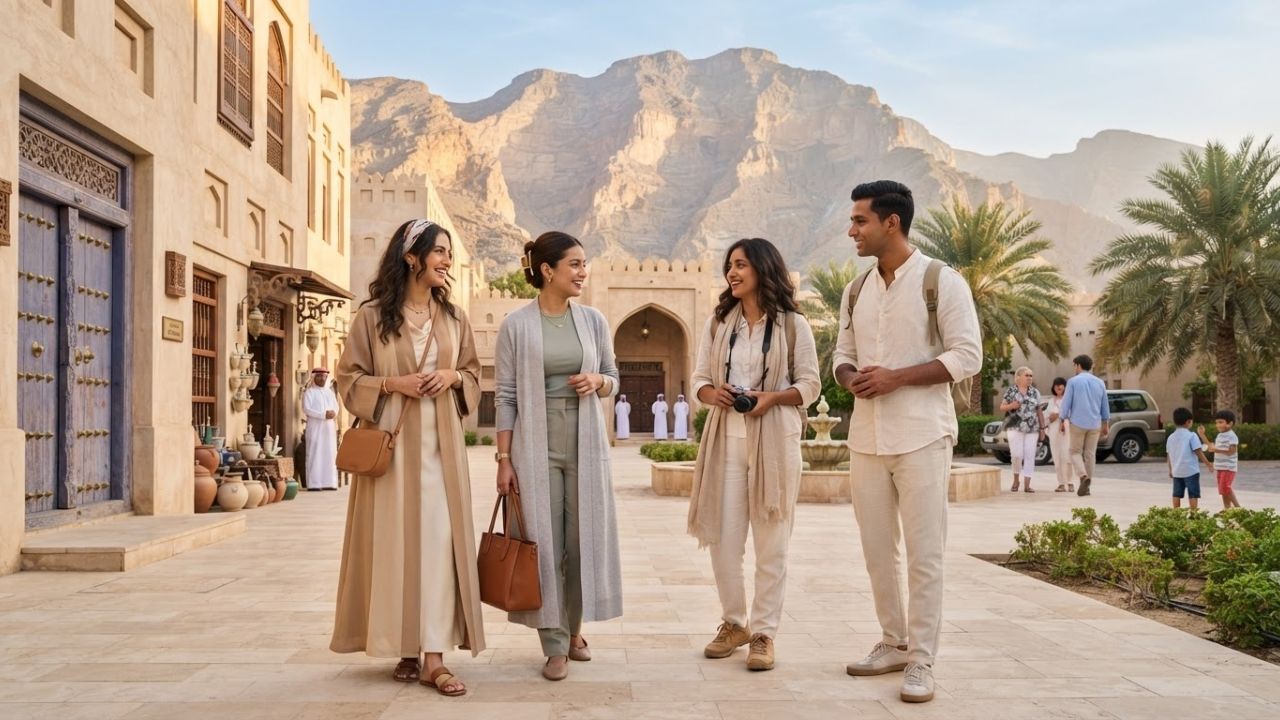
Image generated by AI
Oman's inbound travel sector is experiencing a historic expansion, welcoming a record 381,305 Indian visitors between January and June 2026. By strengthening partnerships with Indian tour operators and introducing modern lifestyle attractions, the Sultanate is positioning itself as a primary year-round destination for Indian families, luxury travelers, and adventure seekers.
India Emerges as the Anchor Market for Omani Tourism
Oman's international travel sector has entered a new phase of growth, with India serving as one of the primary drivers of inbound arrivals. Between January and June 2026, the Sultanate welcomed 381,305 Indian visitors, reflecting strong demand from one of the world's most dynamic outbound travel markets. May 2026 recorded a peak of 81,797 Indian visitors, establishing a monthly record that highlights the shifting travel patterns of Indian tourists.
These statistics reflect the successful implementation of visa-on-arrival upgrades and streamlined electronic application systems designed specifically for Indian passport holders. By simplifying travel logistics, Oman is encouraging spontaneous weekend breaks and short-notice business travel from major Indian cities. Rather than viewing the country as a short-term stopover, Indian travelers are increasingly selecting the Sultanate for extended vacations, luxury stays, and family holidays. The Ministry of Heritage and Tourism is capitalizing on this demand by expanding air connectivity and promoting customized itineraries that align with the interests of Indian travelers. By offering a diverse mix of ancient heritage, modern luxury, and outdoor recreation, the destination has successfully converted high outbound demand from India into sustained local revenue.
Geopolitical Resilience and Inward Tourism Development
Despite continuing geopolitical uncertainty in West Asia, Oman remains highly confident about its tourism outlook. The Sultanate has maintained a reputation as one of the safest and most stable destinations in the region, which is a critical factor for families and corporate groups planning international travel. Instead of reacting to short-term regional trends, Oman is investing in the public safety, modern transport routes, and hospitality infrastructure necessary to support year-round arrivals.
Additionally, the national government has prioritized maritime safety and airport security protocols, ensuring that arrivals experience a seamless transition upon landing in Muscat or Salalah. This commitment to security provides international aviation partners with the assurance needed to maintain and expand flight operations. The Ministry of Heritage and Tourism continues to coordinate with airline partners, international travel agencies, and regional conservation bodies to ensure that tourism expansion is managed sustainably. This long-term focus has helped the country maintain visitor confidence, with destination managers reporting strong booking numbers across both coastal resorts and mountain retreats. By demonstrating operational stability, Oman is proving that targeted infrastructure development and transparent communication can mitigate broader regional risks.
Cultural Ties and Maritime Trade Heritage
One of Oman's strongest advantages in attracting Indian travelers is the centuries-old relationship between both nations. India and Oman have shared maritime trade routes, cultural exchanges, and economic partnerships for generations. These historical connections continue to influence modern travel patterns, creating a welcoming and familiar environment for Indian tourists.
Indian visitors frequently note that the Sultanate offers a unique blend of Arabian hospitality and cultural familiarity. Indian cuisine is widely available across major cities, and the Omani people’s warm hospitality helps travelers feel at home. This shared cultural heritage provides Oman with a distinct advantage in the highly competitive global travel market, allowing the country to build deep connections with multi-generational families and luxury travelers who seek authentic cultural experiences.
Travel Partnerships and the Legacy of Focus Oman 2025
To accelerate visitor growth, Omani tourism authorities are actively collaborating with India’s travel industry. This cooperation involves targeted destination training programs, marketing campaigns, and airline partnerships designed to educate Indian travel agents about Oman's diverse travel segments.
A major milestone in this collaborative effort was the Focus Oman 2025 initiative, which brought together more than 150 travel industry stakeholders from India. This event enabled Omani tourism operators, hotels, and airlines to establish direct partnerships with Indian travel agencies, encouraging them to design more diverse itineraries. By focusing on B2B partnerships rather than generic advertising, Oman is building a resilient distribution network that will continue to drive visitor growth for years to come.
Modern Family Attractions: Snow Oman and the Changing Visitor Demographic
Oman is also changing global destination perceptions by introducing modern family entertainment options alongside its historic landmarks. A prime example is Snow Oman, a major indoor snow park that welcomes approximately 350,000 guests annually. The attraction features indoor snow sports, family entertainment zones, and a penguin colony containing Gentoo and King penguins.
Snow Oman’s design has received international recognition, including the MENALAC Award for Best Design for a Leisure & Entertainment Facility. For Indian families and younger travelers, modern attractions like Snow Oman add more reasons to visit and extend their stay. By combining these contemporary entertainment facilities with traditional sights like the Nizwa Fort and the desert dunes of Wahiba Sands, Oman offers a complete travel package that appeals to diverse age groups.
Visitor Guide: Local Dining, Cultural Etiquette, and Insider Tips
Exploring Oman's diverse terrain—ranging from coastal towns to high-altitude mountain ranges—requires a blend of local insight and respect for Omani traditions. By observing local protocols and planning around seasonal windows, travelers can enjoy an authentic and respectful journey.
The best weather window to visit Oman is from October to April, when daytime temperatures range from a comfortable 20°C to 30°C, making outdoor activities highly enjoyable. For a unique summer experience, consider visiting Salalah in the southern Dhofar region during the Khareef (monsoon) season from June to September, when the desert transformed into a lush green oasis.
When visiting the Sultan Qaboos Grand Mosque in Muscat, visitors must follow a strict dress code. Women must cover their arms to the wrists and legs to the ankles, and wear a headscarf that fully covers their hair. Men should wear long trousers and shirts with sleeves. Keep voices low and avoid taking photos of worshipers. Modest dress is also expected in public markets like the Mutrah Souq in Muscat. While exploring the souq, bargain politely for frankincense, silver jewelry, and traditional textiles.
To experience authentic Omani hospitality, try Shuwa, the national dish of marinated lamb slow-cooked in an underground sand oven for up to 48 hours, served with fragrant Qabuli rice. Always accept Kahwa (traditional cardamom-flavored coffee) when offered by local hosts, which is politely served alongside fresh dates and Omani Halwa, a sweet gelatinous confection made from saffron, rose water, and cardamom. When visiting the historic Nizwa Fort, plan to arrive early on Friday mornings to witness the traditional livestock market, where local traders auction goats and cattle in a lively circle.
Future Outlook: Oman's Vision 2040 and Strategic Market Diversification
The rising number of Indian visitor arrivals represents a major milestone in Oman's Vision 2040 tourism strategy. The Sultanate is working to diversify its inbound travel mix, reducing dependency on European winter charters by building stronger connections with growing Asian markets.
Ultimately, the long-term success of Oman's tourism sector depends on balancing modern entertainment developments with the conservation of its natural and cultural heritage. By improving flight frequencies, expanding sustainable luxury resorts, and cultivating direct partnerships with travel operators in India, the Sultanate is establishing a secure and sustainable framework for tourism growth, proving that destination success lies in creating meaningful cultural connections.
Related Travel Guides
Disclaimer
This article is for informational and educational purposes only. It does not constitute legal, financial, or professional advice. While we strive to provide accurate and up-to-date information, travel policies, regulations, and conditions change rapidly. Always verify information with official sources before making travel decisions. Nomad Lawyer makes no representations about the accuracy, reliability, completeness, or suitability of the information provided. Readers should consult qualified professionals for advice specific to their circumstances. The views expressed in this article are those of the author and do not necessarily reflect the views of Nomad Lawyer.
Preeti Gunjan
Contributor & Community Manager
A passionate traveller and community builder. Preeti helps grow the Nomad Lawyer community, fostering engagement and bringing the reader experience to life.
Learn more about our team →