
Oman Launches Direct Flights to Singapore, Sochi, and Medan as Vision 2040 Tourism Push Targets Russia, Southeast Asia, and India in 2026
Oman's Ministry of Heritage and Tourism debuts new nonstop routes from Muscat to Singapore, Sochi, and Medan while expanding overseas promotion across six priority markets to diversify visitor sources under Vision 2040.

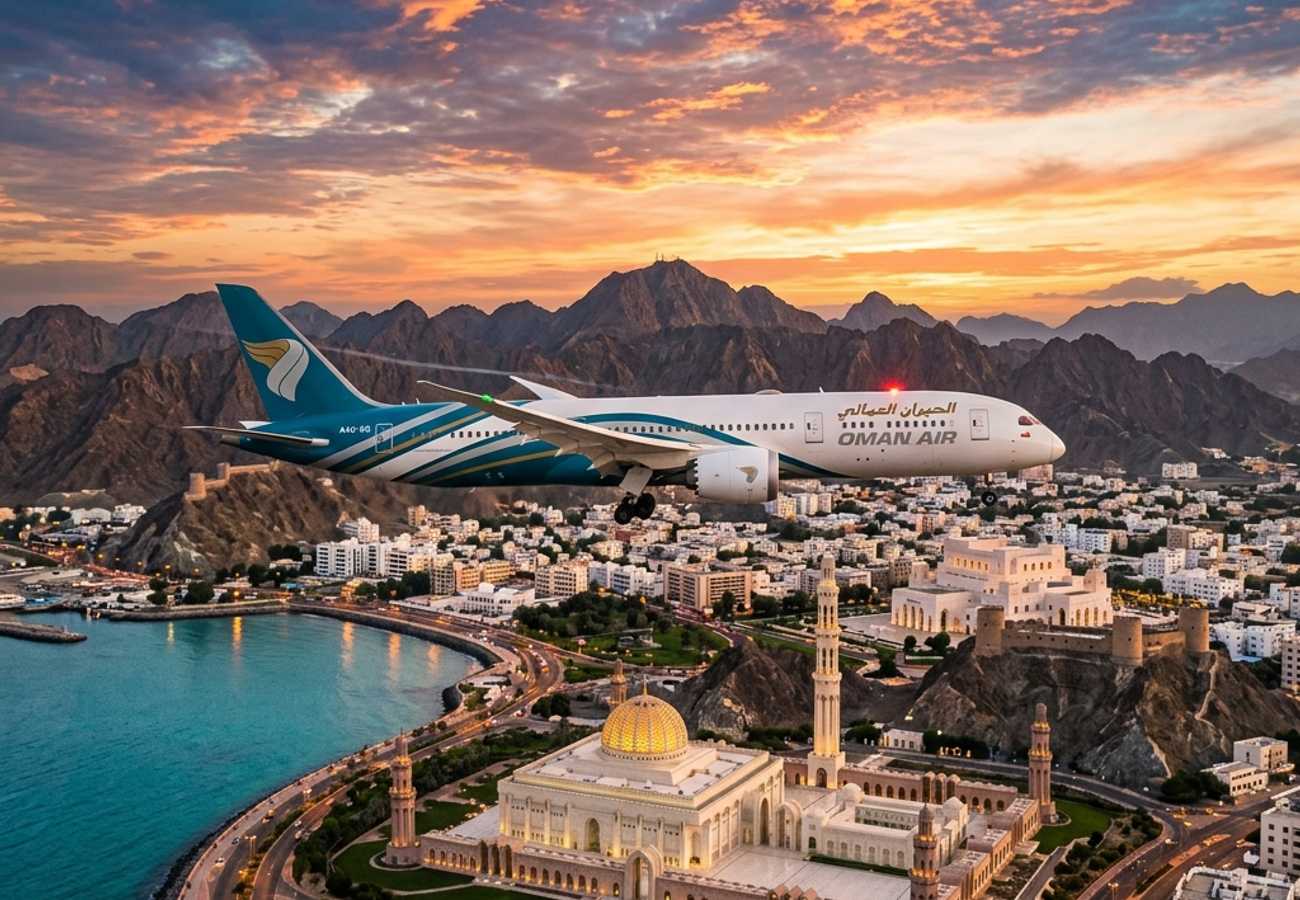
Image generated by AI
Oman is betting big on geographic diversification. The Sultanate's Ministry of Heritage and Tourism has launched new nonstop flights from Muscat to Singapore, Sochi in southern Russia, and Medan in Indonesia, all operational since the start of July 2026. The routes form the backbone of a wider strategy that pairs aviation expansion with intensified destination marketing across Southeast Asia, Russia, and India — markets that have already shown explosive visitor growth to Oman in recent months.
The move is not simply about adding flight frequencies. Oman is simultaneously building a dedicated tourism representation office covering Singapore, Malaysia, Indonesia, and Thailand, engaging media organizations, and coordinating with aviation partners to ensure that improved accessibility translates into actual arrivals. The integrated approach directly supports Oman Vision 2040, the national framework aimed at reducing economic dependence on oil by growing tourism as a sustainable revenue pillar.
New Routes and What They Mean for Travelers
The three new nonstop connections — Muscat to Singapore, Muscat to Sochi, and Muscat to Medan — became operational at the beginning of July. Developed through coordination between the Ministry of Heritage and Tourism and aviation sector partners, these routes target traveler segments that align with Oman's tourism strengths.
Singaporean and Indonesian passengers now reach Muscat without transiting through multiple hubs, making Oman viable for shorter holidays, business trips, and multi-country Gulf itineraries. Russian travelers gain a direct pathway to Oman's warm-weather coastal and nature-based attractions, supporting year-round travel rather than concentrated seasonal peaks.
The practical impact is significant. Direct flights reduce total travel time, eliminate layover complexity, and lower the psychological barrier for travelers who might otherwise skip a destination requiring two or three connections. For Oman, this means capturing demand from markets that were previously underserved by its aviation network.
Why Southeast Asia and Russia Matter
Oman's market research identified these regions as high-potential based on traveler demand, visitor preferences, and long-term growth trajectory. The data backs that assessment.
Recent visitor arrival figures from priority markets reveal striking growth rates:
- Russia: 147% increase — Russian outbound travelers have shown sustained appetite for warm-weather destinations offering outdoor experiences and coastal tourism, making Oman's climate and natural landscape a natural fit.
- Indonesia: 61% increase — Southeast Asian travelers increasingly seek cultural tourism, family holidays, luxury experiences, and halal tourism, segments where Oman can compete effectively.
- Singapore: 26% increase — Singaporean visitors represent strong two-way leisure and business travel potential, particularly given Singapore's status as a major financial and corporate hub.
By establishing a regional tourism representation office earlier this year covering Singapore, Malaysia, Indonesia, and Thailand, Oman created a permanent promotional presence in one of the world's fastest-growing outbound travel regions. The Ministry has already hosted media engagements with leading Singapore-based news organizations to coincide with Oman Air's launch of the Muscat-Singapore route.
India's Indirect but Significant Role
India is not among the newly launched direct routes, but it remains one of Oman's most important neighboring tourism markets. The broader regional connectivity improvements and expanded tourism promotion create indirect benefits for Indian travelers through enhanced Gulf-wide network connections and multi-destination travel options. India's inclusion in the strategy reflects its status as a regional powerhouse whose outbound travel volume complements Oman's diversification goals.
The Aviation-Tourism Integration Model
What sets Oman's approach apart is the deliberate coupling of aviation access with destination marketing. Many destinations expand flight networks without parallel investment in promoting awareness among travelers in those source markets. Oman is avoiding that gap by ensuring that travel agencies, media organizations, and tourism stakeholders in each priority market receive targeted engagement.
This model recognizes that a direct flight alone does not guarantee sustained demand. Travelers need to know what Oman offers — from UNESCO-recognized heritage sites and mountain landscapes to desert adventures, marine tourism, and cultural festivals. The Ministry's expanded overseas representation network is designed to deliver that information through tourism campaigns, digital platforms, travel fairs, and media partnerships.
For airlines, the new routes create opportunities to stimulate demand while improving passenger choice across Asia and Eurasia. Airport operators benefit from higher passenger volumes and stronger commercial activity. If demand continues to grow, airlines may evaluate additional frequencies or entirely new routes from these markets.
Economic Ripple Effects
Tourism is a central pillar of Oman's economic diversification agenda under Vision 2040. Increased international arrivals generate cascading benefits across multiple sectors:
- Hotels experience higher occupancy levels and longer average stays
- Restaurants welcome additional international guests with diverse spending patterns
- Tour operators gain opportunities to develop new itineraries incorporating Oman's varied attractions
- Ground transportation providers see increased passenger demand for transfers and excursions
- Retail businesses benefit from visitor spending on souvenirs, local products, and services
- Cultural attractions, museums, heritage sites, and adventure tourism operators access larger international audiences
The expansion also supports employment across tourism-related sectors while encouraging private investment in hospitality infrastructure, visitor services, and tourism experiences. As visitor markets become geographically diversified, Oman builds resilience against fluctuations that might affect any single source market — a lesson many tourism-dependent economies learned during recent global disruptions.
Countries Aligning with the Initiative
The strategy involves multiple countries playing distinct roles:
| Country | Role in Initiative | Tourism Benefit | Connectivity Impact |
|---|---|---|---|
| Oman | Destination leader | Diversified visitor markets | Expanded international air network |
| Singapore | New direct flight destination | Higher two-way leisure and business travel | Nonstop connectivity |
| Indonesia | New direct route to Medan | Growth in Southeast Asian arrivals | Easier access to Oman |
| Russia | New Sochi connection | Increased Russian visitor arrivals | Expanded seasonal connectivity |
| Malaysia | Tourism representation market | Greater destination awareness | Supports future travel demand |
| Thailand | Tourism promotion market | Enhanced marketing outreach | Strengthens regional links |
| India | Important regional tourism market | Benefits from wider Gulf connectivity | Supports multi-destination travel |
Recent Visitor Growth from Priority Markets
| Market | Reported Growth in Visitor Arrivals |
|---|---|
| Russia | 147% |
| Indonesia | 61% |
| Singapore | 26% |
Key Takeaways
- Oman launched three new nonstop routes from Muscat to Singapore, Sochi, and Medan, operational since July 2026.
- A dedicated tourism representation office now covers Singapore, Malaysia, Indonesia, and Thailand — Southeast Asia's fastest-growing outbound travel markets.
- Russia recorded 147% visitor growth to Oman, Indonesia 61%, and Singapore 26%, validating the Ministry's market selection.
- The strategy pairs aviation expansion with destination marketing rather than treating them as separate initiatives.
- Oman Vision 2040 frames tourism diversification as a core economic pillar to reduce oil dependence.
- India remains a key regional market benefiting indirectly from broader Gulf connectivity improvements.
FAQ
When did the new direct flights from Muscat begin operating? The nonstop routes to Singapore, Sochi, and Medan became operational at the beginning of July 2026.
Which airline operates the Muscat-Singapore direct route? Oman Air launched the direct flight between Muscat and Singapore as part of this expansion.
What is Oman Vision 2040? It is Oman's national strategic framework aimed at economic diversification, with tourism positioned as a sustainable growth pillar to reduce reliance on oil revenues.
Does the new strategy include direct flights to India? No. India is not among the newly launched routes but remains a priority tourism market benefiting indirectly from broader regional connectivity and promotional efforts.
Which Southeast Asian countries does Oman's tourism representation office cover? The dedicated office serves Singapore, Malaysia, Indonesia, and Thailand.
Oman's bet on integrated aviation-and-marketing strategy could redefine how mid-sized destinations compete for global tourism share in the post-connectivity era.
Related Travel Guides
Disclaimer
This article is for informational and educational purposes only. It does not constitute legal, financial, or professional advice. While we strive to provide accurate and up-to-date information, travel policies, regulations, and conditions change rapidly. Always verify information with official sources before making travel decisions. Nomad Lawyer makes no representations about the accuracy, reliability, completeness, or suitability of the information provided. Readers should consult qualified professionals for advice specific to their circumstances. The views expressed in this article are those of the author and do not necessarily reflect the views of Nomad Lawyer.
Raushan Kumar
Founder & Lead Developer
Full-stack developer with 11+ years of experience and a passionate traveller. Raushan built Nomad Lawyer from the ground up with a vision to create the best travel and law experience on the web.
Learn more about our team →