
Norway Wildfire Crisis Near Drammen Destroys 100 Homes and Disrupts Summer Tourism in 2026
A devastating wildfire near Drammen, Norway, has destroyed over 100 homes and triggered mass evacuations, creating significant safety concerns and travel disruptions for international tourists visiting the region's nature parks.

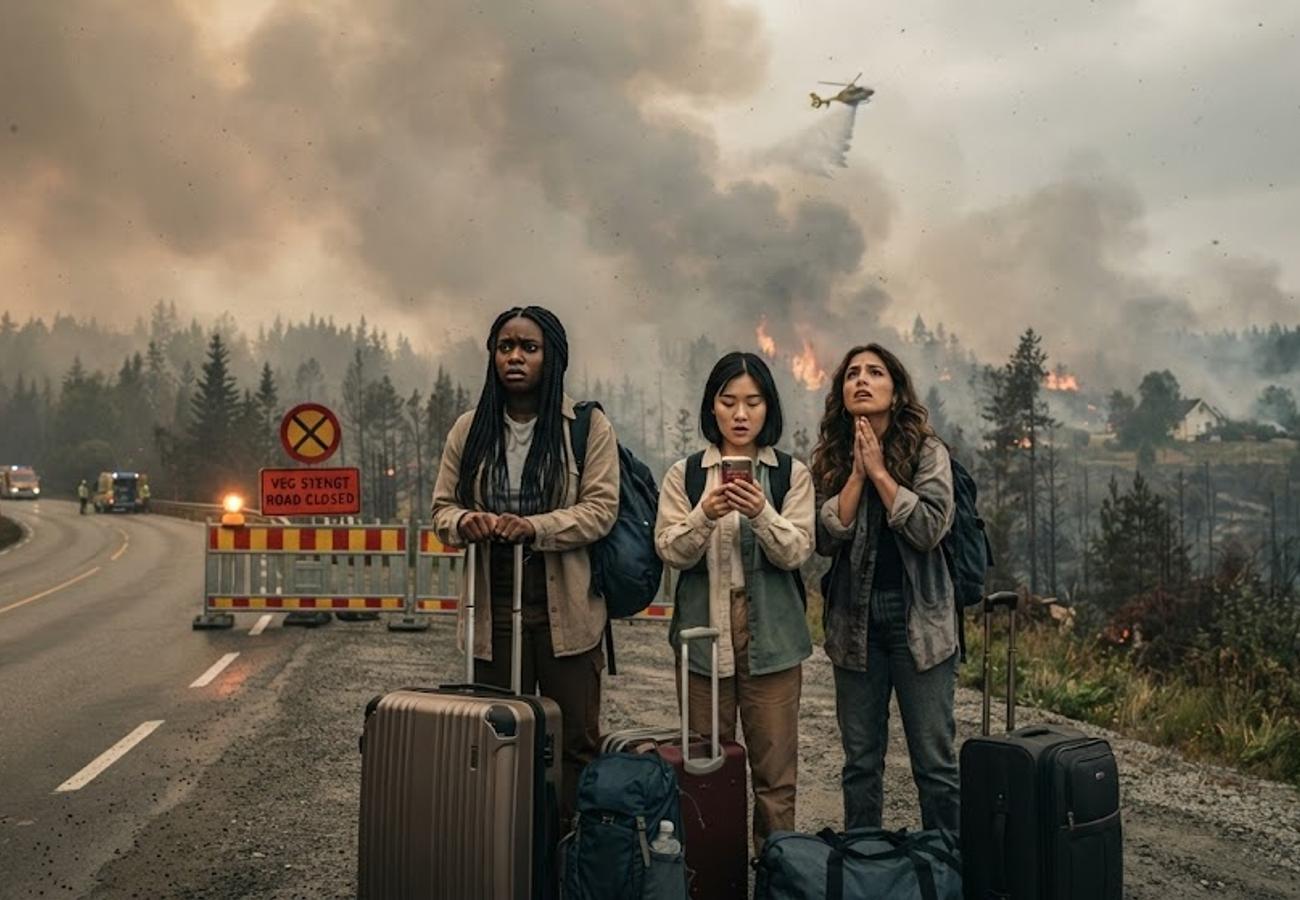
Image generated by AI
[Drammen, July 18, 2026] — A catastrophic wildfire in southern Norway has ignited urgent safety warnings for international travelers as extreme flames consume residential areas and forests. Emergency response teams are currently utilizing helicopters for massive water drops to contain the blaze, which has already destroyed more than 100 homes and forced large-scale evacuations in the region southwest of Oslo.
The disaster strikes during the height of the summer travel season, a period when thousands of global visitors flock to Norway for its iconic fjords, mountain trekking, and wilderness camping. While official government travel advisories have not yet recommended avoiding the country entirely, the scale of the destruction near Drammen is creating immediate logistical hurdles for those exploring the region's natural landscapes.
Emergency Response and Regional Disruptions in Southern Norway
The wildfire's proximity to Drammen has turned a scenic region into an active emergency zone. Industry reports indicate that the fire has rapidly transitioned from forest land into residential neighborhoods, leading to the loss of over 100 properties. This escalation has necessitated the closure of various access points to allow firefighting aircraft and ground crews to operate without interference.
For the international tourist community, the primary risks are no longer just the flames, but the secondary effects of the disaster. Smoke inhalation and poor air quality are becoming prevalent, potentially impacting those with respiratory conditions. Furthermore, the sudden implementation of road closures and restricted access to forest trails is forcing many holidaymakers to abandon their planned itineraries.
According to regional reports, the Norwegian authorities are maintaining a high state of alert. The UK Foreign, Commonwealth and Development Office has specifically urged travelers to adhere strictly to local authority instructions, noting that hot and dry periods in Scandinavia significantly elevate the risk of unpredictable wildfire behavior.
High-Risk Traveler Profiles and Activity Restrictions
The impact of the Drammen blaze is not uniform across all visitor types; certain demographics are facing significantly higher levels of disruption.
Adventure and Wilderness Tourists Norway is a premier global hub for trekking and mountain exploration. Those engaged in remote trail hiking or wilderness expeditions are currently the most vulnerable. Because these travelers often operate far from urban centers, emergency support may be delayed, and the risk of becoming trapped by rapidly shifting fire fronts is a primary concern for rescue officials.
Campers and Motorhome Travelers The "right to roam" culture in Norway encourages independent camping, but the current fire risk has led to strict prohibitions on open flames. Visit Norway has issued reminders for all visitors to remain on marked trails and strictly follow local fire safety regulations to prevent further ignition of dry underbrush.
Cruise and Urban Sightseers While passengers staying in coastal cities or established urban zones are less likely to face direct danger, they are not immune. Smoke plumes can drift into city centers, affecting visibility for sightseeing tours and altering the air quality for excursions into the surrounding countryside.
Families and Elderly Visitors Health officials warn that the heavy smoke generated by the destruction of residential homes and dense forests can cause significant distress for elderly travelers and children, particularly those with pre-existing asthma or lung sensitivities.
Logistics: Smoke, Transport, and Accommodation Pressures
The operational fallout from the wildfire extends beyond the immediate burn zone, affecting the broader infrastructure of southern Norway.
Reduced visibility due to heavy smoke is currently hindering photography, hiking, and long-distance driving. Because of Norway's unique and often singular road networks in rural areas, a single closure near the fire zone can force travelers into lengthy detours, adding hours to planned journeys.
There is also a growing concern regarding lodging. As hundreds of residents are evacuated from their homes near Drammen, local hotels and community centers are being repurposed as temporary shelters. This surge in demand for emergency housing may lead to a shortage of available rooms for tourists, potentially leaving some without planned accommodations during the crisis.
Industry observers emphasize that travel insurance is now a critical requirement. The UK government continues to advise that comprehensive policies covering "unexpected disruptions" and "emergency evacuations" are essential for anyone traveling during these volatile weather patterns.
Maintaining Norway's Status as a Secure Destination
Despite the severity of the current disaster, Norway's overall reputation as a safe destination remains intact. The country's sophisticated emergency infrastructure and rapid deployment of aerial firefighting assets demonstrate a high level of preparedness for natural hazards.
However, this event serves as a stark reminder of the evolving challenges facing nature-based tourism. As climate-driven extreme weather becomes more frequent, the balance between promoting tourism growth and ensuring environmental protection is becoming more precarious.
For the Norwegian tourism sector, the priority is now shifting toward "resilient tourism"—educating visitors on how to enjoy the landscape while remaining flexible and responsive to emergency alerts.
Essential Safety Protocols for Visitors to Norway
To ensure safety during the ongoing wildfire crisis, travelers are urged to adopt the following precautions:
- Monitor Real-Time Alerts: Check official government and emergency service updates before entering any rural or forested area.
- Obey All Cordon Lines: Do not attempt to enter restricted forest zones or bypass police barricades.
- Maintain Itinerary Flexibility: Ensure travel plans allow for sudden route changes or destination pivots.
- Strict Fire Discipline: Avoid all open flames, including campfires and smoking, in high-risk dry zones.
- Avoid Drone Use: Do not fly drones near firefighting operations, as they can obstruct water-dropping helicopters.
- Verify Road Status: Use official transport apps to check for closures before starting long-distance drives.
The situation in southern Norway remains fluid as emergency crews battle to contain the perimeter and protect remaining residential structures.
Related Travel Guides
Disclaimer
This article is for informational and educational purposes only. It does not constitute legal, financial, or professional advice. While we strive to provide accurate and up-to-date information, travel policies, regulations, and conditions change rapidly. Always verify information with official sources before making travel decisions. Nomad Lawyer makes no representations about the accuracy, reliability, completeness, or suitability of the information provided. Readers should consult qualified professionals for advice specific to their circumstances. The views expressed in this article are those of the author and do not necessarily reflect the views of Nomad Lawyer.
Preeti Gunjan
Contributor & Community Manager
A passionate traveller and community builder. Preeti helps grow the Nomad Lawyer community, fostering engagement and bringing the reader experience to life.
Learn more about our team →