
The Catskills Slow-Travel Shift: Boutique Lodges, Fly-Fishing Towns, and Forest Preserve Trails Near New York City

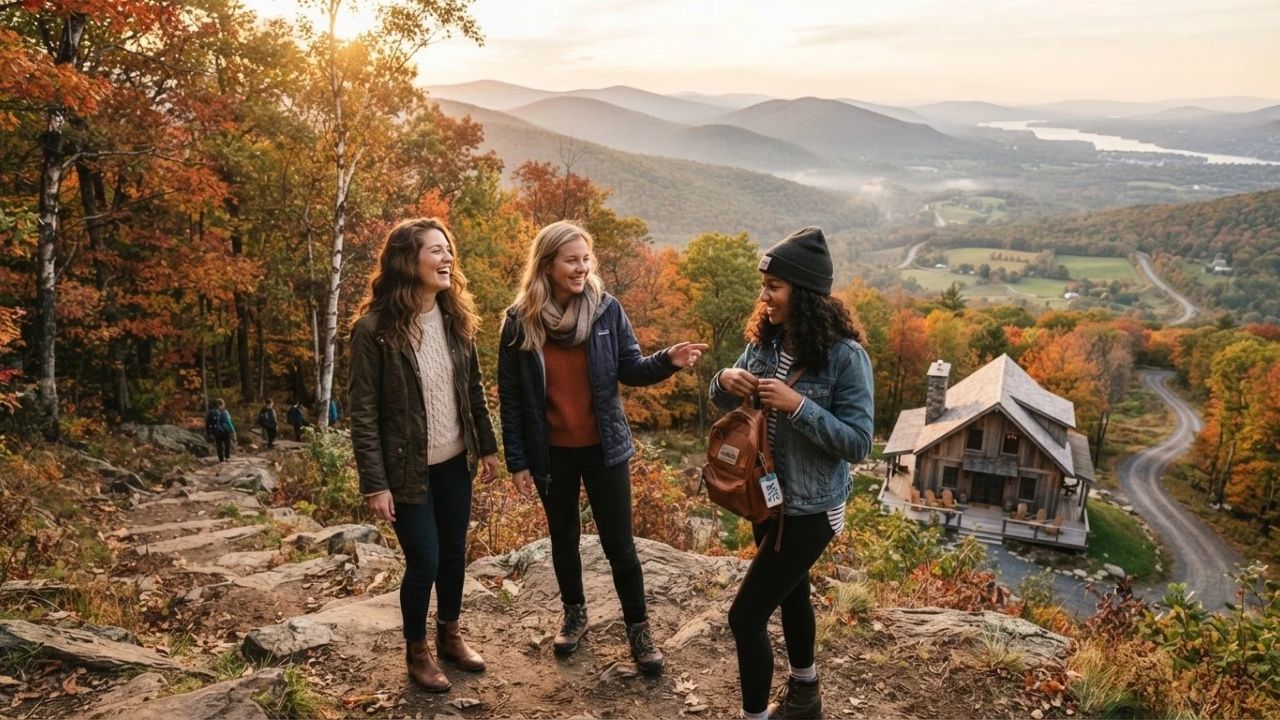
Driven by remote work flexibility and rising demand for authentic rural retreats, New York’s Catskill Mountains have transformed into a primary slow-travel sanctuary on September 14, 2026, generating billions of dollars in annual visitor spending and redefining domestic leisure just two hours north of Manhattan. Once perceived primarily as a seasonal mid-century summer resort belt, the four-county region—spanning Ulster, Greene, Sullivan, and Delaware counties—has evolved into a sophisticated year-round haven where historic timber towns, design-forward boutique hotels, and hundreds of miles of protected mountain trails provide urban travelers with an accessible alternative to long-haul flights.
The acceleration of hybrid work schedules has reshaped how travelers interact with this protected mountain wilderness. Rather than confining visits to rushed 48-hour weekend dashes, vacationers increasingly arrive on Thursdays or extend through Mondays, combining remote professional duties with quiet forest hikes, river wading, and farm-to-table dining. This transition to longer stays distributes tourism dollars directly into independent main-street storefronts, artisan bakeries, and heritage agriculture across the region.
The Local Trend: The Evolution of Boutique Mountain Escapes
The architectural and culinary fabric of the Catskills has undergone a profound evolution over the past decade. A generation of hoteliers, chefs, and creative entrepreneurs has revitalized historic motor lodges, vintage boarding houses, and disused dairy barns into design-conscious retreats that harmonize with their natural surroundings.
Instead of generic resort amenities, these modern properties emphasize localized authenticity. Restored 1950s roadside motels now feature cedar soaking tubs heated by wood fires, Scandinavian barrel saunas overlooking mountain streams, and communal fire pits where local craft brewers pour small-batch farmhouse ales. Farm-to-table dining has transitioned from a marketing buzzword into an everyday regional standard, with restaurant menus dictated daily by harvest yields from neighboring organic growers, Sullivan County duck farms, and small-batch creameries.
Travelers are drawn to this absence of artificial gloss. In place of commercial theme parks or manufactured entertainment districts, the Catskills offer genuine mountain communities where multi-generational general stores operate alongside contemporary ceramics studios and independent literary bookstores.
Preserving the Wild: The Catskill Forest Preserve Legacy
Underpinning the region's appeal is an extraordinary conservation framework rooted in New York State constitutional law. Established in 1885 under Article XIV of the State Constitution, the Catskill Forest Preserve mandates that public state lands "shall be forever kept as wild forest lands." Spanning more than 700,000 acres, this protected public domain guarantees that the peaks, gorges, and headwaters of the region remain shielded from commercial clear-cutting and industrial sprawl.
For outdoor enthusiasts, this pristine wilderness provides exceptional backcountry immersion:
- The Catskill 3500 Peaks: A legendary network of 35 mountain summits exceeding 3,500 feet in elevation, anchored by Slide Mountain—the highest peak in the range at 4,180 feet—which inspired the nature essays of 19th-century naturalist John Burroughs.
- Dramatic Waterfalls and Cloves: Kaaterskill Falls in Greene County plunges 260 feet across two distinct tiers of Devonian sandstone. Celebrated by Thomas Cole and the Hudson River School painters as the spiritual birthplace of American wilderness art, the falls now feature reinforced stone stairways and elevated viewing platforms constructed by the New York State Department of Environmental Conservation (NYSDEC) to balance high visitor volumes with cliffside soil stability.
- The Esopus and Delaware River Watersheds: In addition to their recreational allure, the Catskill river basins form the unfiltered freshwater drinking reservoir system that supplies more than one billion gallons of pristine tap water to New York City daily, reinforcing a delicate ecological bond between the urban metropolis and the rural mountains.
Distinct Regional Hubs Across the Four Counties
Each sector of the Catskills possesses a distinctive heritage, architectural identity, and recreational personality:
Ulster County: Arts Colonies and Valley Traditions
Positioned closest to the Hudson River, Ulster County blends bohemian arts heritage with rugged mountain trailheads:
- Woodstock: The famed colony of the arts, rooted in the historic Byrdcliffe Arts Colony founded in 1902. Visitors stroll along Tinker Street, browsing independent galleries, vintage clothing boutiques, and legendary music halls where Bob Dylan and The Band crafted seminal records.
- Phoenicia: A classic rail town nestled along the Esopus Creek, renowned for summertime whitewater tubing, dry-fly trout fishing, and the iconic Phoenicia Diner, which serves updated comfort food crafted from Hudson Valley meats and grains.
- Kingston: The historic first capital of New York State, where the 17th-century stone houses of the Stockade District house contemporary design showrooms, natural wine bars, and waterfront maritime museums along the Rondout Creek.
Sullivan County: The Cradle of American Fly-Fishing
Covering the southwestern foothills, Sullivan County is synonymous with pristine freestone rivers and pastoral valleys:
- Livingston Manor: Globally celebrated as the birthplace of American dry-fly trout fishing. The willow-lined banks of the Willowemoc Creek and the Beaverkill River attract fly-anglers seeking wild brook and brown trout. The village center is lined with artisanal sourdough bakeries, heritage fly shops, and craft cider houses.
- Bethel: The sacred ground of the 1969 Woodstock Music and Art Fair, where the Bethel Woods Center for the Arts maintains an award-winning museum and open-air concert pavilion situated directly overlooking the historic festival hillside.
- Callicoon and Narrowsburg: River towns perched along the Upper Delaware Scenic and Recreational River, offering bald eagle viewing, vintage antique shops, and unhurried canoe journeys through deep river gorges.
Greene County: Rugged Peaks and Mountain Lodges
Greene County encompasses the dramatic northern Catskills, featuring high alpine elevations and storied ski communities:
- Tannersville & Hunter: Known as the "Painted Village in the Sky" due to its brightly painted Victorian storefronts, Tannersville provides direct access to hiking routes leading through Stony Clove Notch and over the craggy summits of Hunter Mountain and Plateau Mountain.
- Windham: A tranquil mountain valley offering refined country inns, championship golf courses, and technical singletrack mountain biking networks managed in coordination with local trail associations.
Delaware County: Rolling Farmlands and Creamery Valleys
The most pastoral and remote sector of the Catskills, Delaware County is defined by sweeping agricultural bottomlands and unhurried village greens:
- Bovina & Andes: Idyllic farming hamlets where restored general stores serve farmstead dairy cheeses, grass-fed burgers, and locally pressed sweet apple ciders against a backdrop of red dairy barns and grazing sheep.
Local Visitor Insider Tips
To experience the Catskills with the insight of a seasoned mountain specialist, integrate these practical field recommendations into your itinerary:
- Navigating Connectivity and Offline Maps: Mobile cellular coverage drops sharply once you leave major river corridors and enter deep mountain passes ("cloves") like Stony Clove Notch (Route 214) or Platte Clove. Download offline driving directions and topographic trail maps (via Gaia GPS or AllTrails) before departing your hotel or cabin.
- Trailhead Parking Protocols: High-demand hiking trailheads—including Kaaterskill Falls, Peekamoose Blue Hole, and Giant Ledge—experience heavy congestion on autumn weekends. Parking along narrow road shoulders is strictly prohibited by local law enforcement, with illegally parked vehicles subject to towing. Arrive at trailheads before 8:00 AM, or plan hikes on weekday mornings when paths are quiet.
- Peak Foliage Timing: The annual autumn leaf-peeping season varies significantly by elevation. High-altitude summits in Greene and Ulster counties (Hunter, Windham, Slide Mountain) peak in early October, displaying vibrant crimson sugar maples and golden yellow birches. Lower river valleys in Sullivan and Delaware counties peak one to two weeks later, maintaining brilliant golden foliage through late October.
- Tick Prevention and Outdoor Safety: The Catskill forests and tall meadow grasses are native habitats for black-legged deer ticks. Always wear light-colored trousers tucked into wool hiking socks, treat outerwear with permethrin spray, perform thorough tick inspections after completing woodland walks, and carry a basic first-aid kit with blister prevention bandages.
- Regional Culinary Staples: Explore the authentic flavors of the mountain valleys:
- Fresh Pan-Seared River Trout: Wild or sustainably farm-raised brook trout served crisp with brown butter, fresh lemon, and wild chives.
- Pasture-Raised Sullivan County Duck: Smoked duck breast and duck confit featured prominently on farm-to-table tasting menus across Livingston Manor and Callicoon.
- Wood-Fired Sourdough and Artisanal Cheeses: Crusty loaves baked using regionally milled flours, paired with aged raw-milk tommes and creamy goat chevre from Delaware County farms.
- Heirloom Hard Ciders: Crisp, dry, wild-fermented ciders pressed from bitter-sharp heritage apples cultivated in historic Hudson Valley orchards.
- Buckwheat Pancakes with Pure Catskill Maple Syrup: Fluffy pancakes served with dark, amber-grade maple syrup boiled in wood-fired sugar shacks during early spring thaws.
Economic and Community Resilience
The enduring shift toward slow tourism provides essential economic stabilization for rural Catskill municipalities. By extending average length of stay from overnight trips to four-day work-and-leisure breaks, visitor spending circulates more deeply within local economies. Tax revenues generated by lodging surcharges directly fund town road maintenance, rural volunteer fire departments, and municipal trail infrastructure.
At the same time, regional conservation alliances—including the Catskill Center for Conservation and Development and local land trusts—work in close coordination with community leaders to balance tourism growth with environmental preservation. Initiatives such as the Catskill Park Stewards program deploy trained educators to popular trailheads to instruct visitors on Leave No Trace ethics, ensuring that increased popularity does not erode the natural habitats that make the mountains extraordinary.
Tourism Outlook: A Benchmark for Responsible Rural Travel
The transformation of the Catskills demonstrates how historic rural communities can adapt to modern travel dynamics without sacrificing their ancestral heritage. By prioritizing design integrity, culinary craftsmanship, and wilderness preservation over mass commercialization, the Catskills have set a national benchmark for slow, sustainable tourism.
For urban dwellers seeking balance and renewal, the mountains offer more than a fleeting escape from city life; they provide a living reminder that time, quietude, and unspoiled nature remain life's greatest luxuries.
Related Travel Guides
- Dorset Adopts 10-Year Sustainable Tourism Blueprint to Protect Jurassic Coast and Durdle Door Heritage
- France Expands Grande Randonnée Hiking Network: How the GR Trail System Is Driving Sustainable Slow Travel
- British Virgin Islands and Puerto Rico Forge Strategic Alliance to Boost Sustainable Boating and Blue Economy
Disclaimer
This article is for informational and educational purposes only. It does not constitute legal, financial, or professional advice. While we strive to provide accurate and up-to-date information, travel policies, regulations, and conditions change rapidly. Always verify information with official sources before making travel decisions. Nomad Lawyer makes no representations about the accuracy, reliability, completeness, or suitability of the information provided. Readers should consult qualified professionals for advice specific to their circumstances. The views expressed in this article are those of the author and do not necessarily reflect the views of Nomad Lawyer.
Raushan Kumar
Founder & Lead Developer
Full-stack developer with 11+ years of experience and a passionate traveller. Raushan built Nomad Lawyer from the ground up with a vision to create the best travel and law experience on the web.
Learn more about our team →