
Lynmouth in Autumn: Inside Devon’s Victorian Cliff Railway, National Trust Gorges, and Coastal Trails

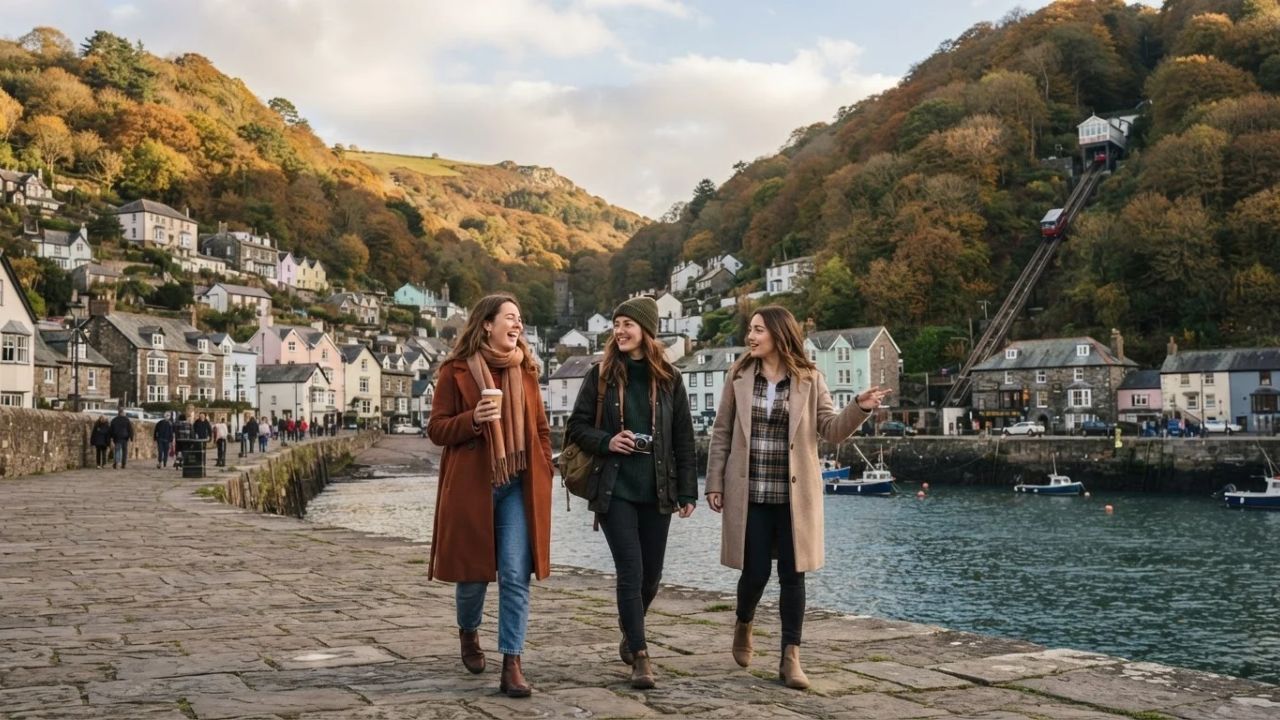
As peak summer crowds disperse across southwest England, Lynmouth enters its most atmospheric season on September 13, 2026, welcoming travelers with fiery autumn oak canopies, crisp sea air, and the steady chime of its 1890 Victorian water-powered cliff railway. Positioned where the East Lyn and West Lyn rivers meet the churning waters of the Bristol Channel beneath the towering hills of Exmoor National Park, this historic North Devon village delivers an authentic slow-travel retreat shaped by dramatic coastal cliffs, deep wooded gorges, and romantic 19th-century heritage.
Long celebrated by Romantic poets as England’s "Little Switzerland," the twin settlements of Lynton and Lynmouth present a rare topographical contrast. Lynton sits perched atop 500-foot sea cliffs, while Lynmouth nestles directly at water level around a sheltered stone harbour. Between September and November, the surrounding ancient sessile oak woodlands transform into rich amber and copper hues, creating an unhurried haven for hikers, wildlife enthusiasts, and travelers seeking coastal quietude.
The Local Trend: North Devon’s Autumn Slow-Travel Resurgence
The seasonal shift across North Devon marks a pronounced movement toward autumn slow travel. While summer months bring congested roads and packed car parks along the West Country coastline, autumn strips away the commercial rush, revealing the tranquil character that originally drew writers such as Robert Southey, William Wordsworth, and Percy Bysshe Shelley to the Exmoor coast.
With daytime temperatures hovering between 12°C and 16°C through late September and October, walking conditions along coastal cliff lines and river valleys reach their annual peak. Seasonal visitors are swapping hurried bucket-list road trips for immersive multi-day stays centered on footpath exploration, heritage conservation, and local food culture.
The village acts as a strategic base for long-distance trail walking. Direct access to the South West Coast Path—England’s longest National Trail running 630 miles—allows hikers to tackle the rugged cliff sections heading east toward Countisbury and Foreland Point, or west toward the otherworldly limestone arches of the Valley of Rocks. Inland, walking connections branch into the Tarka Trail, a 180-mile figure-eight route inspired by Henry Williamson’s classic novel, and the Two Moors Way, which links the wild expanses of Exmoor to Dartmoor across Devon’s rural spine.
Engineering Heritage: The Lynton and Lynmouth Cliff Railway
At the heart of the village's enduring appeal stands the Lynton and Lynmouth Cliff Railway. Operating continuously since it opened to the public in 1890, this Grade II* listed funicular remains the world’s highest and steepest completely water-powered cliff railway. Designed by civil engineer George Croydon Marks and financed by local benefactor Sir George Newnes, the railway was constructed to solve the punishing haulage problem between the harbour village and the clifftop community above.
The engineering mechanism operates on a remarkably pure, zero-carbon gravitational principle that predated modern eco-tourism by more than a century:
- Two passenger carriages run concurrently along parallel 260-metre tracks laid at an astonishing 58% incline (a 1:1.75 gradient), climbing 500 feet of sheer rock face.
- The system uses water diverted from the West Lyn River, channeled into 700-gallon ballast tanks mounted beneath each carriage.
- When the top car is loaded with passengers, water is pumped into its storage tank until its downward gravitational pull outweighs the lower car.
- As the heavier upper carriage glides downhill under hydraulic braking control, it counterbalances and pulls the ascending carriage to the summit via continuous steel cables.
- Upon arriving at the lower sea-level terminal, the water is discharged back into the river and bay, completing a sustainable, closed-loop cycle without any internal combustion or electrical motor drive.
For modern visitors, riding the vintage mahogany-and-brass carriages delivers both panoramic views across the Bristol Channel toward South Wales and a living encounter with Victorian ingenuity.
Woodlands, Gorges, and the Watersmeet Sanctuary
Just upstream from the harbour mouth, the East Lyn River carves through one of Britain’s most spectacular ancient temperate rainforests. Following the well-graded riverside trail leads travelers to Watersmeet, an extraordinary river confluence managed by the National Trust. Here, the East Lyn River joins Farley Water amidst towering moss-covered boulders, plunging waterfalls, and dense canopy cover.
Watersmeet House, originally constructed around 1832 as a romantic fishing lodge for the Reverend Walter Halliday, now serves as an eco-conscious National Trust visitor center and traditional tea garden. During the autumn months, the surrounding sessile oak woods fill with migrating woodland birds, spawning salmon battling upstream through crystalline pools, and red deer stags whose rutting calls echo across the Exmoor combes.
Walking the 4-mile return circuit between Lynmouth and Watersmeet offers an intimate look at the fragile hydrology of the Lyn basin. Interpretive displays along the route detail the ecological restoration projects undertaken by the National Trust and the Environment Agency to maintain natural flood defenses, clear fallen river debris sustainably, and protect rare bryophytes and lichens that thrive exclusively in southwest England’s hyper-humid microclimates.
Distinctive Autumn Stays: From Riverside Cottages to Exmoor Huts
Accommodations in and around Lynmouth cater to travelers seeking connection with natural surroundings, offering intimate vantage points over running waters and surrounding wooded ridges:
- River View: Situated right on the banks of the River Lyn, this self-catering apartment provides an ideal base for couples. The property features an open-plan living and kitchen area alongside a king-size bedroom with an en-suite shower room. Its standout amenity is a private furnished balcony suspended directly over the water, offering front-row vistas of the rushing river and village harbour lights.
- Summerville: A characterful traditional stone cottage positioned along the East Lyn River valley. Sleeping up to six guests, this property features terraced gardens and flagstone hearths, serving as a spacious base for hiking families and small groups of walkers.
- Lynhurst: Nestled near Lynton amidst private mature woodland gardens, this country house retreat accommodates larger gatherings and multi-generational families. The home includes classic timber finishes and dedicated entertainment rooms equipped with a pool table, dartboard, and outdoor table tennis tables.
- Dogsworthy: For travelers prioritizing rural seclusion within Exmoor National Park, this pair of private, adults-only shepherd's huts offers an off-grid aesthetic combined with hotel-standard comfort. Surrounded by moorland pastures and dark-sky horizons, the huts offer sweeping valley views alongside log burners and outdoor fire pits.
Regional Excursions: Valley of Rocks and the North Devon Coast
Lynmouth serves as a launchpad for exploring the wider North Devon coastline, where geological wonders and cultural installations punctuate the shoreline:
- The Valley of Rocks: Located just a mile west of Lynton along a cliffside terrace, this dry river combe features jagged, weather-sculpted towers of Devonian sandstone, including famous formations named Castle Rock and the Devil’s Cheesewring. The valley is home to a resident herd of wild feral goats that graze precariously along vertical shale ledges, offering dramatic wildlife viewing against the crashing sea below.
- Ilfracombe Harbour: Situated less than 20 miles to the west, the historic fishing port of Ilfracombe blends historic maritime architecture with contemporary art. Dominating the harbour pier stands Damien Hirst’s striking 20-metre bronze statue, "Verity," depicting a pregnant woman holding aloft the sword of justice. The town also features independent seafood bistros, sea safaris exploring the Lundy Island marine reserve, and historic tidal bathing pools reached through hand-carved Victorian tunnels.
- Countisbury and Foreland Point: Rising east of Lynmouth, the steep ascent up Countisbury Hill brings walkers to the highest sea cliffs in England. Near the summit, the 12th-century Church of St. John the Evangelist and the Blue Ball Inn provide historic waypoints before descending to the isolated lighthouse at Foreland Point.
Local Visitor Insider Tips
To experience Lynmouth and the surrounding Exmoor coastline like a local specialist, incorporate these practical recommendations into your travel plans:
- Navigating Peak Tides: The Bristol Channel boasts the second-highest tidal range in the world, with water levels fluctuating by up to 15 meters (nearly 50 feet) between low and high water. If walking along coastal shingle beaches or exploring the rock pools around Blacklands Beach, always check daily Admiralty tide tables to avoid becoming cut off by swift incoming waters.
- The Devon Cream Tea Rule: When ordering a traditional cream tea at the National Trust tea garden at Watersmeet or local tea rooms in Lynton, adhere strictly to Devon etiquette: split the warm scone, spread a thick layer of local clotted cream first, and crown it with strawberry preserve. Putting jam first is the rival Cornish tradition and is playfully frowned upon by Devon bakers.
- Local Culinary Specialties: Seek out fresh coastal and moorland staples:
- Fresh Lynmouth Crab and Lobster: Landed directly at the stone harbour quay by local day-boats and served fresh in crab sandwiches, chowders, and grilled seafood platters at village inns.
- Exmoor Venison: Sourced from managed herds across the national park and featured prominently in hearty autumn pies, stews, and roasts paired with spiced red cabbage.
- Whortleberry Tart: A traditional Exmoor treat made from wild bilberries harvested by hand from the moorland heaths in late summer and baked into buttery pastries.
- Scrumpy and Farmhouse Cider: Sample crisp, dry craft ciders produced by historic orchards tucked away in Devon’s inland valleys.
- Dark Sky Stargazing: Exmoor was designated Europe’s first International Dark Sky Reserve. Because Lynmouth is shielded by massive coastal headlands, light pollution is virtually nonexistent. Pack a red-light headlamp to preserve your night vision and head up to the Valley of Rocks or Dunkery Beacon on clear autumn nights to observe the Milky Way arching over the sea.
- Driving and Parking Advice: The hill roads into Lynmouth—particularly Countisbury Hill (a 1-in-4 gradient) and Lynmouth Hill—are steep and narrow. Drive in lower gears to prevent brake overheating. If driving an electric vehicle, note that rapid charging hubs are available at the lower harbour car park and within Lynton.
Environmental Stewardship and Community Conservation
Lynmouth’s peaceful relationship with its rivers is underpinned by profound respect for regional hydrology. The tragic flood of August 1952—when unprecedented rainfall over Exmoor caused the East and West Lyn rivers to surge violently through the settlement—fundamentally reshaped local infrastructure and environmental consciousness.
Today, the Memorial Garden in Lynmouth pays solemn tribute to that history, while modern river management works silently in the background. Widened boulder channels, specialized diversion corridors, and upstream catchment forestry ensure that seasonal waters pass safely to the ocean.
Visitors are urged to follow the Countryside Code throughout Exmoor National Park: keep dogs on leads around wild sheep, feral goats, and Exmoor ponies; take all litter home; and stick to designated footpaths to prevent soil erosion along fragile coastal cliff edges. By supporting family-owned accommodation providers, independent village tea rooms, and craft fishermen, autumn travelers help sustain North Devon’s local coastal economy long after summer holidaymakers have returned home.
Related Travel Guides
- Dorset Adopts 10-Year Sustainable Tourism Blueprint to Protect Jurassic Coast and Durdle Door Heritage
- France Expands Grande Randonnée Hiking Network: How the GR Trail System Is Driving Sustainable Slow Travel
- British Virgin Islands and Puerto Rico Forge Strategic Alliance to Boost Sustainable Boating and Blue Economy
Disclaimer
This article is for informational and educational purposes only. It does not constitute legal, financial, or professional advice. While we strive to provide accurate and up-to-date information, travel policies, regulations, and conditions change rapidly. Always verify information with official sources before making travel decisions. Nomad Lawyer makes no representations about the accuracy, reliability, completeness, or suitability of the information provided. Readers should consult qualified professionals for advice specific to their circumstances. The views expressed in this article are those of the author and do not necessarily reflect the views of Nomad Lawyer.
Raushan Kumar
Founder & Lead Developer
Full-stack developer with 11+ years of experience and a passionate traveller. Raushan built Nomad Lawyer from the ground up with a vision to create the best travel and law experience on the web.
Learn more about our team →