
Neste and United Airlines Power Greener Travel With Expanded Sustainable Aviation Fuel Supply Across US Europe Airports
Neste and United Airlines Power Greener Travel With Expanded Sustainable Aviation Fuel Supply Across US Europe Airports

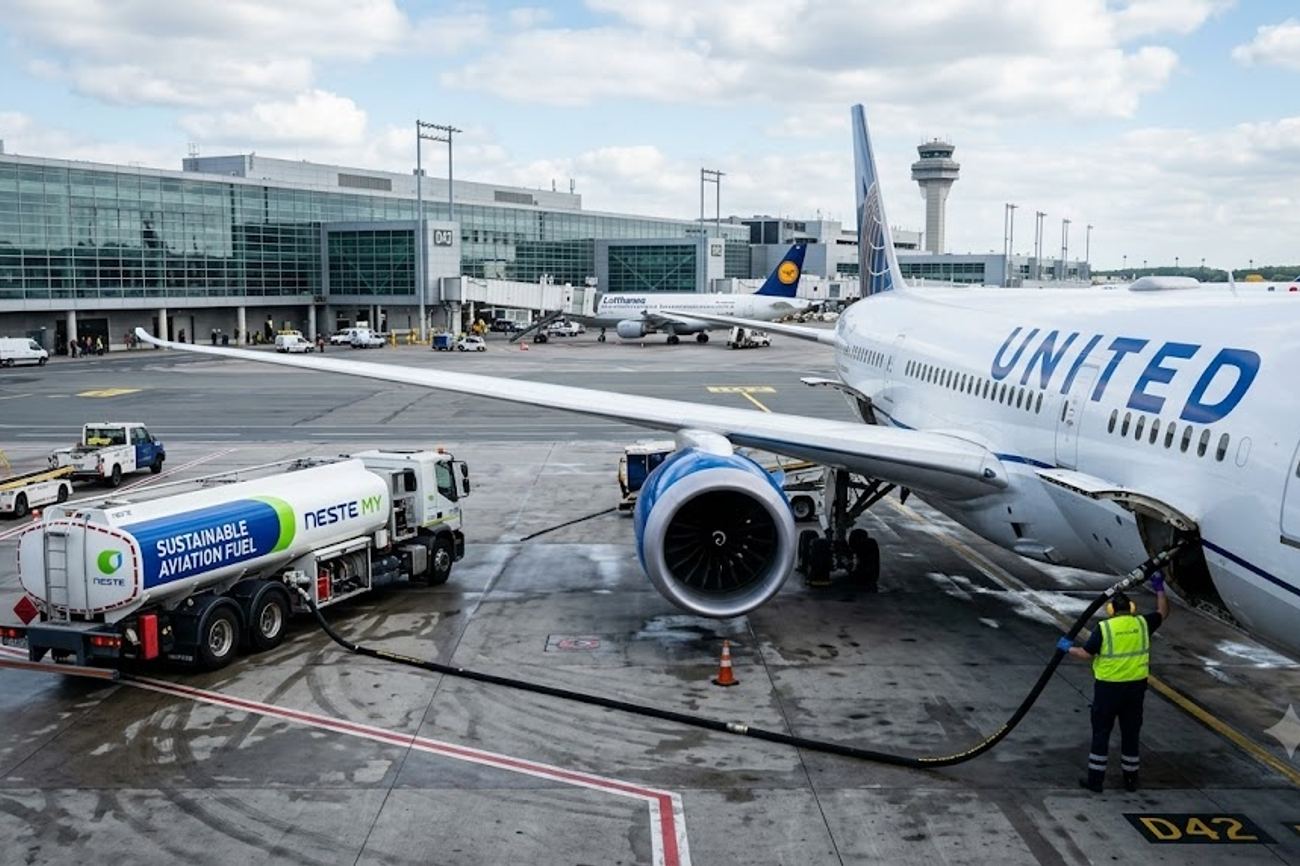
Image generated by AI
United Airlines’ SAF consumption surged to 83,000 metric tonnes in 2025—approximately 27.7 million gallons—marking a significant escalation in renewable fuel adoption compared to 2024. This volume shift signals a transition from experimental "green flights" to the systemic integration of Sustainable Aviation Fuel (SAF) into primary hub operations, moving the industry closer to the net-zero targets outlined by the International Air Transport Association (IATA).
The SAF Integration Scale: United and Neste Data
The current expansion of the partnership between Neste and United Airlines focuses on two critical nodes of global connectivity: Chicago O’Hare International Airport (ORD) and Amsterdam Airport Schiphol (AMS). The deployment schedule reveals a strategic synchronization of fuel availability across the Atlantic. At Amsterdam Schiphol, SAF deliveries were active from June 2026 through August 2026. Simultaneously, Chicago O’Hare—United's largest hub by daily departures—saw deliveries commence in July 2026, with a scheduled runway extending through June 2027.
This is not a first-time trial. United established its presence at Chicago O’Hare with blended SAF in August 2024 and has utilized Neste MY Sustainable Aviation Fuel at Amsterdam Schiphol since 2022. The current data indicates a shift toward "blended" fuel solutions, where Neste MY SAF is mixed with conventional jet fuel. Under current certification, these blends can reach a maximum ratio of 50%, allowing the carrier to utilize existing aircraft engines and airport fueling infrastructure without requiring capital-intensive hardware modifications.
The scale of this operation is supported by Neste’s industrial capacity. Currently, Neste produces approximately 1.5 million metric tonnes of SAF annually, which translates to roughly 515 million gallons. This production is derived from waste animal fats and used cooking oil, bypassing the need for virgin feedstock.
Comparative Market Benchmarks: Production vs. Adoption
When comparing United’s current trajectory to broader industry capacity, a clear gap remains between the desire for decarbonization and the physical availability of fuel. United has now introduced SAF at six of its seven domestic hub airports, including Houston, Washington D.C., and Newark. However, the total volume used in 2025 (83,000 metric tonnes) represents only a fraction of the total fuel required for a global network.
The following table illustrates the projected growth in Neste’s production capacity, which serves as a leading indicator for how much SAF will be available to carriers like United in the coming years.
| Metric | Current Capacity (2025/26) | Projected Capacity (Post-2027) | Percentage Increase |
|---|---|---|---|
| Annual Metric Tonnes | 1.5 Million | 2.2 Million | 46.6% |
| Annual Gallons | 515 Million | 750 Million | 45.6% |
| Key Infrastructure | Existing Refineries | Rotterdam Expansion | N/A |
This production jump is essential because SAF currently accounts for a minuscule percentage of total global jet fuel consumption. According to data patterns tracked by Statista, the primary barrier to net-zero aviation is not aircraft technology, but the "fuel gap"—the difference between current SAF production and the volumes required to replace kerosene. The 46.6% increase in Neste's capacity following the Rotterdam refinery expansion is a critical data point for analysts tracking the feasibility of United's 2050 net-zero commitment.
Practical Traveler Advisory and Strategic Insights
For the individual traveler, the shift toward SAF at hubs like Chicago O’Hare and Amsterdam Schiphol does not currently result in a change to the flight experience, but it does alter the "carbon cost" of specific routes.
- Route Selection for Carbon-Conscious Travel: If you are booking flights through Chicago O’Hare or Amsterdam Schiphol between now and June 2027, you are utilizing routes with a higher probability of SAF integration. Travelers looking to minimize their footprint should prioritize these hubs over smaller regional airports that lack the infrastructure for blended fuel deliveries.
- Anticipate "Green Surcharges": While United is absorbing these costs through corporate partnerships with Neste, the industry-wide cost of SAF remains higher than conventional Jet A-1 fuel. As airlines move toward the 50% blend limit, expect to see the emergence of optional "carbon-neutral" fare tiers or mandatory environmental levies on long-haul international tickets.
- Booking Windows: Because SAF availability is tied to specific delivery windows (e.g., June to August 2026 in Amsterdam), the "greenest" time to fly is now becoming seasonal. Travelers prioritizing sustainability should align their Q2 and Q3 travel with these specific fuel delivery cycles at major hubs.
Neste and United Airlines have partnered to expand the supply of Sustainable Aviation Fuel (SAF) across US and European airports, aiming to reduce greenhouse gas emissions from air travel. For more information on United Airlines' sustainability initiatives, visit their official website at https://www.united.com. This collaboration is expected to have a significant impact on the aviation industry's environmental footprint, making air travel more sustainable for passengers.
The Trajectory of Aviation Decarbonization
The movement from 1.5 million to 2.2 million metric tonnes of annual production suggests that the industry is moving out of the "pilot phase" and into the "scaling phase." The fact that United has successfully integrated SAF into six of its seven domestic hubs indicates that the operational risk of blended fuels is now considered negligible.
The next logical step in this trend is the pursuit of 100% SAF certification. Currently, the 50% blend limit is a regulatory and technical ceiling. However, as Neste expands its Rotterdam facility, the pressure will mount on regulators to approve higher blend ratios. If the industry can move from 50% to 100% SAF, the lifecycle greenhouse gas emissions for a flight from Chicago to Amsterdam could drop precipitously without requiring a single new aircraft.
Furthermore, the focus on "waste-to-fuel" (cooking oil and animal fats) suggests a trend toward circular economy logistics in aviation. We can expect to see more airlines partnering directly with waste management firms to secure their own feedstock pipelines, reducing their reliance on a few large producers like Neste. This vertical integration will be the primary strategy for airlines attempting to hedge against the volatile pricing of renewable fuels.
FAQ: United & Neste SAF Expansion 2026-2027
Will using SAF increase my ticket prices? Currently, these partnerships are handled through corporate supply agreements. However, because SAF production costs are higher than fossil fuels, travelers may see gradual price increases or new "green" fare options as airlines scale these programs toward 2050.
Is SAF actually better for the environment than traditional fuel? Yes. Neste MY SAF is produced from waste materials like used cooking oil and animal fats. This process significantly reduces lifecycle greenhouse gas emissions compared to the extraction and refining of conventional petroleum-based jet fuel.
Do I need to fly on a specific aircraft to benefit from SAF? No. Because the fuel is blended (up to 50%) with conventional jet fuel, it is compatible with all existing aircraft engines and airport fueling systems. No hardware changes are required for the passenger or the pilot.
Which hubs currently have the best SAF availability for United passengers? Chicago O’Hare, Amsterdam Schiphol, Newark, Washington D.C., and Houston are primary locations where United has integrated SAF into its operational network.
The transition to sustainable aviation is no longer a theoretical goal; it is a measurable industrial scaling process.
Related Travel Guides
Disclaimer
This article is for informational and educational purposes only. It does not constitute legal, financial, or professional advice. While we strive to provide accurate and up-to-date information, travel policies, regulations, and conditions change rapidly. Always verify information with official sources before making travel decisions. Nomad Lawyer makes no representations about the accuracy, reliability, completeness, or suitability of the information provided. Readers should consult qualified professionals for advice specific to their circumstances. The views expressed in this article are those of the author and do not necessarily reflect the views of Nomad Lawyer.
Preeti Gunjan
Contributor & Community Manager
A passionate traveller and community builder. Preeti helps grow the Nomad Lawyer community, fostering engagement and bringing the reader experience to life.
Learn more about our team →