
Saudi Arabia Transform Eco-Tourism as Farasan, Al-Qassar And More Lead Coral Island Conservation Revolution
Saudi Arabia Transform Eco-Tourism as Farasan, Al-Qassar And More Lead Coral Island Conservation Revolution

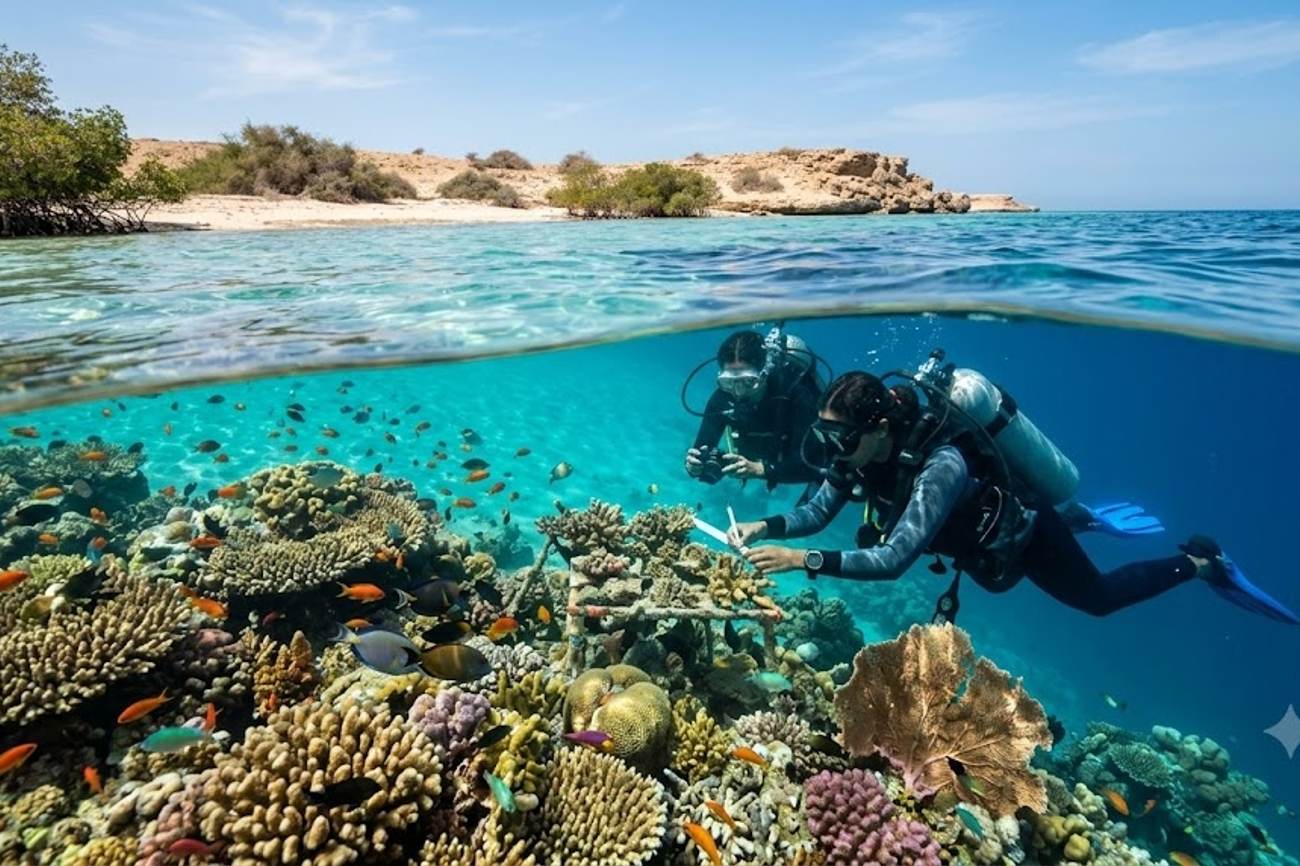
Image generated by AI
[Muscat, October 2023] — Government authorities across the Arabian Peninsula are implementing strict bans on the use of modern Portland cement in the restoration of historic coral stone settlements to prevent the catastrophic structural collapse of maritime heritage sites.
The directive targets the preservation of fragile architectural quarters across the Red Sea and Arabian Gulf, specifically within the Farasan Islands of Saudi Arabia, the Musandam fjords of Oman, and Dalma Island in the UAE. Regulatory bodies, including the Saudi Heritage Commission, Oman’s Ministry of Heritage and Tourism, and the Abu Dhabi Department of Culture and Tourism, are now mandating a return to traditional lime-based masonry to reverse decades of decay caused by industrial building materials.
The Physics of Structural Decay
The crisis stems from a fundamental incompatibility between modern industrial binders and biogenic marine stone. Historic coastal settlements were constructed using fossilized reef formations and calcareous littoral slabs (known locally as farush). These materials possess a cellular matrix with porosity levels ranging from 25% to nearly 50% of their total volume, allowing the buildings to "breathe" in extreme saline humidity.
When traditional lime mortars—composed of slaked air lime, calcined gypsum, crushed shells, and pozzolanic clay (sarooj)—are used, they create a vapor-permeable buffer. This system allows moisture from humid maritime winds to evaporate through the joints.
The introduction of Ordinary Portland Cement (OPC) during late 20th-century renovations disrupted this cycle. Because OPC creates an impermeable, rigid matrix, it traps moisture inside the walls. This leads to subflorescence: a process where soluble salts, specifically sodium chloride and magnesium sulphate, crystallize behind the cement skin. The resulting internal pressure exceeds the compressive strength of the coral stone, effectively grinding the historic masonry into powder beneath a hard cement crust and triggering deep fissures and total structural delamination.
Impacted Heritage Zones and Infrastructure
The restoration mandates affect several specific maritime typologies across the region's archipelagos:
- Defensive Watchtowers: Ottoman-era garrisons and headland towers on Greater Farasan and the Musandam coastline. These utilize double-leaf masonry (dressed coral faces with a rubble/sarooj core) and now require low-pressure lime grouting for stabilization.
- Intertidal Hadrah Weirs: Ancient sustainable fish traps built from unmortared limestone, coral boulders, and palm fronds. These structures, featuring guiding arms extending 50 to 200 meters from the beach, are being protected as examples of ancestral maritime engineering.
- Merchant Trading Houses: Dense, shaded coastal quarters designed for passive convective ventilation and solar radiation dissipation.
- Littoral Settlements: Coastal communities across the Red Sea and Arabian Gulf that rely on fossilized reef architecture.
What This Means for Travelers
For the growing number of tourists visiting the Arabian Peninsula's eco-tourism hubs, these conservation efforts signal a shift in how heritage sites are accessed and managed.
1. Restricted Access to Fragile Sites Travelers visiting the Farasan Islands or Musandam may encounter increased closures or limited access to historic quarters. Because the "cement-rot" has left many structures unstable, authorities are limiting foot traffic to prevent accidental collapses during the restoration phase.
2. Shift Toward "Slow Tourism" The focus on architectural restoration and environmental guidelines suggests a move away from mass tourism. Visitors should expect more curated, low-impact tours that prioritize the preservation of marine sanctuaries and coral stone communities over high-volume infrastructure.
3. Authentic Heritage Experiences The ban on modern materials means that restored sites will no longer look like "modernized" versions of the past. Travelers will see the return of traditional calcined gypsum plasters and lime washes, providing a more historically accurate representation of the region's maritime history.
The Restoration Roadmap
Preservation teams are now utilizing a strict material palette calibrated to historical tensile ratings. The current technical standard requires the use of pure slaked air lime cured through carbonation or naturally hydraulic lime blends mixed with local pozzolanic aggregates.
To protect against rain and sea spray without sealing the walls, teams are applying exterior coatings of calcined gypsum plaster sourced from local mineral deposits. This ensures the structural cellular matrix remains intact while defending the building from the punishing saline environment of the Gulf.
The long-term goal is to integrate these restored "coral cities" into a cohesive regional tourism strategy that links cloudscape mountains and agricultural plains with the vulnerable marine sanctuaries of the coast. This requires a delicate balance between increasing visitor numbers and the strict adherence to pioneering environmental guidelines to ensure the survival of the region's biogenic architecture.
FAQ: Arabian Maritime Heritage 2023
Why is cement banned in coral stone restoration? Portland cement is impermeable. It traps salt and moisture inside the porous coral stone, causing internal crystallization (subflorescence) that shatters the stone from the inside out, leading to structural collapse.
Which specific locations are affected by these guidelines? The mandates are primarily active in the Farasan Islands (Saudi Arabia), the Musandam Peninsula (Oman), and Dalma Island (UAE), covering watchtowers, trading houses, and hadrah fish traps.
How does traditional lime mortar protect these buildings? Traditional lime and sarooj mortars are vapor-permeable. They allow moisture to migrate to the surface and evaporate safely, preventing the buildup of destructive internal pressure.
Will this affect tourist access to historic sites? Yes. Some areas may be temporarily closed or restricted to protect fragile structures undergoing lime-grouting and stabilization to ensure visitor safety.
Preserving the breathability of the past to ensure the stability of the future.
#FarasanIslands #Musandam #SaudiHeritageCommission #CoralArchitecture #MaritimeConservation2023 #SaroojMasonry
Related Travel Guides
Disclaimer
This article is for informational and educational purposes only. It does not constitute legal, financial, or professional advice. While we strive to provide accurate and up-to-date information, travel policies, regulations, and conditions change rapidly. Always verify information with official sources before making travel decisions. Nomad Lawyer makes no representations about the accuracy, reliability, completeness, or suitability of the information provided. Readers should consult qualified professionals for advice specific to their circumstances. The views expressed in this article are those of the author and do not necessarily reflect the views of Nomad Lawyer.
Kunal K Choudhary
Co-Founder & Contributor
A passionate traveller and tech enthusiast. Kunal contributes to the vision and growth of Nomad Lawyer, bringing fresh perspectives and driving the community forward.
Learn more about our team →