
Nepal Leads Global Movement on Responsible Himalayan Tourism: Glaciers, Culture, and the Future of Sacred Mountains
Nepal joins Switzerland, Bhutan, Peru, and India championing responsible tourism to protect melting glaciers and preserve sacred Himalayan cultures for future generations.

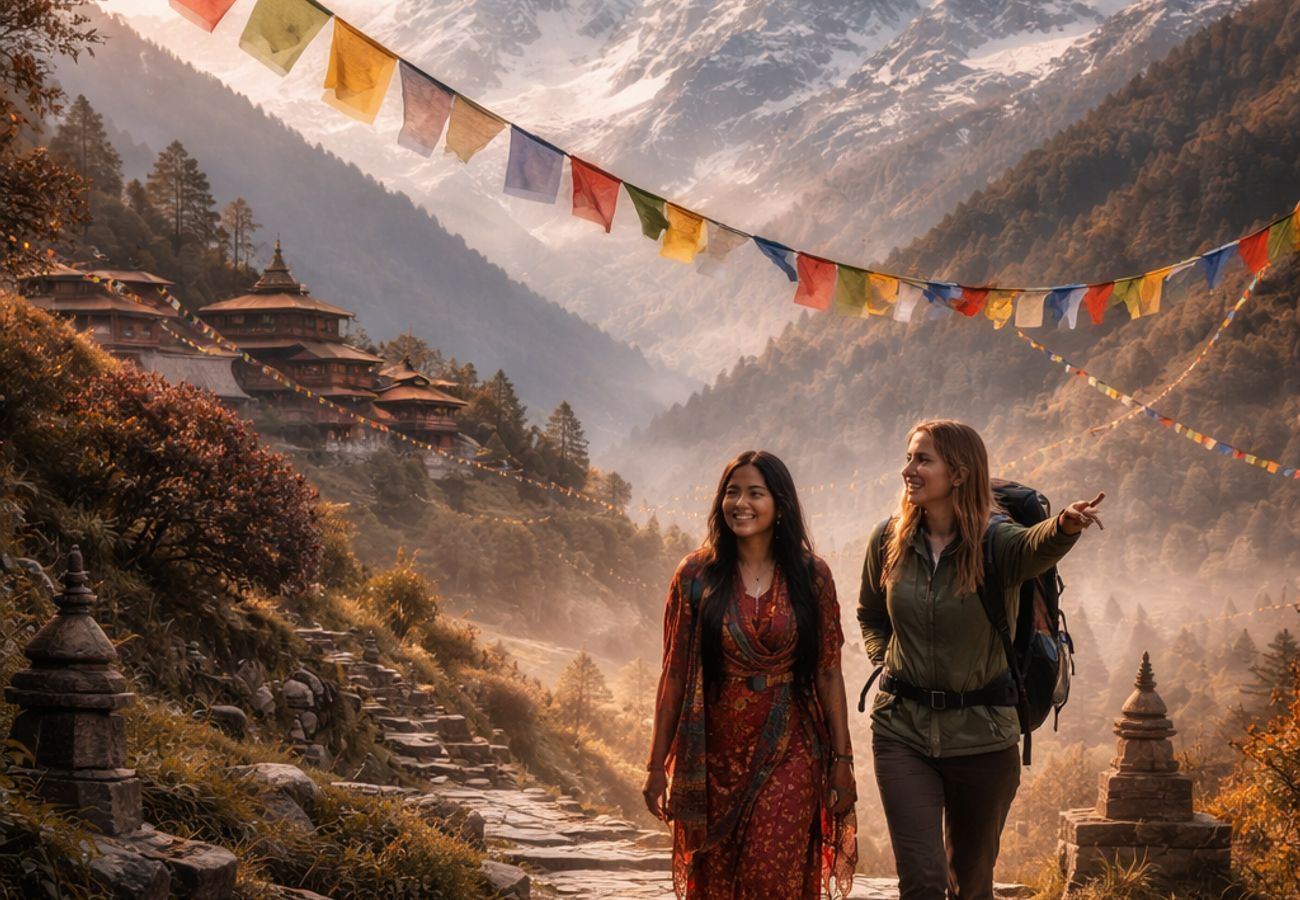
Image generated by AI
The Himalayas Are Bleeding Gray
I stood on a ridge above Everest Base Camp not long ago, and what I witnessed shattered me. The glaciers that once gleamed with pristine white brilliance now weep gray—interspersed with plastic bottles, tattered nylon tents, and the ghostly remnants of human excess. This isn't just climate change. This is a crisis we've engineered ourselves.
Nepal is sounding an alarm that echoes across borders. Joined by Switzerland, Bhutan, Peru, and India, the nation is leading a global reckoning on mountain tourism. The message is stark: we must transform how travelers interact with the world's most sacred peaks, or risk losing them entirely.
A mountain guide with nearly two decades of experience in Nepal's high country told me something that statistics cannot capture: "The creaking of ice, the widening crevasses, the slow collapse of ice walls—these are not just environmental data points. They are screams."
The True Cost of Comfort at 5,000 Meters
Here's what most trekkers don't realize: a hamburger ordered at Gorakshep (5,164 meters), the last settlement before Everest Base Camp, never leaves the mountain. It can't be disposed of. Everything brought up stays up, festering for decades in pristine ecosystems that took centuries to develop.
The environmental toll is staggering:
Vegetation Stripping: Local forests are being clear-cut to supply wood-fired heaters in high-altitude teahouses. These fragile ecosystems require decades to regenerate—time we don't have.
Imported Food Crisis: Pizza, burgers, canned goods, and Western staples are airlifted into valleys via helicopter, generating carbon footprints that dwarf the environmental value of the trek itself.
Glacial Contamination: Non-biodegradable waste contaminates meltwater relied upon by millions of people downstream. Plastic doesn't decompose at altitude; it lingers like a curse.
Reddit: "I hiked Everest Base Camp last year. The amount of garbage at the camp was honestly heartbreaking. I spent half my time picking up other people's trash." — r/travel
Tourism Is Rewriting Mountain Culture
Beyond environmental devastation, modern tourism is erasing centuries of cultural identity. Mountain communities once thrived in harmony with the peaks, practicing traditions rooted in resilience, humility, and spiritual connection to the land.
Today's transactional approach to tourism—where mountains become playgrounds and trekkers become consumers—is corroding this heritage. Imported goods are replacing sustainable crops cultivated for generations. Locals increasingly depend on foreign products rather than the ancestral knowledge that sustained their ancestors.
The Responsible Tourism Framework: From Consumer to Contributor
The solution isn't shutting down tourism. It's fundamentally rewiring how travelers approach these sacred spaces.
Nepal and its global partners are advocating a "contributor mindset" that replaces entitlement with respect:
Leave No Trace (LNT) Principles: Plan ahead, stay on designated trails, pack out all waste. This isn't radical—it's baseline.
Zero Single-Use Plastics: Reusable bottles, refillable containers, and a commitment to eliminate disposable packaging at the source.
Local Food Loyalty: Choose Dal-Bhat, potatoes, barley, wheat, maize, and buckwheat—crops that grow naturally at high altitudes. These "low-footprint" staples nourish both body and heritage, avoiding unnecessary carbon-heavy transport.
Choosing local food isn't just an environmental decision. It's an act of cultural preservation.
A Global Crisis, A Unified Response
This problem isn't unique to Nepal. Mountain regions worldwide are confronting identical challenges:
Bhutan struggles to balance cultural preservation with high-end trekking expansion. Switzerland must reconcile luxury alpine resorts with accelerating glacier loss. Peru's Machu Picchu trails buckle under waste management crises and trail erosion. Tibet and China's sacred mountains face over-tourism, infrastructure sprawl, and pollution. India's Himalayan regions bleed litter, deforestation, and import dependency.
The call is universal: treat nature as a partner, not a commodity. Learn more about responsible tourism frameworks from the Global Sustainable Tourism Council.
Mountains Don't Need Humans—We Need Mountains
Here's the uncomfortable truth: mountains have endured millennia of storms, avalanches, and climate shifts without our intervention. But humanity depends on mountains for water, spirituality, culture, and inspiration. Our presence must enrich, not destroy.
Nepal's crossroads is real. The nation can continue chasing luxury tourism, sacrificing glaciers and traditions for short-term profit. Or it can lead a traveler education revolution—teaching visitors to act as protectors, embracing hygiene, sustainability, and local living.
The white giants of the Himalayas don't have a voice in boardrooms or government offices. But trekkers do. Every traveler who chooses local food, carries reusable bottles, and respects sacred ground becomes a guardian instead of a consumer.
Check out detailed Leave No Trace guidelines from the established LNT organization for mountain trekking.
The Legacy We Leave
Nepal, Switzerland, Bhutan, Peru, and India have laid down a challenge: will the next generation of trekkers experience dazzling white peaks or gray wastelands littered with plastic and debris?
The answer depends on choices made today—choices that separate contributors from consumers, protectors from plunderers. The mountains are watching. Future generations are counting on us.
The peak of the world doesn't need your Instagram post. It needs your respect.
Related Travel Guides
Porter Airlines Eyes oneworld Membership as Alliance Seeks to Close Canadian Market Gap
Thailand 2026 Tourism Dip: Bangkok, Phuket, Udon Thani Face 2.3% Visitor Decline Amid Luxury Pivot
Indonesia's International Tourism Surge: France, Japan, Saudi Arabia Drive Record 2026 Growth
Disclaimer
This article is for informational and educational purposes only. It does not constitute legal, financial, or professional advice. While we strive to provide accurate and up-to-date information, travel policies, regulations, and conditions change rapidly. Always verify information with official sources before making travel decisions. Nomad Lawyer makes no representations about the accuracy, reliability, completeness, or suitability of the information provided. Readers should consult qualified professionals for advice specific to their circumstances. The views expressed in this article are those of the author and do not necessarily reflect the views of Nomad Lawyer.
Kunal K Choudhary
Co-Founder & Contributor
A passionate traveller and tech enthusiast. Kunal contributes to the vision and growth of Nomad Lawyer, bringing fresh perspectives and driving the community forward.
Learn more about our team →