
Narita Express Maintains Vital Tokyo Airport Link Amid 2026 Service Disruptions and Planned Closures
The Narita Express continues to provide critical connectivity between Narita Airport and Central Tokyo despite localized service interruptions and upcoming major construction closures in September and November 2026.

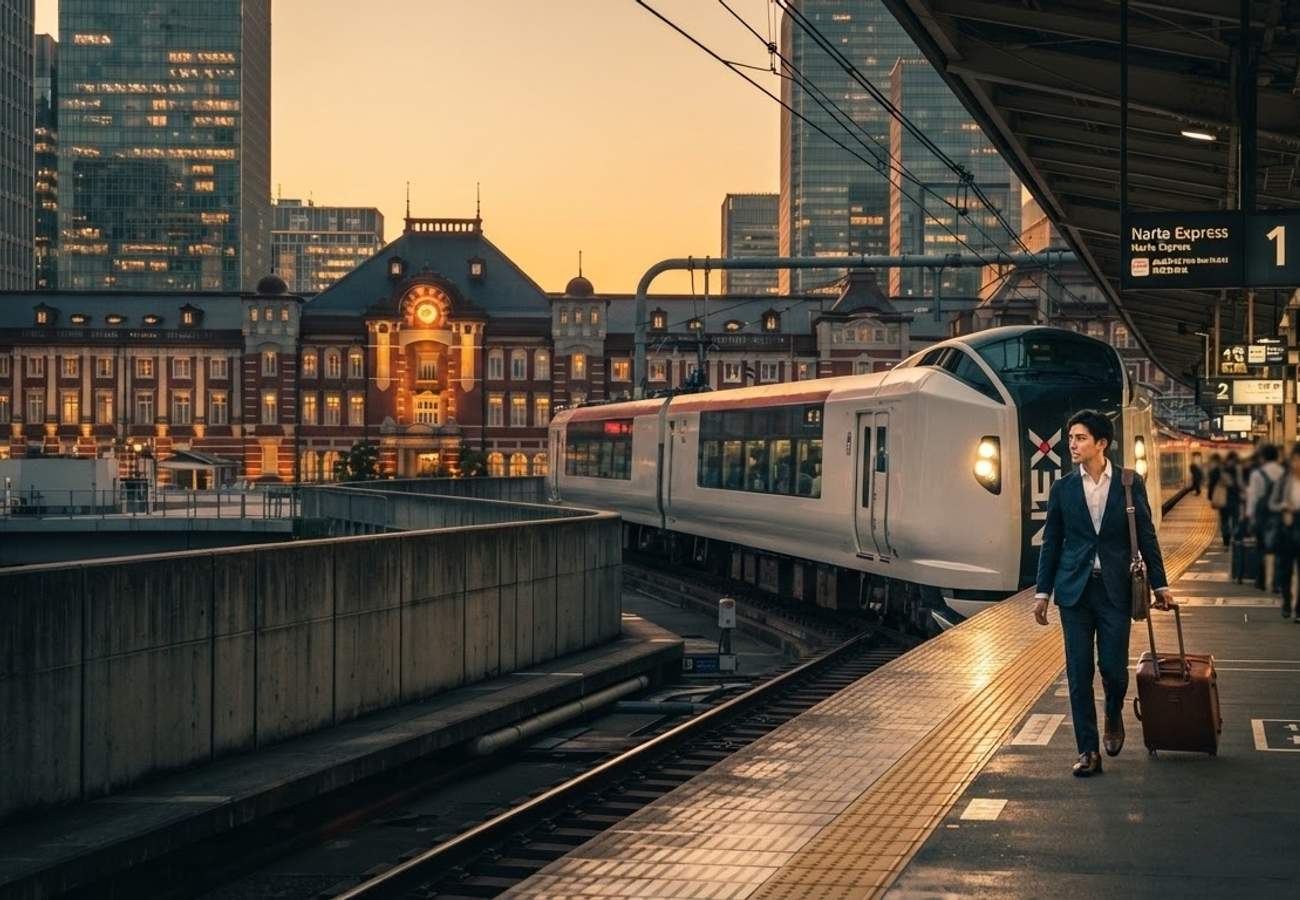
Image generated by AI
Two specific service cancellations on August 23, 2026, highlighted a vulnerability in the Shinagawa-Shinjuku corridor, though the core link to Tokyo Station remained uninterrupted.
The Current State of Airport Connectivity
As of 10:55 JST on August 23, 2026, the Narita Express (N'EX) remains the primary artery for travelers entering Japan. While a complete shutdown was avoided, localized disruptions impacted morning commuters and tourists. Specifically, Service No. 2 was cancelled between Shinagawa and Shinjuku, and Service No. 15 faced a reciprocal cancellation between Shinjuku and Shinagawa.
For the visitor, the real impact was felt most acutely by those bound for Narita Airport from Shinjuku. These passengers were forced to transfer at Tokyo or Shinagawa stations, significantly increasing the physical effort of transporting luggage through some of the world's most complex transit hubs. Despite these gaps, the essential route between Narita Airport and Tokyo Station remained fully operational, ensuring the city's main gateway stayed open.
Engineering the Future: Autumn 2026 Service Shifts
While the August disruptions were temporary, travelers should prepare for more systemic changes this autumn. Intensive tunnel construction on the Yokosuka and Sōbu Rapid railway corridor will trigger significant service modifications.
The primary all-day closures are scheduled for Saturday, 5 September, and Saturday, 7 November 2026. However, the operational ripple effects extend beyond these dates. Travelers should treat the windows of 4–6 September and 6–8 November as high-disruption periods.
During these peak construction days, the rail section between Tokyo and Shinagawa will be closed from the first train until the last. While airport trains will generally continue to run between Narita Airport and Tokyo Station, services extending toward Shinjuku, Yokohama, and Ōfuna will be suspended or modified. These changes typically begin around 19:40 at Tokyo Station on the eve of the closure and persist until approximately 08:00 the following morning.
Critical Service Data for 2026 Travelers
| Category | Verified Detail | Travel Impact |
|---|---|---|
| Status Snapshot | 10:55 JST, 23 August 2026 | Confirms operational window for August disruptions |
| Service No. 2 | Shinagawa–Shinjuku suspended | Shinjuku-bound passengers required transfers |
| Service No. 15 | Shinjuku–Shinagawa suspended | Airport-bound passengers from Shinjuku required transfers |
| Core Route | Tokyo–Narita Airport active | Principal airport access remained stable |
| Transit Speed | ~53 minutes to Tokyo Station | Baseline for direct airport-to-city connection |
| Major Closures | 5 September & 7 November 2026 | Full closures between Tokyo and Shinagawa |
| Immigration | No changes to visa/passport rules | Disruptions are strictly transport-related |
Cultural & Environmental Value: The N'EX Experience
The Narita Express is more than a transit tool; it is an introduction to Japanese efficiency and accessibility. By consolidating passengers into dedicated airport expresses, the system reduces the strain on local commuter lines, supporting a more sustainable urban flow.
For the traveler, the value lies in the seamless transition from an international flight to a high-comfort environment. The trains feature dedicated luggage storage with dial-type locks and surveillance cameras, reflecting the regional priority on security and order. Accessibility is integrated through Braille signage, multipurpose spaces, and minimized gaps between platforms and trains, ensuring that Japan's tourism infrastructure remains inclusive for those with limited mobility.
Visitor Insider Tips
Navigating Tokyo's rail system during construction requires a strategy beyond the timetable. To avoid stress, follow these local expert recommendations:
- The "Buffer Hour" Rule: When traveling from Shinjuku, Shibuya, or Yokohama during the September and November windows, add at least 60–90 minutes to your journey. Transferring at Tokyo Station with heavy luggage can be time-consuming.
- Live Tracking: Do not rely on printed schedules. Use live railway pages and refresh them frequently; delays exceeding 30 minutes are typically reported in real-time.
- Alternative Hubs: If the N'EX is disrupted, consider the Skyliner or Access Express via Nippori or Ueno stations. These are often faster alternatives for those staying in the northern or eastern parts of the city.
- Terminal Logistics: Remember that Terminal 1 is a 5-minute walk from the station, while Terminals 2 and 3 require 5 and 10 minutes respectively.
- Ticket Nuances: If you are forced to switch to a private railway operator due to JR construction, your N'EX ticket will not be valid. Ensure you have a separate IC card (like Suica or Pasmo) topped up for seamless transitions.
Tourism Outlook
The temporary disruptions of August and the planned works in autumn are part of a broader effort to modernize Tokyo's aging rail infrastructure. While these closures create short-term hurdles, the long-term result will be a more resilient and higher-capacity network capable of handling the projected increase in global tourism for 2027 and beyond. As long as the core link to Tokyo Station remains intact, the Narita Express continues to be the gold standard for airport accessibility in Japan.
Stay agile, check your train number, and allow the journey to be part of the adventure.
Related Travel Guides
Disclaimer
This article is for informational and educational purposes only. It does not constitute legal, financial, or professional advice. While we strive to provide accurate and up-to-date information, travel policies, regulations, and conditions change rapidly. Always verify information with official sources before making travel decisions. Nomad Lawyer makes no representations about the accuracy, reliability, completeness, or suitability of the information provided. Readers should consult qualified professionals for advice specific to their circumstances. The views expressed in this article are those of the author and do not necessarily reflect the views of Nomad Lawyer.
Kunal K Choudhary
Co-Founder & Contributor
A passionate traveller and tech enthusiast. Kunal contributes to the vision and growth of Nomad Lawyer, bringing fresh perspectives and driving the community forward.
Learn more about our team →