
Mürren Switzerland's Car-Free Alpine Paradise Redefines Sustainable Travel
Mürren, Switzerland's car-free alpine village at 1,638m in Bernese Oberland offers world-class skiing, hiking, and sustainable tourism. No vehicles allowed—only cable cars and mountain tranquility reshaping global travel trends.

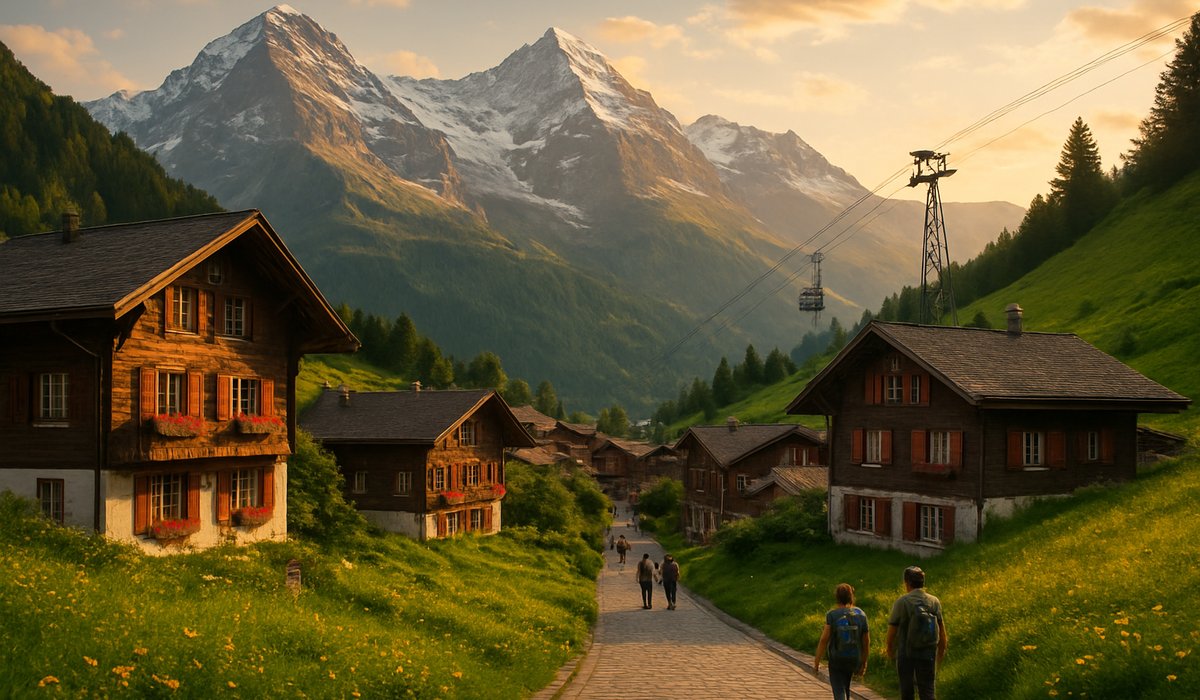
Image generated by AI
Quick Summary
- Location: Mürren in Switzerland's Bernese Oberland at 1,638 meters elevation
- Unique Feature: 100% car-free village with cable car-only access (Schilthornbahn 4-minute ascent)
- Population: Approximately 430 year-round residents maintaining authentic alpine culture
- Winter: 50+ kilometers of ski slopes including famous 16-km Schilthorn descent
- Summer: Hiking, mountain biking, paragliding in emerald mountain meadows
- Global Significance: Model for sustainable tourism and eco-friendly travel trends
Mürren Emerges as Global Model for Sustainable Alpine Tourism
Mürren, Switzerland's legendary car-free mountain village, is reshaping how the travel industry approaches sustainable destination development through its century-long commitment to preserving Alpine environment without sacrificing world-class visitor experiences. Perched at 1,638 meters in the Bernese Oberland region, this picturesque settlement represents a rare success story: maintaining authentic cultural heritage while attracting international travelers seeking escape from modern congestion. The absence of vehicles—replaced entirely by innovative cable-car infrastructure and pedestrian-only streets—has positioned Mürren as the definitive template for eco-conscious tourism as global interest in sustainable travel accelerates.
The village demonstrates that automotive access isn't necessary for tourism excellence; thoughtful infrastructure solutions and community commitment matter far more.
The Geographic Marvel: Alpine Elevation and Legendary Views
Mürren's breathtaking geography explains its magnetic appeal to travelers worldwide.
Elevation and Mountain Theater
The village sits at 1,638 meters above sea level, placing it in the heart of the Bernese Oberland's most dramatic mountain landscape. From virtually any vantage point in Mürren, three legendary Alpine peaks dominate the horizon:
- Eiger: The towering 3,970-meter north-face icon
- Mönch: The 4,107-meter "Monk" peak commanding respect
- Jungfrau: The 4,158-meter "Maiden" glacier mountain
These three peaks create a backdrop so visually stunning that UNESCO protection and international conservation efforts recognize their irreplaceable significance. The proximity to these world-famous mountains transforms everyday village life into continuous Alpine theater.
Transportation Revolution: From Footpaths to Modern Cable Cars
Modern Mürren's accessibility paradoxically depends on 19th-century ingenuity.
Before Cable Cars: Isolation and Hardship
For centuries, Mürren residents navigated treacherous footpaths and mule tracks connecting the village to surrounding settlements. Trading goods, moving families, and accessing services required physically demanding mountain journeys—journeys that killed travelers during harsh winters and dangerous seasons. This geographic isolation, while preserving culture, created genuine hardship for Mürren's population.
1891: Mountain Railway Breakthrough
The construction of a mountain railway connecting Mürren to Grütschalp in 1891 fundamentally transformed accessibility. Goods could reach the village more reliably. Residents gained safer passage. The railway signaled that connectivity and environmental preservation weren't mutually exclusive.
The Schilthornbahn: Engineering Marvel
The Schilthornbahn cable car represents the modern pinnacle of sustainable mountain access:
- Gradient: 159.4% steepness—one of Earth's steepest cable cars
- Journey duration: Just 4 minutes from valley to village summit
- Capacity: Moves hundreds of visitors daily without environmental degradation
- Experience: Provides cinematic Alpine views during the ascent itself
This cable car system proved revolutionary: visitors could reach Mürren without requiring automobile roads carving through protected Alpine ecosystems. The solution transcended simple transit—it became part of the travel experience itself.
The Village's Living History: 13th Century to Modern Age
Mürren's 700+ year story reveals how authentic culture survives commercial tourism pressure.
Medieval Origins and Architectural Heritage
Mürren's stone cottages and timber chalets trace lineage to the 13th century, with original structures remaining inhabited today. This architectural continuity creates an atmosphere impossible to replicate or fake—genuine historical buildings shelter contemporary residents, perfectly preserving period aesthetics without theme-park artificiality.
Late 1800s British Discovery and Alpine Tourism Birth
British skiers discovered Mürren's spectacular slopes in the late 1800s, transforming the village from isolated farming community into Alpine destination. This was the moment Mürren's tourism identity crystallized around winter sports capabilities.
Hotel Mürren Palace: First Swiss Palatial Hotel
The Hotel Mürren Palace remains Switzerland's pioneering luxury Alpine property. Built during the Victorian era, this iconic structure symbolizes Mürren's golden age as Europe's premier mountain resort destination. Its continued operation demonstrates Mürren's sustained appeal across 150+ years of tourism evolution.
Winter Sports Heritage
The village became headquarters for Swiss skiing development:
- Ski schools: Training generations of competitive and recreational skiers
- Downhill racing: Hosting competitions that shaped Alpine skiing sport
- Cultural impact: Mürren essentially invented modern Alpine skiing as organized sport
- Continued prominence: Still hosting international ski events today
Year-Round Alpine Activities: Beyond Winter Sports
Mürren defies seasonal tourism stereotypes through genuine multi-season appeal.
Winter: The Ski Paradise Season
Winter transforms Mürren into dedicated ski destination:
- 50+ kilometers of maintained ski slopes across varying difficulty levels
- The Schilthorn run: Legendary 16-kilometer descent from 2,970-meter summit to valley
- Ski schools and rental services: Supporting all proficiency levels
- Safety record: Grooming and avalanche management establish reliability
- Season duration: November through April typically operational
The Schilthorn descent deserves particular attention—it circumnavigates the mountain, offering continuously evolving views while maintaining intermediate-to-advanced terrain.
Summer: The Emerald Season
Melting snow reveals transformed landscape:
- Hiking networks: Extensive trails connecting Mürren to neighboring Alpine villages
- Mountain biking: Technical and leisurely routes for various skill levels
- Paragliding: Bird's-eye perspective of Alpine landscape and distant valleys
- Wildflower meadows: Botanical magnificence typically peaking July-August
- Temperature: Cool 10-15°C typically, refreshing after European summer heat
Summer hiking terrain attracts international trekking communities seeking relatively accessible Alpine routes without glacial technical requirements.
The Car-Free Lifestyle: Philosophy and Practice
Mürren's prohibition on vehicles represents much more than traffic restriction—it embodies deliberate environmental and social commitment.
Transportation Model
- All vehicles parked in valley below, typically in Stechelberg or Grütschalp
- Cable car dominance: Schilthornbahn and alternative routes provide necessary vehicular replacement
- Pedestrian infrastructure: Narrow cobblestone streets designed for foot traffic, not automobiles
- Cargo delivery: Mountain railways and equipment appropriately handle essential goods
- Emergency services: Specialized equipment manages medical situations
This system functions flawlessly—the village hasn't suffered transportation inadequacy through 130+ years of car-free existence.
Community Benefits
The absence of vehicles generates measurable quality-of-life improvements:
- Noise reduction: Mountain silence uninterrupted by engine sounds
- Air quality: Zero automotive emissions degrading Alpine atmosphere
- Safety: Children ride bicycles without traffic danger
- Social cohesion: Pedestrian-only streets encourage spontaneous community interaction
- Mental health: Travelers report stress reduction and peaceful renewal
Environmental Preservation
The car-free model directly protects the Alpine ecosystem:
- Road construction eliminated: Mountain meadows remain undisturbed
- Soil integrity: No tire compaction or chemical runoff from vehicles
- Wildlife corridors: Animals navigate uninterrupted paths across traditional territorial ranges
- Carbon footprint: Zero direct emissions from village transportation
- Climate resilience: Preserved ecosystems better withstand climate change pressures
Cultural Integration: Tradition Meeting Modernity
Mürren seamlessly blends 13th-century Alpine traditions with contemporary comfort.
Architecture and Aesthetics
Wooden chalets feature characteristic Swiss design: steep roofs shedding heavy snow, flower-box overflows during blooming season, traditionally painted timber elements honoring regional patterns. Modern interiors provide contemporary plumbing, heating, and internet connectivity—but authentic exterior aesthetics remain unchanged.
Culinary Heritage
Traditional Swiss mountain cuisine dominates restaurant offerings:
- Cheese fondue: Melted Alpine cheese served communally, perfect for group dining
- Raclette: Warm cheese scraped onto bread or potatoes
- Rösti: Crispy potato cakes paired with Alpine sausages
- Wild mushroom preparations: Seasonal specialties utilizing mountain foraging
- Swiss chocolate: Artisanal confections serve as souvenir purchases
Cultural Events and Festivals
Beyond daily traditions, Mürren maintains seasonal celebrations—Alpine music festivals, regional sports competitions, and harvest celebrations—inviting travelers to participate in authentic community life rather than observing from tourism distance.
Global Impact: Mürren's Model for Sustainable Destination Development
The travel industry increasingly recognizes Mürren as the definitive sustainability template.
Sustainable Tourism Leadership
Mürren demonstrates several revolutionary principles:
- Environmental preservation prioritized over maximum commercialization
- Infrastructure investment in public systems rather than automotive convenience
- Population-controlled access maintaining community-to-visitor balance
- Economic stability through sustainable development rather than growth exploitation
- Cultural continuity actively protected rather than commodified
Global Replication Opportunities
Destinations worldwide facing overtourism, environmental degradation, and cultural erosion increasingly reference Mürren as proof that alternative models exist. The Schilthornbahn system particularly interests transportation planners managing sensitive mountain ecosystems.
The Slow Travel Movement
Mürren perfectly embodies "slow travel" philosophy—travelers spending extended time in single location, engaging deeply with community culture, prioritizing quality experience over quantity of destinations visited. This contrasts with rushed tourism extracting Instagram photos rather than meaningful memory creation.
What This Means for Travelers
Visiting Mürren requires abandoning automotive convenience assumptions—and discovering profound value through this shift.
- No car anxiety: Forget navigation, parking, and traffic stress
- Authentic experiences: Marketing-light community maintains genuine character
- Physical wellness: Mountain air and outdoor activity build health
- Mental renewal: Silence and natural beauty reduce stress effectively
- Cultural connection: Small population enables real resident interaction
- Investment justification: Experience remains unforgettable decades later
FAQ: Mürren Switzerland Travel Essentials
Q: How do I get to Mürren if there are no cars? A: Fly to Zurich or Bern airports, train to Interlaken, then cable car systems reach Mürren. The journey itself becomes adventure rather than logistical burden. Most visitors appreciate this gradual transition into mountain environment rather than arriving via highway.
Q: Can I bring my car to Mürren? A: Absolutely not. Vehicles cannot pass cable car systems. Park in valley and ascend via Schilthornbahn. This restriction universally strengthens the peaceful atmosphere—no exceptions exist.
Q: What's the best season to visit Mürren? A: Winter for skiing (November-April), summer for hiking (June-September). Shoulder seasons (May, October) offer fewer crowds but unpredictable weather. Choose based on activity preference—both seasons offer remarkable value.
Q: How much does Mürren cost compared to other Swiss destinations? A: Surprisingly accessible. Accommodation ranges €80-250 per night. Restaurant meals average €15-35. While Swiss prices remain generally high, Mürren offers better value than Zermatt or Interlaken through authentic local establishments avoiding luxury premium pricing.
Q: Is Mürren suitable for families with young children? A: Excellent family destination. Safe pedestrian-only streets, cable car excitement for kids, summer hiking adapted to different fitness levels, and mountain air quality benefit children's respiratory development. The car-free environment eliminates traffic injury risk entirely.
Disclaimer
This article is for informational and educational purposes only. It does not constitute legal, financial, or professional advice. While we strive to provide accurate and up-to-date information, travel policies, regulations, and conditions change rapidly. Always verify information with official sources before making travel decisions. Nomad Lawyer makes no representations about the accuracy, reliability, completeness, or suitability of the information provided. Readers should consult qualified professionals for advice specific to their circumstances. The views expressed in this article are those of the author and do not necessarily reflect the views of Nomad Lawyer.
Preeti Gunjan
Contributor & Community Manager
A passionate traveller and community builder. Preeti helps grow the Nomad Lawyer community, fostering engagement and bringing the reader experience to life.
Learn more about our team →