
Morelia Mexico Blends World Heritage Beauty With a Powerful Responsible Travel Story
Morelia Mexico Blends World Heritage Beauty With a Powerful Responsible Travel Story

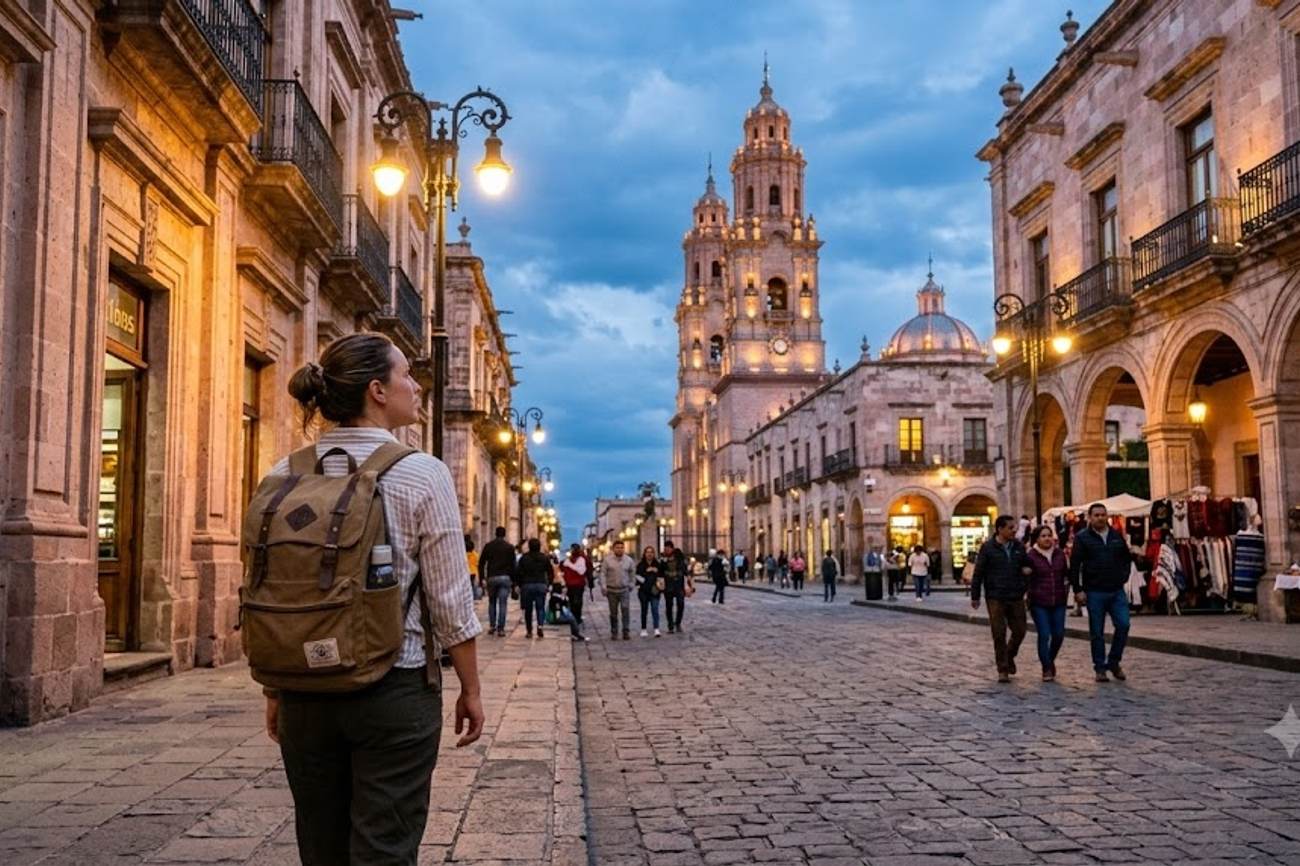
Image generated by AI
The shift toward "slow travel" in heritage destinations is evidenced by the growth of secondary-city tourism, where visitors are prioritizing depth over breadth. In Morelia, this is reflected in a urban layout that has remained largely intact since the sixteenth century, positioning the city not as a transit hub, but as a destination where the primary "attraction" is the preserved 1991 UNESCO World Heritage status of its entire historic center.
The Architecture of Heritage in Numbers
Morelia's value proposition is built on a specific, quantifiable density of historical assets. The city is not defined by a single landmark but by a concentrated cluster of 249 monuments of prime importance within its central historic area. This density creates a high-value "walkable loop" for the traveler, reducing the need for motorized transport and aligning with global shifts toward sustainable urban tourism.
The structural composition of this heritage zone is precisely categorized:
- 21 Churches: These serve as the primary anchors for the city's skyline and spiritual history.
- 20 Civil Buildings: These structures represent the administrative and social evolution of the region.
- 200+ Historic Buildings: A broad inventory reflecting a chronological progression of architectural styles, including Medieval, Renaissance, Baroque, and Neoclassical.
From a data perspective, the use of local pink stone is more than an aesthetic choice; it is a unifying material marker that defines the city's visual identity. This material consistency, paired with a street plan that adapts to the natural slopes of the hill site, transforms the city into a living laboratory for Spanish Renaissance urban planning integrated with Mesoamerican spatial experiences.
Comparative Context: Heritage Urbanism vs. Mass Tourism
When comparing Morelia to Mexico's primary tourism magnets, a clear divergence in market positioning emerges. While coastal hubs focus on high-volume throughput and resort-based spending, Morelia is pivoting toward a "Cultural Gateway" model. This strategy leverages the city's status as the capital of Michoacán to extend the average length of stay.
The following table illustrates the shift in traveler behavior patterns when moving from "Fast City Break" models to the "Slow Travel" model adopted by Morelia:
| Metric | Fast City Break Model (Primary Hubs) | Slow Travel Model (Morelia/Heritage) |
|---|---|---|
| Primary Movement | Taxi/Ride-share between landmarks | Pedestrian-centric exploration |
| Engagement Depth | Checklist-based (Top 5 sites) | Experience-based (Daily life/Local art) |
| Economic Impact | High-volume, short-term spending | Sustained, local-integrated spending |
| Infrastructure Stress | Peak-hour congestion at major sites | Distributed flow across 249 monuments |
| Visitor Intent | Sightseeing and consumption | Cultural immersion and historical study |
This shift is part of a broader global trend tracked by the World Tourism Organization (UNWTO), where travelers are increasingly seeking "authentic" experiences in secondary cities to avoid the pitfalls of overtourism found in primary capitals. By positioning itself as a base for exploring the wider Michoacán state—including its craft traditions and regional gastronomy—Morelia is attempting to capture a higher-value, longer-stay demographic.
Practical Traveler Advisory and Strategic Insights
For the individual traveler, the data suggests that Morelia is no longer a "stopover" but a destination requiring a dedicated itinerary. Because the city's strength lies in its integrated landscape rather than isolated monuments, a rushed visit results in a significant loss of value.
Actionable Booking and Travel Advice:
- Duration: Allocate a minimum of 3-4 days. This allows for the transition from the urban center to the wider Michoacán region, supporting the "Gateway" model and reducing the stress on the city's transport infrastructure.
- Navigation: Prioritize walking. With 249 monuments of importance concentrated in the center, the most efficient way to experience the Renaissance planning is on foot.
- Economic Contribution: Shift spending toward independent artisans and local eateries. As UNESCO notes that tourism pressures can lead to a loss of housing and local services, spending directly with residents helps maintain the "living city" aspect of the World Heritage site.
- Timing: Visit during periods that allow for slow exploration of the public squares and gardens, which are designed for broad views and contemplation rather than rapid transit.
The Trajectory of Heritage Preservation
The future of Morelia depends on its ability to balance economic growth with the integrity of its 1991 UNESCO designation. The data indicates a tension between the "positive" side of heritage travel—where tourism funds the restoration of the 200+ historic buildings—and the "negative" pressures of real estate speculation.
According to trends monitored by IATA regarding regional connectivity and Statista regarding luxury travel shifts, there is an increasing demand for "boutique" heritage stays. Morelia has already begun the reuse of old residential buildings for tourism. However, the trajectory suggests that if the city does not manage congestion and the displacement of local residents, it risks becoming a "museum city"—a place that looks historic but lacks the living culture that attracts the slow traveler.
The projection for the next five years is a move toward "Managed Capacity." We can expect Morelia to implement more stringent guidelines on residential zoning in the historic center to ensure that the 21 churches and 20 civil buildings remain surrounded by a functioning community rather than just hotels.
FAQ: Morelia Heritage Trends 2024-2025
Will hotel prices increase in the historic center? Yes. As more residential buildings are converted into boutique tourism assets to leverage the UNESCO status, supply for traditional lodging may decrease, driving up prices for high-end heritage stays.
Is now a good time to visit Morelia? Yes, particularly for those avoiding the overtourism of Mexico's coastlines. The current "slow travel" pivot makes it an ideal destination for cultural immersion before mass-market operators fully saturate the region.
Which travel style is best for this destination? Pedestrian-based cultural tourism. The city's layout is specifically designed for walking, and the density of the 249 monuments makes car travel inefficient and detrimental to the city's preservation.
How does Morelia differ from other Mexican colonial cities? Its unique use of pink stone and its specific role in the independence movement (linked to José María Morelos) provide a distinct visual and historical identity compared to other heritage sites.
The value of Morelia lies not in the stone itself, but in the pace at which the stone allows you to live.
Tags: Michoacán-Tourism-Growth-2025, Morelia-UNESCO-Heritage-Data, Mexico-Slow-Travel-Trends, Heritage-Urbanism-Metrics, Michoacán-Regional-Economy
Related Travel Guides
- New York Unveils $1 Billion Sustainable Future Programme to Cut Energy Costs and Expand Clean Power
- New Religious Tourism Plans at Borobudur and Prambanan Temples Set to Attract More Global Travellers to Indonesia
- Richmond Second Street Festival 2026 Turns Jackson Ward Into a Living Rhythm of Black Heritage
Disclaimer
This article is for informational and educational purposes only. It does not constitute legal, financial, or professional advice. While we strive to provide accurate and up-to-date information, travel policies, regulations, and conditions change rapidly. Always verify information with official sources before making travel decisions. Nomad Lawyer makes no representations about the accuracy, reliability, completeness, or suitability of the information provided. Readers should consult qualified professionals for advice specific to their circumstances. The views expressed in this article are those of the author and do not necessarily reflect the views of Nomad Lawyer.
Naina Thakur
Contributor & Travel Specialist
Travel enthusiast and legal writer covering visa regulations, responsible tourism, and cultural journeys across global destinations.
Learn more about our team →