
New Religious Tourism Plans at Borobudur and Prambanan Temples Set to Attract More Global Travellers to Indonesia
New Religious Tourism Plans at Borobudur and Prambanan Temples Set to Attract More Global Travellers to Indonesia

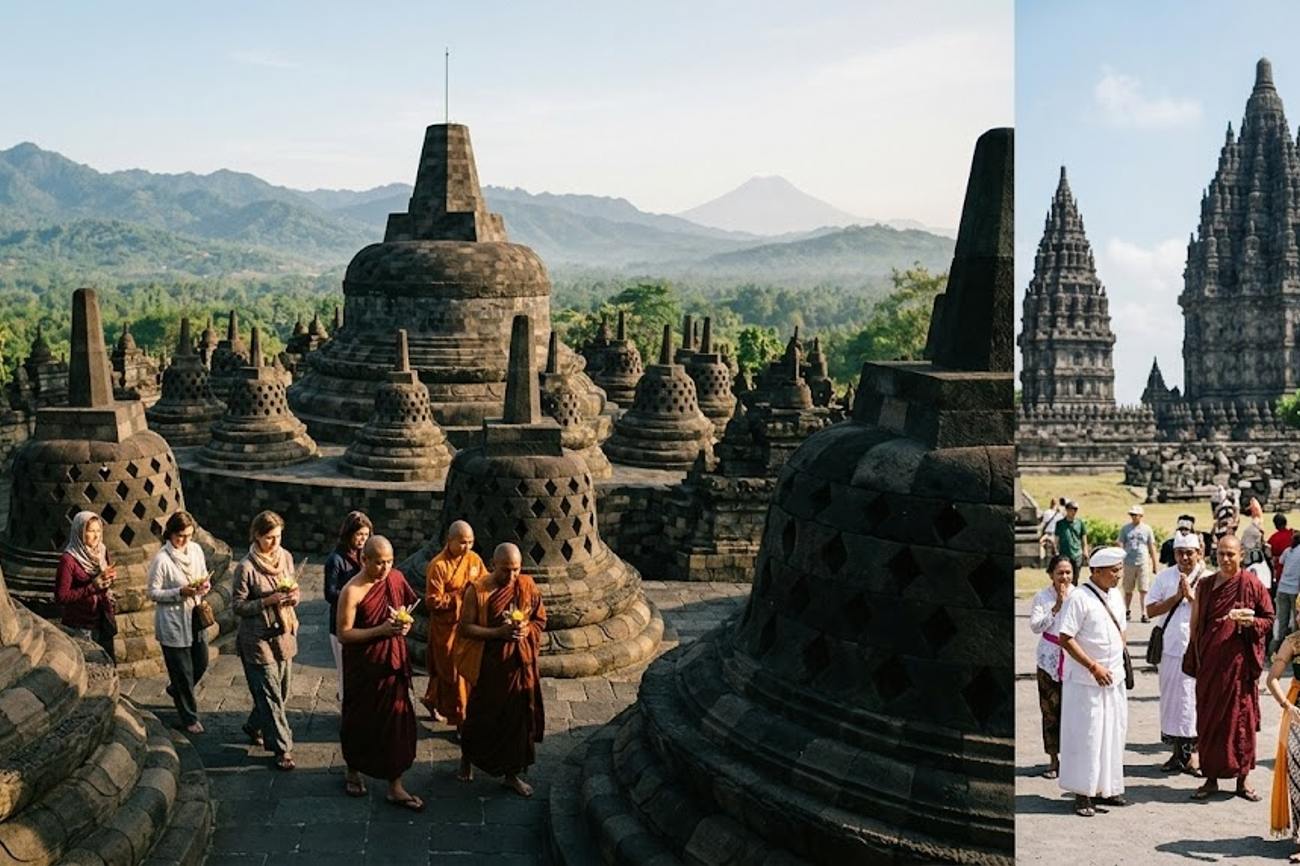
Image generated by AI
[Jakarta, May 2024] — The Indonesian government has launched a strategic overhaul of its most iconic heritage sites, transforming the Borobudur, Prambanan, Mendut, and Pawon temples into global hubs for sustainable religious tourism and spiritual pilgrimage.
The initiative, formalized through a renewed strategic cooperation agreement, shifts the operational focus of these ancient landmarks from passive sightseeing destinations to active centers of faith and cultural exchange. By integrating the efforts of the Ministry of Tourism, various government agencies, and local authorities, Indonesia intends to institutionalize a framework that accommodates international Buddhist and Hindu pilgrims while simultaneously accelerating regional economic development.
The Strategic Pivot to Spiritual Tourism
The catalyst for this policy shift is a desire to move beyond "conventional sightseeing" toward a model of "meaningful travel." The Indonesian government is repositioning these sites to serve as living centers of tradition rather than static museum pieces. This involves the creation of sustainable culture centers dedicated to Hindu and Buddhist practices, which will facilitate pilgrimage, academic research, and community-led development.
Central to this plan is the balance between three competing interests: the requirements of active worship, the demands of global tourism growth, and the non-negotiable necessity of heritage preservation. The updated framework provides a more adaptable management system, allowing the sites to scale their services based on fluctuating visitor numbers without compromising the structural integrity or sanctity of the monuments.
Markets and Sites Impacted
The program targets specific religious demographics and geographical regions, focusing on the "Tirtha Yatra" (Hindu pilgrimage) and "Dharmayatra Buddha" (Buddhist pilgrimage) traditions.
| Temple Site | Primary Religious Focus | Key Objectives | Target Audience |
|---|---|---|---|
| Prambanan | Hindu | Strengthening the site as a primary hub for Tirtha Yatra; integrating architecture tours with spiritual practice. | Global Hindu community, history enthusiasts |
| Borobudur | Buddhist | Expanding the site's role as a world-class monument for spiritual reflection and Buddhist heritage. | International Buddhist pilgrims, cultural tourists |
| Mendut | Buddhist | Supporting the Dharmayatra Buddha tradition and creating sustainable tourism hubs. | Spiritual seekers, academic researchers |
| Pawon | Buddhist | Integrating the site into the broader Buddhist pilgrimage circuit in Central Java. | Religious travelers, heritage scholars |
Practical Traveler Advisory and Strategic Insights
For the average international traveler or religious pilgrim, this policy shift translates into a change in how these sites are accessed and experienced. The government's move toward "innovative tourism products" suggests a transition toward more curated, experience-based visits.
For Pilgrims: There is now a formalized, government-backed guarantee that these sites will remain accessible for active worship. The renewal of the cooperation agreement ensures that religious communities from around the world have a recognized legal and operational framework to conduct ceremonies and spiritual retreats.
For Cultural Tourists: Visitors should expect an increase in educational infrastructure. The plan to establish research and culture centers means that sightseeing will likely be supplemented by deeper academic contexts, guided spiritual narratives, and structured cultural programs.
For the Budget and Boutique Traveler: The emphasis on "community empowerment" means that the tourism ecosystem surrounding the temples is expanding. Travelers will find more integrated opportunities to engage with local artisans, traditional food providers, and community-run accommodations, moving the economic benefit away from large corporate operators and toward the local village economies.
Research, Innovation, and Conservation
Beyond the spiritual aspect, the Indonesian government is leveraging these sites to attract a new demographic of "educational tourists." The temples are being repositioned as laboratories for the study of religion, art, and history. By opening these sites to international cultural organizations and educational institutions, Indonesia aims to foster a global exchange of knowledge regarding Southeast Asian heritage.
This academic push is inextricably linked to the conservation strategy. The government has stated that visitor growth must be coupled with strict protection of the assets. This likely implies the implementation of more rigorous visitor management systems—such as capped entry numbers or mandatory guided tours—to prevent the degradation of the stone structures under the weight of increased pilgrimage traffic.
The integration of the UNESCO World Heritage Centre standards remains a silent but critical backdrop to these developments, as the government seeks to maintain the "authenticity" of the complexes while modernizing the services provided to the public.
Community Integration and Economic Impact
A primary pillar of the new vision is the prevention of "tourism leakage," where profits from heritage sites leave the local area. The government is actively designing a model where the growth of religious tourism directly fuels the regional economy of Central Java.
The Indonesian government has announced new religious tourism plans at Borobudur and Prambanan Temples, aiming to attract more global travellers to the country. According to the Indonesian Ministry of Tourism, these plans include improved infrastructure and facilities to enhance the overall tourist experience. This move is expected to boost tourism revenue and promote Indonesia's rich cultural heritage.
Local residents are being positioned as primary stakeholders. The development plan encourages the growth of:
- Artisanal Workshops: Local craftsmen creating religious artifacts and traditional art.
- Agritourism and Culinary Experiences: Integration of local food systems into the visitor experience.
- Hospitality Expansion: Support for local guesthouses and boutique accommodation providers.
By weaving the local community into the fabric of the pilgrimage experience, Indonesia intends to create a sustainable loop where the residents become the primary guardians of the heritage sites, as their livelihoods are now directly tied to the preservation of the temples.
FAQ: Indonesia Religious Tourism 2024
Will there be restrictions on non-religious visitors at Borobudur or Prambanan? No. The initiative aims to balance worship with tourism. While the sites will be strengthened as religious hubs, they remain open to all international visitors interested in history, architecture, and culture.
How does this affect the cost of visiting these temples? The source does not specify price changes, but the move toward "innovative tourism products" and "sustainable hubs" often involves the introduction of tiered ticketing or specialized guided experience packages.
Can international researchers apply to study at these sites? Yes. The renewed cooperation specifically expands the role of these temples as centers for research and education, welcoming cultural organizations and academic institutions to explore Indonesia's historical legacy.
Are there new requirements for dress codes or behavior? While not explicitly detailed in the announcement, the focus on "respecting the sacred importance" and "religious practices" suggests that visitors will be expected to adhere to strict spiritual etiquette and modesty standards.
Indonesia is betting that the path to economic growth runs through the preservation of the sacred.
Related Travel Guides
- Richmond Second Street Festival 2026 Turns Jackson Ward Into a Living Rhythm of Black Heritage
- Sweden Aligns With Denmark and Other Nordic Countries Fueling Colombia Tourism Growth as Arrivals Rise Fourfold
- Greece Tourism Enters a New Phase as Travellers Seek Value Authenticity and Lesser Known Destinations: All You Need to Know
Disclaimer
This article is for informational and educational purposes only. It does not constitute legal, financial, or professional advice. While we strive to provide accurate and up-to-date information, travel policies, regulations, and conditions change rapidly. Always verify information with official sources before making travel decisions. Nomad Lawyer makes no representations about the accuracy, reliability, completeness, or suitability of the information provided. Readers should consult qualified professionals for advice specific to their circumstances. The views expressed in this article are those of the author and do not necessarily reflect the views of Nomad Lawyer.
Preeti Gunjan
Contributor & Community Manager
A passionate traveller and community builder. Preeti helps grow the Nomad Lawyer community, fostering engagement and bringing the reader experience to life.
Learn more about our team →