
Minneapolis (MSP) Airport Crisis: Delta and Southwest Trigger Travel Chaos with 80 Disrupted Flights Crippling US Transit: Airline News
A massive wave of operational failures at Minneapolis-Saint Paul International Airport (MSP) leaves hundreds stranded as Delta and regional carriers ground flights, triggering severe travel chaos.

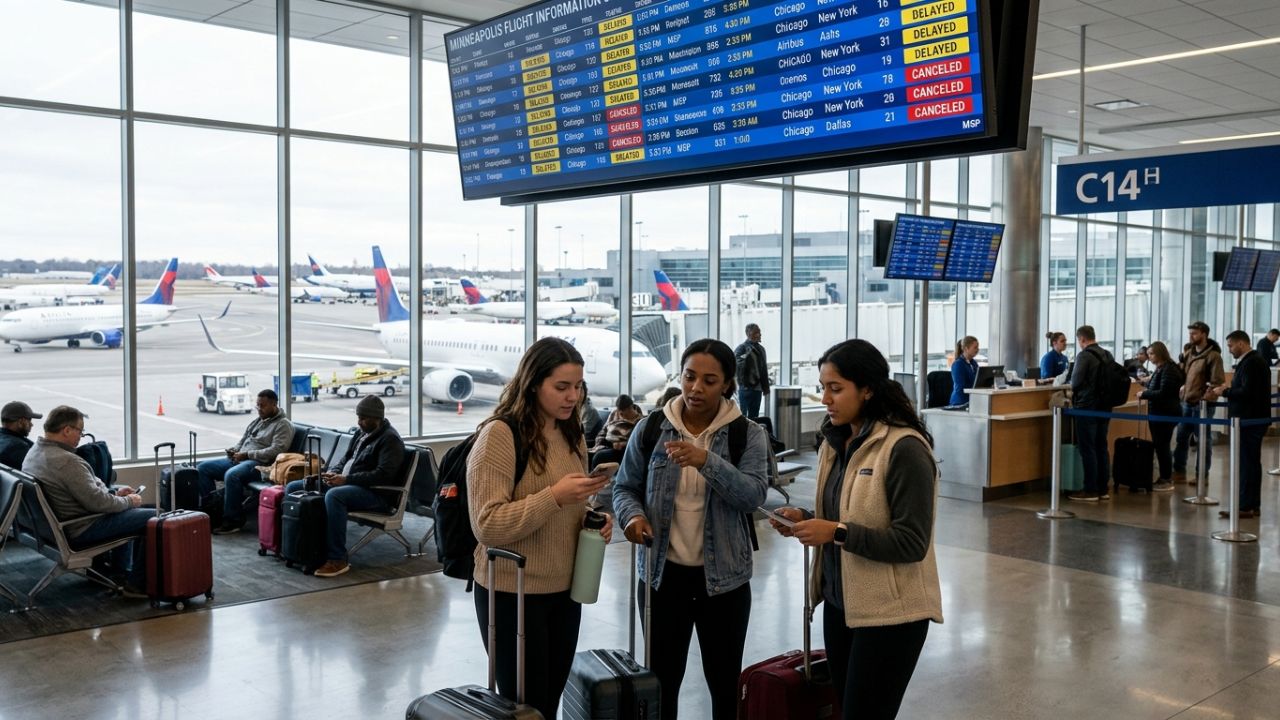
Image generated by AI
In a massive demonstration of how rapidly a primary Midwestern hub can succumb to cascading operational strain, Minneapolis-Saint Paul International Airport (MSP) has been paralyzed by severe travel chaos. Reported on June 20, 2026, as hundreds of stranded domestic and international passengers frantically monitor the latest airline news for stable rebooking options, a sweeping wave of flight cancellations and delays has severely degraded the US transit grid. Driven by undisclosed operational failures across multiple carriers—heavily led by Delta Air Lines and Southwest—authorities confirmed a total of 10 flight cancellations and 70 rolling delays. For passengers attempting to navigate this logistical nightmare and secure reliable transit out of the highly congested Minneapolis hub without becoming trapped in worsening airport disruptions, understanding the exact scale of this multi-carrier collapse is the only tactical method to bypass today's breaking aviation updates.
By introducing direct passenger coordination and dynamic scheduling backups, regional aviation hubs target growing passenger demand across vital commerce sectors. The choice to coordinate rapid flight recovery helps to manage gate capacity, supporting the broader domestic transportation network without succumbing to massive aviation gridlock.
Context: Eradicating Major Hub Transit Gridlock
For the modern domestic and cross-border traveler, relying on primary mega-hubs like Minneapolis during periods of intense operational strain is routinely an exercise in mitigating vulnerability and cascading transit failure.
Historically, the US aviation grid relies heavily on MSP as a foundational interchange point connecting northern and central states to major coastal arteries. When operations run smoothly, connectivity across this hub is incredibly efficient. However, when sudden operational issues strike dominant mainline carriers and their regional feeder networks simultaneously, the resulting travel chaos instantly severs critical links, trapping hundreds of passengers in prolonged terminal gridlock. Today's disruptions at Minneapolis perfectly illustrate the absolute fragility of this highly interconnected infrastructure. The abrupt cancellation of flights to Los Angeles, Denver, and Baltimore immediately transforms a highly optimized transit center into an emergency triage zone. This structural failure completely exposes the traveler to the paralyzing effects of localized aviation emergencies, guaranteeing that connecting flights across North America—from San Francisco to Montreal—will face severe delays as the network attempts to absorb the shock.
To view live recovery schedules, verify the active deployment of replacement aircraft, or to track potential airport access prior to heading to the terminal, stranded travelers must consult the official mobile applications of their respective carriers. For direct updates regarding how this localized disruption might shield your onward itinerary from current flight cancellations out of major US hubs, travelers should aggressively utilize their airline's direct rebooking portals. To explore live transit tracking and monitor the exact severity of the cascading bottlenecks paralyzing alternative North American airspace, passengers can consult the official FlightAware tracking service.
Section-Wise Breakdown: The Tactical Disruption Matrix
The Delta Air Lines Collapse
The absolute core of today's crisis response centers on Delta Air Lines, which operates Minneapolis as a primary fortress hub. Data confirms that Delta has borne the absolute brunt of the operational failures, officially canceling 8 flights (1% of its schedule) and delaying a massive 33 additional departures (8%). Because Delta utilizes MSP to feed its lucrative high-demand city pairs across the US, these 41 disrupted flights create an immediate, lethal ripple effect. Hundreds of passengers are currently stranded, desperately seeking alternative routings as the carrier's massive domestic network backs up.
Southwest and Regional Feeder Strain
The operational collapse extends far beyond Delta. Southwest Airlines has officially canceled 1 flight (3%) and delayed 9 others (28%), severely disrupting point-to-point travelers relying on quick turnaround schedules. Furthermore, the regional feeder networks are buckling under the pressure. Endeavor Air (operating Delta connections) has logged 12 delayed flights (17%), while SkyWest Airlines has canceled 1 flight and delayed 6. When these regional flights fail, passengers from smaller markets completely lose their access to the national grid, leaving them isolated without diverse rebooking options.
The Continental Route Impact
The severity of the MSP disruption is magnified by its massive geographic footprint. The flight cancellations have explicitly severed routes to Los Angeles, Denver, and Baltimore. Meanwhile, the rolling delays have infected a massive list of destinations, including Winnipeg, Atlanta, Windsor Locks, Nashville, Boise, Cedar Rapids, Sault Ste. Marie, Dallas, Fort Worth, Spokane, Kalispell, Kansas City, Chicago, Rochester, Louisville, San Francisco, Sacramento, Traverse City, Valparaiso, Anchorage, and Montreal. This proves definitively that the Minneapolis disruption respects no geographic boundaries, impacting both domestic operations and vital cross-border links to Canada.
Technical Roster: Official Minneapolis Disruption Matrix
To ensure absolute factual accuracy regarding the specific carrier impacts, the verified cancellation percentages, and the operational delays defining this hub crisis, the following matrix details the strictly verified data directly sourced from FlightAware as of June 20, 2026:
Official Aviation Disruption Matrix
| Airline | Cancelled Flights | Cancelled % | Delayed Flights | Delayed % |
|---|---|---|---|---|
| Delta Air Lines | 8 | 1% | 33 | 8% |
| Southwest Airlines | 1 | 3% | 9 | 28% |
| SkyWest Airlines | 1 | 0% | 6 | 3% |
| Endeavor Air | 0 | 0% | 12 | 17% |
| Frontier Airlines | 0 | 0% | 3 | 33% |
| Alaska Airlines | 0 | 0% | 2 | 18% |
| American Airlines | 0 | 0% | 2 | 11% |
| Envoy Air | 0 | 0% | 1 | 20% |
| PSA Airlines | 0 | 0% | 1 | 16% |
| Sun Country Airlines | 0 | 0% | 1 | 1% |
Data accurately reflects the verified cancellation and delay telemetry logs across all carriers at Minneapolis-Saint Paul International Airport (MSP) regarding the June 20, 2026 operational environment.
Industry Analysis: The Lethal Ripple of Multi-Carrier Strain
Aviation analysts monitoring the highly interconnected US domestic network note that the current crisis at Minneapolis is a textbook example of "systemic multi-carrier failure."
Analysts emphasize that when a fortress hub like MSP experiences disruption, it is usually contained to the primary tenant (Delta). However, the fact that ten different airlines—including Southwest, Frontier, and American—are simultaneously logging delays indicates a severe, localized infrastructural or operational bottleneck (such as gate management or air traffic control flow restrictions). Because regional transport networks (Endeavor Air, SkyWest) are highly interconnected with the mainline carriers, analysts warn that the sudden delay of 70 total flights creates an immediate, insurmountable logistical nightmare. As hundreds of passengers simultaneously attempt to rebook and crowd into the MSP terminal, the localized customer service infrastructure buckles. This inevitably leads to severe travel chaos, forcing airlines to execute strategic rolling delays across the rest of the continent until the massive influx of abruptly displaced passengers at Minneapolis can be safely processed and cleared.
Actionable Advice for Domestic and Global Travelers
Because this massive hub disruption fundamentally alters the logistics of transit through the Upper Midwest, all domestic and cross-border passengers must execute this strategic travel checklist immediately:
- Exploit Automated Rebooking: If you are currently stranded at MSP due to a Delta or Southwest cancellation, immediately abandon the physical customer service lines. The sheer volume of delayed passengers guarantees hours of waiting. Utilize the airline app or direct SMS chat systems to instantly claim seats on alternative routings through Chicago or Detroit.
- Audit Connecting Flights Aggressively: When facing rolling airport disruptions at Minneapolis, explicitly verify the flight status for onward departures to Los Angeles, Denver, or Montreal. If your inbound flight to MSP is delayed, you will miss the connection; demand that the airline reroute you through a completely different, uncompromised hub before you board your initial flight.
- Prepare for Grounded Regional Flights: If you are flying out of a regional spoke city on Endeavor Air or SkyWest, expect massive delays. Regional flights are routinely the first to be sacrificed to protect mainline departures; preemptively investigate alternative transport or accept that your itinerary is highly vulnerable to further collapse.
FAQ: Minneapolis Airport (MSP) Travel Crisis
Which airline is experiencing the most severe disruption at Minneapolis?
Delta Air Lines is heavily impacted, recording 8 cancellations and 33 flight delays at its MSP hub.
How many total flights have been disrupted at the airport?
A total of 10 flights have been explicitly canceled, alongside 70 rolling delays across multiple carriers.
Which major routes are actively affected by these cancellations?
Cancellations have officially severed critical domestic transit corridors to Los Angeles, Denver, and Baltimore.
The Reality of Fragile Hub Transit
The severe operational crisis unfolding at Minneapolis-Saint Paul International Airport proves definitively that relying on highly congested mega-hubs during periods of operational instability is terrifyingly fragile. By failing to secure direct, point-to-point flights, exposed passengers have successfully guaranteed that they will suffer the terrifying gridlock and logistical danger of sudden hub cancellations. Yet, as travelers frantically attempt to secure their domestic and cross-border transit, they must accept a critical new reality: surviving the massive disruptions of modern commercial aviation demands tactical routing planning. Navigating the highly compromised North American travel sector requires a complete refusal to accept passive stranding in congested terminals, and the absolute discipline to aggressively seek alternative, stable transit solutions when traditional multi-carrier hubs inevitably collapse.
Key Takeaways
- Major Hub Collapse: Minneapolis-Saint Paul International Airport (MSP) is experiencing severe travel chaos with 80 total disrupted flights.
- Delta Network Hit: Delta Air Lines is the primary casualty, officially canceling 8 flights and delaying 33 others.
- Southwest and Regional Strain: Southwest Airlines, Endeavor Air, and SkyWest have all logged severe delays, crippling point-to-point and feeder networks.
- Global Route Impact: The disruptions have severed or delayed critical transit links to major cities including Los Angeles, Denver, San Francisco, and Montreal.
- Digital Recovery Mandatory: Stranded passengers must utilize airline apps for rebooking, as physical customer service desks at MSP are entirely overwhelmed.
Related Travel Guides
Massive Travel Chaos Paralyzes Chicago O'Hare with 1,425 Disruptions
Disclaimer
This article is for informational and educational purposes only. It does not constitute legal, financial, or professional advice. While we strive to provide accurate and up-to-date information, travel policies, regulations, and conditions change rapidly. Always verify information with official sources before making travel decisions. Nomad Lawyer makes no representations about the accuracy, reliability, completeness, or suitability of the information provided. Readers should consult qualified professionals for advice specific to their circumstances. The views expressed in this article are those of the author and do not necessarily reflect the views of Nomad Lawyer.
Kunal K Choudhary
Co-Founder & Contributor
A passionate traveller and tech enthusiast. Kunal contributes to the vision and growth of Nomad Lawyer, bringing fresh perspectives and driving the community forward.
Learn more about our team →