
Italy and Greece Position Car-Free Mediterranean Slow Travel Islands
Italy and Greece are promoting car-free islands like Alicudi, Marettimo, and Hydra, investing millions in ports and desalination plants.
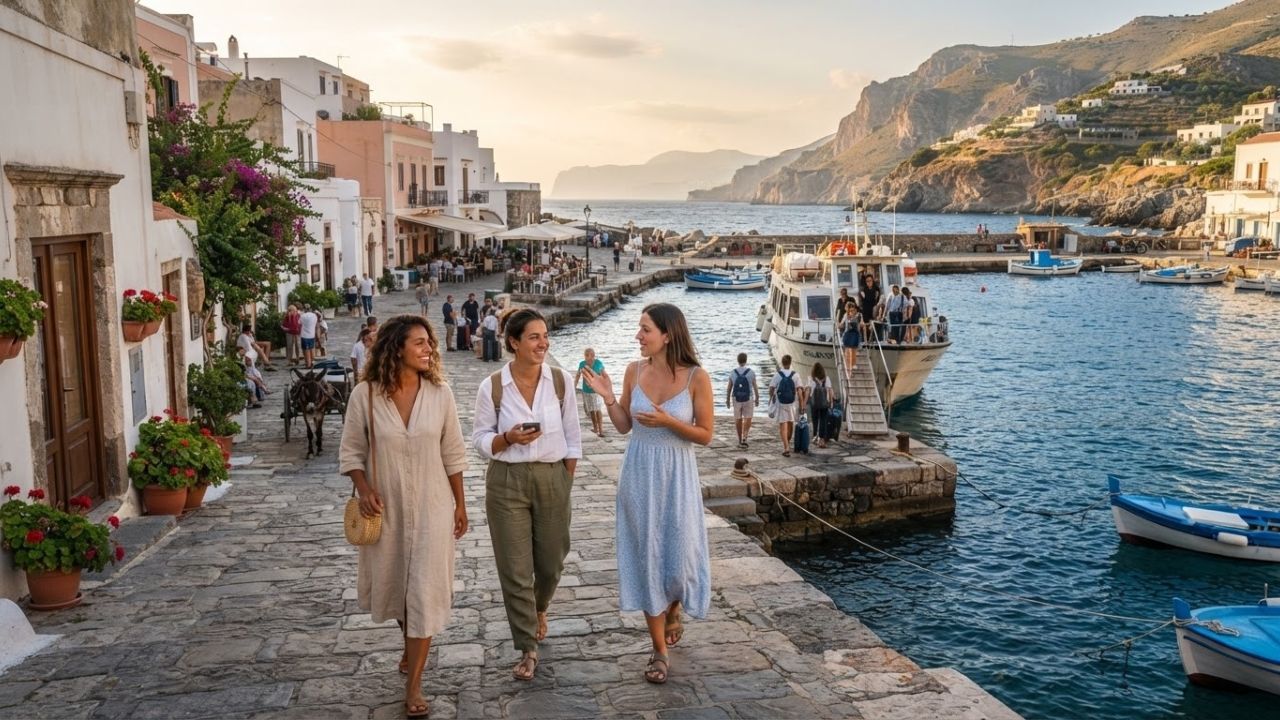
Image generated by AI
Italy and Greece are turning vehicle access limits into slow-travel assets, positioning islands like Alicudi, Filicudi, Marettimo, and Hydra as low-mobility havens.
The Core Transit Update
Maritime corridors and low-mobility transport strategies are redefining destination planning across the Mediterranean. Rather than centering tourism around rental car pick-ups and highway access, Italy and Greece are positioning vehicle-restricted islands as slow-travel preserves.
In Italy, a regional decree restricted vehicle traffic on Filicudi from June 1 to September 30, 2026, while adjacent Alicudi and Hydra in Greece enforce complete vehicle prohibitions. Behind the scenes, the Sicilian government is backing these limits with nearly €17 million in port safety funds and PNRR Green Islands modular desalination installations.
Slow-Travel Islands & Tourism Demand Specifications
Coordinating ferry-first itineraries requires aligning last-mile transport limitations with regional tourist volumes. The following tables outline the parameters of major Mediterranean slow-travel islands and recent demand statistics.
| Destination Island & Region | Primary Vehicle Restriction Status | Deployed Infrastructure Upgrades (2026) | Gateway Hubs & approach |
|---|---|---|---|
| Alicudi (Aeolian Islands, Italy) | Highly pedestrianized; no visitor road access | PNRR Green Islands modular desalination plant | Lipari, Messina (Ferry approach) |
| Filicudi (Aeolian Islands, Italy) | Restricted vehicle circulation (Jun 1 - Sep 30) | Port structural safety funding & desalination | Lipari, Messina (Ferry approach) |
| Marettimo (Egadi Islands, Italy) | Low road dependence | €12.4 million port safety works & desalination | Favignana, Trapani (Ferry approach) |
| Hydra (Saronic Gulf, Greece) | Complete vehicle & motorcycle prohibition | Walking trail maps & eco-island branding | Piraeus, Athens (Ferry approach) |
Mediterranean low-mobility slow travel islands and infrastructure specifications.
| Macro Tourism Indicator | Italy Performance (Q1 2026) | Greece Performance (Jan-May 2026) | Year-on-Year Growth Rate (%) | Primary National Source |
|---|---|---|---|---|
| Inbound Travelers / Arrivals | 23.0 million total arrivals | 8.569 million inbound arrivals | +4.2% (IT) / +20.9% (GR) | Istat / Bank of Greece |
| Overnight Stays / Receipts | 71.6 million nights | €5.3197 billion receipts | +7.5% (IT) / +25.8% (GR) | Istat / Bank of Greece |
| Extra-Hotel Stays Growth | +14.7% (compared to +3.9% hotel) | N/A | N/A | Istat Research Registry |
| International Demand Segment | 54.6% of total overnight stays | N/A | +12.3% (IT) | Istat Research Registry |
Mediterranean national tourism performance indices compiled from government reports.
Traveler Logistics Guide
From a ground-level perspective, the best way to navigate this is to buy your ferry tickets in advance and allow a three-hour transit cushion between your flight arrival and port departure, as these remote islands are accessible only by sea and have no mainland road alternatives. Checking weather forecasts is recommended.
To coordinate your low-mobility travel plan:
- Ferry Access Points: Use Lipari or Messina as gate points for the Aeolian Islands (Alicudi/Filicudi), Trapani for the Egadi Islands (Marettimo), and Piraeus for Hydra.
- Luggage Logistics: Because traditional vehicles are prohibited, prepare to carry your luggage or arrange local port-to-hotel handcart transfers through your accommodation before arriving.
- Ship Accessibility: Italy's Ministry of Infrastructure and Transport has implemented passenger ship accessibility guidelines. Look for vessels equipped with lifts and tactile pathways if traveling with reduced mobility.
- Desalination Context: Potable water on Alicudi, Filicudi, and Marettimo is generated via seawater desalination plants. Practice water preservation to respect island resource constraints.
Infrastructure Impact Assessment
The shift toward car-free tourism models is backed by significant public works. Sicily's €12.4 million port safety expansion at Marettimo and the modular desalination installations ensure that remote communities can handle tourist volumes without straining local ecosystems.
These preservation guidelines help manage the physical density of visitors, allowing Greece's Hydra and Italy's Aeolian Islands to support tourist arrivals (which rose 20.9% in Greece during January–May 2026) while keeping their historic pedestrian character intact.
Related Travel Guides
European Capitals Tighten Security to Protect Tourists from Scams
Shravani Mela 2026 Deoghar Travel Tips and Logistics Guide
10 Best Travel Tips for Mediterranean Islands, According to Reddit
Disclaimer
This article is for informational and educational purposes only. It does not constitute legal, financial, or professional advice. While we strive to provide accurate and up-to-date information, travel policies, regulations, and conditions change rapidly. Always verify information with official sources before making travel decisions. Nomad Lawyer makes no representations about the accuracy, reliability, completeness, or suitability of the information provided. Readers should consult qualified professionals for advice specific to their circumstances. The views expressed in this article are those of the author and do not necessarily reflect the views of Nomad Lawyer.