
Global Aviation Branding Shift: Malaysia Airlines Unveils Mumbai Indians Aircraft Amidst Oil Prices Uncertainty and Gulf Tensions
As Gulf tensions and a potential Strait of Hormuz closure threaten global energy and oil prices, Malaysia Airlines counters with a bold Mumbai Indians A330-300.

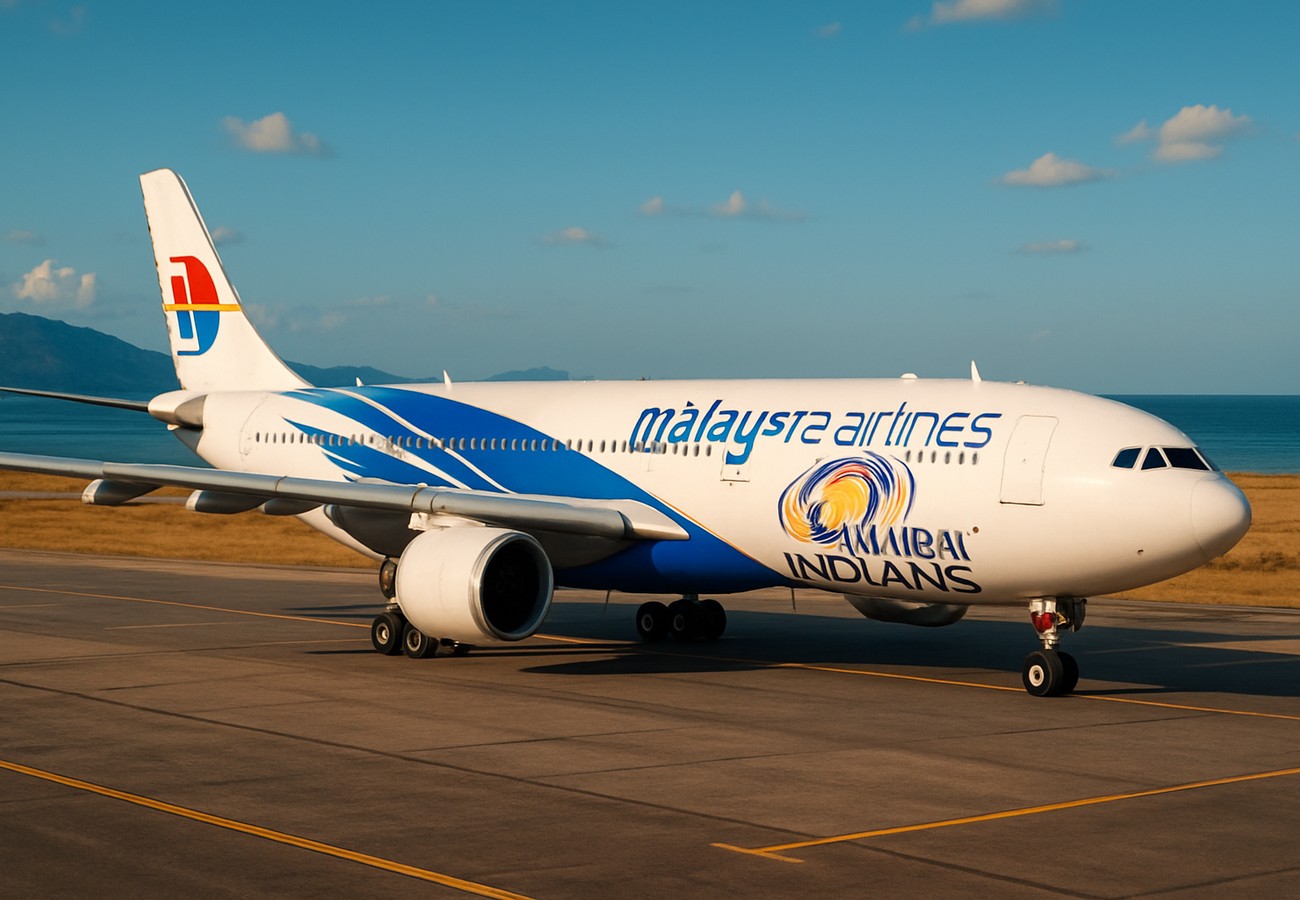
Image generated by AI
Aviation Meets Cricket Culture: A Strategic Move to Secure Global Passenger Engagement While the Industry Faces Rising Insurance Costs, Shipping Disruptions, and US-Iran Conflict Ripples
In a bold convergence of aviation branding and sports influence, Malaysia Airlines has officially launched a specially designed Mumbai Indians-themed A330-300 aircraft. Unveiled amidst an increasingly volatile macroeconomic backdrop—defined by a looming global energy crisis, fluctuating oil prices, and the ever-present geopolitical threat of a Strait of Hormuz blockade—this partnership marks a radical shift in how carriers are securing brand loyalty and expanding their global footprint in 2026.
Context and Background: An Expanded Overview
The global travel industry is currently operating under immense pressure. With the US-Iran conflict intensifying and potential supply chain risks shaking international markets, airlines are forced to innovate beyond traditional route expansions. The specially designed Malaysia Airlines A330-300 aircraft serves as a flying cultural symbol, merging the immense global reach of the Mumbai Indians cricket franchise with international passenger travel. The stunning livery features the iconic blue and gold colors, dynamic pulse patterns, and the Chakra emblem, acting as a powerful symbol of movement and global momentum.
Geopolitical Context: Navigating Gulf Tensions
The geopolitical landscape cannot be ignored when analyzing modern global aviation strategies. With the US-Iran conflict casting a long shadow, airlines must continuously navigate the complexities of Middle Eastern airspace. A potential Strait of Hormuz closure represents a massive security threat, impacting over 20% of global oil consumption. While this partnership centers on the Indian market and Southeast Asia, the broader industry reality is that airlines like Malaysia Airlines are aggressively seeking deep emotional engagement to retain passengers who might otherwise be deterred by rising travel costs triggered by these global macroeconomic shocks.
Breaking Down the Geographic and Commercial Impact
The aviation and maritime sectors are deeply interconnected. Shipping disruptions in the Red Sea and potential vessel rerouting around the Cape of Good Hope have skyrocketed insurance costs and triggered severe trade delays. For global carriers, fluctuating oil prices present a constant supply chain risk that threatens profitability.
| Economic Risk Factor | Global Impact | Airline Strategy Response |
|---|---|---|
| Strait of Hormuz Risk | Spike in global crude oil prices | Hedging fuel; boosting brand loyalty via emotional branding (e.g., Mumbai Indians livery) |
| Shipping & Vessel Rerouting | Delayed aircraft parts, supply chain risk | Enhancing current fleet utilization, massive visibility campaigns |
| Rising Insurance Costs | Higher operational overhead and ticket prices | Leveraging elite sports marketing to capture high-yield travelers |
By partnering with a globally recognized sports franchise, Malaysia Airlines offsets these macroeconomic pressures by building affinity-driven loyalty that transcends standard ticket prices.
Regional Impact (Gulf States)
The ripple effects of global aviation shifts are acutely felt across Saudi Arabia, the UAE, Qatar, Kuwait, Oman, and Bahrain. As Gulf states push their own aggressive tourism agendas (such as Saudi Vision 2030), the India-Southeast Asia corridor has become a highly competitive battleground. Malaysia Airlines’ move to deeply embed itself in Indian cricket culture is a direct challenge to Gulf carriers that have traditionally dominated the transit market from the subcontinent.
Industry / Expert Analysis
According to global trends monitored by the International Air Transport Association (IATA), brand differentiation is no longer driven solely by connectivity but by emotional resonance. The Malaysia Airlines and Mumbai Indians collaboration illustrates this perfectly. By turning the A330-300 into a mobile billboard, the airline adopts a storytelling-driven marketing strategy. Passengers are no longer just travelers; they become active brand advocates.
What Guests Get
The launch perfectly aligns with Malaysia Airlines’ broader strategy to enhance inbound tourism, directly supporting the Visit Malaysia 2026 campaign. For the passenger, the benefits are clear:
- Immersive Matchday Journey: The matchday experience extends into the sky, celebrating cricket culture globally.
- Bonus Side Trip Programme: Transit passengers are heavily encouraged to explore multiple destinations within Malaysia.
- Cultural Connection: Visual storytelling elements on the aircraft project themes of unity, appealing directly to the massive Indian diaspora and global sports fans.
What This Means for Travelers
If you are planning to fly across Asia or globally, expect major airlines—from Boeing and Airbus fleet operators alike—to increasingly rely on experiential branding. This partnership signifies that carriers are investing heavily in the emotional aspect of your journey. As global energy prices threaten to raise standard fares, airlines will compete fiercely on relevance, identity, and shared passion rather than just schedule convenience.
What Happens Next
As we look ahead, the intersection of sports branding and aviation will likely accelerate. If geopolitical tensions—such as those involving Saudi Arabia, UAE, and the broader Gulf—continue to cause trade delays, airlines will double down on culturally resonant marketing to maintain passenger volume. We can expect more carriers to partner with mega-franchises to secure long-term loyalty in a fundamentally volatile world.
Conclusion
The unveiling of the Malaysia Airlines Mumbai Indians aircraft is far more than a simple livery update. It is a calculated, strategic maneuver in a global aviation market fraught with uncertainty. Against the backdrop of oil price volatility and global trade threats, this collaboration highlights the undeniable power of emotional, fan-driven travel experiences to sustain growth and redefine brand relevance on the world stage.
Key Takeaways
- Aviation Meets Cricket: Malaysia Airlines launches a stunning Mumbai Indians-themed A330-300 aircraft to dominate the crucial Indian market.
- Geopolitical Backdrop: The move comes as the industry navigates the systemic risks of global energy crises, potential Strait of Hormuz closures, and US-Iran conflicts.
- Economic Strategy: The massive partnership builds affinity-driven loyalty to actively combat rising insurance costs and complex supply chain risks.
- Tourism Boost: Supports the high-profile Visit Malaysia 2026 campaign and enhanced regional connectivity.
- Future Trend: Expect more global airlines to leverage deep cultural storytelling to secure essential passenger engagement.
FAQ: Malaysia Airlines & Mumbai Indians 2026
Why did Malaysia Airlines partner with Mumbai Indians? To dramatically strengthen brand visibility in India and build deep emotional engagement with travelers by merging aviation with the immense cultural influence of cricket.
What aircraft is used for the Mumbai Indians livery? The specially designed livery is proudly featured on a Malaysia Airlines A330-300 commercial aircraft, showcasing iconic blue and gold colors and the prominent Chakra emblem.
How does this affect global travel strategies? It represents a major industry shift toward culture-led branding, where airlines use experiential marketing to secure long-term passenger loyalty amidst global economic pressures and fluctuating travel costs.
Related Travel Guides
Disclaimer
This article is for informational and educational purposes only. It does not constitute legal, financial, or professional advice. While we strive to provide accurate and up-to-date information, travel policies, regulations, and conditions change rapidly. Always verify information with official sources before making travel decisions. Nomad Lawyer makes no representations about the accuracy, reliability, completeness, or suitability of the information provided. Readers should consult qualified professionals for advice specific to their circumstances. The views expressed in this article are those of the author and do not necessarily reflect the views of Nomad Lawyer.
Kunal K Choudhary
Co-Founder & Contributor
A passionate traveller and tech enthusiast. Kunal contributes to the vision and growth of Nomad Lawyer, bringing fresh perspectives and driving the community forward.
Learn more about our team →