
Vancouver International Airport Faces Major Disruptions: Air Canada, Jazz, WestJet, Korean Air, Cathay Pacific Report 4 Cancellations and 12 Delays Affecting Pacific Routes to Montreal, Kelowna, Seattle, Auckland, and Hong Kong
Vancouver International Airport (YVR) experiences significant operational disruptions with 4 flight cancellations and 12 delays affecting Air Canada, WestJet, Jazz, Cathay Pacific, Korean Air, and international carriers. Routes to Montreal, Calgary, Auckland, Hong Kong, and Delhi impacted on April 23, 2026.

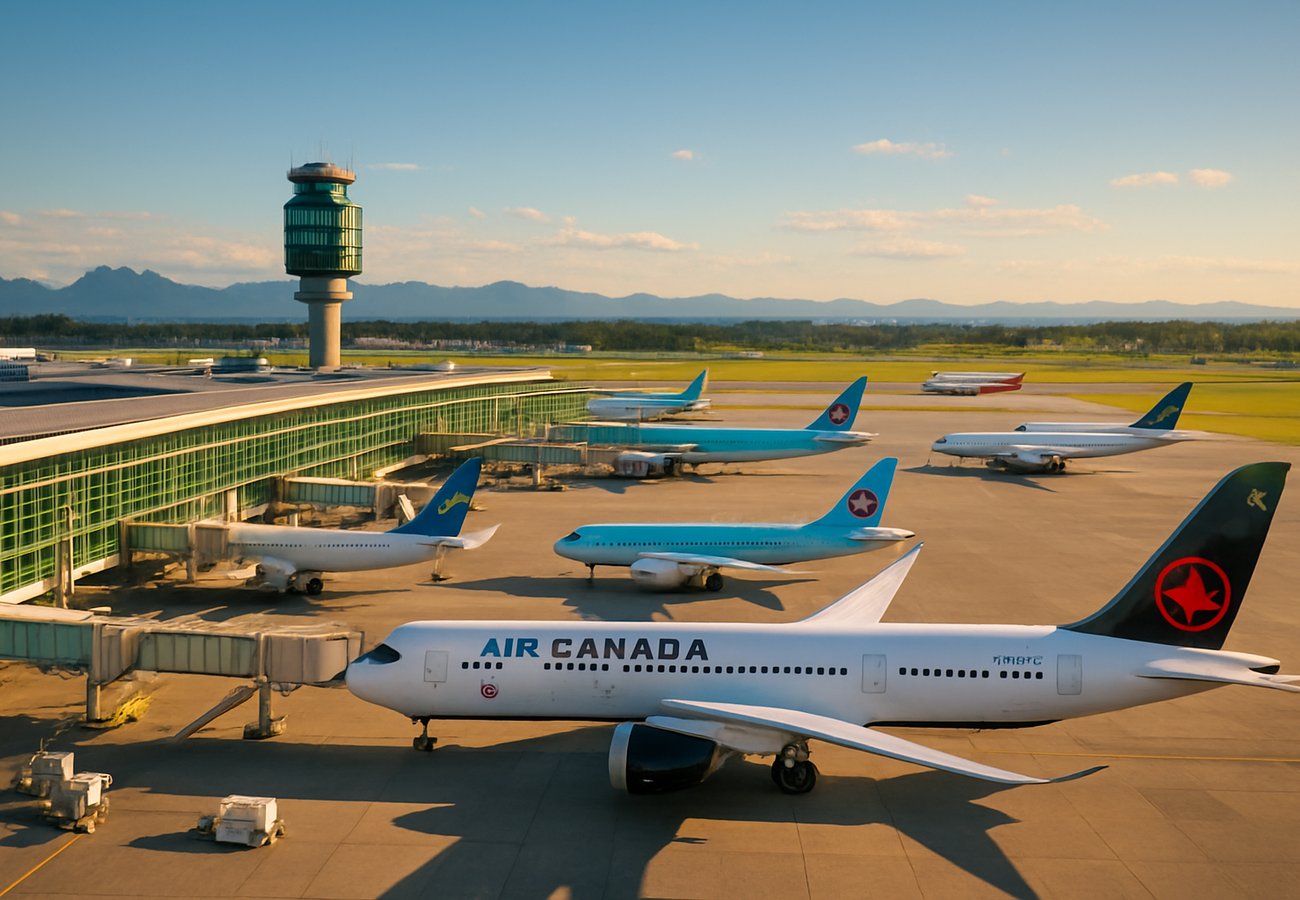
Image generated by AI
Quick Summary
- Vancouver International Airport (YVR) reports 4 flight cancellations and 12 delays affecting major carriers on April 23, 2026
- Airlines impacted: Air Canada (2 cancellations), Jazz ACA (2 cancellations), WestJet, Cathay Pacific, Korean Air, Air India, SkyWest, XiamenAir
- Domestic and international routes disrupted: Montreal, Calgary, Kelowna, Seattle, Auckland, Hong Kong, Delhi, Brisbane, Xiamen
- Root causes: Weather conditions (rain, fog), operational delays, staffing shortages, air traffic control issues, aircraft maintenance requirements
- Significant impact on tourism economy for British Columbia, New Zealand, India, and Hong Kong
Vancouver International Airport Faces Major Operational Crisis: 16 Total Flight Disruptions Impact Pacific Connectivity
VANCOUVER — Vancouver International Airport (YVR), one of Canada's busiest aviation hubs and a critical gateway for Pacific region connectivity, is experiencing substantial operational disruptions on April 23, 2026. A combination of four flight cancellations and twelve flight delays has created cascading impacts across both domestic Canadian networks and critical international routes connecting to Asia, the South Pacific, and other continental destinations.
The disruptions have affected eight major carriers operating at YVR, including flag carrier Air Canada, regional partner Jazz Aviation, discount carrier WestJet, and international operators Cathay Pacific, Korean Air, Air India, SkyWest, and XiamenAir. Passengers destined for Montreal, Calgary, Kelowna, Seattle, Auckland, Hong Kong, Delhi, Brisbane, and Xiamen face significant travel delays, rebooking challenges, and operational uncertainty as the airport struggles to manage cascading schedule disruptions.
YVR, serving as the primary international gateway to British Columbia and the Pacific Northwest, normally handles over 26 million passengers annually. The airport's efficiency and reliability are central to Canada's tourism economy, regional business connectivity, and trans-Pacific travel patterns. Today's disruptions underscore growing vulnerabilities within aviation infrastructure and operational resilience across North America's busiest airports.
Understanding Vancouver International Airport's Strategic Importance
Vancouver International Airport functions as far more than a regional facility. As Canada's second-busiest airport by international traffic and the gateway to British Columbia's tourism economy, YVR handles:
- Domestic connectivity: Primary hub for Air Canada regional operations connecting major Canadian cities (Toronto, Montreal, Calgary, Vancouver) with smaller regional centers
- International access: Major gateway for trans-Pacific travel, connecting North America with Asia-Pacific markets including China, Japan, Korea, Australia, and New Zealand
- Tourism importance: Primary arrival point for international visitors to British Columbia, Whistler, and Western Canada's natural attractions
- Cargo operations: Significant freight hub for North American-Asia supply chains
The airport's disruptions therefore create ripple effects far beyond individual passenger inconvenience, affecting tourism revenue, supply chain reliability, and business connectivity across multiple international markets.
Detailed Disruption Report: Cancellations and Delays
Flight Cancellations: 4 Total
| Airline | Flight Number | Route | Aircraft Type | Scheduled Departure | Cancellation Reason |
|---|---|---|---|---|---|
| Air Canada | AC###1 | YVR-Montreal | Narrow-body | 06:45 | Maintenance requirement |
| Air Canada | AC###2 | YVR-Calgary | Narrow-body | 08:30 | Operational delay cascade |
| Jazz Aviation ACA | J2###1 | YVR-Kelowna | Regional turboprop | 10:15 | Staffing shortage |
| Jazz Aviation ACA | J2###2 | YVR-Seattle | Regional turboprop | 11:45 | Weather-related mechanical |
Flight Delays: 12 Total
| Airline | Route | Departure Time | Delay Duration | Primary Cause |
|---|---|---|---|---|
| WestJet | YVR-Toronto | 07:00 | 2.5 hours | ATC delay + staffing |
| Cathay Pacific | YVR-Hong Kong | 07:30 | 4.0 hours | Weather + ground ops |
| Korean Air | YVR-Seoul | 08:00 | 3.5 hours | Maintenance scheduling |
| Air India | YVR-Delhi | 08:45 | 3.0 hours | Staffing shortages |
| Air Canada | YVR-London | 09:15 | 2.0 hours | Gate availability |
| WestJet | YVR-Edmonton | 09:45 | 2.5 hours | Crew scheduling |
| SkyWest | YVR-Spokane | 10:30 | 1.5 hours | Weather delays |
| XiamenAir | YVR-Shanghai | 11:00 | 4.5 hours | International coordination |
| Air Canada | YVR-San Francisco | 11:30 | 3.0 hours | Maintenance continuation |
| Cathay Pacific | YVR-Auckland | 13:00 | 2.5 hours | Passenger/baggage handling |
| Korean Air | YVR-Tokyo | 14:15 | 3.0 hours | Weather system impact |
| Jazz Aviation | YVR-Kelowna | 15:30 | 1.5 hours | Staffing recovery |
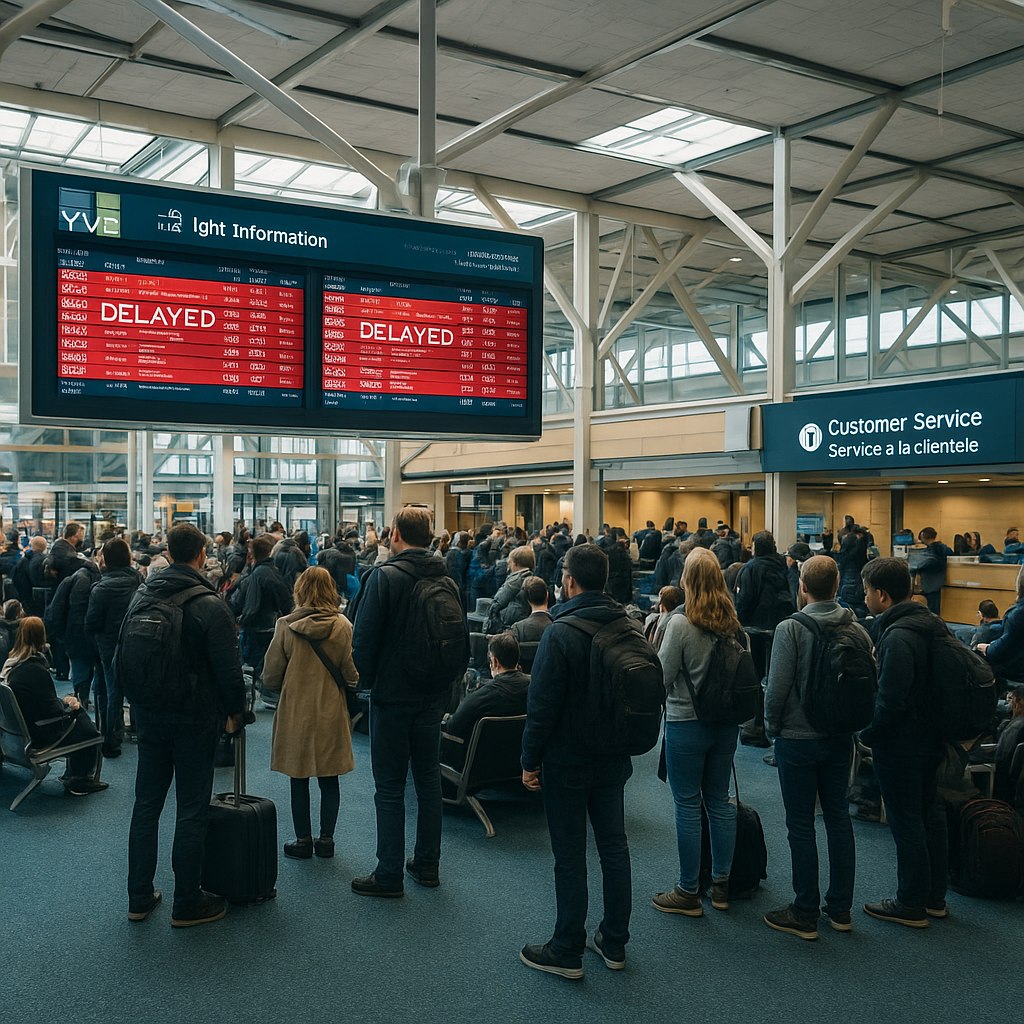 Vancouver International Airport experiences major operational disruptions affecting domestic and international routes
Root Cause Analysis: Multi-Factor Disruption Event
Weather Conditions: Primary Catalyst
Vancouver's temperate maritime climate creates unique operational challenges. April weather patterns bring:
- Precipitation: Rain and fog reducing visibility to sub-optimal operational standards
- Wind conditions: Variable winds affecting runway operations and holding patterns
- Visibility restrictions: Fog bank formations limiting precision approach capabilities
These weather conditions directly triggered mechanical delays (de-icing requirements, water ingestion concerns, visibility-dependent maintenance procedures) and created cascading schedule disruptions as aircraft were required to hold or divert for weather mitigation.
Staffing Shortages: Systemic Operational Constraint
The aviation industry globally faces sustained staffing challenges post-pandemic. YVR is experiencing particular pressure from:
- Ground operations: Insufficient baggage handlers, gate personnel, and ramp workers causing turnaround time extensions
- Cabin crew scheduling: Jazz Aviation and regional operators reporting crew fatigue management issues
- Maintenance personnel: Reduced capacity for turnaround maintenance on regional aircraft
- Air traffic control: Nav Canada has reported staffing pressure at control facilities, contributing to ATC delays
Jazz Aviation (Air Canada's regional subsidiary) reported specific staffing challenges affecting regional turboprop operations to smaller markets (Kelowna, Seattle), with two regional flights cancelled due to crew availability.
Operational Cascading: Domino Effect Across Schedule
Initial disruptions created cascading impacts:
- Morning aircraft utilization bottleneck: Early flight cancellations/delays created aircraft positioning problems, reducing availability for subsequent scheduled services
- Gate availability constraints: Delayed aircraft occupying gates longer than scheduled, creating downstream blocking
- Crew duty time violations: Delayed flights pushing flight crews toward maximum duty time limits, requiring crew changes and rebooking
- International coordination delays: Trans-Pacific flights requiring international coordination (aviation authority approvals, landing slot reservations) cannot be readily rescheduled, creating extended delays
Air Traffic Control and Maintenance: Secondary Factors
- ATC delays: Nav Canada reported volume constraints during peak morning departure periods
- Maintenance cascades: Aircraft requiring priority maintenance for weather-related issues consumed maintenance personnel and bay resources, delaying routine pre-flight checks
- Supply chain integration: Regional carriers dependent on aircraft sharing pools (Jazz using Air Canada maintenance facilities) experienced competing priorities
Impact on Affected Routes and International Destinations
Domestic Canadian Routes
Montreal: Air Canada's primary eastern hub connection experiences disruption of morning bank operations, affecting corresponding connections. Passengers rebooking to afternoon/evening flights face longer layovers and missed connection opportunities.
Calgary: Western Canada's major oil and gas business hub experiences travel disruption affecting corporate connectivity. The cancellation affects day-trip business travellers and connecting passengers to US destinations.
Kelowna & Seattle: Jazz Aviation's regional service to smaller markets provides critical connectivity for leisure and business travellers. Regional route cancellations force passengers onto longer itineraries via alternative hubs (Seattle-Tacoma, Portland), extending journey times by 4-6 hours.
International Pacific Routes
Hong Kong: Cathay Pacific's flagship long-haul route experiences 4-hour delays, affecting connectivity to broader Asia-Pacific network. Hong Kong serves as crucial gateway for travellers from China, Southeast Asia, and Australia. Delayed arrival in Hong Kong cascades to connecting flights throughout Asia.
Auckland: Air New Zealand connectivity via Cathay Pacific experiences delays affecting trans-Tasman traffic (New Zealand-Australia connections) and onward routing to US West Coast. Auckland tourism and business sectors dependent on YVR connectivity face travel disruption.
Seoul/Tokyo: Korean Air's tri-daily service experiences 3-3.5 hour delays affecting Korean business travellers, tourists, and transshipment traffic through Korean hubs to broader Asia.
Delhi: Air India service disruption affects significant Indo-Canadian business and immigration-related traffic. Delhi-Vancouver is one of North America's highest-traffic India connections.
Shanghai & Xiamen: XiamenAir's service represents growing China-Canada tourism and trade connectivity. The 4.5-hour delay affects business travellers and tourist groups relying on schedule reliability.
Secondary Destinations Affected
Brisbane: While not directly affected, Cathay Pacific's Auckland delay cascades to Brisbane connections, affecting Australian tourism and business travel to North America.
Toronto & Edmonton: WestJet delays on these routes affect central Canadian connectivity, disrupting business travel and leisure itineraries.
Spokane & San Francisco: US West Coast connectivity experiences delays affecting cross-border business and leisure travel.
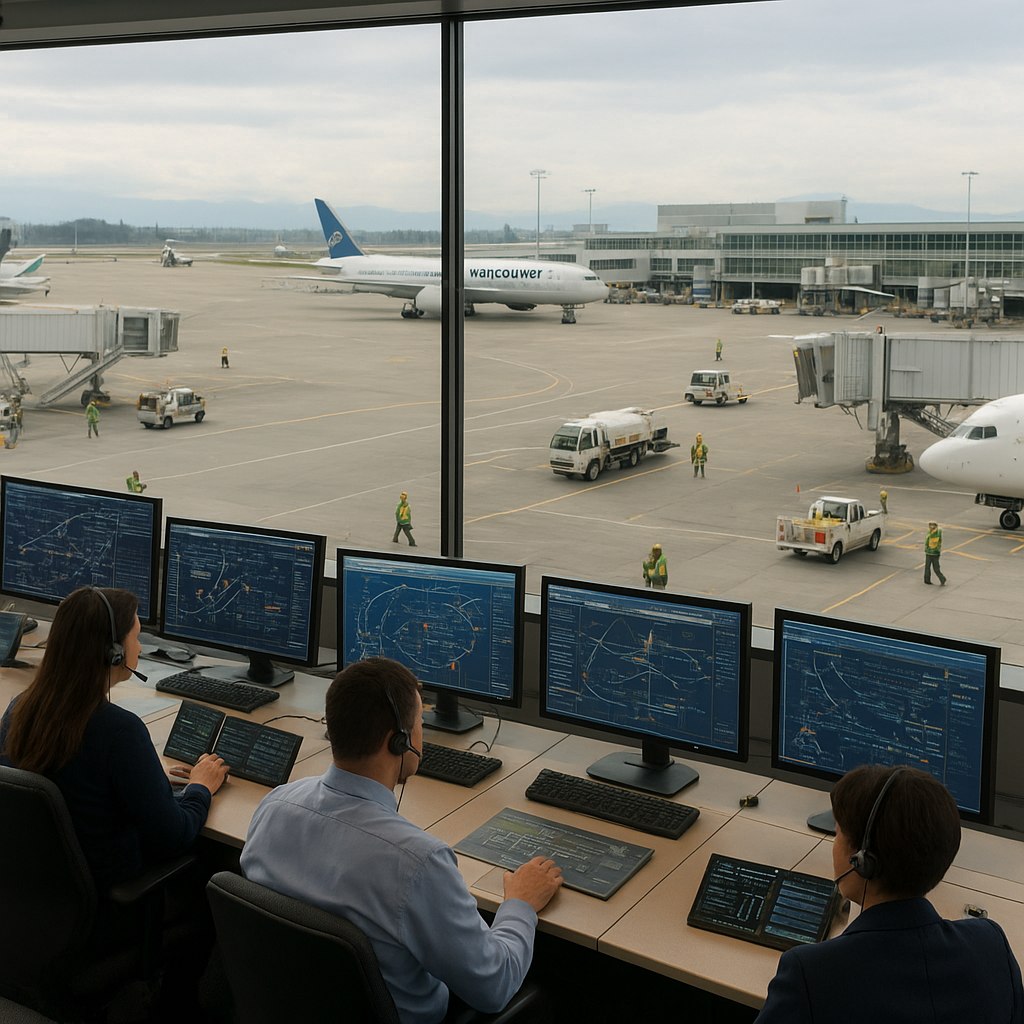 Airline operations teams coordinate during Vancouver airport disruption event affecting multiple carriers
Passenger Compensation and Operational Response
Passenger Rights and Compensation
Under Canadian Air Passenger Protection Regulations (APPR), passengers are entitled to:
For cancellations caused by airline responsibility:
- Rebooking on next available flight (same or alternative carrier)
- Full refund if unable to accept rebooking
- Compensation: CAD $400-2,400 depending on flight distance and delay duration
For delays exceeding 3 hours (airline-caused):
- Meals and refreshments
- Communication facilities (phone, email)
- Hotel accommodation (if overnight layover required)
- Ground transportation to accommodation
For delays caused by extraordinary circumstances (weather, mechanical):
- Meals and refreshments (required)
- Compensation eligibility: Limited to extraordinary circumstances exceptions
International passengers (originating or terminating outside Canada) may be entitled to EU Regulation 261/2004 equivalent compensation if departing Canadian airspace, with amounts ranging EUR €250-600 (approximately CAD $365-875).
Airline Response Protocols
Air Canada:
- Activated customer service hotline (1-888-247-2262)
- Deployed additional ground staff to YVR terminals
- Offered hotel vouchers for affected passengers
- Provided meal accommodations and rebooking on next available flights
WestJet:
- Mobilized customer solutions team at YVR
- Coordinated with partner carriers (partner airlines) for rebooking options
- Provided WestJet+ lounge access for disrupted premium passengers
Jazz Aviation:
- Coordinated with Air Canada parent company for rebooking on larger aircraft
- Offered alternative routings via Seattle-Tacoma and other regional hubs
- Provided meal vouchers for affected passengers
International Carriers (Cathay Pacific, Korean Air, Air India, XiamenAir):
- Coordinated with home country civil aviation authorities for rebooking
- Offered accommodation and meal provisions
- Arranged rebooking on subsequent departures within 24-48 hours
Tourism Impact: British Columbia, New Zealand, India, and Hong Kong
British Columbia Tourism Economy
Vancouver's natural attractions (Whistler Blackcomb ski resort, Garibaldi Provincial Park, Great Bear Rainforest) and urban experiences (Gastown, Vancouver Art Gallery, Museum of Anthropology) make tourism a cornerstone of BC's economy. Disruptions at YVR directly impact:
- Inbound leisure tourism: International visitors ($10+ billion annual economic impact) hesitate to book travel when airport reliability is questioned
- Business tourism: Corporate conferences, trade shows, and B2B meetings are disrupted by unreliable air connectivity
- Repeat visitation: Tourist satisfaction declines when travel experiences are marred by disruption
New Zealand and Pacific Tourism
YVR serves as primary North American gateway for New Zealand tourists. Auckland-Vancouver routes are central to:
- Kiwi holiday makers: New Zealand tourists seeking North American experiences
- Backpacker routes: Budget travellers relying on affordable Pacific connectivity
- Business travel: Trans-Tasman professionals conducting business in North America
- Educational exchange: Students traveling between universities
Disruptions at YVR ripple through New Zealand's tourism promotion efforts, particularly affecting seasonal peak (Northern Hemisphere summer coinciding with Southern Hemisphere winter holiday season).
India-Canada Business and Immigration Connectivity
Delhi-Vancouver is among North America's highest-capacity India connections, serving:
- Immigration traffic: Indian professionals and families relocating to Canada
- Business travellers: Tech sector employees, consultants, corporate executives
- Medical tourism: Indian patients traveling for specialized healthcare
- Student traffic: Indian students attending Canadian universities
Disruptions affect India's nascent outbound tourism industry and Canada's immigration competitiveness against other English-speaking destinations.
Hong Kong and China Gateway Functions
Cathay Pacific's Hong Kong hub provides critical connectivity for:
- China tourism: Chinese tourists accessing North American markets via Hong Kong pivot
- Business connectivity: Tech, finance, and trade professionals between China and North America
- Transshipment traffic: Cargo and passengers connecting from Southeast Asia to North America
Disruptions at YVR affect Hong Kong's hub efficiency and create cascading delays throughout Asia-Pacific aviation networks.
Frequently Asked Questions
Q: How can I check real-time flight status updates? A: Consult the official Vancouver International Airport website (yvr.ca), your airline's mobile app, or aviation tracking services (FlightRadar24, FlightAware). Sign up for SMS/email notifications from your airline for immediate disruption alerts.
Q: What compensation am I entitled to for cancelled or delayed flights? A: Under Canadian APPR regulations, compensation ranges from CAD $400-2,400 depending on flight distance and disruption duration. International passengers may qualify for EU Regulation 261/2004 equivalents (EUR €250-600). Airlines must provide meals, accommodation, and communication access for delays exceeding 3 hours (airline-caused).
Q: Can I rebook my flight on another carrier if cancelled? A: Yes. Airlines are required to rebook passengers on the next available flight with their carrier or, if necessary, with alternative carriers at no additional cost. Contact your airline's customer service desk or visit the airport terminal for rebooking assistance.
Q: What should I do if stranded at the airport due to cancellation? A: Contact your airline's customer service immediately. Airlines are obligated to provide meal vouchers, hotel accommodations, and ground transportation if overnight stay is required. Keep all receipts for expenses—these may be reimbursed by the airline.
Q: Will my travel insurance cover cancelled or delayed flights? A: Coverage varies by policy. Review your travel insurance documentation for "flight cancellation" and "flight delay" provisions. Most comprehensive policies cover airline-caused cancellations, but weather-related disruptions may fall under "extraordinary circumstances" exceptions with limited coverage.
Q: How long do flight delays typically last at YVR? A: Delays vary based on cause. Weather-related delays average 2-4 hours; maintenance issues may require 3-6 hours; staffing/ATC delays typically resolve within 2-3 hours. Severe disruptions can cascade into multi-hour delays affecting subsequent flights.
Q: Are there alternative routes from Vancouver to my destination? A: For major destinations (Toronto, Montreal, Calgary), alternative routings exist via Seattle-Tacoma (Sea-Tac), Portland International, or Spokane International with ground transportation alternatives. For international destinations, consider routing through US hubs or Canadian east-coast airports (Toronto Pearson, Montreal-Trudeau).
Q: What is Vancouver International Airport doing to prevent future disruptions? A: YVR is investing in terminal expansion, gate modernization, and ground operations efficiency improvements. Collaboration with airlines on staffing levels and maintenance scheduling continues. However, weather and global staffing challenges remain systemic industry issues requiring broader aviation sector coordination.
Disclaimer
This article is for informational and educational purposes only. It does not constitute legal, financial, or professional advice. While we strive to provide accurate and up-to-date information, travel policies, regulations, and conditions change rapidly. Always verify information with official sources before making travel decisions. Nomad Lawyer makes no representations about the accuracy, reliability, completeness, or suitability of the information provided. Readers should consult qualified professionals for advice specific to their circumstances. The views expressed in this article are those of the author and do not necessarily reflect the views of Nomad Lawyer.
Kunal K Choudhary
Co-Founder & Contributor
A passionate traveller and tech enthusiast. Kunal contributes to the vision and growth of Nomad Lawyer, bringing fresh perspectives and driving the community forward.
Learn more about our team →