
Major Heathrow Disruption Leaves Hundreds Stranded Across Europe
Severe operational disruption at London Heathrow in early April 2026 has left hundreds of passengers stranded across European connection hubs. Cascading flight cancellations and delays have triggered continent-wide seat shortages during peak spring travel season.

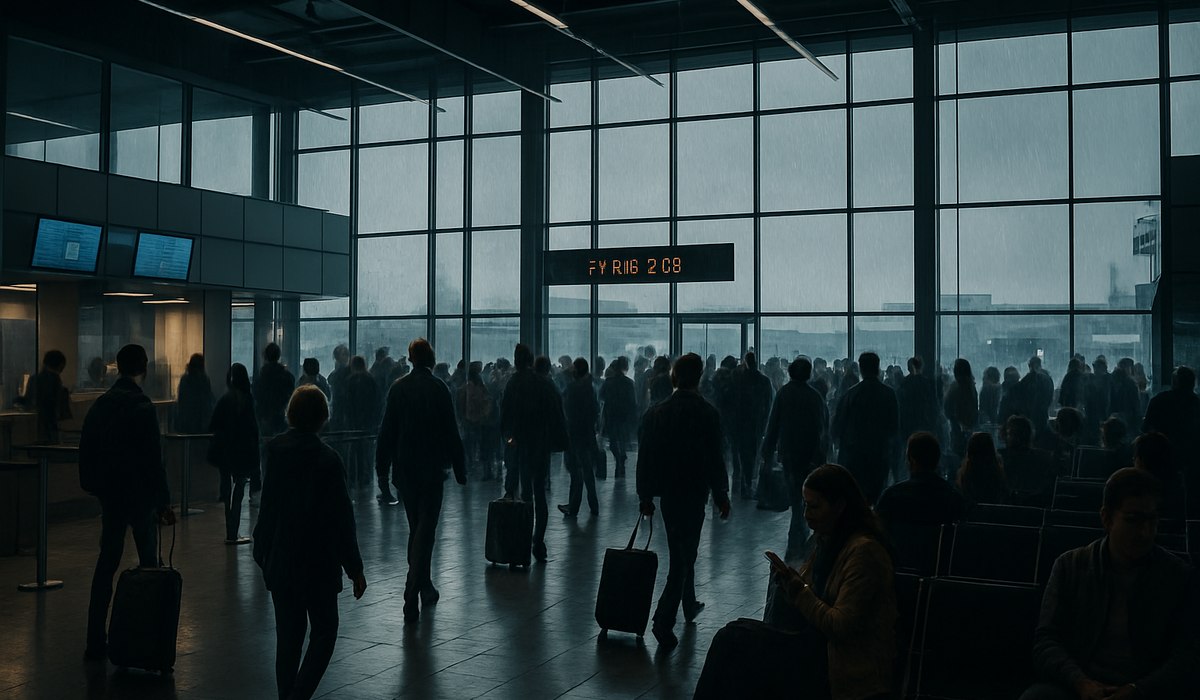
Image generated by AI
Severe Disruption Strands Hundreds Across Europe
London Heathrow faced severe operational disruption in early April 2026, leaving hundreds of passengers stranded across European connection hubs. The major Heathrow disruption triggered cascading flight cancellations and delays throughout the continent's busiest airports. Travelers attempting to reach destinations in North America, the Middle East, and Asia found themselves trapped in intermediate cities from Rome to Copenhagen. The crisis unfolded during peak spring travel season, when spare capacity was already stretched thin across European airline networks.
Heathrow Bottleneck Triggers Europe-Wide Flight Chaos
Flight-tracking data from the first week of April 2026 revealed London Heathrow as a critical pressure point in a widening European aviation crisis. On the worst-affected days, the airport recorded more than one hundred delayed departures and arrivals, alongside multiple cancellations that eliminated vital capacity on trunk routes connecting the United Kingdom with continental hubs.
The major Heathrow disruption rippled outward to major connecting airports including Amsterdam Airport Schiphol, Paris Charles de Gaulle, Frankfurt am Main, and Madrid-Barajas. Passengers whose inbound Heathrow flights arrived late discovered their onward connections had departed without them. Industry monitoring platforms documented a clear cascading effect: missed slots at Heathrow translated directly into missed connections at secondary hubs, creating overnight backlogs across multiple countries.
Across Europe during peak disruption days, flight-delay totals reached the high hundreds, with some dates exceeding one thousand delayed departures and arrivals. Even modest cancellations at Heathrow rapidly created widespread seat shortages for displaced travelers attempting rebooking from cities such as Rome, Zurich, Dublin, and Copenhagen. For more information on European aviation challenges, visit the European Union Aviation Safety Agency.
Cascading Effect Hits Major Continental Connection Points
The interconnected nature of modern European aviation meant that Heathrow's problems immediately affected dozens of downstream airports. When aircraft fell out of position at London's largest hub, airlines faced difficult choices about which routes to prioritize. Carriers had to decide whether to delay connections or cancel services entirely, adding uncertainty across the network.
Amsterdam experienced particularly severe disruption, with lengthy queues at transfer desks as travelers sought replacement flights. Paris Charles de Gaulle faced similar challenges, with limited remaining seat availability forcing passengers into multi-day delays. Frankfurt's connecting services saw cascading cancellations as inbound aircraft from Heathrow never arrived to depart their scheduled onward legs.
Madrid, Zurich, and Italian airports including Rome and Milan also reported significant passenger backlogs. The cascade effect meant that a weather delay at Heathrow could strand a family attempting to connect in Frankfurt, forcing rebooking attempts across three or four different airlines. Ground handling resources at secondary hubs became overwhelmed as passenger loads exceeded normal capacity levels, further delaying recovery operations.
Spring Travel Season Leaves No Spare Capacity for Rebooking
April 2026 represented peak spring travel demand, when European airline schedules operated at near-maximum capacity. Airlines maintained little spare seating to accommodate displaced passengers from the major Heathrow disruption. Families returning from Mediterranean holidays, business travelers en route to long-haul meetings, and students connecting to transatlantic flights all faced the same problem: no available alternatives for days.
The timing compounded traveler misery significantly. During off-season periods, airlines might offer multiple daily alternatives on popular routes. In April, those same routes operated with full aircraft and waiting lists. A passenger stranded in Paris with a missed Heathrow connection might find no alternative seats to London for thirty-six hours, then no further connections to their final destination.
Airlines struggled with the arithmetic of disruption recovery. Each cancellation at Heathrow cascaded through the network, creating demand spikes at secondary hubs that carriers couldn't fulfill. Rebooking teams across Europe faced impossible choices between offering overnight delays, routing passengers through circuitous alternative paths, or providing involuntary meal and accommodation vouchers. The combination of spring season demand and the major Heathrow disruption created a perfect storm for passenger frustration.
Weather, Capacity Strain, and Infrastructure Vulnerabilities
Meteorological data from early April 2026 confirmed that unsettled weather patterns across western and northern Europe contributed significantly to the major Heathrow disruption. Strong winds, heavy rain, and low cloud cover reduced the airport's already-constrained arrival and departure rates. When air traffic flow management restrictions took effect in response to poor conditions, Heathrow's limited runway resilience meant small reductions in hourly movements translated into dozens of cascading delays.
Heathrow operates with only two main runways, creating a fundamental capacity bottleneck. Even under normal conditions, the airport functions near maximum sustainable throughput throughout much of the day. Weather-related restrictions amplify this constraint immediately. Airlines faced extended holding patterns, diversions to alternate airports, and late-arriving aircraft that missed planned turnarounds, forcing short-notice cancellations.
Beyond weather, analysts identified broader vulnerabilities in Europe's interconnected aviation infrastructure. Recent incidents ranging from power-supply problems near Heathrow to cyber events affecting regional air traffic control systems demonstrated how rapidly issues at one network node cascade globally. Ground-handling resource limitations, air traffic control staffing constraints, and available stand space all became bottlenecks as the major Heathrow disruption built momentum, extending recovery timelines and prolonging passenger stranding across Europe. The UK Civil Aviation Authority has published guidelines on managing such disruptions.
Disruption Timeline and Passenger Impact Data
| Metric | Details |
|---|---|
| Disruption Duration | April 6–8, 2026 (3 primary days) |
| Peak Delayed Flights | 1,400+ delays across European network on single day |
| Cancellations | ~20 cancellations at Heathrow and secondary hubs combined |
| Passengers Stranded | Hundreds across continental connection airports |
| Primary Affected Airports | Amsterdam, Paris CDG, Frankfurt, Madrid, Rome, Zurich, Copenhagen |
| Key Cause | Weather (wind, rain, low cloud) + capacity strain |
| Rebooking Capacity | Limited due to peak spring travel season |
| Longest Delays | Some passengers delayed 36+ hours for connecting flights |
What This Means for Travelers
The major Heathrow disruption of April 2026 revealed critical vulnerabilities in European aviation connectivity during peak seasons. Passengers planning travel through London Heathrow during spring months should prepare for potential cascading delays affecting connections across the continent.
Actionable takeaways for future travel:
-
Build connection time – Add minimum 3-4 hours for Heathrow connections in spring months, rather than standard 2-hour minimums recommended for EU airports.
-
Monitor weather forecasts – Check meteorological conditions across western Europe 48 hours before travel, particularly for wind and low-visibility alerts near Heathrow.
-
Book direct flights when possible – If transatlantic or Middle East connections through Heathrow aren't essential, consider alternative routing through other European hubs like Frankfurt or Amsterdam.
-
Register with airline apps – Enable push notifications for flight status changes, allowing real-time awareness of potential cascading delays before arriving at connection airports.
-
Understand passenger rights – Review EU261 compensation regulations, which entitle passengers to rebooking on alternative carriers and meal/accommodation provisions for disruptions exceeding three hours.
-
Consider travel insurance – Comprehensive coverage should include missed-connection provisions and rebooking flexibility for extended delays
Disclaimer
This article is for informational and educational purposes only. It does not constitute legal, financial, or professional advice. While we strive to provide accurate and up-to-date information, travel policies, regulations, and conditions change rapidly. Always verify information with official sources before making travel decisions. Nomad Lawyer makes no representations about the accuracy, reliability, completeness, or suitability of the information provided. Readers should consult qualified professionals for advice specific to their circumstances. The views expressed in this article are those of the author and do not necessarily reflect the views of Nomad Lawyer.
Preeti Gunjan
Contributor & Community Manager
A passionate traveller and community builder. Preeti helps grow the Nomad Lawyer community, fostering engagement and bringing the reader experience to life.
Learn more about our team →