
Major Heathrow Chaos Strands Hundreds Across Europe in April 2026
Hundreds of European passengers face stranding and severe delays as major Heathrow chaos disrupts aviation networks from Amsterdam to Athens. Atlantic weather systems converge with near-capacity operations at Europe's busiest hub, triggering cascading flight cancellations across the continent during peak spring travel season.

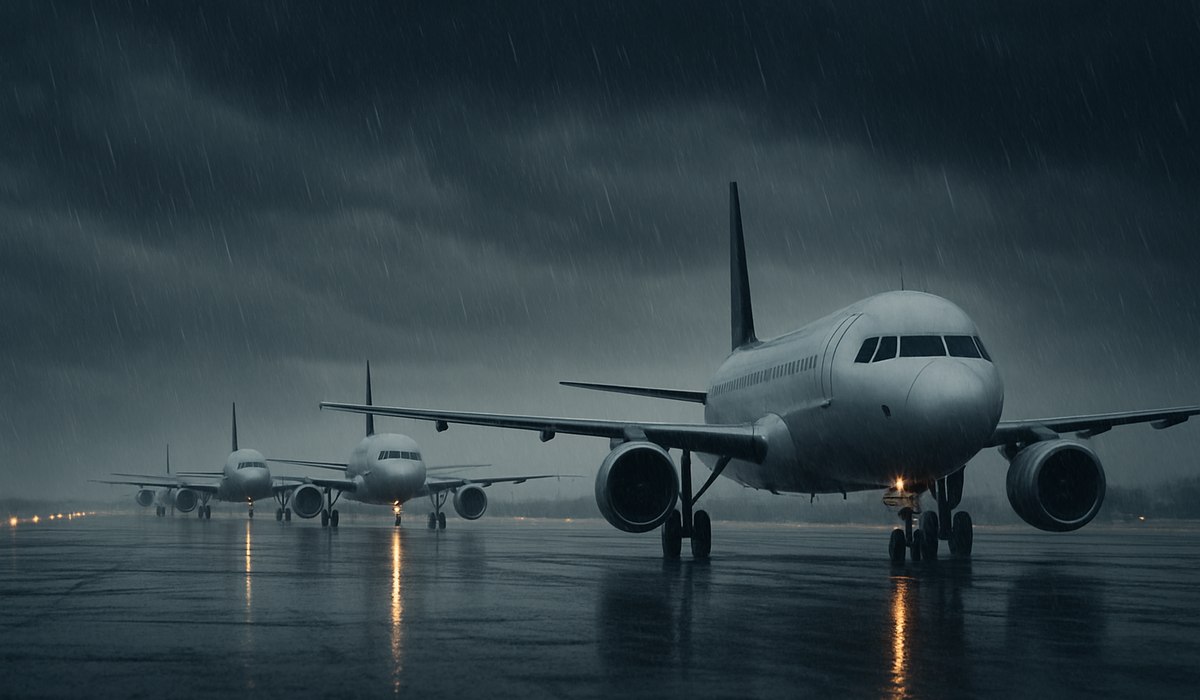
Image generated by AI
Hundreds Stranded as Major Heathrow Chaos Cascades Across Europe
London Heathrow Airport ground to a halt during early April 2026, leaving hundreds of European passengers stranded or severely delayed as major weather disruptions converged with the airport's near-capacity operations. The cascading failures rippled outward from Britain's busiest aviation hub, affecting onward connections from Amsterdam to Athens and snarling schedules at Frankfurt, Munich, Madrid, and Oslo. What began as a weather event at a single London airport quickly evolved into continent-wide aviation chaos, stranding leisure travelers and families at the peak of the European spring holiday period.
Atlantic Weather Systems Disrupt Europe's Busiest Hub
A sequence of Atlantic low-pressure systems and named storms descended on Western and Northern Europe during the first week of April, bringing strong crosswinds, heavy rainfall, and low cloud formations to major aviation corridors. Heathrow, already operating near maximum capacity, bore the brunt of these meteorological challenges. Strong winds forced the airport to implement runway restrictions and go-around procedures, dramatically reducing hourly aircraft movements.
Flight-tracking platforms recorded over 1,000 delays and more than 100 cancellations within single 24-hour periods as the system persisted. The weather wasn't confined to London—Frankfurt, Amsterdam Schiphol, Oslo Gardermoen, and Athens International also reported significant disruptions. However, Heathrow's status as Europe's primary long-haul gateway meant that even modest delays in London created exponential problems downstream. A two-hour arrival delay on a transatlantic flight could eliminate a passenger's connection window for their onward European journey, leaving them stranded miles from their intended destination.
According to EUROCONTROL air traffic management data, European-wide delays exceeded 1,400 flights on peak disruption days, with more than 150 cancellations recorded.
Network-Wide Cascading Delays: From Heathrow to Athens
The interconnected nature of modern European aviation means that major Heathrow chaos doesn't stay contained in London. Passengers connecting through Heathrow from cities like Dublin, Barcelona, and Stockholm suddenly found themselves stuck when transatlantic arrivals ran late. Ground handling crews couldn't turnaround aircraft quickly enough, aircraft got routed to alternative gates, and crew members exceeded duty-time limitations.
This created a domino effect: overnight hotel stays in unexpected cities, missed family vacations, abandoned cruise embarkations, and families separated across multiple flights. Social media filled with frustration as travelers documented sleeping in airport terminals and facing rebooking offers that put them on flights days later.
The ripple effect extended to secondary hubs. Frankfurt suffered delays because aircraft positioned there from London arrived late. Athens experienced cascading cancellations when connecting passengers missed their flights due to Heathrow delays. Madrid reported significant disruption as inbound aircraft from London pushed back departure schedules. This continent-spanning impact demonstrated how major Heathrow chaos can destabilize European aviation for days.
For travelers, the practical reality meant being rebooked through Paris Charles de Gaulle or Istanbul, adding 4-6 hours to journey times. Some passengers were told to wait 24-48 hours for next-day departures after crew members exhausted their legal flight hours managing earlier delays.
Overcapacity Schedules Leave No Room for Weather Disruption
Airlines expanded their spring schedules in 2026 compared to previous years, filling available slots with additional flights as demand rebounded strongly after winter. Heathrow operates at approximately 98% capacity during peak hours, meaning there's virtually no buffer when disruptions occur. Each cancelled flight eliminates a slot that can't easily be reassigned. Each delayed arrival means a cascading series of delayed departures.
Aviation analysts explain that in less congested periods, a weather delay might cost an airline 90 minutes. At capacity-constrained Heathrow, the same weather event costs six hours or more because there's no slack in the system. Aircraft can't be held for runway availability—there are no alternate gates. Crews can't wait for conditions to improve—they're scheduled for multiple sectors throughout the day.
When major Heathrow chaos occurs at a fully-booked airport, it doesn't resolve quickly. Congestion builds, spreads, and compounds hour by hour. This structural vulnerability affects not just Heathrow passengers, but every traveler depending on connections through European hubs fed by Heathrow.
What This Means for Spring Travel Season Passengers
The early April 2026 disruptions carry important lessons for travelers planning European journeys during peak seasons.
Impact Summary
| Metric | Figure | Context |
|---|---|---|
| Total Delayed Flights (Peak Day) | 1,400+ | European-wide during major Heathrow chaos |
| Cancellations per 24 Hours | 150+ | April 2026 peak disruption period |
| Affected Airports (Primary) | 8+ | Heathrow, Frankfurt, Munich, Madrid, Oslo, Athens, Amsterdam, Dublin |
| Passengers Stranded | Hundreds | Primarily connecting and leisure travelers |
| Duration | 4-7 days | Disruption persistence across early April |
| Weather Cause | Atlantic Systems | Low-pressure formations with high winds, heavy rain |
| Primary Vulnerability | Network Capacity | Heathrow operating at 98% capacity with no buffer |
What This Means for Travelers
The major Heathrow chaos of April 2026 emphasizes critical vulnerabilities in European aviation during high-demand periods:
-
Build Connection Time: If connecting through Heathrow, allow at least three hours between arriving and departing flights during spring and summer seasons. Standard 90-minute connections are insufficient when the airport operates at capacity.
-
Monitor Weather Forecasts: Track Atlantic weather systems 5-7 days before transatlantic travel. Named storms and low-pressure systems affecting Western Europe often cascade into Heathrow delays within 24 hours.
-
Avoid Peak Days: When possible, travel mid-week rather than weekends, and avoid holiday periods. Peak travel times magnify the impact of any disruption.
-
Purchase Delay Coverage: Consider travel insurance that covers airline delay compensation and additional accommodation costs. EU regulations require airline compensation for delays over three hours, but actual recovery requires claims and documentation.
-
Choose Less-Congested Hubs: Consider alternative gateway airports for European connections. Paris Charles de Gaulle, Brussels, or Amsterdam offer more capacity buffer, potentially reducing cascade effects from weather events.
-
Stay Informed: Register with your airline's delay notification system. Early awareness allows rebooking onto alternative flights before those seats fill.
FAQ
Q: What causes major Heathrow chaos during Atlantic weather events?
A: Heathrow's runways are oriented east-west, making them vulnerable to north-south crosswinds common in Atlantic storms. Strong winds force aircraft to use extended landing distances, reducing runway capacity. Combined with the airport's 98% peak capacity utilization, even modest wind restrictions create significant delays.
Q: How long do cascading delays typically last after major disruptions?
A: In the April 2026 event, impacts persisted for 4-7 days as aircraft and crews remained out of position. Heathrow requires 48-72 hours minimum to fully recover from major disruption because the recovery process itself consumes scheduling capacity.
Q: Which airlines were most affected by major Heathrow chaos in April?
A: All airlines operating from Heathrow were affected, particularly carriers with significant transatlantic services like British Airways, American Airlines, United, and Air Canada. However, passengers on connecting flights were disproportionately imp
Disclaimer
This article is for informational and educational purposes only. It does not constitute legal, financial, or professional advice. While we strive to provide accurate and up-to-date information, travel policies, regulations, and conditions change rapidly. Always verify information with official sources before making travel decisions. Nomad Lawyer makes no representations about the accuracy, reliability, completeness, or suitability of the information provided. Readers should consult qualified professionals for advice specific to their circumstances. The views expressed in this article are those of the author and do not necessarily reflect the views of Nomad Lawyer.
Preeti Gunjan
Contributor & Community Manager
A passionate traveller and community builder. Preeti helps grow the Nomad Lawyer community, fostering engagement and bringing the reader experience to life.
Learn more about our team →