
European Fleet Modernization 2035: How Lufthansa, Ryanair, and easyJet Are Reshaping Air Travel Economics

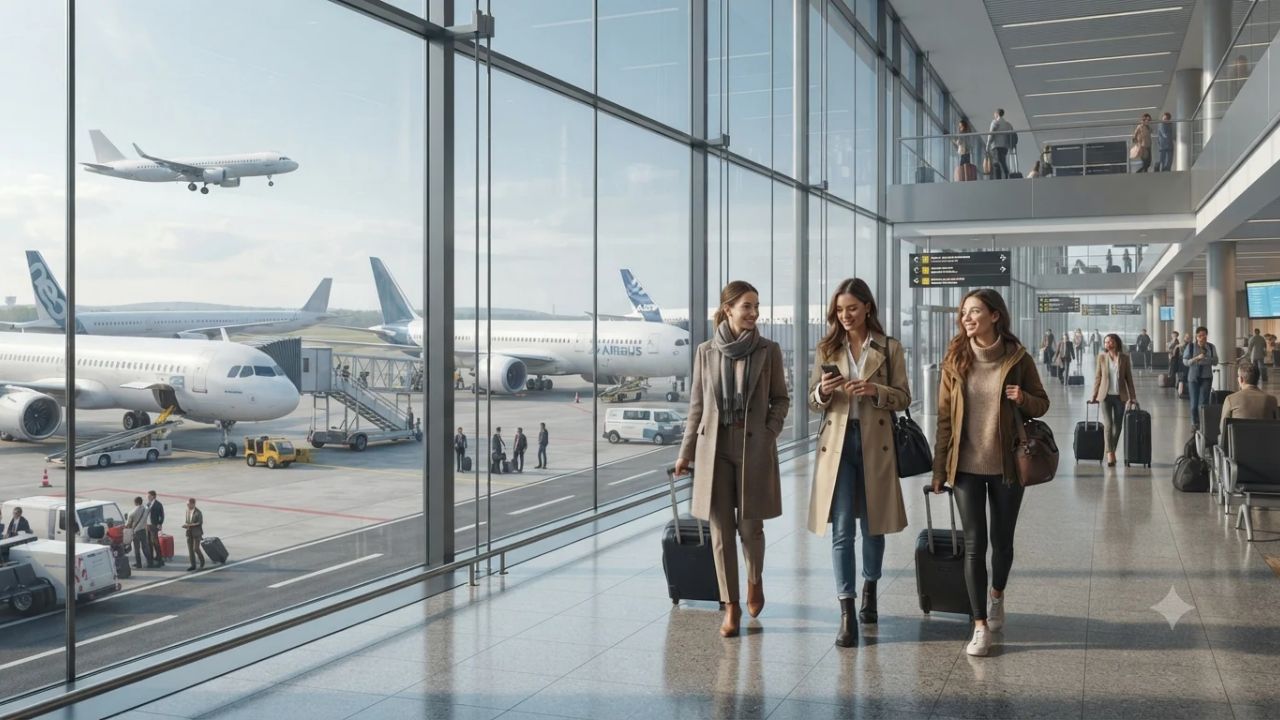
More than 250 new commercial aircraft destined for Lufthansa Group alongside a massive 300-jet commitment from Ryanair represent a historic capital reallocation that will fundamentally overhaul European airspace by 2035. Behind these eye-watering balance-sheet commitments lies an urgent operational necessity: legacy narrowbodies and inefficient twin-aisle jets are bleeding profitability under tightening European environmental mandates and spiraling heavy maintenance cycles. As Lufthansa Group formalizes its strategic shift by exercising options for 20 Boeing 737 MAX 10 aircraft—marking a decisive return to Boeing narrowbodies alongside its core Airbus inventory—Europe’s airline network is pivoting toward hyper-efficient, high-density gauge aircraft. For passengers, this structural transformation is not merely about brand-new cabin lighting and larger overhead bins; it fundamentally resets seat economics, route availability, ticket fare structures, and flight frequencies across continental gateways.
Decoupling from Aging Airframes: The Operational Pressures Accelerating European Fleet Renewal
The financial calculus of commercial aviation in Europe has shifted decisively against older airframes. First-generation Airbus A320ceo family aircraft and early Boeing 737 Next Generation models burn between 15% and 20% more kerosene per seat than their modern successors. With the European Union Emissions Trading System phasing out free carbon allowances and ReFuelEU Aviation mandates mandating escalating minimum shares of sustainable aviation fuel, operating fuel-thirsty jets on European trunk routes imposes severe bottom-line penalties. Every metric ton of carbon dioxide released carries an escalating regulatory cost that legacy engines cannot amortize competitively.
Maintenance inflation is accelerating this retirement schedule. As commercial airframes cross the 15-to-20-year operational threshold, scheduled heavy maintenance overhauls—specifically structural C-checks and D-checks—demand extended hangar downtime, scarce replacement components, and specialized technician labor that has seen record wage growth. Supply chain bottlenecks for legacy turbine components have left dozens of older jets grounded for weeks awaiting engine shop visits. According to fleet performance analyses published by the International Air Transport Association (IATA), newer aircraft deliver vastly superior dispatch reliability rates, allowing airlines to extract maximum daily aircraft utilization while insulating their schedules from technical cancellations.
Lufthansa’s strategic maneuver illustrates how legacy network carriers are adapting. The group’s decision to exercise options for 20 Boeing 737 MAX 10 passenger jets stems from a landmark 2023 foundational agreement for 40 Boeing 737 MAX 8 aircraft. By activating these options, the German aviation group secures delivery priority for Boeing’s highest-capacity narrowbody variant starting in the early 2030s. Rather than maintaining an exclusively Airbus narrowbody stable across its main line, Lufthansa is pursuing a dual-source strategy designed to hedge manufacturer delivery risks, exert purchasing leverage against suppliers, and systematically phase out aging A320 airframes across its Frankfurt and Munich hubs.
Delivery Schedules, Airframe Commitments, and Fleet Modernization Metrics
The ongoing capital deployment is not confined to legacy flag carriers. Ultra-low-cost carriers and leisure airlines are executing parallel fleet transformations of unprecedented scale, setting up an intense battle for passenger market share across primary hubs and secondary leisure corridors.
Leading the low-cost charge, low-fare powerhouse easyJet has finalized commitments for 157 firm Airbus A320neo family aircraft, supported by an additional 100 purchase rights. This massive contract divides deliveries between standard A320neo variants and the larger A321neo. For easyJet, taking higher-capacity A321neo airframes is the primary tactical weapon to unlock passenger growth at severely slot-constrained airports like London Gatwick, Paris Orly, and Geneva, where obtaining new takeoff and landing permissions is virtually impossible.
Meanwhile, Ryanair Group continues to orchestrate one of the single largest aircraft procurement campaigns in European aviation history. The Irish budget giant holds commitments for up to 300 Boeing 737 MAX 10 aircraft, structured as 150 firm orders and 150 purchase options, with delivery streams extending well into the early 2030s. Ryanair is deploying this future capacity to drive aggressive expansion across Eastern Europe, Scandinavia, and the Baltic region, targeting 300 million annual passengers by the middle of the next decade.
Similar modernization initiatives are transforming long-haul and regional segments across the continent. International Airlines Group (IAG)—parent conglomerate of British Airways, Iberia, Aer Lingus, and LEVEL—is executing a widebody renewal blueprint that incorporates Airbus A350s, Airbus A330neos, Boeing 787 Dreamliners, and Boeing 777X airframes to dominate transatlantic and Latin American routes. Scandinavian flag carrier SAS has placed firm commitments for 18 Airbus A330-900 widebody jets to replace legacy twin-aisle equipment on long-haul routes connecting Copenhagen, Stockholm, and Oslo to North America and Asia. Central European discount giant Wizz Air is integrating 75 additional Airbus A321neo aircraft into its ultra-dense single-type fleet, while Dublin-headquartered aircraft lessor SMBC Aviation Capital has placed direct orders for 100 Airbus A320neo family jets to supply European carriers via operating leases.
| Airline / Aviation Group | Headquarters | Aircraft Model Ordered | Aircraft Manufacturer | Commitment Volume |
|---|---|---|---|---|
| Lufthansa Group | Germany | Boeing 737 MAX 10 | Boeing | 20 options exercised (250+ total group deliveries by 2035) |
| Ryanair Group | Ireland | Boeing 737 MAX 10 | Boeing | Up to 300 aircraft (150 firm orders + 150 options) |
| easyJet | United Kingdom | Airbus A320neo Family | Airbus | 157 firm aircraft + 100 purchase rights |
| International Airlines Group (IAG) | UK / Spain | A330neo, A350, 787, 777X | Airbus / Boeing | Multi-type long-haul widebody program |
| SAS Scandinavian Airlines | Sweden / Denmark | Airbus A330-900 (A330neo) | Airbus | 18 widebody aircraft |
| Wizz Air | Hungary | Airbus A321neo | Airbus | 75 additional aircraft |
| SMBC Aviation Capital | Ireland | Airbus A320neo Family | Airbus | 100 aircraft orderbook |
Expert Analysis: Gauge Creep, Slot Saturation, and the Real Impact on Airfares
The defining operational reality driving European fleet renewal is airport slot saturation. Major European hubs—including London Heathrow, Amsterdam Schiphol, Frankfurt Airport, and Paris Charles de Gaulle—operate under strict environmental caps, noise curfews, and runway capacity limits. Because carriers cannot secure additional hourly flight movements to meet growing passenger demand, their only viable path to expansion is "up-gauging": replacing 140-to-180-seat regional jets and older narrowbodies with 220-to-240-seat stretched airframes like the Boeing 737 MAX 10 and Airbus A321neo.
When an airline replaces four daily regional flights using 140-seat airframes with three daily rotations using 230-seat Boeing 737 MAX 10 or Airbus A321neo jets, schedule flexibility shrinks even as total seat volume expands. For travelers booking this route, the direct consequence is fewer departure windows throughout the business day, compelling corporate and leisure passengers to adapt to wider spacing between connecting banks. Business travelers who once relied on hourly shuttles between major financial centers will find fewer departures, concentrating passenger traffic into heavier, peak-hour waves.
From an economic perspective, operating larger, fuel-efficient aircraft yields substantial reductions in cost per available seat-kilometer (CASK). The pricing pressure this creates means budget competitors and legacy groups can discount shoulder-season inventory aggressively to maintain load factors, yet peak holiday travel windows will see steep revenue management algorithms extracting higher yields across denser cabins. While baseline airfares on trunk routes may remain competitive, airlines will increasingly rely on ancillary unbundling—charging for seat selection, priority boarding, and carry-on bags—to offset the heavy capital expenditure of these multi-billion-dollar deliveries.
Simultaneously, airworthiness oversight coordinated by the European Union Aviation Safety Agency (EASA) ensures rigorous crew training and commonality standards across these next-generation cockpits. For airlines, common type ratings between the 737 MAX 8 and MAX 10, or the A320neo and A321neo, minimize pilot transition costs. For passengers, the passenger experience will feature modernized cabin architecture, sculpted overhead baggage storage, and quieter engine acoustics that markedly reduce inflight fatigue.
Key Takeaways
- Lufthansa Group has expanded its narrowbody renewal by exercising options for 20 Boeing 737 MAX 10 aircraft, contributing to more than 250 factory-fresh aircraft scheduled for delivery across the group by 2035.
- Low-cost operators are driving unprecedented volume, led by Ryanair’s order for up to 300 Boeing 737 MAX 10 aircraft and easyJet’s commitment to 157 firm Airbus A320neo family jets plus 100 purchase rights.
- Legacy long-haul fleets are undergoing comprehensive modernizations, with IAG deploying multi-type Airbus and Boeing widebodies while SAS integrates 18 Airbus A330-900 jets.
- Airport slot caps at European gateways are accelerating narrowbody up-gauging, resulting in larger passenger loads per flight alongside consolidated daily flight frequencies.
- Institutional aircraft lessor SMBC Aviation Capital has reinforced fleet transition momentum by placing a direct order for 100 Airbus A320neo family aircraft to supply European carriers.
FAQ: European Airline Fleet Modernization 2026
Why is Lufthansa ordering Boeing 737 MAX 10 aircraft after flying Airbus narrowbodies for decades?
Lufthansa exercised options for 20 Boeing 737 MAX 10s to introduce fleet flexibility, lower operating costs, and expand capacity on high-demand European routes, complementing its 2023 agreement for 40 MAX 8 jets while gradually retiring older Airbus A320ceo aircraft.
How does the introduction of larger narrowbody aircraft affect passenger flight schedules?
Replacing smaller jets with high-density MAX 10 and A321neo airframes allows airlines to bypass airport slot caps. However, this up-gauging often consolidates frequencies, giving travelers fewer departure time choices per day while expanding total seat capacity on peak trunk routes.
When will travelers see these new aircraft entered into full commercial service?
While easyJet and Wizz Air are taking immediate deliveries of A320neo family jets, Lufthansa Group and Ryanair anticipate Boeing 737 MAX 10 deliveries entering commercial passenger service through the early 2030s as certification programs conclude and production ramps up.
What long-haul aircraft are European legacy airlines buying to replace older widebodies?
European carriers are investing heavily in modern twin-aisle programs, including IAG deploying Airbus A350, A330neo, Boeing 787, and 777X airframes, alongside SAS taking delivery of 18 Airbus A330-900 aircraft for intercontinental operations.
As European aviation hurtles toward 2035, the carriers dominating regional skies will not be those flying the most planes, but those flying the most calculated seats per slot.
Related Travel Guides
Disclaimer
This article is for informational and educational purposes only. It does not constitute legal, financial, or professional advice. While we strive to provide accurate and up-to-date information, travel policies, regulations, and conditions change rapidly. Always verify information with official sources before making travel decisions. Nomad Lawyer makes no representations about the accuracy, reliability, completeness, or suitability of the information provided. Readers should consult qualified professionals for advice specific to their circumstances. The views expressed in this article are those of the author and do not necessarily reflect the views of Nomad Lawyer.
Raushan Kumar
Founder & Lead Developer
Full-stack developer with 11+ years of experience and a passionate traveller. Raushan built Nomad Lawyer from the ground up with a vision to create the best travel and law experience on the web.
Learn more about our team →