
Preemptive Capacity at Scale: How Singapore’s Changi T5 and Mega Rail Corridors Are Outmaneuvering Global Rivals

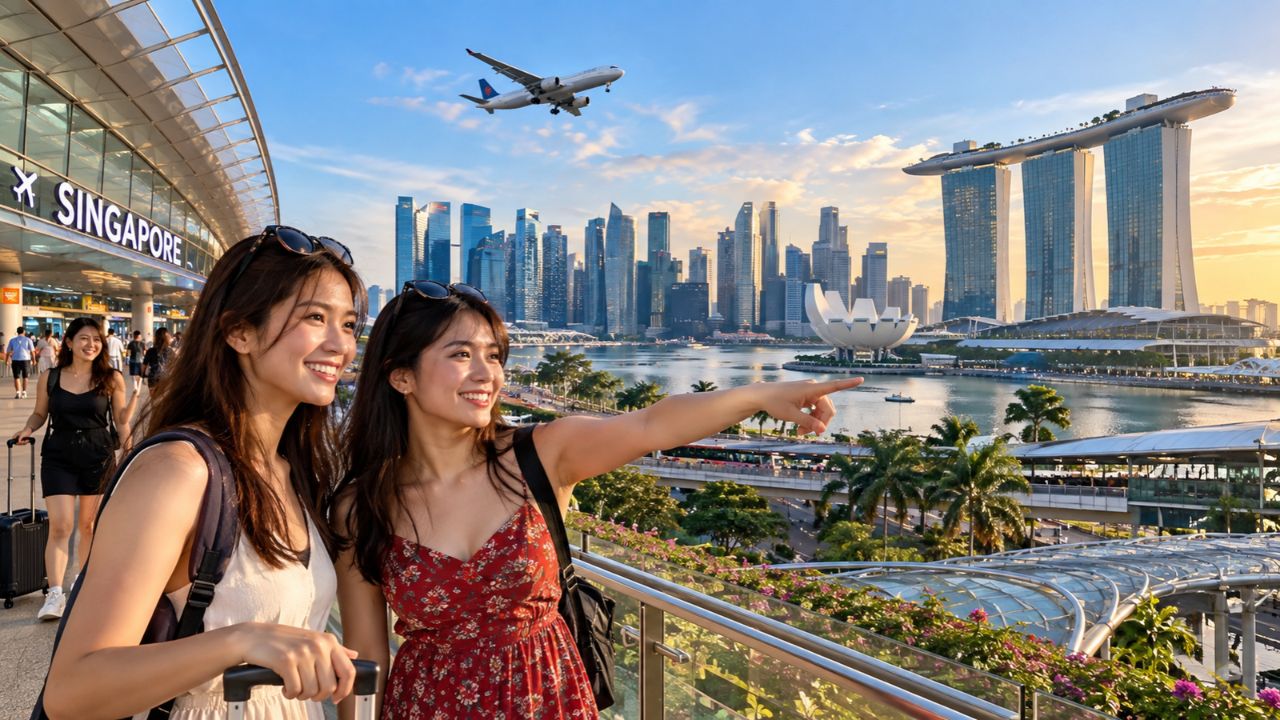
An initial design capacity of 50 million passengers annually for Changi Airport Terminal 5, coupled with a 50-plus-kilometer fully subterranean Cross Island Line, anchors a multi-decade capital deployment that reinforces Singapore’s dominance in global transit. While competing aviation and tourism hubs across Asia and the Middle East scramble to build reactive infrastructure once terminal congestion and tarmac delays reach crisis levels, the Republic of Singapore operates under a diametrically opposed planning doctrine: construct massive operational capacity decades before bottlenecks emerge. Coordinated across key statutory bodies including Changi Airport Group, the Land Transport Authority (LTA), the Maritime and Port Authority of Singapore, and the Urban Redevelopment Authority, this comprehensive infrastructure drive systematically weaves aviation, rapid rail, automated maritime ports, and prime urban waterfront redevelopments into a frictionless visitor ecosystem.
Preemptive Infrastructure Planning: Building Decades Ahead of Saturation Limits
Singapore’s transport planning doctrine eliminates bottlenecks before they emerge. Rather than treating terminals, rail lines, and ports as isolated utilities, the Ministry of Transport approaches infrastructure as a unified catalyst. In an era where corporations and tourists demand punctuality, logistical efficiency dictates where international capital, regional headquarters, and visitors choose to arrive.
According to economic development benchmarks published by the Singapore Tourism Board, international visitors increasingly favor destinations that offer seamless multimodal mobility from terminal gate to hotel lobby. By synchronizing major transport projects years in advance, the city-state ensures that arriving passengers encounter minimal processing delays, regardless of whether they touch down on an Airbus A380 at midnight or board a morning commuter train to a suburban technology campus.
This coordinated capital commitment serves a vital defensive purpose against rising regional competition. Megahubs in Doha, Dubai, Bangkok, and Kuala Lumpur are aggressively investing billions into runway expansions and airport luxury retail to siphon high-yield transit traffic away from Southeast Asia. Singapore’s response is not merely to build larger passenger lounges, but to re-engineer its entire national geography, creating an urban transit web where air terminals function as direct extensions of the city’s high-capacity rail arteries.
The Four Pillars: Aviation Mega-Terminals, Subterranean Rail, and Coastal Reclamation
Anchoring this transformation is the Changi East development and Changi Airport Terminal 5. Targeted for completion in the mid-2030s, Terminal 5 will initially handle 50 million passengers annually, boosting Changi’s total capacity beyond 130 million travelers. A dedicated Ground Transportation Centre will integrate rail, buses, and automated people movers directly beneath the passenger concourse.
Beneath the surface, the Land Transport Authority is constructing the Cross Island Line (CRL), Singapore’s eighth MRT line. Stretching over 50 kilometres underground across eastern, western, and northeastern corridors, Phase 1 serves more than 100,000 households across Loyang, Tampines, Pasir Ris, Defu, Hougang, Serangoon North, and Ang Mo Kio. Future extensions will link Terminal 5 directly to both the Cross Island Line and the Thomson-East Coast Line, integrated with western feeders like the Jurong Region Line.
Simultaneously, maritime logistics are undergoing a historic geographic pivot with the phased commissioning of the automated Tuas Mega Port. By consolidating all container terminal operations at Tuas, the government is progressively vacating hundreds of hectares of prime coastal land along the southern coastline. This enables the Urban Redevelopment Authority to execute the Greater Southern Waterfront project, converting former industrial shipping docks into an expansive coastal district featuring commercial towers, lifestyle entertainment, and waterfront hotels.
| Infrastructure Mega-Project | Governing Agency | Targeted Operational Delivery | Primary Engineering Metric | Strategic Passenger & Tourism Function |
|---|---|---|---|---|
| Changi Airport Terminal 5 | Changi Airport Group / MOT | Mid-2030s (Phased opening) | 50 million initial annual passengers | Future-ready international mega-hub terminal |
| Cross Island Line (CRL) | Land Transport Authority (LTA) | Phased delivery (From late 2020s) | 50+ km fully underground rail line | Direct airport-to-suburb rail connectivity |
| Thomson-East Coast Line Extension | Land Transport Authority (LTA) | Aligned with T5 opening | Direct city-center airport rail link | Express transit from Changi East to downtown Marina Bay |
| Tuas Mega Port | Maritime & Port Authority (MPA) | 2040s full completion | Automated mega-containership berths | Frees historic southern ports for urban tourism |
| Greater Southern Waterfront | Urban Redevelopment Authority (URA) | Multi-decade progressive rollout | 2,000 hectares prime coastal zone | Mixed-use leisure, cruise, and waterfront hotels |
Expert Analysis: Intermodal Friction Elimination, Hub Yield Protection, and Land-Use Arbitrage
The engineering brilliance of Singapore's strategy lies in intermodal friction elimination. In most global gateway cities—such as London, New York, or Manila—travelers must navigate disjointed rail transfers, airport express premium markups, and notorious highway gridlock to reach downtown meetings. In Singapore, integrating two separate subway lines directly beneath Terminal 5 allows inbound fliers to step off a long-haul flight and reach financial districts or regional tech hubs without ever flagging a taxi or exiting covered walkways.
This seamless transit access alters visitor spending dynamics across the island. When international tourists can traverse from Changi Airport to western ecotourism attractions or northern culinary enclaves in under 45 minutes on modern MRT lines, visitor dwell time expands into suburban heritage neighborhoods. For travelers booking this route, the direct consequence is unprecedented itinerary efficiency, allowing business and leisure fliers to attend morning conferences in the Central Business District, visit nature reserves in the afternoon, and catch evening flights without the anxiety of missing departures due to traffic gridlock.
From an airline and hospitality yield perspective, preemptive capacity acts as an economic protective moat. The pricing pressure this creates means legacy full-service carriers and budget airlines alike can expand flight banks into Singapore without facing slot allocation rationing or escalating gate delay fees. As Changi avoids the gate crunches that plague European hubs, international airlines can maintain dependable turnarounds, preserving operating profit margins and passing predictable schedule stability onto premium travelers.
In parallel, the relocation of shipping operations to Tuas represents a masterstroke of land-use arbitrage. Maritime container terminals generate thin real estate returns per hectare compared to prime luxury hospitality and commercial development. By freeing 2,000 hectares of southern coastline for the Greater Southern Waterfront, Singapore effectively creates a brand-new tourism playground directly adjacent to Sentosa Island and the cruise terminal. This strategic maneuvering ensures that the island nation will continuously offer fresh cultural and recreational assets to global travelers long after traditional attractions mature.
Key Takeaways
- Changi Airport Terminal 5 will add an initial handling capacity of 50 million passengers annually upon completion in the mid-2030s, positioning Singapore for long-term global air dominance.
- The 50-plus-kilometer fully underground Cross Island Line and Thomson-East Coast Line extensions will connect Terminal 5 directly into national rail interchanges.
- Moving commercial shipping docks to the automated Tuas Mega Port releases valuable southern coastal territory for the Greater Southern Waterfront redevelopment.
- Integrated airport transit centers eliminate intermodal friction, enabling international travelers to reach financial and leisure hubs smoothly via public rail.
- Preemptive capacity investments prevent airport congestion, protecting flight schedule reliability and maintaining competitive landing economics for global airlines.
FAQ: Singapore Tourism and Transport Infrastructure 2026
When will Changi Airport Terminal 5 be completed and open to passengers?
According to the Singapore Ministry of Transport and Changi Airport Group, Terminal 5 construction is progressing on schedule for operational opening in the mid-2030s, initially handling around 50 million passengers per year.
How will the Cross Island Line MRT benefit international travelers?
The 50-plus-kilometer underground Cross Island Line will connect Changi Airport directly to eastern, northeastern, and western hubs like the Jurong Lake District, reducing cross-island transit times and expanding rapid transit access across the country.
What is the Greater Southern Waterfront project?
The Greater Southern Waterfront is a major urban revitalization initiative by the Urban Redevelopment Authority, transforming 2,000 hectares of vacated southern port land into a mixed-use coastal district featuring waterfront hotels, attractions, and residential spaces.
Why is Singapore expanding airport and rail capacity so far in advance?
Singapore practices preemptive infrastructure planning to ensure passenger processing, runway capacity, and rail connections stay well ahead of projected global travel demand, preventing the crowding and delays common in competing regional hubs.
By pouring billions into steel and concrete long before its runways and train platforms reach capacity, Singapore ensures that when global travel demand surges, its borders will welcome millions without missing a single beat.
Related Travel Guides
Disclaimer
This article is for informational and educational purposes only. It does not constitute legal, financial, or professional advice. While we strive to provide accurate and up-to-date information, travel policies, regulations, and conditions change rapidly. Always verify information with official sources before making travel decisions. Nomad Lawyer makes no representations about the accuracy, reliability, completeness, or suitability of the information provided. Readers should consult qualified professionals for advice specific to their circumstances. The views expressed in this article are those of the author and do not necessarily reflect the views of Nomad Lawyer.
Raushan Kumar
Founder & Lead Developer
Full-stack developer with 11+ years of experience and a passionate traveller. Raushan built Nomad Lawyer from the ground up with a vision to create the best travel and law experience on the web.
Learn more about our team →