
Rogue Drones Over Findel: Why Luxembourg's Airspace Shutdown Exposes Single-Runway Vulnerabilities

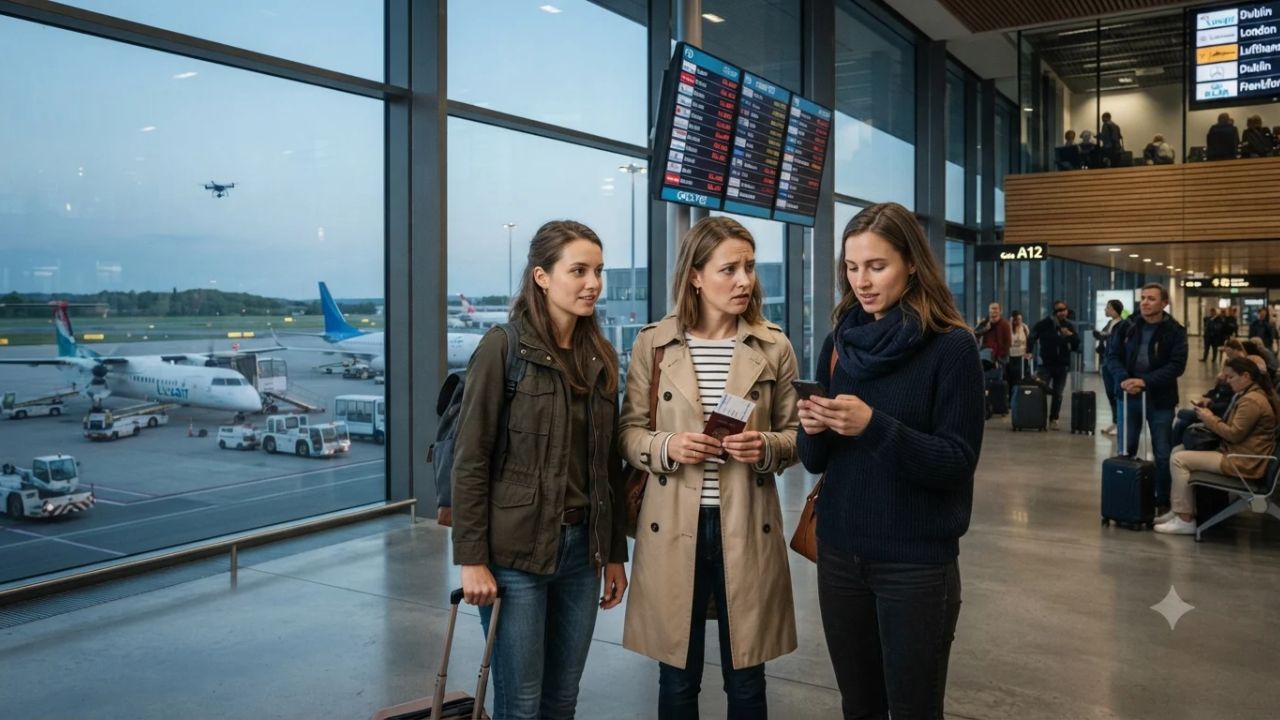
An abrupt runway closure initiated at 21:45 local time paralyzed Luxembourg Airport on Friday evening, triggering international flight diversions after rogue unmanned aerial vehicles breached the nation's primary terminal control area. With unauthorized drones sighted hovering directly within the approach vectors of Findel Airport, air traffic controllers enacted emergency safety protocols, halting all departing movements and vectoring inbound aircraft away from the Grand Duchy. The sudden grounding of the country's sole commercial runway stranded hundreds of evening passengers and forced cross-border diversions into neighboring Belgium. As detailed by safety directives from the European Union Aviation Safety Agency (EASA), even lightweight consumer drones present catastrophic ingestion risks to high-bypass turbofan engines, leaving airport authorities no choice but to enforce total airspace sterilization until police and aviation security personnel clear the perimeter.
Low-Altitude Incursions and Kinetic Hazards: Why Findel Ceased Flight Operations
The operational freeze at Findel Airport highlights the structural vulnerability of single-runway national gateways. Unlike multi-runway megahubs that can isolate arrival streams or shift active thresholds during isolated perimeter breaches, Luxembourg Airport relies on a single paved runway (Runway 06/24) to handle both commercial passenger networks and dense international freight movements. As the home operating hub for national flag carrier Luxair and global freight operator Cargolux, the facility anchors vital logistics corridors connecting Central Europe with global trade hubs. When unauthorized drone operators flew into protected approach airspace, controllers faced a potential midair collision threat that made continuous flight operations legally and physically untenable.
The physical physics of drone ingestion represent a nightmare scenario for commercial flight crews. During final approach and initial climb-out—phases where aircraft operate at lower altitudes, reduced speeds, and high engine power settings—flight crews possess virtually zero radar visibility or reaction time to evade small unmanned aerial systems. High-capacity lithium-polymer batteries and dense metallic camera gimbals can easily puncture cockpit windscreens, shatter titanium engine fan blades, or trigger uncontained engine fires. To protect passenger lives, air traffic managers coordinated with pan-European flow controllers at EUROCONTROL to immediately initiate holding patterns and order en-route diversions across adjacent flight information regions.
The disruption in Luxembourg is not an isolated occurrence, but part of an escalating wave of low-altitude airspace violations across Western Europe. Regional hubs including Brussels Airport have previously faced temporary operational pauses following unauthorized drone incursions near active runways. Despite increasingly strict European Union drone registration frameworks and mandatory geo-fencing software built into consumer drones, rogue hobbyists and deliberate disruptors continue to bypass electronic restrictions, exposing the urgent need for dedicated counter-UAS (unmanned aerial systems) kinetic and electronic detection infrastructure around civil airfields.
Cross-Border Diversion Mechanics and the Liège Tarmac Confinement
The immediate consequence of Friday evening's runway closure was a sudden dispersion of inbound aircraft to secondary airfields across Western Europe. Among the most severely impacted services was an evening commercial passenger flight arriving from London City Airport (LCY) to Luxembourg. Diverted while descending toward Findel, the aircraft was redirected across the Belgian border to Liège Airport (LGG), an airfield primarily equipped for nocturnal cargo operations rather than international passenger handling.
Upon touching down in Liège, passengers encountered an acute logistical impasse. Because the flight originated outside the Schengen Area in the post-Brexit United Kingdom, passengers could not simply disembark into the Belgian terminal without formal border control processing. Liège’s passenger terminal, operating with reduced nighttime customs staffing, was unequipped to process an unexpected influx of non-Schengen travelers. As flight crews relayed cockpit updates confirming that unauthorized drones remained active over Luxembourg until near midnight, passengers were held onboard the aircraft for hours awaiting immigration clearance and replacement ground transportation to the Grand Duchy.
| Disruption Timeline Event | Exact Recorded Time | Operational Manifestation | Affected Airline Corridors | Regional Aviation Impact |
|---|---|---|---|---|
| First Incursion Reported | Around 21:45 Local Time | Immediate approach freeze | Inbound European flights | Suspension of all arrivals & departures |
| International Diversions | 22:00 to 23:00 Local Time | Aircraft rerouted across borders | London City to LUX service | Diversion to Liège Airport, Belgium |
| Tarmac Confinement Phase | 22:30 to 01:00 Late Night | Aircraft held on apron in LGG | UK non-Schengen arrivals | Delayed border clearance & coach transfers |
| Continued Drone Reports | Near Midnight Local Time | Police security sweep extended | Regional night rotations | Stranded outbound aircraft & crew timeouts |
| Phased Reopening | Early Morning Hours | Runways certified operational | Morning flight schedule | Cascading delays on Luxair regional turns |
Expert Analysis: The EU261 Liability Void, Airline Positioning Costs, and Asymmetric Airspace Defense
From a legal and consumer rights standpoint, drone-induced airport shutdowns create a major financial headache for passengers. Under European Regulation EC 261/2004, airlines are obligated to pay fixed statutory cash compensation—ranging from €250 to €600 per traveler—for long delays and cancellations. However, because unauthorized drone incursions represent an unlawful third-party security breach entirely outside the carrier's operational control, European aviation jurisprudence categorizes these events as "extraordinary circumstances." Consequently, passengers on diverted flights to Liège or delayed departures in Luxembourg cannot claim statutory cash compensation, leaving them entitled only to basic duty of care, such as hotel accommodation, meals, and surface transport.
For airlines, absorbing the costs of a sudden diversion to a secondary airport is financially punitive. When an aircraft diverts to an unstaffed outstation like Liège, the airline must pay emergency landing fees, ground handling surcharges, and bus charter fees to ferry passengers across international borders. For travelers booking this route, the direct consequence is severe itinerary dislocation and missed interline connections, as passengers arriving by motorcoach in Luxembourg at 3:00 a.m. find public transit dormant and connecting flights departed hours earlier. Business travelers commuting on the London-Luxembourg financial corridor face canceled morning conferences and wasted workdays.
From an airline revenue perspective, the cascading disruption across single-hub operators like Luxair inflicts lasting fleet damage. The pricing pressure this creates means carriers must absorb unrecoverable repositioning expenses, overtime ground wages, and passenger hotel bills without any mechanism to recoup these losses from ticket margins or insurance policies. Flight crews stranded in outstations exceed legal duty-time limitations under flight time limitation (FTL) rules, forcing carriers to cancel morning rotations on Saturday while repositioning aircraft back to their home bases.
Simultaneously, the incident exposes the disproportionate economic leverage held by illicit drone operators. An unauthorized consumer device costing under $1,000 can successfully disrupt millions of euros in commercial aviation movements, ground heavy long-haul freighters, and overwhelm international border authorities. Until civil aviation regulators mandate integrated radio-frequency detection, automated acoustic tracking, and active drone-jamming perimeters around European aerodromes, commercial passengers will remain vulnerable to sudden, asymmetric airspace seizures.
Key Takeaways
- Luxembourg Airport (Findel) suspended all flight operations starting around 21:45 local time on Friday following unauthorized drone incursions near active runway approaches.
- Inbound passenger and cargo aircraft were diverted to neighboring European countries, including a London City service redirected to Liège Airport in Belgium.
- Non-Schengen arrivals from the UK experienced extended tarmac confinement in Liège due to nighttime customs and immigration staffing limitations at the cargo hub.
- Drone disruptions are classified as "extraordinary circumstances" under EU Regulation 261/2004, exempting airlines from paying statutory passenger delay compensation.
- As a single-runway airport serving both Luxair passenger banks and Cargolux freight fleets, Findel possesses zero operational redundancy during airspace security emergencies.
FAQ: Luxembourg Airport Drone Disruption and Passenger Rights 2026
Why did Luxembourg Airport halt flights on Friday evening?
Air traffic controllers suspended all flight operations beginning around 21:45 local time after unauthorized drones were reported operating inside the protected approach airspace of Findel Airport, creating severe collision hazards for arriving aircraft.
Are passengers entitled to EU261 cash compensation for drone flight diversions?
No. Unauthorized drone incursions are classified as "extraordinary circumstances" under European air passenger rights legislation, exempting airlines from paying cash compensation, although carriers remain legally obligated to provide duty-of-care meals, hotels, and alternate transport.
Why were diverted passengers held inside the plane at Liège Airport?
Passengers arriving from the United Kingdom were held onboard because Liège Airport is primarily a nighttime cargo hub lacking immediate nighttime border control officers to process non-Schengen international arrivals.
How did the single-runway layout of Findel Airport impact the disruption?
Because Luxembourg Airport relies on a single commercial runway for all passenger and cargo traffic, any perimeter airspace security breach forces a total facility shutdown without the ability to redirect flights to alternative parallel runways.
Until European gateways deploy active electronic countermeasures against rogue drones, an off-the-shelf toy will remain capable of holding multi-million-dollar airliners and international borders hostage.
Related Travel Guides
Disclaimer
This article is for informational and educational purposes only. It does not constitute legal, financial, or professional advice. While we strive to provide accurate and up-to-date information, travel policies, regulations, and conditions change rapidly. Always verify information with official sources before making travel decisions. Nomad Lawyer makes no representations about the accuracy, reliability, completeness, or suitability of the information provided. Readers should consult qualified professionals for advice specific to their circumstances. The views expressed in this article are those of the author and do not necessarily reflect the views of Nomad Lawyer.
Raushan Kumar
Founder & Lead Developer
Full-stack developer with 11+ years of experience and a passionate traveller. Raushan built Nomad Lawyer from the ground up with a vision to create the best travel and law experience on the web.
Learn more about our team →