
Libya Steps Up With Qatar and Others As Emerging Dark Sky Tourism Destinations Redefine Luxury Desert Travel For International Visitors
Libya Steps Up With Qatar and Others As Emerging Dark Sky Tourism Destinations Redefine Luxury Desert Travel For International Visitors

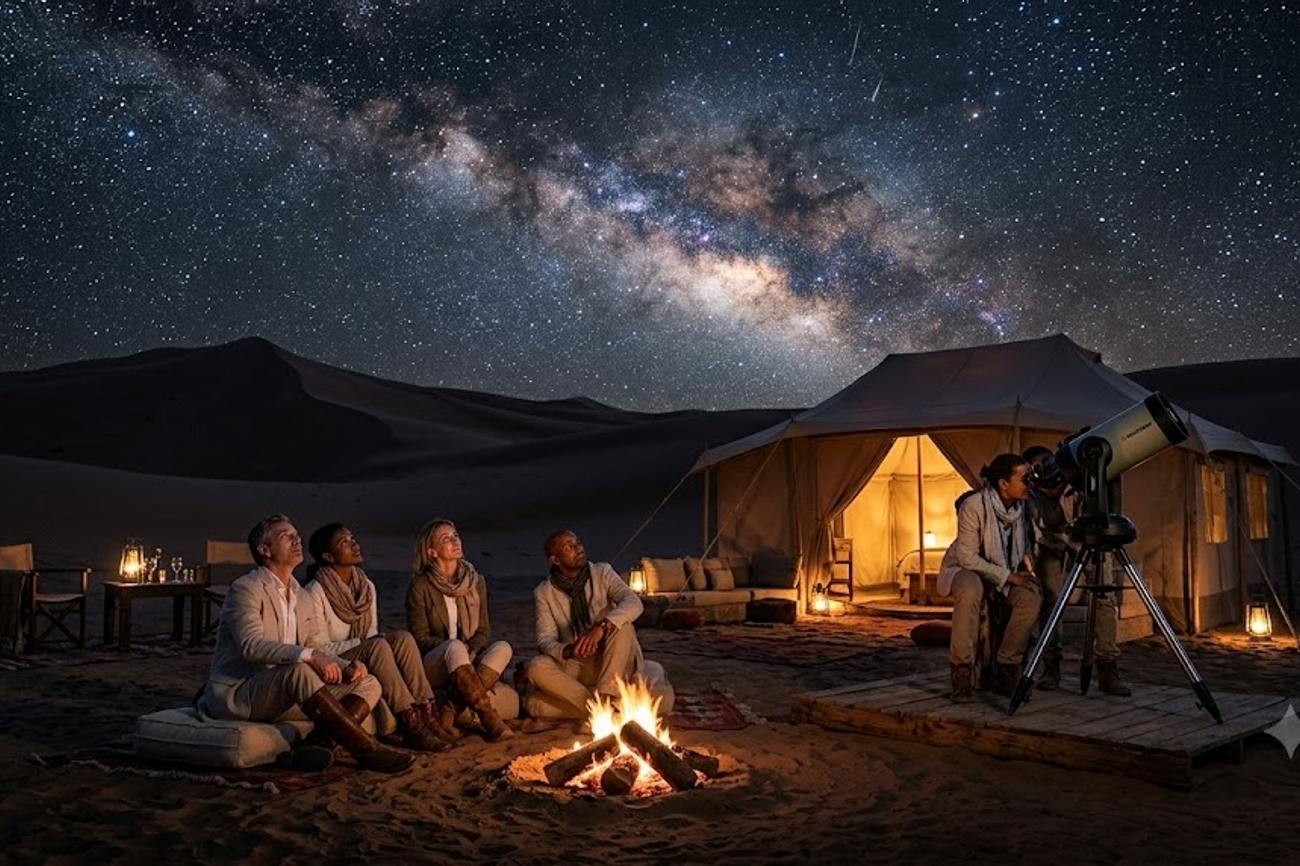
Image generated by AI
[Rome, May 2026] — Vatican City, Qatar, Saudi Arabia, Libya, and Oman have emerged as the world's leading destinations for "dark sky" and nighttime tourism according to a 2026 radiance index. The ranking, which measures light intensity per 1,000 population, highlights a growing global trend where travelers are intentionally seeking out regions with minimal artificial light pollution to experience natural night landscapes.
The data reveals a stark contrast in how "darkness" is experienced across these five territories. While some destinations offer traditional astronomical experiences in vast desert expanses, others, like Vatican City, utilize nighttime illumination to enhance cultural and architectural heritage. This shift reflects a broader movement in the travel industry toward "slow tourism," where the absence of urban glare becomes a primary draw for high-end and adventure travelers.
The Radiance Index Trigger
The current surge in dark sky tourism is driven by the rapid expansion of global urban centers and the subsequent spread of artificial lighting, which has obscured the night sky for a majority of the world's population. The 2026 radiance measurement provides a quantitative look at where the balance between population density and light emission allows for the most profound nighttime experiences.
For the desert nations of the Middle East and North Africa, this ranking validates a strategic shift toward adventure tourism. By leveraging their vast, unpopulated territories, these countries are positioning themselves as sanctuaries for those fleeing "glowing skylines." The index specifically tracks radiance per 1,000 residents, meaning that in countries like Libya and Oman, the sheer scale of the uninhabited landscape outweighs the light produced by their urban hubs.
Affected Travelers, Key Stakeholders and Regional Positioning
The impact of this trend is felt most acutely across the Middle East and North Africa (MENA) region, where tourism boards are now integrating "night-sky" itineraries into their national branding. The following table breaks down the specific radiance figures and the primary draw for each identified destination:
| Destination | Radiance (per 1,000 pop) | Primary Night Tourism Draw | Key Geographic Feature |
|---|---|---|---|
| Vatican City | Highest (Unspecified) | Architectural Illumination | St. Peter's Basilica |
| Qatar | 429.4 | Luxury Desert Stargazing | Khor Al Adaid (Inland Sea) |
| Saudi Arabia | 267.1 | Cultural "Kashta" Camping | Remote Interior Deserts |
| Libya | 229.8 | Primitive Sahara Exploration | Sahara Desert |
| Oman | 226.6 | Multi-Terrain Night Treks | Mountains and Coastlines |
Travelers to Qatar are increasingly gravitating toward Khor Al Adaid, a UNESCO-recognized area where the desert meets the sea, offering a rare environment for overnight camping. In Saudi Arabia, the rise of "kashta"—traditional outdoor gatherings—is transforming from a local custom into a commercialized tourism product, drawing international visitors to the country's remote interior.
Meanwhile, Libya's position in the top five is a direct result of the Sahara Desert's dominance over its geography. While the radiance figure of 229.8 makes it a prime spot for astronomical observation, the destination remains high-risk. Travelers are urged to consult the U.S. Department of State or similar government agencies for current safety warnings and entry requirements before attempting to visit Libyan territories.
Practical Traveler Advisory and Strategic Insights
For the modern traveler, the rise of dark sky tourism means a shift in how itineraries are planned. No longer is the "night" simply a period of downtime between sightseeing excursions; it is now the main event.
Booking and Logistics Travelers should expect a rise in "glamping" and luxury desert camp offerings. In Qatar and Oman, the infrastructure is shifting to allow visitors to combine five-star hospitality with total isolation. This means booking windows for remote desert camps are likely to tighten during peak stargazing seasons.
Equipment and Preparation Those visiting Saudi Arabia or Oman for night-sky experiences must prepare for extreme temperature drops. The transition from daytime heat to nighttime cold in the desert is abrupt. Specialized gear for "kashta" style camping—including high-grade thermal layers and portable lighting that minimizes light pollution—is becoming essential.
Cultural Expectations In Vatican City, the "night experience" is urban and curated. Visitors should expect managed crowds and timed entry for evening tours of the Vatican Museums, where the focus is on the interplay between artificial light and Renaissance art rather than the stars.
The Future of Night-Sky Tourism
As the 2026 rankings settle, the industry is expected to see a surge in "Astro-Tourism" certifications. Much like LEED certification for buildings, destinations may soon seek "International Dark Sky" designations to attract a specific demographic of high-spending, eco-conscious travelers.
Oman is currently leading the way in diversifying the dark-sky experience by blending its coastal and mountain geography. Future itineraries are expected to move beyond simple desert camps to include "night trekking" in the Al Hajar Mountains and coastal stargazing along the Arabian Sea.
In Saudi Arabia, the integration of dark sky tourism into the broader "Vision 2030" framework suggests that massive investments in sustainable, remote infrastructure will continue. This will likely lead to the creation of dedicated astronomical reserves that protect the night sky from future urban encroachment.
FAQ: Dark Sky Tourism 2026
What is "radiance per 1,000 population"? It is a measurement of the total artificial light emitted by a country divided by its population. A lower figure generally indicates a darker environment, though in the case of Vatican City, the high radiance reflects intense lighting in a tiny, densely populated area.
Is it safe to visit Libya for stargazing? While Libya offers some of the darkest skies in the world due to the Sahara, it remains a high-risk destination. Travelers must check official government travel advisories and secure specialized permits and guides before planning any trip.
What is "Kashta" in Saudi Arabia? Kashta refers to the traditional Saudi practice of heading into the desert for outdoor gatherings, dining, and camping. It has evolved into a popular tourism activity that blends cultural heritage with nature exploration.
How does Vatican City fit into a "dark sky" list? Vatican City represents the opposite end of the spectrum. While the other countries are prized for their natural darkness, the Vatican is highlighted for its curated nighttime illumination, proving that "night tourism" encompasses both astronomy and urban heritage.
The world is getting brighter, but the luxury of true darkness is becoming the ultimate travel commodity.
Related Travel Guides
- Indonesia Unveils New Komodo Wildlife Cruises as AYANA Targets Sharks Dragons and Manta Rays
- Indonesia and Philippines Tighten Ferry Safety Focus as Maritime Incidents Renew Enforcement Pressure
- Greece Builds A Stronger Tourism Future As Peak Season Highlights Premium Visitor Trends And Revenue Growth
Disclaimer
This article is for informational and educational purposes only. It does not constitute legal, financial, or professional advice. While we strive to provide accurate and up-to-date information, travel policies, regulations, and conditions change rapidly. Always verify information with official sources before making travel decisions. Nomad Lawyer makes no representations about the accuracy, reliability, completeness, or suitability of the information provided. Readers should consult qualified professionals for advice specific to their circumstances. The views expressed in this article are those of the author and do not necessarily reflect the views of Nomad Lawyer.
Naina Thakur
Contributor & Travel Specialist
Travel enthusiast and legal writer covering visa regulations, responsible tourism, and cultural journeys across global destinations.
Learn more about our team →