
Indonesia and Philippines Tighten Ferry Safety Focus as Maritime Incidents Renew Enforcement Pressure
Indonesia and Philippines Tighten Ferry Safety Focus as Maritime Incidents Renew Enforcement Pressure

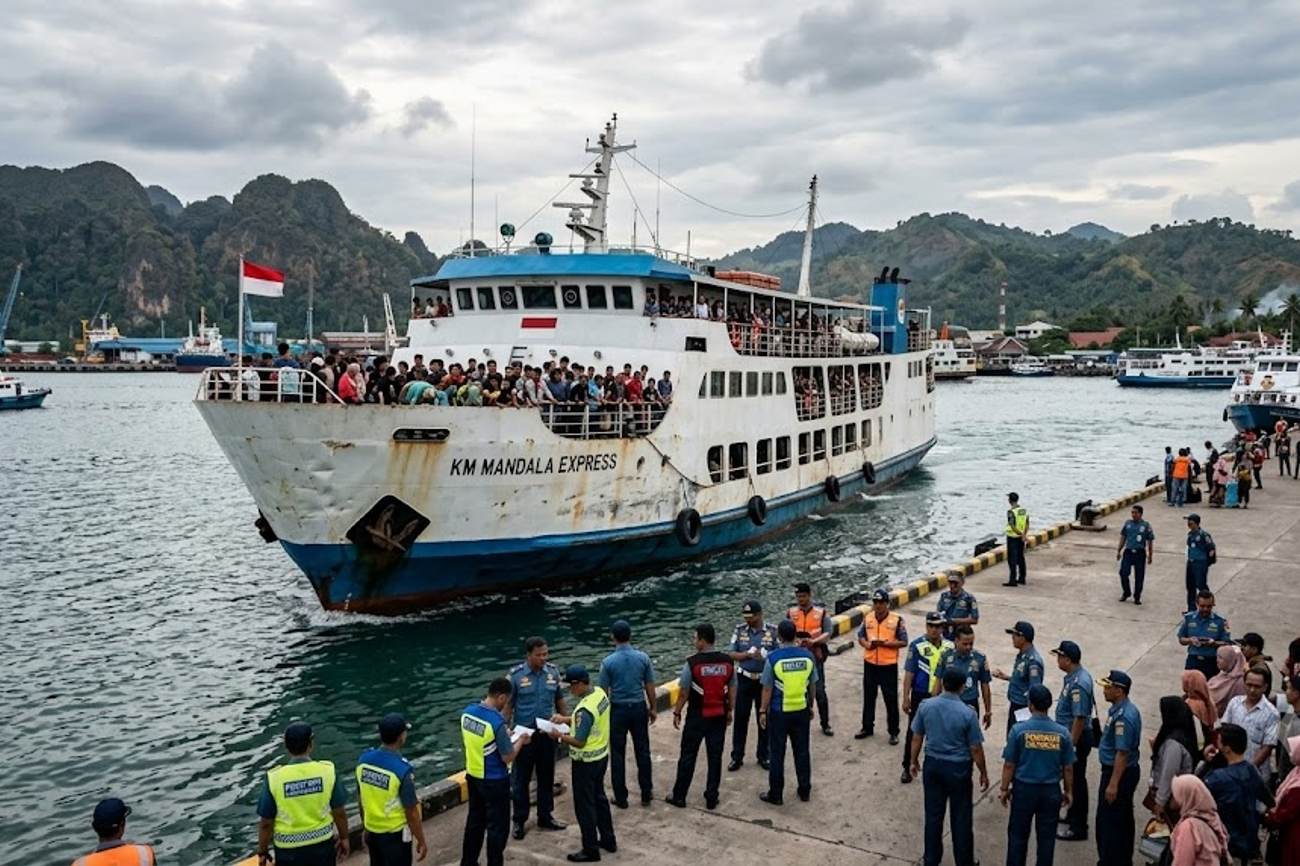
Image generated by AI
95 per cent of ferry-related casualties globally occur on domestic voyages, a statistic from the International Maritime Organization (IMO) that underscores the lethal gap between international shipping standards and the regional realities of Southeast Asian transit. While ocean-crossing liners adhere to rigid global treaties, the domestic ferries serving the archipelagos of Indonesia and the Philippines operate under national jurisdictions where "paper compliance" has historically outweighed operational readiness.
The Crisis of Paper Compliance in Archipelagic Transit
The maritime sectors of Indonesia and the Philippines are currently undergoing a forced evolution. For decades, safety in these regions has been measured by the possession of certificates and manuals rather than the ability of a crew to execute an evacuation under pressure. This systemic failure reached a breaking point in September, triggering a wave of regulatory interventions.
In Indonesia, the catalyst was a cluster of maritime accidents occurring in rapid succession. On 16 September, Transport Minister Dudy Purwagandhi convened a summit of maritime supervisors to issue a blunt directive: safety protocols must function in real-world operating conditions, not just within regulatory documents. The Ministry of Transportation is now shifting the burden of proof from the vessel's paperwork to the Directorate General of Sea Transportation's field implementation.
The urgency of this shift was cemented by the 13 September accident involving the KMP Virgo Transport 8 in the Java Sea. This incident highlighted a critical failure in the "documentation vs. reality" divide, prompting Minister Purwagandhi to mandate a prioritized focus on search and rescue operations, passenger evacuation efficiency, and the accuracy of passenger manifests—data points that are often neglected until a tragedy occurs.
Operational Readiness and the EV Variable
While Indonesia focuses on systemic supervision, the Philippines is targeting the human element of maritime disaster. On 16 September, the Maritime Industry Authority (MARINA) announced a pivot toward the aggressive monitoring of emergency drills. Under the guidance of Administrator Sonia Malaluan and the framework of MARINA Advisory 2026-04, the agency is moving beyond equipment checklists to test whether crews can actually operate lifesaving gear and coordinate evacuations in real-time.
The Philippine regulatory landscape is also grappling with a modern technological threat: the transport of electric vehicles (EVs). The fire aboard the MV June Aster, which remains under investigation as of 18 September, has forced a multi-agency collaboration between MARINA, the Bureau of Fire Protection, the Philippine Coast Guard, and the Department of Energy.
The core of the MV June Aster investigation is not merely identifying the cause of the fire, but establishing new safety standards for hybrid and electric vehicles on passenger decks. Because EV battery fires behave differently than internal combustion engine fires, the existing maritime safety protocols are effectively obsolete.
| Country | Primary Regulatory Shift | Key Incident/Driver | Strategic Focus |
|---|---|---|---|
| Indonesia | Field-based supervision | KMP Virgo Transport 8 (13 Sept) | Operational implementation over manuals |
| Philippines | Practical drill verification | MARINA Advisory 2026-04 | Crew competency and emergency response |
| Philippines | EV Transport Standards | MV June Aster Fire (18 Sept) | Technical assessment of new vehicle hazards |
| SE Asia Region | SCOPE Project | IMO Framework | Cross-border safety strategies (ID, MY, TH) |
Expert Analysis: The "Domestic Gap" and Pricing Pressures
The current regulatory crackdown reveals a dangerous structural flaw in global maritime law. The Safety of Life at Sea (SOLAS) Convention, the gold standard for maritime safety, generally does not apply to vessels operating exclusively on domestic routes. This creates a "Domestic Gap" where the ships carrying the most people—the daily commuters of Southeast Asia—are subject to the least stringent international oversight.
For travelers and expatriates utilizing these networks, the direct consequence is a volatile safety environment. When regulators like MARINA move from "document checks" to "practical drills," the immediate result is often a spike in vessel downtime. Ships that cannot pass these new, rigorous tests will be pulled from service, leading to a temporary contraction in seat capacity.
Indonesia and the Philippines have intensified their focus on ferry safety in response to recent maritime incidents, prompting renewed enforcement efforts to ensure compliance with safety regulations. The Indonesian Ministry of Transportation has outlined new guidelines for ferry operators, which can be found on their official website https://hubla.dephubla.go.id/. These measures aim to enhance passenger safety and prevent accidents, thereby protecting the livelihoods of those dependent on ferry services.
The pricing pressure created by these mandates will likely be passed to the passenger. Upgrading safety systems and implementing mandatory, high-frequency crew training increases operational overhead. In a market where ferry operators often run on thin margins, we can expect a shift toward higher ticket prices or a consolidation of smaller, under-capitalized operators into larger fleets that can afford the compliance costs.
Furthermore, the MV June Aster investigation signals a coming conflict between the green energy transition and maritime logistics. If MARINA implements strict restrictions or requires specialized fire-suppression equipment for EV transport, ferry operators may either ban electric vehicles or create a "premium" surcharge for their transport. This creates a logistical bottleneck for the growing number of EV owners in the Philippines who rely on inter-island transit.
Key Takeaways
- Shift to Practicality: Both Indonesia and the Philippines are moving away from "paper compliance," prioritizing field inspections and live emergency drills over the possession of safety manuals.
- EV Risk Management: The MV June Aster fire has triggered a regulatory review of how electric and hybrid vehicles are transported, potentially leading to new restrictions or equipment requirements.
- Regulatory Vacuum: Because domestic ferries are largely exempt from SOLAS international rules, national governments are the sole line of defense, utilizing voluntary IMO Model Regulations adopted in 2022.
- Operational Impact: Increased supervision and the SCOPE project (involving Indonesia, Malaysia, and Thailand) suggest a long-term move toward standardized regional safety strategies.
- Passenger Risk: The 95% casualty rate on domestic voyages emphasizes that the highest risk for travelers in Southeast Asia is not the long-haul voyage, but the short-haul domestic ferry.
FAQ: Southeast Asia Ferry Safety 2026
Are domestic ferries in Indonesia and the Philippines safe for travelers? Safety varies by operator. While regulators are increasing inspections and drills following the KMP Virgo Transport 8 and MV June Aster incidents, domestic vessels operate under national rather than international (SOLAS) standards, meaning safety levels are inconsistent.
What should I check before boarding a ferry in Southeast Asia? Observe the crew's familiarity with safety equipment and check for visible, well-maintained life jackets. Inquire if the vessel has undergone recent MARINA or Ministry of Transportation safety audits, especially for routes in the Java Sea or Philippine archipelagos.
Why are electric vehicles (EVs) a concern on ferries? EV battery fires are harder to extinguish than traditional fires and can undergo "thermal runaway." The investigation into the MV June Aster fire is determining if current vessel fire-suppression systems are adequate for EV transport.
What is the SCOPE project? The SCOPE project is an IMO-backed initiative involving Indonesia, Malaysia, and Thailand. It aims to develop comprehensive ferry safety strategies to reduce the high rate of casualties associated with domestic maritime travel in the region.
The distance between a safety manual and a saved life is measured in the quality of a crew's last drill.
Tags: Indonesia Ministry of Transportation, MARINA Philippines, KMP Virgo Transport 8, MV June Aster, IMO Model Regulations, Southeast Asia Maritime Safety
Related Travel Guides
Disclaimer
This article is for informational and educational purposes only. It does not constitute legal, financial, or professional advice. While we strive to provide accurate and up-to-date information, travel policies, regulations, and conditions change rapidly. Always verify information with official sources before making travel decisions. Nomad Lawyer makes no representations about the accuracy, reliability, completeness, or suitability of the information provided. Readers should consult qualified professionals for advice specific to their circumstances. The views expressed in this article are those of the author and do not necessarily reflect the views of Nomad Lawyer.
Naina Thakur
Contributor & Travel Specialist
Travel enthusiast and legal writer covering visa regulations, responsible tourism, and cultural journeys across global destinations.
Learn more about our team →