
Las Vegas Travel Comeback: Sin City Rebuilds Tourism Power With Luxury and Entertainment
Las Vegas engineers a multi-billion-dollar tourism rebound as luxury hospitality, high-tech entertainment, and desert geotourism reverse 2025 visitor declines.

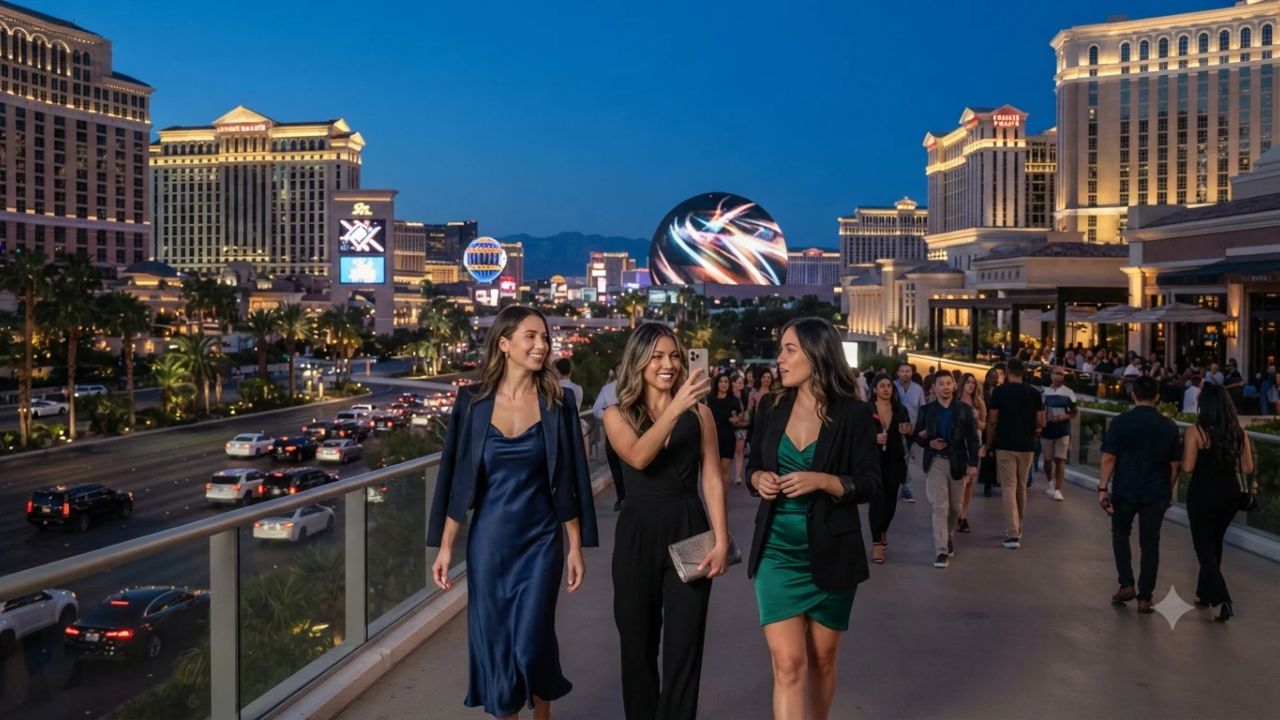
Image generated by AI
[Las Vegas, October 2025] — Las Vegas is recording a significant surge in travel interest as the city pivots toward a luxury-centric tourism model to reverse a period of declining visitor numbers. New data reveals that the entertainment capital saw one of the highest year-over-year increases in U.S. travel searches during September, signaling a critical recovery in consumer confidence.
This recovery demonstrates that while consumer travel budgets have tightened under broader economic strains, appetite for one-of-a-kind immersive spectacles remains robust. The destination recorded one of the most substantial year-over-year expansions in United States travel search volume during September, outperforming numerous competing domestic leisure markets. However, beneath these headline gains lies a bifurcated tourism economy where legacy casino gaming occupies a shrinking share of visitor expenditure, superseded by high-yield live events, luxury wellness retreats, and outdoor eco-excursions.
Structural Recalibration: Reversing the Post-Pandemic Tourism Slump
The underlying catalyst for the current tourism push is an urgent imperative to stabilize market fundamentals following the contraction of 2025. In that year, total annual visitation slipped to 38.5 million guests, reflecting a sharp 7.5% year-over-year pullback from 2024 figures. Tourism analysts attributed this downturn to widespread price sensitivity among domestic middle-class travelers. Over consecutive quarters, escalating room rates, ancillary parking surcharges, elevated food and beverage minimums, and rising domestic airfares eroded the city's historic reputation as an accessible, high-value getaway.
In response, regional leadership and the Las Vegas Convention and Visitors Authority (LVCVA) enacted a strategic transformation designed to pivot the municipal visitor profile toward higher-margin consumer demographics. Recognizing that casual slot and table game wagering no longer serves as an automatic tourism magnet for younger generations, casino resort operators have redirected billions of dollars into architectural spectacles, wellness retreats, and digital entertainment venues. This realignment seeks to insulate the local hospitality workforce from fluctuations in discretionary mass-market spending by capturing high-net-worth cultural tourists, global convention delegates, and dedicated sports enthusiasts.
The initial dividends of this strategy surfaced in mid-2026 data. July arrivals increased 2.7% year-over-year, accompanied by measurable improvements in average hotel occupancy across both the Strip and surrounding municipal submarkets. This rebound was further validated by late-summer search analytics indicating renewed consumer intent heading into the autumn conference and entertainment season.
Performance Audit: Visitation Metrics, Sector Shifts, and Economic Indicators
The rebuilding of Las Vegas tourism operates across several interconnected economic verticals, each adjusting to evolving traveler expectations.
| Sector Vertical | 2025 Baseline & Headwinds | 2026 Performance Indicator | Core Strategic Transformation | Primary Visitor Demographic |
|---|---|---|---|---|
| Overall Visitation | 38.5M Visitors (-7.5% YoY) | +2.7% July Uptick; Surge in Sept Searches | Transition from budget gaming to experiential luxury | High-yield domestic & international travelers |
| Resort Corridor | Average Daily Rate (ADR) resistance | Hotel occupancy stabilization across Strip | Focus on premium suites, Michelin-tier dining, wellness | Affluent couples, luxury weekenders |
| High-Tech Entertainment | Shifting demand away from legacy revues | Record sellouts at The Sphere Las Vegas | Architectural immersion & digital production integration | Gen Z, millennial experiential seekers |
| Convention & MICE | Slower corporate delegate rebound | Steady baseline corporate trade calendar | Hybrid meeting facilities & networking integration | International business & trade professionals |
| Outdoor Adventure | Underutilized regional desert assets | Expanding trail use at Red Rock & Valley of Fire | Nature-based day trips paired with luxury dining | Active eco-tourists & adventure photographers |
Strip Entertainment and Architectural Innovation
At the center of the resort corridor, immersive entertainment has become the primary growth engine. The commercial success of The Sphere Las Vegas, featuring cutting-edge LED exterior displays, spatial audio engineering, and resident concert runs, has established a global template for experiential architecture. This massive venue, alongside dynamic installations at the Area 15 entertainment district, has proven that contemporary travelers prioritize interactive sensory environments over traditional showroom revues. Classic Strip fixtures continue to draw substantial foot traffic, including the iconic choreographed Bellagio fountains and the 550-foot High Roller observation wheel, but their role has shifted from standalone draws into complimentary visual landmarks within broader luxury itineraries.
Cultural Dispersion into Downtown and the Arts District
While the Strip captures the preponderance of gaming and luxury revenue, a growing contingent of returning visitors is dispersing into downtown corridors. Downtown Las Vegas and the Fremont Street Experience offer a deliberate contrast to mega-resort scale, highlighting vintage neon preservation, street food collectives, and historic casino properties. Concurrently, the 18b Las Vegas Arts District has matured into a focal point for independent boutiques, craft breweries, and chef-driven dining concepts. Cultural institutions such as The Mob Museum provide educational depth, giving cultural tourists compelling reasons to extend their stays beyond the resort corridor.
Desert Exploration Beyond the Neon Perimeter
A defining development of the 2026 travel season is the aggressive promotion of southern Nevada's natural surroundings. Recognizing that wellness and outdoor recreation represent major post-pandemic travel priorities, local operators are marketing the region as an adventure gateway. Just seventeen miles west of the Strip, Red Rock Canyon National Conservation Area attracts hundreds of thousands of hikers, cyclists, and rock climbers navigating towering sandstone formations. To the northeast, Valley of Fire State Park showcases ancient petroglyphs and fiery Aztec sandstone ridges, while Lake Mead National Recreation Area supplies extensive kayaking, boating, and shoreline trekking. This outdoor portfolio allows travelers to balance daytime wilderness excursions with evening theatrical performances.
The Sports and Convention Nexus
Business and convention travel remains a foundational pillar of the regional economy, providing mid-week occupancy stability for thousands of hotel rooms. While corporate travel recovered more deliberately than weekend leisure travel throughout 2025, major autumn industrial expos and medical conventions continue to anchor the city's hospitality workforce. Simultaneously, professional sports tourism has fundamentally altered weekend travel dynamics. With championship boxing, international motorsports, professional football, hockey, and basketball events filling stadium calendars, athletic tourism generates consistent, high-spending room demand that offsets seasonal lulls.
Expert Analysis: Balancing High-Margin Luxury Against Volume Sustainability
For travelers booking this route, the direct consequence of the luxury-first transition is an unavoidable escalation in baseline itinerary expenses. The days when Las Vegas subsidized luxury accommodations and lavish culinary offerings through casino gaming margins are permanently over. Today, every vertical must independently generate profits. For consumer travel planners, this means average nightly expenditures—including mandatory resort fees, self-parking charges, and dining surcharges—require significantly higher travel budgets than comparable vacations in regional leisure hubs.
The pricing pressure this creates means that budget-conscious domestic travelers and international visitors facing currency headwinds are increasingly priced out of prime Strip properties during peak event weekends. When major sporting fixtures or global trade conventions coincide with marquee residency performances, mid-tier resort rates routinely surge above $400 per night before taxes and auxiliary resort fees are applied. To navigate these hurdles, value-conscious visitors must either pivot toward off-Strip accommodations, schedule mid-week stays between Tuesday and Thursday, or target non-convention windows identified through published LVCVA calendars.
From an operational perspective, the contraction in key international feeder markets presents a strategic vulnerability. Cross-border visitation from Canada, traditionally one of the destination's primary international sources, experienced marked declines through 2025 due to unfavorable exchange rates and increased competition from overseas sun destinations. While transborder air connectivity between Canadian gateways and Harry Reid International Airport remains frequent, seat load factors have required targeted promotional campaigns. Restoring robust international arrival numbers from Canada, Mexico, and Western Europe is essential to sustain mid-week hotel capacity throughout 2026 and 2027.
In parallel, destination leadership faces a delicate balancing act. While high-net-worth travelers generate enviable revenue per available room (RevPAR), a hospitality ecosystem comprising more than 150,000 hotel rooms cannot maintain sustainable long-term health on elite spending alone. If entry-level leisure travelers conclude that the destination has permanently abandoned its accessible entertainment identity, overall occupancy rates could falter during non-event periods. Destination executives must ensure that while luxury developments flourish, sufficient value-oriented entertainment, transparent pricing, and accessible dining options remain available to preserve the multi-tiered appeal that built the city's global brand.
Key Takeaways
- Las Vegas tourism is rebounding from a 7.5% contraction in 2025 (which totaled 38.5 million visitors), propelled by a 2.7% July arrival expansion and robust September travel search queries.
- The city's economic model has shifted permanently from gaming-subsidized vacations toward independent high-margin entertainment, luxury wellness, and sports tourism.
- Marquee architectural and technological developments like The Sphere and Area 15 are driving strong leisure demand among younger, digitally engaged demographics.
- Surrounding natural attractions, including Red Rock Canyon, Valley of Fire State Park, and Lake Mead, are successfully expanding the destination's appeal into outdoor adventure travel.
- Travelers must prepare for heightened baseline costs, as resort fees, parking charges, and peak-event room rates make advance planning and mid-week scheduling essential for value.
FAQ: Las Vegas Travel Recovery 2026
How did Las Vegas tourism perform in 2025 compared to 2026? Las Vegas welcomed approximately 38.5 million visitors in 2025, representing a 7.5% decline from the previous year due to high travel expenses. Early 2026 indicators show recovery, with July visitation increasing 2.7% year-over-year and September search volume expanding nationwide.
What new attractions are leading the entertainment comeback beyond casinos? The Sphere leads modern entertainment with advanced LED architecture and immersive live residencies. Complementary attractions include the multi-sensory Area 15 complex, The Mob Museum in downtown, the High Roller observation wheel, and outdoor excursions throughout Red Rock Canyon.
Why have Las Vegas travel costs increased in recent years? Resort operators have transitioned from gaming-subsidized models to standalone profit centers across lodging, fine dining, and entertainment. Mandatory daily resort fees, parking charges, and peak event pricing have elevated baseline trip budgets across Strip properties.
What natural outdoor attractions are easily accessible from the Strip? Red Rock Canyon National Conservation Area sits seventeen miles west, offering scenic drives and hiking trails. Valley of Fire State Park features ancient sandstone formations fifty miles northeast, while Lake Mead National Recreation Area provides water recreation thirty miles southeast.
The neon may still blaze across the Mojave, but the modern traveler is betting on unforgettable experiences rather than the roll of the dice.
Related Travel Guides
- Peru Aligns With Costa Rica as G Adventures Moves to Capture the New Luxury Traveler Boom
- Las Vegas Teams Up with Nashville, Philadelphia, New Orleans and Other US States Shine from Tourism Faceloss with a Surge of Visitor Searches
- United Teams Up With American and More As Airlines Cut Flights And Prepare Travellers For Higher Holiday Airfares
Disclaimer
This article is for informational and educational purposes only. It does not constitute legal, financial, or professional advice. While we strive to provide accurate and up-to-date information, travel policies, regulations, and conditions change rapidly. Always verify information with official sources before making travel decisions. Nomad Lawyer makes no representations about the accuracy, reliability, completeness, or suitability of the information provided. Readers should consult qualified professionals for advice specific to their circumstances. The views expressed in this article are those of the author and do not necessarily reflect the views of Nomad Lawyer.
Kunal K Choudhary
Co-Founder & Contributor
A passionate traveller and tech enthusiast. Kunal contributes to the vision and growth of Nomad Lawyer, bringing fresh perspectives and driving the community forward.
Learn more about our team →