
Costa Rica Launches Revolutionary Sustainable Tourism Model in La Fortuna Near Arenal Volcano, Urging Travelers to Secure Early Waterfall Passes: New Update
Costa Rica launches a community-led sustainable tourism model in La Fortuna. Read about Arenal Volcano hikes, waterfall fees, and safety tips.

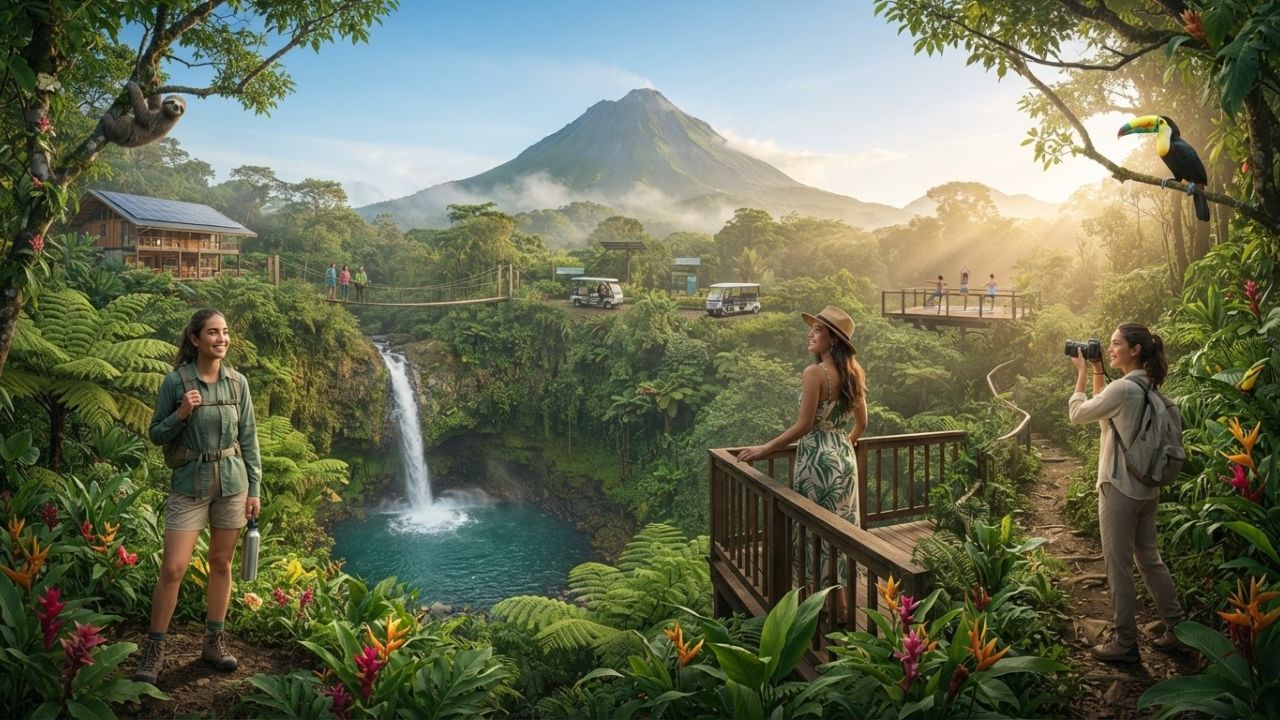
Image generated by AI
Published on July 27, 2026
In an effort to protect fragile biological corridors and fund community development, Costa Rica has launched a revolutionary community-led sustainable tourism model in La Fortuna near the Arenal Volcano. This administrative transition affects international visitors and eco-tourists who face strict daily visitor caps, structured entry fees, and upgraded safety guidelines along volcanic trails. Vacationers planning an eco-trip are urged to pre-book entrance passes on official community portals and pack appropriate closed-toe footwear to explore the famous local cascades safely.
Quick Summary
- Community-Led Administration: The Integral Development Association of La Fortuna manages the region's famous biological reserve and 70-meter waterfall.
- Direct Reinvestment Loop: Entry fees and tourist spending are directly funneled back into local road improvements, public schools, and conservation.
- Ecosystem Protection Limits: Travel authorities have enforced daily visitor caps to maintain pristine water quality in the Arenal Volcano foothill pools.
- Upgraded Trail Infrastructure: A safety-optimized trail featuring over 500 hand-built steps has democratized access to the scenic forest valley.
- Fierce Eco-Lodge Competition: The success of this local model is compelling major international hotels to rapidly align with community-centric guidelines.
Context and Background: Eco-Tourism Overhaul and ADIFORT Reinvestment
The international sustainable travel market is witnessing a major transformation, moving away from corporate gentrification toward community-managed ecological zones. Backed by joint agreements between the Costa Rican Tourism Institute and the local municipality of La Fortuna, the new model places administrative control of primary natural assets directly in the hands of residents. This transition ensures that the financial benefits of tourism support local public services rather than flowing to foreign-owned conglomerates.
As over-tourism puts pressure on delicate volcanic environments, managing visitor load factors has become critical to environmental preservation. By coordinating trail capacity and water-quality checks, local developers are setting a new standard for responsible travel. Consequently, vacationers stand to benefit from safer walking trails, upgraded facilities, and the certainty that their spending directly aids the community.
Event and Incident Details: Inside La Fortuna's Sustainable Tourism Model
The new ecological model is centered around the management of the Arenal Volcano's biological reserve, directing revenue toward local infrastructure. The community-run board manages the daily entrance flows, trail systems, and municipal conservation targets. The primary operational guidelines, reserve dimensions, and community targets managed by the local association are detailed in the data table below:
| Sustainable Model Coordinate | Core Operational Guidelines | Community & Environmental Target |
|---|---|---|
| Managing Association | Integral Development Association of La Fortuna | Non-profit board representing local residents |
| Biological Reserve Area | 210-acre protected zone near Arenal Volcano | Protection of regional rainforest corridors |
| Key Natural Landmark | 70-meter-high La Fortuna waterfall | Main attraction with 500-step paved descent |
| Daily Entrance Tariff | Approximately $20 for international adults | Reinvested into local schools and road upgrades |
| Township Population | 15,000 local residents | Direct support and employment opportunities |
These strategic points show how the township of 15,000 residents retains the economic value generated by the region's natural wonders. Every dollar spent at the 210-acre biological reserve and the 70-meter waterfall goes directly toward road improvements, educational facilities, and forest protection. Additionally, the success of this local management has prompted international eco-lodges to compete by offering better integration with community conservation programs.
Risk and Impact: Trail Safety and Environmental Capacity Restrictions
The implementation of strict ecological guidelines and community management brings several safety and capacity rules:
- Daily Entry Caps: Rigorous visitor load controls are enforced to protect the biological reserve, resulting in sold-out time slots during peak weeks.
- Physical Trail Demands: The descent to the waterfall basin involves over 500 steep steps, which can become slippery due to volcanic mist and rain.
- Ecosystem Contamination Risks: Unmanaged swimming and tourist crowds risk degrading water quality and disturbing local rainforest wildlife.
- Financial Compliance Checks: Tourism authorities strictly enforce the $20 international adult entry fee, requiring travelers to purchase tickets on official portals.
What Authorities and Conservationists Say: Redefining Tourism Blueprints
According to statements published by the Costa Rica Tourism Board (ICT), this locally governed model has shattered previous economic forecasts, showing that responsible travel is highly profitable. Tourism directors note that neighboring municipalities are pulling outdated, foreign-owned blueprints out of circulation to build locally owned visitor centers. For official safety updates and trail guidelines, travelers can consult the National System of Conservation Areas (SINAC) website.
Administrative planners at the La Fortuna Integral Development Association explain that the immediate objective is to keep tourist capital inside the township. They advise travelers that the $20 entry fees are directly used to build schools, hire teachers, and pave roads. Conservationists urge visitors to respect designated trail rules and follow instructions regarding sustainable waste management during their stays.
Practical Traveler Advice: Navigating the Sustainable Tourism Model Safely
For eco-tourists planning to explore the volcanic rainforests of La Fortuna, travel experts recommend:
- Pre-Book Entrance Passes: Check ticketing availability on the official community platform early to secure passes before daily caps are reached.
- Arrive During Early Morning Hours: Plan your visit right as the gates open to enjoy a quiet jungle experience and avoid midday tour buses.
- Pack Closed-Toe Footwear: Wear sturdy hiking boots or trail runners to maintain grip on the wet, mist-slicked 500-step waterfall descent.
- Utilize Water-Resistant Daypacks: Use dry bags to protect cameras, passports, and electronics from the heavy spray near the waterfall basin.
- Bring Hydration Gear: Carry reusable water bottles to stay hydrated along the volcanic foothill trails and minimize plastic waste.
Broader Context: The Fight Against Corporate Gentrification in Central America
The Arenal Volcano region has long served as a focal point for Central American travel, drawing visitors to its geothermal springs and tropical forests. Historically, much of the tourism revenue in the area was managed by foreign-owned operators, leaving local communities with minimal economic benefits. The transition to a community-led structure represents a significant shift, ensuring that local residents retain administrative control of their natural assets.
This model has successfully protected La Fortuna from the corporate gentrification that has altered other major destinations. By focusing on sustainable practices and local management, the township has preserved its authentic cultural identity while upgrading its tourist facilities. This approach demonstrates how local communities can directly balance environmental protection with economic growth.
Looking Ahead: Expanding Local Biological Corridors
Looking ahead, neighboring municipalities in Central America are planning to adopt similar community-centric frameworks to manage their natural resources. Tourism boards will continue to release new guidelines for expanding biological corridors and protecting water quality. Eager vacationers can expect more locally owned visitor centers and community-run tours to launch in the coming years.
Additionally, developers will continue to upgrade trail safety systems and implement digital booking tools to manage visitor load factors. Evolving environmental regulations will encourage operators to focus on renewable energy and eco-certifications. Vacationers should check official community sites regularly for updates on trail conditions and ticketing rules.
Conclusion: Emphasizing Preparedness and Vigilance
In conclusion, the new community-led model in La Fortuna demonstrates how sustainable travel can directly benefit local communities. While managing daily caps and trail safety requires careful planning, the program ensures a highly rewarding and responsible vacation experience. By planning ahead, booking early, and respecting local guidelines, travelers can support the conservation of Costa Rica's beautiful volcanic forests.
FAQ: Understanding the La Fortuna Sustainable Tourism Model
What is the new sustainable tourism model in La Fortuna?
It is a community-run eco-tourism model managed by the non-profit Integral Development Association of La Fortuna (ADIFORT), where all visitor revenue is directly reinvested in local schools, roads, and conservation.
How much is the entry fee for the La Fortuna waterfall?
The entrance fee is approximately $20 for international adults, which directly supports the township's 15,000 residents and local projects.
Why did authorities implement daily visitor caps?
Daily visitor caps are strictly enforced to protect the fragile rainforest ecosystem and maintain the pristine water quality of the waterfall pools.
What safety gear is recommended for the waterfall hike?
Travelers must wear closed-toe footwear for the steep 500-step descent and carry water-resistant daypacks to protect electronics from the heavy waterfall mist.
Related Travel Guides
- France, Spain, UAE, and Saudi Arabia Clash in the $1 Trillion Travel War, Accelerating Global Tourism Competition and Redefining International Routes: Latest Update
- Global Tourism Overhauled as Gen Z Travel Trends Revolutionize Vacations in Asia and Europe, Urging Travelers to Choose Sustainable Stays: Latest Update
- The 12 Best Eco-Lodges in Costa Rica, According to Reddit
Suggested SEO Metadata & Assets
- Meta Title: La Fortuna Sustainable Tourism Model: 2026 Costa Rica
- Meta Description: Costa Rica launches a community-led sustainable tourism model in La Fortuna. Read about Arenal Volcano hikes, waterfall fees, and safety tips.
- URL Slug: la-fortuna-sustainable-tourism-model-costa-rica-2026
- Tags: ["sustainable tourism model", "La Fortuna waterfall hike", "Arenal Volcano eco-tourism", "Costa Rica travel updates", "community led travel 2026"]
- Featured Image Alt Text: A majestic view of the 70-meter-high La Fortuna waterfall cascading into a bright emerald green pool, surrounded by thick tropical jungle.
Disclaimer
This article is for informational and educational purposes only. It does not constitute legal, financial, or professional advice. While we strive to provide accurate and up-to-date information, travel policies, regulations, and conditions change rapidly. Always verify information with official sources before making travel decisions. Nomad Lawyer makes no representations about the accuracy, reliability, completeness, or suitability of the information provided. Readers should consult qualified professionals for advice specific to their circumstances. The views expressed in this article are those of the author and do not necessarily reflect the views of Nomad Lawyer.
Kunal K Choudhary
Co-Founder & Contributor
A passionate traveller and tech enthusiast. Kunal contributes to the vision and growth of Nomad Lawyer, bringing fresh perspectives and driving the community forward.
Learn more about our team →