
France, Spain, UAE, and Saudi Arabia Clash in the $1 Trillion Travel War, Accelerating Global Tourism Competition and Redefining International Routes: Latest Update
France, Spain, UAE, and Saudi Arabia clash in the $1 Trillion Travel War for tourism dominance. Read about tourist yields and giga-projects.

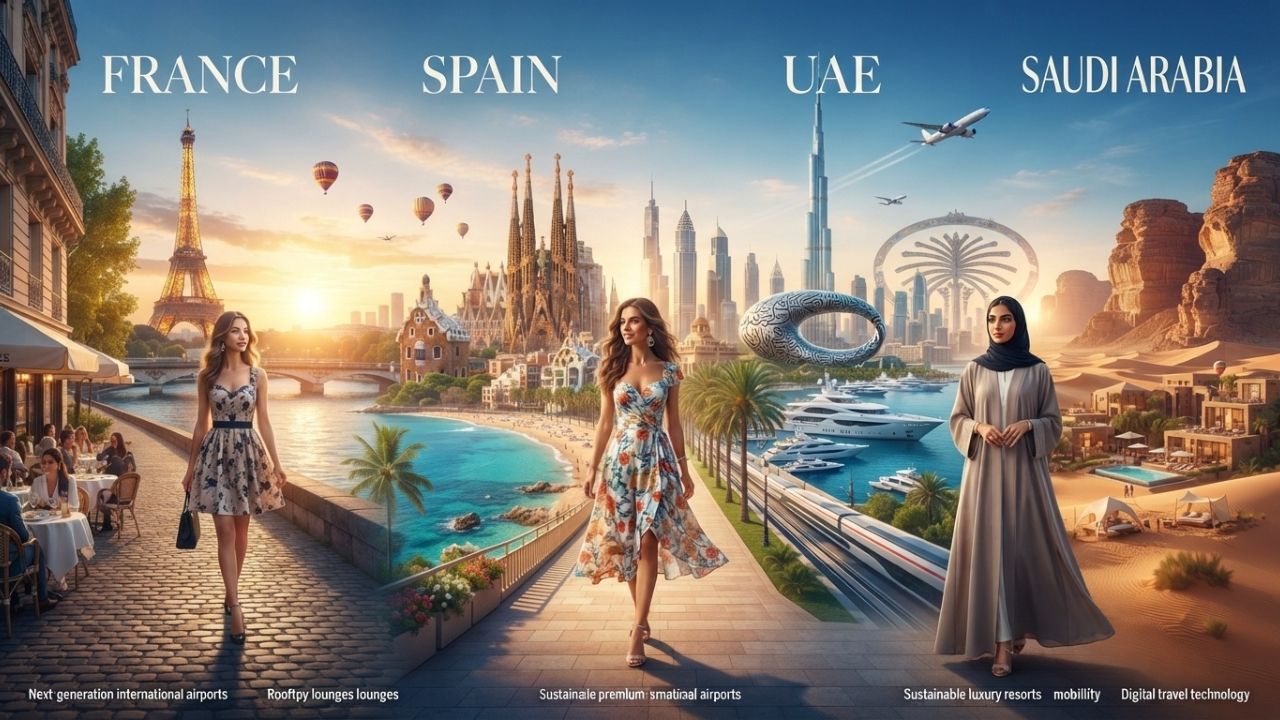
Image generated by AI
Published on July 27, 2026
In an unprecedented clash for market supremacy, France, Spain, the United Arab Emirates, and Saudi Arabia have escalated the $1 Trillion Travel War to secure dominance in global tourism competition. This high-stakes rivalry affects international travelers who face rapid transit upgrades, simplified visa regimes, and completely new flight corridors across Europe and the Middle East. Passengers planning their upcoming holiday itineraries are urged to explore these competing travel programs to capitalize on discounted fares, modern rail connections, and luxury hub amenities.
Quick Summary
- High-Stakes Rivalry: The $1 Trillion Travel War represents a massive capital clash between traditional European heavyweights and emerging Gulf powers.
- France and Spain Dominance: France leads in raw numbers with over 100 million yearly arrivals, while Spain yields the highest European revenue at over $106 billion.
- Middle Eastern Competitors: The UAE continues its ultra-luxury transit leadership, while Saudi Arabia's Vision 2030 projects aggressively capture new market shares.
- Infrastructure Upgrades: Governments are investing billions in high-speed rail lines, airport hubs (Emirates/Etihad), and massive leisure destinations like NEOM.
- Devotee and Tourist Growth: The intense contest is simplifying visa regulations, accelerating route networks, and improving global hospitality standards.
Context and Background: Geopolitical Tension and the Global Travel War
The current state of international travel has shifted from standard leisure planning to a critical economic battleground where nations deploy massive sovereign capital to capture traveler expenditure. In this high-stakes contest, traditional European destinations are forcing themselves to modernize their offerings to protect their market share against highly ambitious, capital-backed Middle Eastern competitors. This transition highlights the growing role of international tourism as a vital engine for economic resilience, foreign direct investment, and cultural diplomacy.
As travelers seek novel experiences and frictionless transit, the traditional rulebook on customer retention is being rewritten by regional tourism boards and digital platforms. According to industry observations, this multi-front contest is remapping global travel corridors, with Gulf nations building modern aviation hubs and luxury destinations from scratch. Consequently, vacationers stand to benefit from a highly competitive environment that drives continuous innovation in transport links and hospitality services.
Event and Incident Details: The Frontlines of Global Tourism Competition
The contest for tourism dominance has created distinct leaders in volume, revenue yield, connectivity, and growth momentum. Traditional European heavyweights rely on established transit networks, while emerging contenders focus on rapid capital deployment. The primary performance metrics, visitor volumes, and strategic crown categories for the four key rivals are detailed in the data table below:
| Country Parameter | Annual Visitor Volume | Tourism Receipts (Revenue) | Primary Category Crown & Core Growth Engine |
|---|---|---|---|
| France | ~102.0 Million | $77.1–$84.0 Billion | Volume Leader / High-speed rail & mega-events |
| Spain | ~93.8–96.8 Million | $106.5–$113.8 Billion | Yield Leader / Coastal hospitality & extended stays |
| United Arab Emirates | ~18.7 Million | ~$57.0 Billion | Hub Leader / World-class airlines (Emirates/Etihad) |
| Saudi Arabia | ~29.7 Million | ~$41.0 Billion | Momentum Leader / Vision 2030 & visa easing |
These figures demonstrate how each nation leverages its unique assets to capture international travel market share. France secures the highest volume of inbound holidaymakers by leveraging its pan-European rail connections and world-class culinary prestige. Meanwhile, Spain focuses on maximizing length of stay, generating over $106 billion annually by dominating coastal hospitality and urban cultural corridors. In the Middle East, the UAE's established status as an international transit hub faces strong competition from Saudi Arabia's massive Vision 2030 sovereign investments.
Risk and Impact: Changing Routes and Pricing Shifts
The intense rivalry between European and Middle Eastern tourism giants brings several key changes and challenges for travelers:
- Aviation Hub Relocation: The rapid expansion of Middle Eastern airlines and airport terminals is shifting long-haul transit patterns away from traditional European stopovers.
- Visitor Overcrowding: Volume-focused strategies in France and Spain risk overwhelming local municipal infrastructure and historic heritage sites.
- Currency and Economic Pressures: Evolving currency valuations and inflation are causing tourism receipts to fluctuate, altering destination affordability.
- Infrastructure Demands: Capital investments in projects like NEOM put immense financial pressure on public and private budgets to deliver on promised infrastructure.
What Authorities Are Saying: Expanding Connectivity and Upgrading Hospitality
According to statements from Anup Kumar Keshan, Founder and Editor-in-Chief of Travel And Tour World, the global tourism landscape is undergoing a monumental shift as emerging powerhouses challenge traditional leaders. He noted that the scale of sovereign investment pouring out of the Gulf is changing the rules of the game, forcing every country to continuously elevate its hospitality offering. For official destination guidelines, entry requirements, and official travel itineraries across these global hubs, visitors can consult the UAE Government Portal to plan their trip.
Tourism reports from the UN Tourism official portal show that international travel receipts are recovering at record-breaking speeds. To counter emerging competitors, European tourism departments, including the Spain Tourism official website, are emphasizing high-yield, sustainable urban corridors. Regulatory bodies warn that success in the long term requires balancing raw arrival volume with ecological preservation and economic efficiency.
Practical Traveler Advice: Navigating Global Tourism Competition and Maximizing Itinerary Value
For passengers looking to optimize their travel plans amidst this global contest, travel coordinators recommend the following:
- Leverage Transit Hubs: Use stopover programs in Dubai or Abu Dhabi to combine two destinations on a single long-haul ticket.
- Compare Entry Requirements: Check the relaxed visa policies in Saudi Arabia and the UAE to simplify entry procedures and save on processing fees.
- Monitor Seasonal Pricing: Track currency fluctuations and off-peak travel discounts in Spain and France to secure premium coastal lodging at lower rates.
- Use High-Speed Rail: Opt for pan-European rail connections when traveling between France and neighboring countries to save time and reduce carbon footprints.
- Explore Giga-Project Portals: Visit official planning portals for NEOM and the Red Sea to secure early-access bookings and guide local itineraries.
Broader Context: The Geography of the Trillion-Dollar Contest
The $1 Trillion Travel War highlights a geographic shift in the global balance of travel power. For decades, Western Europe remained the undisputed hub of international tourism, with France and Spain setting the benchmark for cultural heritage and beach holidays. However, the emergence of the Middle East as a major travel corridor has introduced new dynamics, powered by state-led development strategies.
This rivalry has accelerated aviation capacity and transformed traditional transit routes. The UAE established early regional leadership by building mega-hubs that connect East and West, while Saudi Arabia is using its sovereign wealth to build entirely new historic and scenic destinations. This massive deployment of capital is reshaping how travelers perceive and experience global destinations, making novel infrastructure a key driver of visitor arrivals.
Looking Ahead: The Next Phase of Aviation and Destination Expansion
Looking ahead, the global tourism contest will intensify as Saudi Arabia's Vision 2030 projects transition from construction phases to active operations. The completion of mega-projects like NEOM and the Red Sea developments will create new travel demand, challenging established global hotspots. Travelers can expect continued enhancements in international flight routes, transit speeds, and digital booking integration.
Additionally, European nations will continue to upgrade their high-speed rail networks and historic sites to maintain their competitive edge. Evolving traveler preferences, especially the demand for sustainable options and digital convenience, will dictate which destinations secure the highest market share. Eager vacationers should monitor official government travel portals for updates on new flight paths and visa programs.
Conclusion: Emphasizing Preparedness and Vigilance
In conclusion, the $1 Trillion Travel War represents a dynamic, rapidly changing landscape that is rewriting the rules of global transit. While traditional leaders like France and Spain leverage their historic heritage and coastal efficiency, Gulf powers are setting new benchmarks for infrastructure and growth. By staying informed of these competing tourism programs and leveraging transit advantages, travelers can enjoy highly personalized, world-class vacations across the globe.
FAQ: Understanding the Global Tourism Competition
What is the '$1 Trillion Travel War'?
It refers to the high-stakes global tourism competition where countries like France, Spain, the UAE, and Saudi Arabia deploy massive capital to dominate the international travel market.
Which country has the highest number of annual tourist arrivals?
France remains the world's volume leader, welcoming approximately 102 million international visitors annually.
How does Spain compare to France in tourism revenue?
While France attracts more total visitors, Spain is the yield leader, extracting higher economic value per traveler and generating over $106 billion in annual tourism receipts.
What is driving Saudi Arabia's rapid tourism growth?
Saudi Arabia's growth is driven by its Vision 2030 initiative, which funds massive giga-projects like NEOM and the Red Sea developments alongside eased visa entry rules.
Related Travel Guides
- United States Witnesses Major Aviation Shift as Alaska Airlines Virgin America Acquisition Consolidates West Coast Flights under a Unified Brand: Latest Update
- Global Tourism Overhauled as Gen Z Travel Trends Revolutionize Vacations in Asia and Europe, Urging Travelers to Choose Sustainable Stays: Latest Update
- The 12 Best Luxury Travel Destinations in the Middle East, According to Reddit
Disclaimer
This article is for informational and educational purposes only. It does not constitute legal, financial, or professional advice. While we strive to provide accurate and up-to-date information, travel policies, regulations, and conditions change rapidly. Always verify information with official sources before making travel decisions. Nomad Lawyer makes no representations about the accuracy, reliability, completeness, or suitability of the information provided. Readers should consult qualified professionals for advice specific to their circumstances. The views expressed in this article are those of the author and do not necessarily reflect the views of Nomad Lawyer.
Kunal K Choudhary
Co-Founder & Contributor
A passionate traveller and tech enthusiast. Kunal contributes to the vision and growth of Nomad Lawyer, bringing fresh perspectives and driving the community forward.
Learn more about our team →