
Aviation Updates: Massive Kuwait Airport Disruptions Trigger Travel Chaos as Airlines Ground 52 Flights to Prevent Total Network Collapse
As incredibly severe terminal gridlock threatens the Middle East, Kuwait Airways executes a massive, unannounced grounding of 48 flights, plunging passengers into devastating travel chaos.

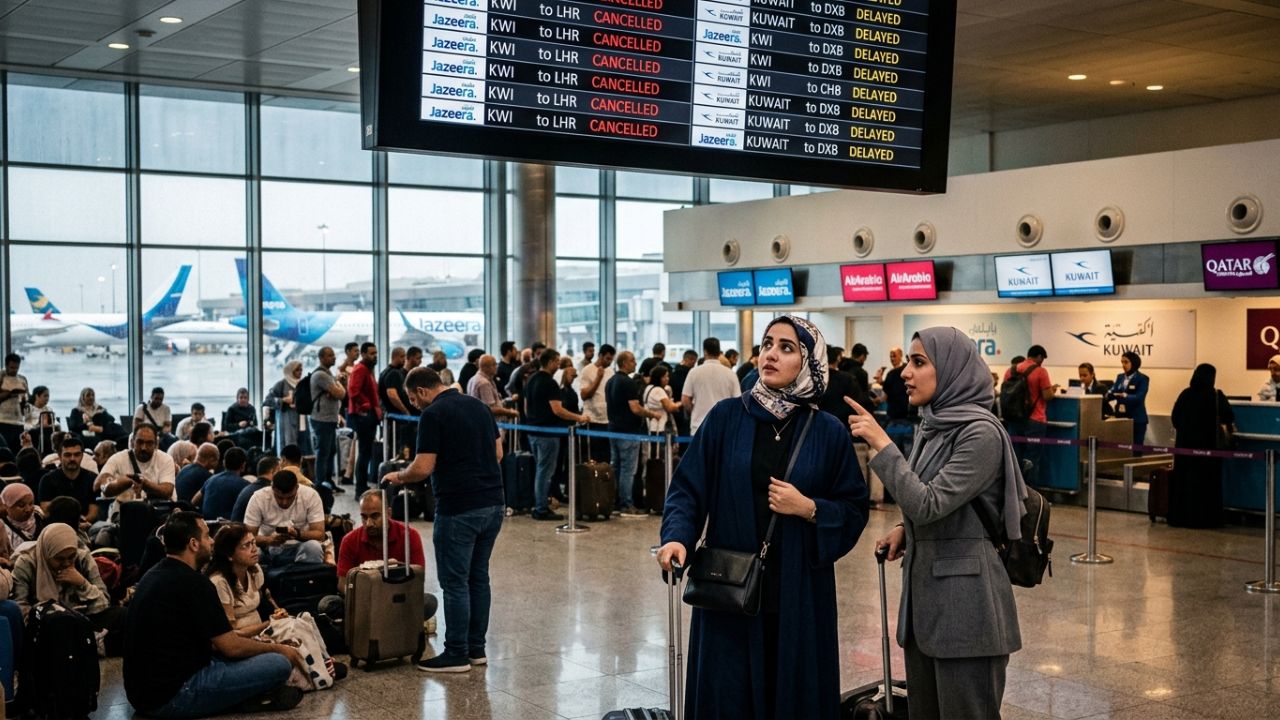
Image generated by AI
Aviation Updates: Massive Kuwait Airport Disruptions Trigger Travel Chaos as Airlines Ground 52 Flights to Prevent Total Network Collapse
As incredibly severe terminal gridlock and massive legacy airline network failures completely suffocate primary aviation gateways across the Middle East, a sudden and highly destructive wave of strategic flight cancellations at Kuwait International Airport is actively forcing passengers into an agonizing battle against unprecedented regional travel chaos.
While incredibly exhausted domestic and international passengers desperately navigate an incredibly brutal summer travel season defined by rolling delays and severe, localized airport disruptions, a massive, highly tactical operational breakdown is actively paralyzing transit flows in the Gulf. According to the absolute latest breaking airline news and official operational metrics recorded on June 23, 2026, Kuwait International Airport has violently suffered a massive, highly unusual scheduling collapse. Desperate to ensure that severe systemic constraints did not completely destroy the safety and scheduling parameters of their sprawling networks, major carriers—led aggressively by Kuwait Airways Corporation—executed a highly strategic, massive grounding. At the time of reporting, real-time aviation analysts confirmed that an astonishing 52 flights were outright canceled, compared to a mere three recorded delays. This unprecedented, 94% cancellation-to-delay ratio heavily forces thousands of highly vulnerable passengers bound for Saudi Arabia, Qatar, the United Arab Emirates, India, and Egypt into terrifying, unannounced travel chaos as their carefully planned itineraries instantly collapse.
This highly critical capacity collapse explicitly exposes the Middle Eastern aviation network not just as a vital global transit feed, but as a heavily congested, deeply fragile capacity zone prone to sudden, catastrophic failure during peak operational windows. By violently overwhelming ground handling crews and massive aircraft rotation schedules, systemic demand is directly driving massive regional gridlock. Because traditional Gulf mega-hubs frequently suffer from severe tarmac congestion leading to massive cascading delays, this sudden, heavily disruptive event across Kuwait serves as an absolute warning. Highly utilized fleets operate on razor-thin turnaround margins, meaning that airline executives are now choosing to execute immediate, decisive flight cancellations rather than allowing delays to ripple through the network. This operational breakdown explicitly demonstrates how rapidly interconnected hub issues can completely destroy the tightly scheduled movement network linking Kuwait with the broader world.
Aviation Updates: The Strategic Execution of Fleet Groundings
This massive, highly structural shift in global network stability perfectly illustrates the intense, incredibly fragile nature of modern intercontinental mobility.
According to highly detailed, official aviation updates, the disruption at Kuwait International Airport is not the result of a catastrophic weather event or a sudden security shutdown, but rather a deliberate, highly tactical network reduction. A normal weather or ATC delay scenario typically produces massive volumes of delayed flights before cancellations accumulate. However, the airport’s decision to execute 52 cancellations and only 3 delays proves that carriers proactively slashed their schedules to stabilize aircraft rotations. Operational analysts explicitly state that these current airport disruptions reflect extreme scheduling pressure where any minor constraint—such as aircraft unavailability, heat-related ground handling limits, or crew duty exhaustion—forces airlines to instantly axe high-profile routes. When airlines simultaneously execute massive groundings, it proves that the hub is currently operating at maximum physical capacity, leaving absolutely zero buffer to absorb operational shockwaves and guaranteeing massive downstream passenger failure.
Section-Wise Breakdown: Navigating the Paralyzed Flight Corridors
The sudden, massive evolution of these critical transit failures actively impacts several incredibly distinct, highly sensitive operational dynamics spanning multiple massive regional networks.
The Kuwait Airways Collapse
At the absolute core of this massive operational pivot is the severe congestion strangling the national carrier. Kuwait Airways Corporation violently executed the overwhelming majority of these flight cancellations, completely wiping 48 flights from the departure and arrival boards. This staggering figure represents more than 92% of the airport's total cancellations and equates to a massive 57% cancellation rate of their own tracked schedule. The sheer volume of affected flights demonstrates that Kuwait Airways is actively battling extreme, airline-specific scheduling challenges. Because the carrier operates an extensive network connecting the Gulf to Europe, Asia, and Africa, this massive, deliberate fleet grounding instantly shattered thousands of itineraries. The carrier chose to record only a single delayed flight, proving a brutal operational tactic: cancel early to protect the remaining schedule, leaving stranded passengers to face immediate travel chaos.
The Qatar Airways and Air Arabia Groundings
Simultaneously protecting their dense international networks proved impossible for foreign operators. Both Qatar Airways and Air Arabia violently executed a 100% cancellation rate for their scheduled operations tracked during this disruption window, grounding two flights each. Although Qatar Airways maintains one of the world’s most resilient global networks, this complete operational withdrawal from Kuwait proves that even massive global carriers must brutally reduce capacity when faced with severe localized congestion or rotation limits. For passengers booked on these critical low-cost and premium connectors, the lack of delayed options means immediate, total itinerary destruction.
The Jazeera Airways Delay Strategy
In stark contrast to the massive groundings executed by its competitors, Jazeera Airways managed to completely avoid outright flight cancellations. Instead, the low-cost carrier absorbed the systemic pressure by operating with two recorded delays. This indicates a markedly different response strategy, suggesting that Jazeera maintained just enough operational flexibility and crew availability to push their aircraft through the congested Gulf airspace. However, while less devastating than a cancellation, these delays still directly contribute to the massive airport disruptions paralyzing the terminals.
Flight Details and Verified Disruption Impact Matrix
To fully understand the exact structural parameters of this massive performance collapse and how airlines are desperately attempting to navigate complex capacity constraints, the following matrices explicitly detail the massive failures directly recorded by airport departure boards on June 23, 2026.
Confirmed Kuwait International Airport Operational Snapshot
| Airport | Cancelled Flights | Delayed Flights |
|---|---|---|
| Kuwait International Airport | 52 | 3 |
Confirmed Airline Disruption Matrix
| Airline | Cancelled Flights | Cancellation % | Delayed Flights | Delay % |
|---|---|---|---|---|
| Kuwait Airways Corporation | 48 | 57% | 1 | 1% |
| Air Arabia | 2 | 100% | 0 | 0% |
| Qatar Airways | 2 | 100% | 0 | 0% |
| Jazeera Airways | 0 | 0% | 2 | 2% |
Data explicitly reflects the massive, highly structural operational disruption currently paralyzing Kuwait's critical global travel corridors.
Passenger Impact: The Financial and Emotional Toll
For the highly demanding passengers actively engaged in this massive Gulf mobility crisis, traditional, highly anticipated international travel is currently viewed as a completely terrifying trap.
The immediate consequence of this massive operational event is measured in the profound emotional and financial shock experienced by incredibly exhausted expatriates, families, and high-level corporate travelers. Passengers originally expecting seamless transits to Saudi Arabia, India, or Egypt are now trapped in severe airport disruptions. By violently canceling these routes instead of delaying them, airlines immediately force passengers to face the severe reality of missed international connections, ruined business summits, and destroyed family holidays. The massive surge in stranded traffic guarantees that passengers will face massive, hours-long queues at rebooking desks inside Kuwait International. The artificial cap on seat availability created by these sudden flight cancellations means that securing a rebooking is no longer just about patience; it is a desperate scramble that often requires expensive, unscheduled overnight hotel stays before a traveler can finally secure an alternative flight days later.
Industry Analysis: The Economics of Tactical Fleet Exhaustion
Aviation structural analysts strictly point out that this massive, multi-national operational failure perfectly illustrates the extreme, highly vital danger of operating global mega-hubs at maximum physical capacity.
Economic data explicitly indicates that massive carrier networks are absolutely desperate to leverage extreme aircraft utilization to meet summer demand. The brutal reality of deploying fleets across the intense summer heat of the Gulf is that any minor technical issue, crew timeout, or ATC delay instantly results in a canceled departure to preserve the broader schedule. As travelers aggressively prioritize escaping travel chaos, airlines operating out of heavily congested hubs like Kuwait must acknowledge that prioritizing network recovery over individual passenger journeys directly leads to systemic passenger failure. This sensational trend beautifully proves that the era of flawless intercontinental scheduling is highly vulnerable; passengers must aggressively anticipate sudden, deliberate operational groundings when booking flights that rely on tightly constrained Middle Eastern airspace.
Conclusion: A Highly Fragile Intercontinental Future
The massively evolving infrastructure dynamics directly defining the integration of high-volume demand into the Kuwait airport network violently reflect a much broader, highly critical structural transformation currently dominating how commercial aviation is physically managed in 2026.
Rather than violently forcing massive international traffic to wait out agonizing multi-hour delays, the industry is explicitly executing rapid cancellations, demanding extreme flexibility and financial endurance from its passengers. As Gulf airspace reaches absolute saturation during the peak summer months, travelers actively navigating the incredibly busy sector must absolutely remain highly vigilant. To actively survive potential travel chaos this season, passengers must aggressively monitor all breaking aviation updates, verify their flight status via airline apps before departing for the airport, and perfectly understand that escaping modern airport disruptions and devastating flight cancellations fundamentally requires having immediate financial buffers, strong travel insurance, and backup itineraries prepared.
Key Takeaways
- Massive Tactical Grounding: Kuwait International Airport suffered a devastating 52 flight cancellations against only 3 delays on June 23, 2026, indicating a deliberate, strategic network reduction.
- The Kuwait Airways Collapse: The national carrier executed 48 cancellations, grounding a massive 57% of its tracked schedule and causing unparalleled travel chaos.
- Total Operator Withdrawals: Both Air Arabia and Qatar Airways executed 100% cancellation rates for their tracked operations during the disruption window.
- Systemic Fragility: The cancellations were executed to prevent total schedule collapse driven by aircraft availability, crew limits, and extreme operational congestion in the Gulf.
- Passenger Survival Strategy: Travelers are aggressively urged to strictly monitor airline applications for last-minute aviation updates and prepare for sudden airport disruptions involving forced overnight stays and complete itinerary destruction.
Related Travel Guides
Massive UAE Visa Bombshell: Strict New 30-Day Escape Window Announced
Travel Chaos Cripples Spain as Iberia and Ryanair Suffer 1,079 Delays
Global Flight Cancellation and Compensation Guide 2026
Disclaimer: This article is strictly for informational purposes only. Massive airline scheduling algorithms, highly localized operational maintenance requirements, and complex long-haul turnaround constraints change rapidly based on operational demand and real-time fleet availability. Always carefully verify your specific itinerary and aggressively monitor real-time flight statuses directly via your respective operator's platform before attempting to secure travel.
Disclaimer
This article is for informational and educational purposes only. It does not constitute legal, financial, or professional advice. While we strive to provide accurate and up-to-date information, travel policies, regulations, and conditions change rapidly. Always verify information with official sources before making travel decisions. Nomad Lawyer makes no representations about the accuracy, reliability, completeness, or suitability of the information provided. Readers should consult qualified professionals for advice specific to their circumstances. The views expressed in this article are those of the author and do not necessarily reflect the views of Nomad Lawyer.
Preeti Gunjan
Contributor & Community Manager
A passionate traveller and community builder. Preeti helps grow the Nomad Lawyer community, fostering engagement and bringing the reader experience to life.
Learn more about our team →