
European Travel Chaos Ignites as KLM Boeing 737-800 Suffers Engine Failure and Cabin Smoke, Forcing Emergency Landing in Denmark
Breaking airline news: A KLM Boeing 737-800 suffers a massive mid-air engine failure and severe cabin smoke, forcing a dramatic emergency landing in Denmark and triggering European travel chaos.

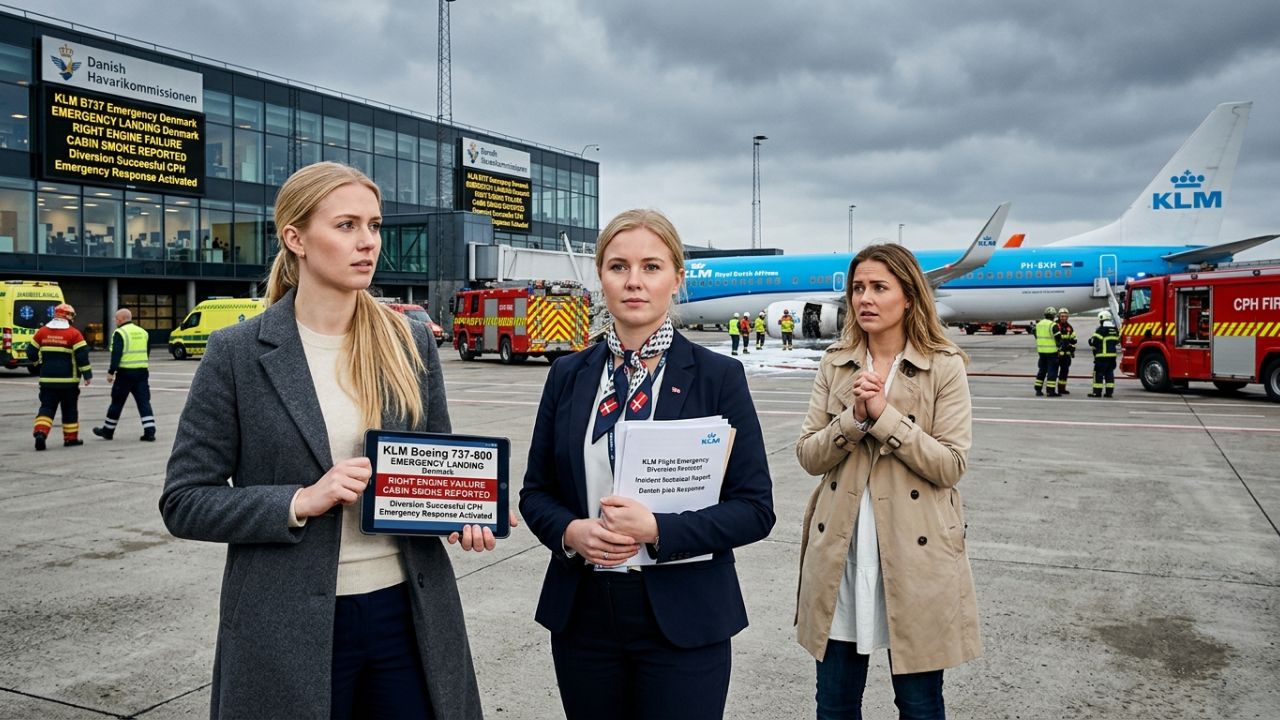
Image representing the severe mid-air crisis involving a KLM Boeing 737-800, which suffered a right engine failure and cabin smoke, forcing an immediate emergency diversion to Denmark and triggering localized travel chaos. (Image Credit: Aviation Authorities)
European Travel Chaos Ignites as KLM Boeing 737-800 Suffers Engine Failure and Cabin Smoke, Forcing Emergency Landing in Denmark
A Critical Mid-Air Meltdown Triggers Massive Disruption Across Northern European Airspace
A routine commercial flight over Northern Europe was instantly transformed into a terrifying survival scenario, triggering localized travel chaos and severely disrupting the region's highly congested aviation network. According to the latest breaking airline news, a KLM Boeing 737-800 suffered a catastrophic mid-air mechanical failure, forcing the flight deck crew into a dramatic, high-speed emergency diversion to Denmark. The crisis was initiated by a critical malfunction in the aircraft’s right engine, immediately compounded by horrifying reports of thick cabin smoke filling the passenger interior. This dual-system failure activated the highest levels of European aviation emergency protocols. While the aircraft was safely guided to the ground, the immediate diversion and subsequent grounding have caused intense airport disruptions, exposing the absolute fragility of the commercial aviation grid when critical hardware fails mid-flight.
This terrifying mid-air event is not an isolated disruption; it is a catalyst for systemic delay. When a massive passenger jet declares a full-scale emergency, air traffic control must instantly clear surrounding airspace, frequently forcing trailing aircraft into holding patterns or triggering sudden flight cancellations at nearby hubs. The situation over Denmark was further complicated by a parallel, simultaneous crisis. Just as the KLM jet was executing its emergency descent, a separate commercial aircraft in the broader Denmark-controlled airspace also experienced technical irregularities, requiring its own unscheduled emergency landing. This unprecedented clustering of mid-air emergencies heavily saturated Danish emergency response networks, plunging regional passengers into deep travel chaos and severely compounding the already fragile European aviation schedule.
Section-Wise Breakdown: The Anatomy of a Mid-Air Crisis
The operational execution of this emergency landing reveals the intense, high-stakes coordination required to prevent a localized mechanical failure from evolving into an absolute disaster:
The Mid-Air Crisis Over Denmark Airspace According to recent aviation updates, the KLM Boeing 737-800 was operating under completely standard cruise conditions when violent mechanical irregularities abruptly shattered the calm. Aircraft systems immediately detected a severe loss of thrust and critical parameter deviations, confirming a right engine failure. The flight deck instantly declared an emergency status. Because European airspace is incredibly dense, the subsequent diversion required massive, instantaneous coordination with regional air traffic control. The aircraft was violently ripped from its original flight path, granted absolute priority landing clearance, and pushed into a rapid, controlled descent toward Denmark’s emergency diversion infrastructure, triggering immediate airport disruptions as civilian traffic was abruptly halted to clear the runway.
Technical Meltdown: Engine Failure and Cabin Smoke The sheer severity of this crisis stems from the compounding nature of the failures. An isolated engine failure on a twin-engine Boeing 737-800 is a highly trained scenario; the aircraft is explicitly designed to fly on a single engine. However, the simultaneous injection of cabin smoke into the passenger environment elevates the crisis to a catastrophic threat level. The presence of smoke indicates severe internal contamination, forcing the pilots to execute rapid engine isolation procedures while simultaneously assessing cabin pressure and air quality. Redundant safety systems were pushed to their absolute limits as the crew battled to stabilize the aircraft's internal environment while simultaneously executing an emergency diversion under extreme duress.
The Passenger Experience and Terminal Disruptions Inside the cabin, the psychological impact was massive. As cabin smoke was detected, flight attendants executed rapid survival protocols, which likely included preparing oxygen mask deployments and isolating affected ventilation zones to prevent asphyxiation. Passengers were locked into a terrifying descent, bracing for impact as the aircraft accelerated toward Denmark. Upon touching down, the aircraft was met by a massive armada of pre-staged fire response units and medical teams. While the passengers physically survived, they were instantly thrust into severe travel chaos on the ground. Stranded in Denmark without their original connections, passengers faced agonizing delays, massive rebooking friction, and the paralyzing reality of sudden flight cancellations.
Operational Infrastructure Details: The Emergency Diversion Matrix
To provide exact, factual clarity on the immense severity of this mid-air meltdown, aviation safety analysts have mapped the operational failures and emergency protocols executed. The following factual matrix details the precise breakdown of the KLM emergency:
Factual KLM Emergency Diversion Matrix
| Strategic Crisis Element | Operational Failure & Emergency Execution |
|---|---|
| Operating Airline | KLM Royal Dutch Airlines |
| Aircraft Type | Boeing 737-800 (Twin-engine narrowbody) |
| Primary Mechanical Failure | Critical malfunction and failure of the right engine |
| Secondary Threat Vector | Severe cabin smoke filling the passenger interior |
| Emergency Diversion Location | Denmark (Northern European Airspace) |
| Executed Flight Protocols | Engine isolation, cabin pressure assessment, rapid descent |
| Parallel Regional Incident | A separate commercial aircraft also executed an emergency landing nearby |
Passenger Impact: Surviving the Descent and the Aftermath
For the passengers trapped aboard the KLM Boeing 737-800, surviving the initial mechanical failure was only the beginning of a grueling logistical nightmare. When an aircraft is grounded in an unscheduled diversion hub like Denmark, the airline's network is instantly fractured. Passengers who were scheduled to connect to global destinations are suddenly stranded. Because the aircraft is seized for intense mechanical investigation, the airline must scramble to source replacement aircraft, a nearly impossible task during peak travel periods. This massive logistical failure inevitably triggers rolling flight cancellations down the line, trapping passengers in transit hotels and forcing them to navigate extreme airport disruptions as they desperately attempt to re-enter the commercial grid.
Industry Analysis: The Fragility of European Air Corridors
The global aviation sector is currently watching the Denmark airspace with extreme concern. The fact that two separate commercial aircraft required unscheduled emergency landings within the same regional airspace highlights the incredible operational strain currently placed on European air traffic control. While the successful recovery of the KLM Boeing 737-800 proves that pilot training and redundant safety architecture remain highly effective, these mechanical failures are massive catalysts for systemic travel chaos. Every time an aircraft declares an emergency and forcefully diverts, it heavily disrupts the tightly choreographed flow of international aviation, proving that even minor hardware anomalies can trigger massive, continent-wide congestion.
Conclusion: A Brutal Reminder of Aviation Vulnerability
The terrifying emergency diversion of the KLM Boeing 737-800 over Denmark marks a stark reminder of the absolute fragility of modern commercial flight. By suffering a simultaneous right engine failure and severe cabin smoke, the aircraft was forced into a high-risk, rapid descent that instantly plunged the surrounding airspace into deep travel chaos. Leveraging rapid emergency protocols and Denmark's robust diversion infrastructure, a catastrophic tragedy was averted. However, the subsequent grounding and the parallel emergency landing in the same region brutally highlight how rapidly technical failures can trigger severe airport disruptions and paralyzing flight cancellations across the European network. (Source: Nomad Lawyer)
Key Takeaways
- Massive Mid-Air Crisis: A KLM Boeing 737-800 suffered a critical mid-air failure, forcing an immediate, high-speed emergency landing.
- Dual-System Failure: The crisis was triggered by a severe right engine failure compounded by terrifying reports of cabin smoke.
- Denmark Diversion: The aircraft successfully executed an emergency diversion into Denmark under priority air traffic control clearance.
- Parallel Emergency: A second, separate commercial aircraft also suffered technical irregularities and executed an emergency landing in the same regional airspace.
- Systemic Disruption: The emergency descent forced the clearing of airspace, triggering localized travel chaos and subsequent network delays.
✈️ Frequently Asked Questions (Factual Aviation Data)
What airline and aircraft were involved in the emergency landing? The emergency incident involved a Boeing 737-800 passenger jet operated by KLM.
What specific mechanical failures forced the emergency diversion? The aircraft suffered a dual-system crisis involving the failure of the right engine and the simultaneous presence of smoke in the passenger cabin.
Where was the aircraft forced to divert? The KLM flight executed a rapid emergency diversion and safely landed in Denmark.
Did any other aircraft experience issues in the region at the same time? Yes. In a highly unusual parallel event, another separate commercial aircraft also experienced technical irregularities and executed an unscheduled emergency landing within the broader Denmark-controlled airspace.
What emergency protocols were executed by the flight crew? The crew executed standard aviation emergency checklists, including engine isolation procedures, cabin pressure assessment, oxygen and ventilation management, and rapid diversion decision-making.
Were emergency services deployed on the ground? Yes. Emergency services, including specialized fire response units and medical teams, were placed on immediate standby in Denmark prior to the aircraft's touchdown.
Where was this aviation emergency data officially sourced from? The strategic incident details regarding the KLM Boeing 737-800 diversion and the parallel Denmark airspace emergency were sourced from industry reporting via Nomad Lawyer.
🌍 Related Travel Guides & Flight Resources
- Navigate Airport Disruptions Like a Pro Master the art of surviving unexpected travel chaos with our expert strategies.
- Breaking Airline News & Evasion Routes Stay ahead of the delays with our real-time aviation updates and route intelligence.
- Global Flight Cancellation Defense Grid Essential legal rights and compensation tactics when your flight goes down.
⚖️ Disclaimer
The aviation safety statistics, mechanical failure reports, and emergency diversion protocols provided in this report are for informational purposes only. Aircraft emergency responses, specific details regarding the KLM Boeing 737-800 right engine failure and cabin smoke incident, and the parallel emergency landing within Denmark airspace are highly volatile and subject to ongoing investigation by international aviation safety boards and regulatory authorities. All data regarding the mid-air crisis has been officially sourced from initial industry reports (via Nomad Lawyer) as of June 2026, and remains completely fluid as formal investigations proceed. NomadLawyer does not guarantee the absolute accuracy or current validity of the information provided and assumes no liability for travel disruptions, sudden flight cancellations, altered itineraries, or any financial consequences resulting from the use of this content. Passengers affected by the diversion are strongly advised to coordinate directly with KLM for rebooking and compensation.
Disclaimer
This article is for informational and educational purposes only. It does not constitute legal, financial, or professional advice. While we strive to provide accurate and up-to-date information, travel policies, regulations, and conditions change rapidly. Always verify information with official sources before making travel decisions. Nomad Lawyer makes no representations about the accuracy, reliability, completeness, or suitability of the information provided. Readers should consult qualified professionals for advice specific to their circumstances. The views expressed in this article are those of the author and do not necessarily reflect the views of Nomad Lawyer.
Kunal K Choudhary
Co-Founder & Contributor
A passionate traveller and tech enthusiast. Kunal contributes to the vision and growth of Nomad Lawyer, bringing fresh perspectives and driving the community forward.
Learn more about our team →