
Kīlauea Volcanic Activity 2026: USGS Monitoring Confirms Safe Travel to Hawaii Volcanoes National Park
Current volcanic activity at Kīlauea remains contained within Hawaii Volcanoes National Park, with USGS monitoring ensuring zero disruptions to commercial flights or major highways on the Big Island.

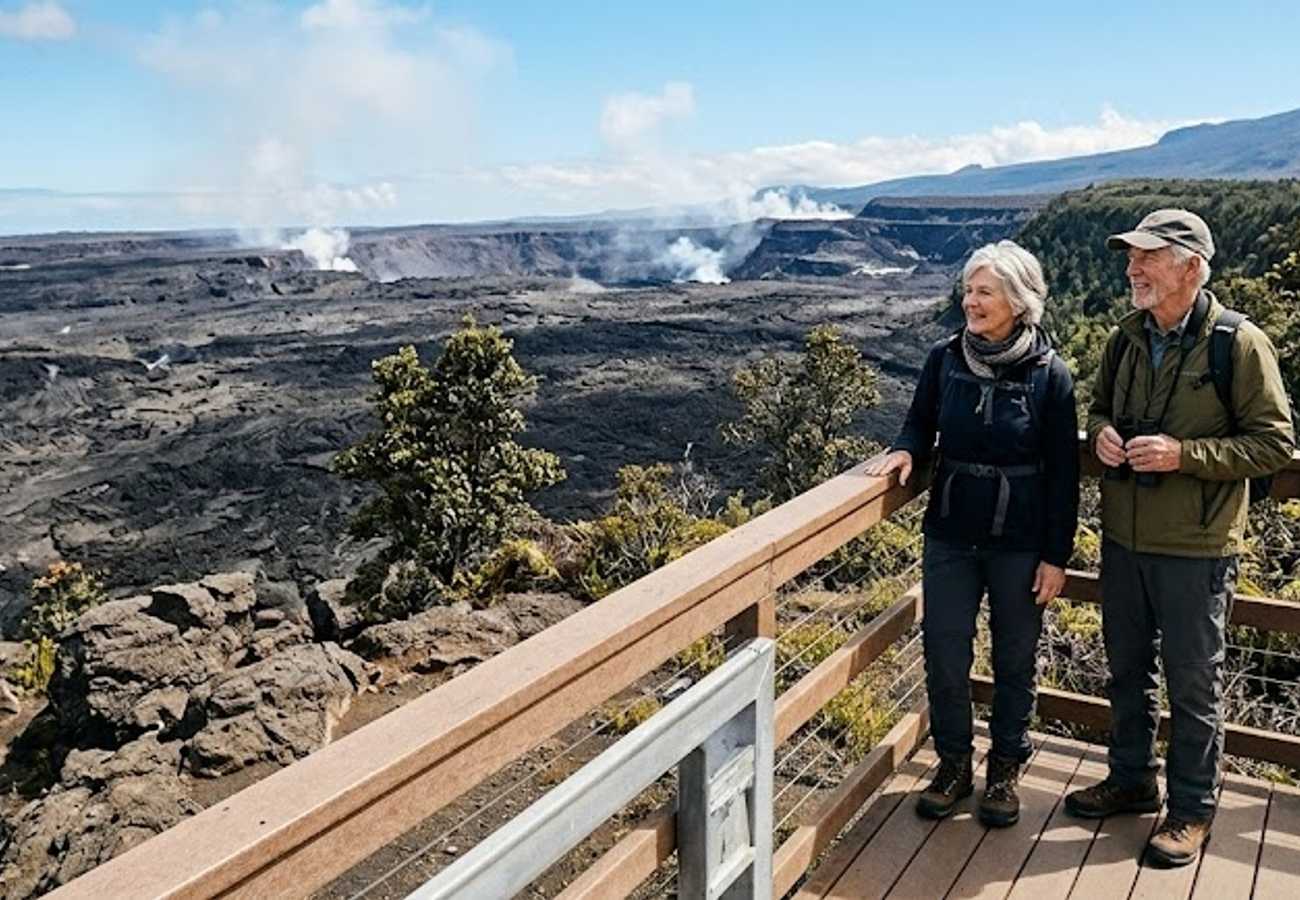
Image generated by AI
Current volcanic activity at Kīlauea is fully contained within the boundaries of Hawaii Volcanoes National Park. U.S. Geological Survey (USGS) data confirms that tourism infrastructure, including commercial aviation and primary road networks, remains entirely operational.
The U.S. Geological Survey’s Hawaiian Volcano Observatory (HVO) maintains 24/7 surveillance of Kīlauea, one of the most active volcanic systems globally. This continuous monitoring ensures that while the volcano remains geologically dynamic, the risks to the general public are mitigated through precise data and managed access.
For travelers, this means the "Big Island" remains open for business. The basaltic lava flows characteristic of Kīlauea are predictable and currently confined to protected areas, allowing the state to maintain normal tourism operations.
Operational Status and Logistics
The most critical metric for international and domestic travelers is the stability of transportation hubs. Our analysis of current flight data indicates that volcanic emissions have not reached levels that interfere with airspace or runway operations.
- Commercial Aviation: Flights to Hilo International Airport and Ellison Onizuka Kona International Airport are operating on normal schedules.
- Ground Transport: All principal highways on Hawaii Island remain open. There are no reported volcanic closures affecting transit between resorts, beaches, and the national park.
- Infrastructure: Hotels, tour operators, and local businesses are operating without disruption.
USGS Monitoring Framework
The HVO utilizes a multi-layered technical approach to ensure visitor safety. The monitoring network consists of:
- Seismic Activity: Tracking magma movement via tremors.
- Ground Deformation: Measuring surface swelling or sinking.
- Gas Emissions: Monitoring sulfur dioxide and other volcanic gases.
- Thermal Imaging & Satellite Observations: Real-time heat mapping of lava flows.
- Lava Flow Mapping: Precise charting of basaltic movement.
Visitor Experience and Safety Protocols
Depending on current conditions, visitors can access several high-value geological sites. However, the environment is volatile, and strict adherence to National Park Service (NPS) guidelines is mandatory.
Available Attractions:
- Glowing lava vistas (post-sunset).
- Active volcanic vents and steam plumes.
- Fresh basaltic lava landscapes and crater overlooks.
- The Thurston Lava Tube (Nāhuku) and Chain of Craters Road.
Mandatory Safety Measures:
- Strictly remain on marked trails.
- Obey all ranger instructions and closure signs.
- Carry sufficient water and wear sturdy, closed-toe footwear.
- Check official USGS updates immediately prior to entry.
Kīlauea Travel Logistics Summary
| Feature | Detail |
|---|---|
| Primary Site | Kīlauea Volcano |
| Location | Hawaii Volcanoes National Park, Big Island |
| Nearest Airport (Hilo) | Hilo International Airport (~30 miles / 48 km) |
| Nearest Airport (Kona) | Ellison Onizuka Kona International Airport (~100 miles / 161 km) |
| Optimal Viewing | Early morning (low crowds) / Evening (lava glow) |
| Key Nearby Sites | Mauna Kea, Punaluʻu Black Sand Beach, Volcano House |
Why This Matters: Industry Implication
From a logistical perspective, the containment of Kīlauea’s activity within the national park boundaries is a significant economic win for the Big Island. Volcanic tourism is a primary driver of the local economy; when activity shifts toward residential areas or disrupts airports, the financial impact is immediate.
For the traveler, the real value here is the "predictable spectacle." Unlike explosive volcanoes in other regions, Kīlauea’s fluid basaltic flows allow the USGS to provide high-confidence safety windows. This transforms a potential hazard into a controlled tourism asset. Travelers can confidently book flights into Hilo or Kona knowing that the geological activity is being managed as a feature of the landscape rather than a disruption to the itinerary.
Forward Outlook
While the current status is stable, volcanic systems are inherently unpredictable. Market trends suggest a surge in "geotourism" for the remainder of 2026. Visitors should expect the National Park Service to adjust access points in real-time based on HVO data. The long-term outlook remains positive for tourism, provided that the activity remains confined to the park's interior.
The Big Island continues to offer a rare intersection of high-risk geological power and low-risk tourist accessibility.
Related Travel Guides
Disclaimer
This article is for informational and educational purposes only. It does not constitute legal, financial, or professional advice. While we strive to provide accurate and up-to-date information, travel policies, regulations, and conditions change rapidly. Always verify information with official sources before making travel decisions. Nomad Lawyer makes no representations about the accuracy, reliability, completeness, or suitability of the information provided. Readers should consult qualified professionals for advice specific to their circumstances. The views expressed in this article are those of the author and do not necessarily reflect the views of Nomad Lawyer.
Kunal K Choudhary
Co-Founder & Contributor
A passionate traveller and tech enthusiast. Kunal contributes to the vision and growth of Nomad Lawyer, bringing fresh perspectives and driving the community forward.
Learn more about our team →