
Denver Flight Delays Ripple Across Major US Routes in March 2026
Denver International Airport experienced 220+ flight delays and four cancellations on March 29, 2026, affecting United, SkyWest, and Frontier Airlines across routes to Los Angeles, Atlanta, Miami, and Orlando. Disruptions rippled nationwide.

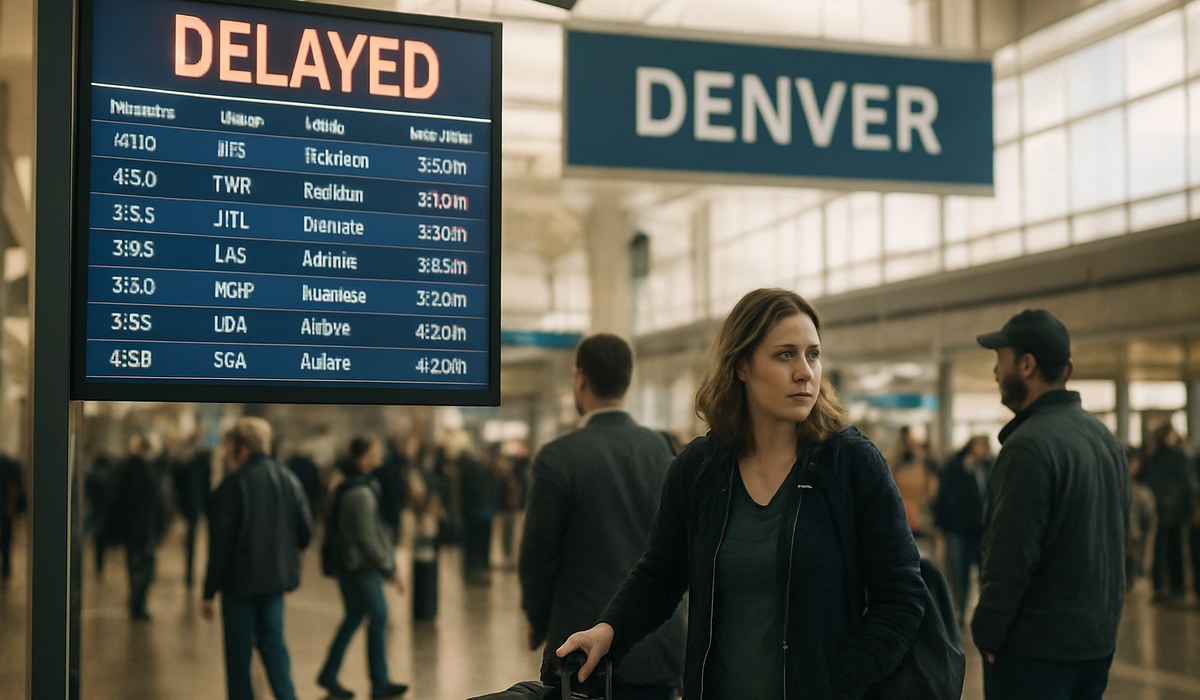
Image generated by AI
Denver International Airport (DEN) ground operations came to a standstill on March 29, 2026, with more than 220 flight delays and four cancellations disrupting services across the western United States. United Airlines, SkyWest Airlines, and Frontier Airlines—which operate extensive networks from Denver's central hub—absorbed the brunt of the disruption. The operational strain rippled across major routes connecting Denver to Los Angeles, Atlanta, Miami, and Orlando, affecting thousands of passengers nationwide.
Denver International Airport Becomes the Day's Biggest Bottleneck
Denver International Airport (DEN) emerged as America's most congested hub on March 29, 2026, with real-time tracking data from FlightAware confirming approximately 220 delayed flights and four cancellations. The Colorado airport's position as a central connecting point between the US coasts, Rocky Mountain region, and the Southeast amplified the cascading impact.
Airlines attributed the delays primarily to operational constraints rather than severe weather. However, Denver's elevation of 5,280 feet and proximity to the Rocky Mountains create inherent vulnerability to rapid atmospheric shifts. Wind, visibility changes, and localized precipitation can force air traffic managers at the FAA to reduce runway acceptance rates, triggering ground delays and airborne holding patterns that persist for hours.
By mid-afternoon on March 29, gate congestion and crew positioning bottlenecks had created a compounding effect. Aircraft assigned to evening departures arrived late from morning rotations, forcing airlines to push back scheduled departure times. This domino effect accelerated throughout the evening, with delays exceeding three hours reported on flights departing after 8 p.m. local time.
United Airlines and Regional Partners Bear the Brunt of Disruptions
United Airlines, which operates an extensive hub at Denver serving 150+ daily departures, recorded the highest absolute number of delays among all carriers. The airline's network structure—where Denver serves as a critical connection point for transcontinental and international itineraries—meant that even modest ground-level disruptions cascaded across the entire system.
SkyWest Airlines, operating regional aircraft on behalf of United under capacity purchase agreements, experienced parallel delays on flights branded as United Express. Regional carriers often absorb disproportionate strain during hub congestion because they operate fixed schedules with less flexibility than mainline carriers. When Denver's operational window tightens, SkyWest pilots and crews have limited discretion to delay departures or skip intermediate stops.
Frontier Airlines, which uses Denver as its primary base for ultra-low-cost operations, recorded significant delays on leisure-oriented routes. The airline's typical passenger profile—price-conscious travelers with minimal flexibility—meant that rebooking options were severely limited. Frontier does not offer automatic rerouting to competitors' flights, forcing affected passengers to wait for the next available Frontier service, often 6–12 hours later.
Southwest Airlines and legacy carriers with smaller Denver schedules experienced secondary delays, though less severely. Airlines with more distributed hub networks distributed the operational load more evenly across their systems.
Ripple Effects Hit Los Angeles, Atlanta, Miami, and Orlando Routes
The wave of Denver flight delays spread across major US routes, particularly affecting connections through Los Angeles and Southeast hubs. Passengers heading to Los Angeles on delayed inbound flights from Denver faced compressed transfer windows for onward departures to Asia-Pacific gateways. Evening flights departing LAX with Denver origins experienced late arrivals, forcing cascading delays for transatlantic and transpacific services.
In the Southeast, Atlanta Hartsfield-Jackson International Airport (ATL) and Miami International Airport (MIA) absorbed significant secondary delays. Passengers arriving late from Denver missed evening connections to Caribbean, Latin American, and South American destinations. The March 29 disruption coincided with elevated spring break travel demand, meaning alternative flights were already at capacity.
Orlando International Airport (MCO) experienced particular stress. The Florida hub manages heavy leisure traffic year-round, with late March representing peak spring break season. Inbound delays from Denver added to security line congestion and baggage system bottlenecks. Families with reservations to theme parks faced cascading delays, while business travelers routing through Orlando for multi-city trips encountered compressed connection windows.
A US DOT analysis of March 2026 data showed that Denver-origin delays persisted longer than typical hub disruptions because the airport's constrained airspace and runway configuration limit recovery velocity. Once delays accumulate beyond two hours, runway utilization rates drop as ground crews struggle to turn aircraft, service boarding areas, and prepare aircraft for expedited departures.
Live Flight Tracking and Real-Time Status Updates
Passengers monitoring FlightAware on March 29 could track the disruption in real time. The tracking platform's delay heat map showed Denver colored in deep red, while connected routes to Los Angeles, Atlanta, Miami, and Orlando displayed orange and yellow indicators—signaling moderate to severe delays propagating outward.
By 6 p.m. local time on March 29, FlightAware's delay statistics showed the average Denver departure delay at 127 minutes. Average arrival delays exceeded 95 minutes. The FAA's Traffic Flow Management system issued Ground Stop advisories at 4:45 p.m., restricting new flight releases from Denver for 37 minutes.
Real-time data sources including airline apps, airport websites, and third-party trackers provided passengers with granular visibility into individual flight status. However, the sheer volume of simultaneous delays meant that gate assignments changed frequently, and estimated departure times shifted every 15–30 minutes. This visibility did not translate to passenger control—most travelers could only wait for airlines to declare actual pushback times.
Key Disruption Data Summary
| Metric | March 29, 2026 |
|---|---|
| Total Flight Delays at DEN | 220+ |
| Outright Cancellations | 4 |
| Most Affected Airline | United Airlines |
| Average Departure Delay | 127 minutes |
| Average Arrival Delay | 95 minutes |
| Peak Congestion Window | 4:00 p.m. – 9:30 p.m. (local) |
| Primary Routes Impacted | DEN–LAX, DEN–ATL, DEN–MIA, DEN–MCO |
| Regional Partner Strain | SkyWest Airlines (United Express) |
| Estimated Passengers Affected | 18,000+ |
What This Means for Travelers
Passengers booked on Denver routes during peak travel periods must prepare for operational bottlenecks that extend far beyond the originating airport. Here are concrete steps to protect your itinerary:
-
Monitor flight status proactively. Set alerts on FlightAware and your airline's app starting 48 hours before departure. Early warnings allow time to contact the airline or rebook before queues form.
-
Build connection buffers. If connecting through Denver, allow minimum 2-hour layovers during spring break season (March–April). The airport's elevation and airspace constraints mean delays accumulate faster than at sea-level hubs.
-
Confirm crew scheduling. Call your airline 24 hours before departure to verify that assigned crew members are positioned correctly. Regional carriers like SkyWest occasionally cancel flights due to crew unavailability after delays cascade.
-
Understand airline policies. Ultra-low-cost carriers (Frontier, Spirit, Allegiant) rarely rebook passengers on competing airlines. If your Frontier flight cancels, you may not reach your destination on the same day. Budget carriers only rebooking passengers on their own aircraft.
-
**Request written delay
Disclaimer
This article is for informational and educational purposes only. It does not constitute legal, financial, or professional advice. While we strive to provide accurate and up-to-date information, travel policies, regulations, and conditions change rapidly. Always verify information with official sources before making travel decisions. Nomad Lawyer makes no representations about the accuracy, reliability, completeness, or suitability of the information provided. Readers should consult qualified professionals for advice specific to their circumstances. The views expressed in this article are those of the author and do not necessarily reflect the views of Nomad Lawyer.
Raushan Kumar
Founder & Lead Developer
Full-stack developer with 11+ years of experience and a passionate traveller. Raushan built Nomad Lawyer from the ground up with a vision to create the best travel and law experience on the web.
Learn more about our team →