
Kansas City Airport Gridlock Sparks Nationwide Travel Chaos as Southwest and United Suffer Flight Cancellations
Breaking airline news: An operational breakdown at Kansas City International Airport triggers severe travel chaos, forcing Southwest, United, and Delta to execute multiple flight cancellations.

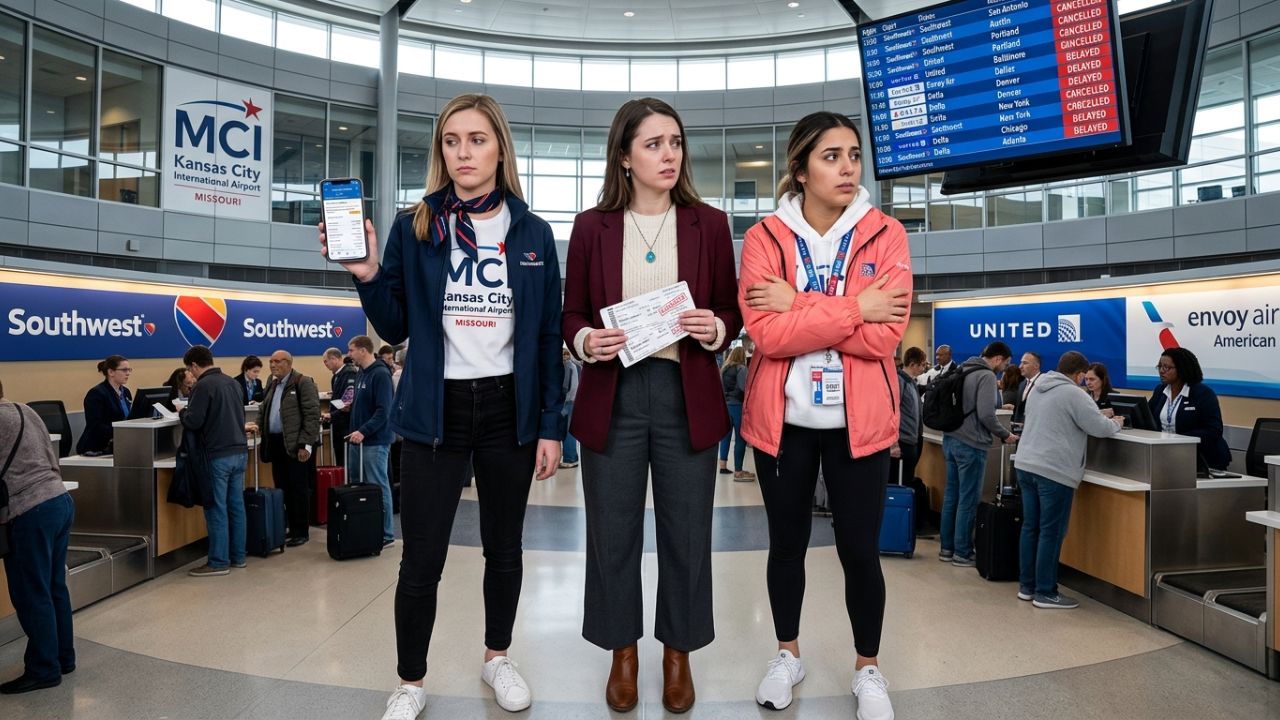
Image representing the intense travel chaos at Kansas City International Airport, where sudden operational setbacks forced airlines to execute severe flight cancellations, crippling connectivity to San Antonio, Austin, and Baltimore. (Image Credit: Aviation Tracking)
Kansas City Airport Gridlock Sparks Nationwide Travel Chaos as Southwest and United Suffer Flight Cancellations
A Severe Operational Breakdown at Kansas City Paralyzes Vital US Domestic Flight Corridors
The extreme fragility of the United States commercial aviation network was brutally exposed today in the Midwest. According to the latest breaking airline news and real-time aviation tracking telemetry, an abrupt operational breakdown at Kansas City International Airport (MCI) has plunged thousands of domestic passengers into a state of severe travel chaos. On June 15, 2026, air travel activity through the critical midwestern gateway experienced massive friction as critical low-cost giants and mainline operators struggled with collapsing schedules. Flight data confirms that operations were derailed as carriers executed 10 absolute flight cancellations alongside dozens of grinding delays. Because Kansas City operates as a highly connected hub within the broader national grid, this localized terminal gridlock immediately weaponized transit networks, crippling connectivity to massive destinations spanning the entire US, including San Antonio, Austin, Portland, and Baltimore.
This sprawling logistical nightmare perfectly illustrates how rapidly localized airport disruptions can mutate into a severe, cross-country crisis. When critical network operators like Southwest Airlines, United Airlines, and Delta Air Lines suffer simultaneous schedule setbacks alongside regional feeders like Envoy Air and PSA Airlines, the resulting shockwaves actively destroy connectivity for corporate and leisure travelers alike. Passengers relying on tightly choreographed feeder flights found their meticulously planned itineraries completely obliterated. As airline operational control centers scrambled to reallocate airframes and exhausted flight crews, the reality inside the Kansas City terminal remained deeply hostile. The rolling delays violently exacerbated the travel chaos for outbound passengers, highlighting the extreme vulnerability of short-haul schedules during peak operational cycles and proving that a disruption at a single midwestern gateway can paralyze transit across the continent.
Section-Wise Breakdown: The Anatomy of the Kansas City Disruption
The operational collapse radiating from Kansas City International Airport reveals how quickly localized schedule friction paralyzes major carriers across the aviation spectrum:
The Kansas City Logistical Breakdown According to real-time aviation updates, the disruption profile shows a severe impact across multiple carriers operating out of MCI. As airlines attempted to adjust schedules and triage the operational damage, delays rapidly accumulated throughout the day. This severe terminal friction forced arriving aircraft into holding patterns and trapped departing passengers in overwhelmed gate areas. Because smaller US airports depend heavily on tight-turnaround feeder flights operated by regional subsidiaries, even minor delays cascade into missed connections. The 10 outright cancellations acted as a catalyst, creating immense scheduling uncertainty and generating a devastating knock-on effect that destabilized the airport's entire outbound network toward major mega-hubs.
Southwest and United Absorb the Delays The data confirms that major operators absorbed the absolute brunt of the systemic failure. Southwest Airlines accounted for the largest share of the absolute disruption, executing 3 flight cancellations alongside a massive 53 rolling delays. This severe failure indicates acute schedule instability on Southwest's high-frequency point-to-point routes. Mainline operator United Airlines was equally devastated, recording 2 cancelled flights and 5 delays. Delta Air Lines recorded 1 cancelled flight and 15 severe delays. Furthermore, the regional feeder network operating on behalf of American Airlines completely collapsed; both PSA Airlines and Envoy Air executed 2 absolute cancellations each (with 0 delays recorded), reflecting a highly concentrated disruption profile where airlines opted to entirely slash regional routes rather than attempt delayed turnarounds.
Coast-to-Coast Contagion Across Domestic Hubs The disruption was completely indiscriminate, heavily impacting major transit corridors stretching far beyond the Midwest. The flight removals instantly severed vital connectivity to major centers across the country. The contagion heavily impacted Dallas, Denver, New York City, Baltimore, Washington, Boston, Charlotte, Detroit, Newark, Fort Lauderdale, Houston, Indianapolis, Las Vegas, Los Angeles, Orlando, Chicago, Miami, Milwaukee, Myrtle Beach, Portland, Philadelphia, Phoenix, San Diego, San Antonio, Tampa, Atlanta, Austin, Nashville, and St. Louis. Most critically, the cascading delays violently struck America's primary aviation hubs; Dallas, Chicago, Atlanta, Los Angeles, and New York all recorded severe secondary airport disruptions. This massive geographic spread proves that no domestic destination was immune to the Kansas City airspace saturation.
Operational Infrastructure Details: The Kansas City Disruption Matrix
To provide exact, factual clarity on the immense scale of this systemic failure, aviation analysts have mapped the specific delay and cancellation metrics impacting every affected carrier at Kansas City. The following factual matrix details the precise breakdown of the June 15, 2026, disruption:
Factual Kansas City Airline Disruption Matrix
| Airline / Regional Operator | Cancelled Flights | Delayed Flights | Operational Impact |
|---|---|---|---|
| Southwest Airlines | 3 | 53 | Largest absolute contributor to disruptions |
| PSA Airlines (AAL) | 2 | 0 | Severe regional route cancellations |
| United Airlines | 2 | 5 | Mainline schedule instability |
| Envoy Air (AAL) | 2 | 0 | Severe regional route cancellations |
| Delta Air Lines | 1 | 15 | Significant rolling delays |
Data recorded as of June 15, 2026. (Source: FlightAware)
Passenger Impact: Terminal Gridlock and Ruined Itineraries
For the thousands of passengers trapped inside Kansas City International Airport, this disruption represents a highly acute form of travel chaos. Enduring rolling delays creates intense psychological exhaustion, while sudden flight cancellations generate immense logistical and financial liability. The immediate impact is staggering: missed onward connections at massive hub airports like Dallas and Atlanta, extended airport dwell times due to continuous rescheduling, and reduced availability of same-day rebooking options. Travelers bound for high-volume corporate and leisure destinations like San Antonio, Austin, and Portland were severely penalized, facing the terrifying reality of ruined itineraries and strict hotel check-in conflicts. Passengers attempting to execute multi-leg domestic journeys were abruptly grounded, forcing increased loads onto overwhelmed customer service counters and airline help desks.
Industry Analysis: Vulnerability of Interconnected Domestic Networks
The global aviation sector is currently wrestling with the extreme physical limits of regional network dependency. The volume of secondary airport disruptions radiating from a mid-sized hub like Kansas City indicates systemic fragility within the US aviation model. Airlines operate heavily on optimized rotation cycles, utilizing point-to-point flights and feeder routes to supply massive hubs. When major operators like Southwest and United suffer a concentrated wave of cancellations alongside regional carriers like Envoy Air and PSA Airlines, it reflects how deeply interconnected the modern flight schedule has become. A single aircraft delayed in Missouri instantly forces a missed connection in Chicago or Los Angeles. While airline recovery systems have been activated, full normalization is entirely dependent on complex aircraft repositioning across the highly congested national network.
Conclusion: A Fractured Midwestern Transit Grid
The severe operational disruptions striking Kansas City International Airport on June 15, 2026, serve as a stark reminder of the absolute volatility of modern commercial flight. By suffering a combined wave of 10 outright flight cancellations and 73 severe delays, the Missouri hub inadvertently plunged national aviation networks into deep travel chaos. The resulting delays crippled tightly choreographed itineraries connecting the Midwest to massive hubs across the US, deeply impacting Southwest, United, Delta, PSA Airlines, and Envoy Air. While airlines desperately scramble to execute phased recovery plans and re-accommodate stranded corporate and leisure passengers, the meltdown brutally highlights how rapidly a highly localized capacity failure can metastasize, transforming routine transit into a highly expensive logistical nightmare. (Source: FlightAware via Nomad Lawyer)
Key Takeaways
- Localized Breakdown: Kansas City International Airport suffered 10 flight cancellations and numerous delays on June 15, 2026.
- Southwest Airlines Devastation: Southwest absorbed the highest absolute impact, recording 3 cancellations and a massive 53 delays.
- Mainline Carrier Impact: United Airlines recorded 2 cancellations and 5 delays, while Delta Air Lines suffered 1 cancellation and 15 delays.
- Regional Feeder Gridlock: Both PSA Airlines and Envoy Air recorded 2 absolute flight cancellations.
- National Contagion: The travel chaos severely disrupted connecting flights to major hubs including Dallas, Chicago, Atlanta, Los Angeles, and New York.
✈️ Frequently Asked Questions (Factual Aviation Data)
Which specific airport was the epicenter of this localized flight disruption? The operational breakdown and subsequent flight cancellations occurred at Kansas City International Airport (MCI).
Exactly how many flights were cancelled during this event? Aviation tracking data recorded 10 absolute flight cancellations concentrated among five airlines.
Which airline suffered the highest number of flight disruptions? Southwest Airlines recorded the highest absolute disruption volume, executing 3 flight cancellations and 53 delays.
What was the specific operational impact on United Airlines? United Airlines recorded 2 absolute flight cancellations alongside 5 flight delays.
Did regional operators experience flight cancellations as well? Yes, regional feeder networks were heavily impacted; both PSA Airlines and Envoy Air recorded 2 absolute flight cancellations.
Which primary US destinations were directly affected by the severed connectivity? The disruptions heavily impacted routes connecting Kansas City to major destinations including San Antonio, Austin, Portland, and Baltimore.
Which major aviation hubs recorded the highest concentration of secondary delays? The cascading delays severely impacted connecting traffic at major hubs including Dallas, Chicago, Atlanta, Los Angeles, and New York.
Where was this specific flight disruption data officially sourced from? All specific delay metrics and cancellation statistics regarding the Kansas City Airport disruption were officially sourced from FlightAware.
🌍 Related Travel Guides & Flight Resources
- Navigate Airport Disruptions Like a Pro Master the art of surviving unexpected travel chaos with our expert strategies.
- Breaking Airline News & Evasion Routes Stay ahead of the delays with our real-time aviation updates and route intelligence.
- Global Flight Cancellation Defense Grid Essential legal rights and compensation tactics when your flight goes down.
⚖️ Disclaimer
The aviation safety statistics, flight tracking data, and airport delay reports provided in this report are for informational purposes only. Aircraft operational statuses, specific delay metrics regarding Southwest, United Airlines, Delta Air Lines, PSA Airlines, Envoy Air, and other carriers at Kansas City International Airport, and the subsequent regional recovery timeline are highly volatile and subject to ongoing review by airline operational control centers. All data regarding the Kansas City disruption has been officially sourced from live aviation tracking platforms (FlightAware) as of June 15, 2026, and remains completely fluid as airlines restore normal operations. NomadLawyer does not guarantee the absolute accuracy or current validity of the information provided and assumes no liability for travel disruptions, sudden flight cancellations, missed connections, altered leisure itineraries, or any financial consequences resulting from the use of this content. Passengers affected by the systemic delays are strongly advised to coordinate directly with their respective airlines for rebooking and compensation.
Disclaimer
This article is for informational and educational purposes only. It does not constitute legal, financial, or professional advice. While we strive to provide accurate and up-to-date information, travel policies, regulations, and conditions change rapidly. Always verify information with official sources before making travel decisions. Nomad Lawyer makes no representations about the accuracy, reliability, completeness, or suitability of the information provided. Readers should consult qualified professionals for advice specific to their circumstances. The views expressed in this article are those of the author and do not necessarily reflect the views of Nomad Lawyer.
Kunal K Choudhary
Co-Founder & Contributor
A passionate traveller and tech enthusiast. Kunal contributes to the vision and growth of Nomad Lawyer, bringing fresh perspectives and driving the community forward.
Learn more about our team →