
Catastrophic Travel Chaos Hits Kansas City Airport: Southwest, American, and Delta Trigger Mass Flight Cancellations and Severe Airport Disruptions in Breaking Aviation Update
Severe travel chaos erupts at Kansas City International Airport as Southwest, American, and Delta force 9 flight cancellations and 46 delays, sparking massive airport disruptions for travelers nationwide.

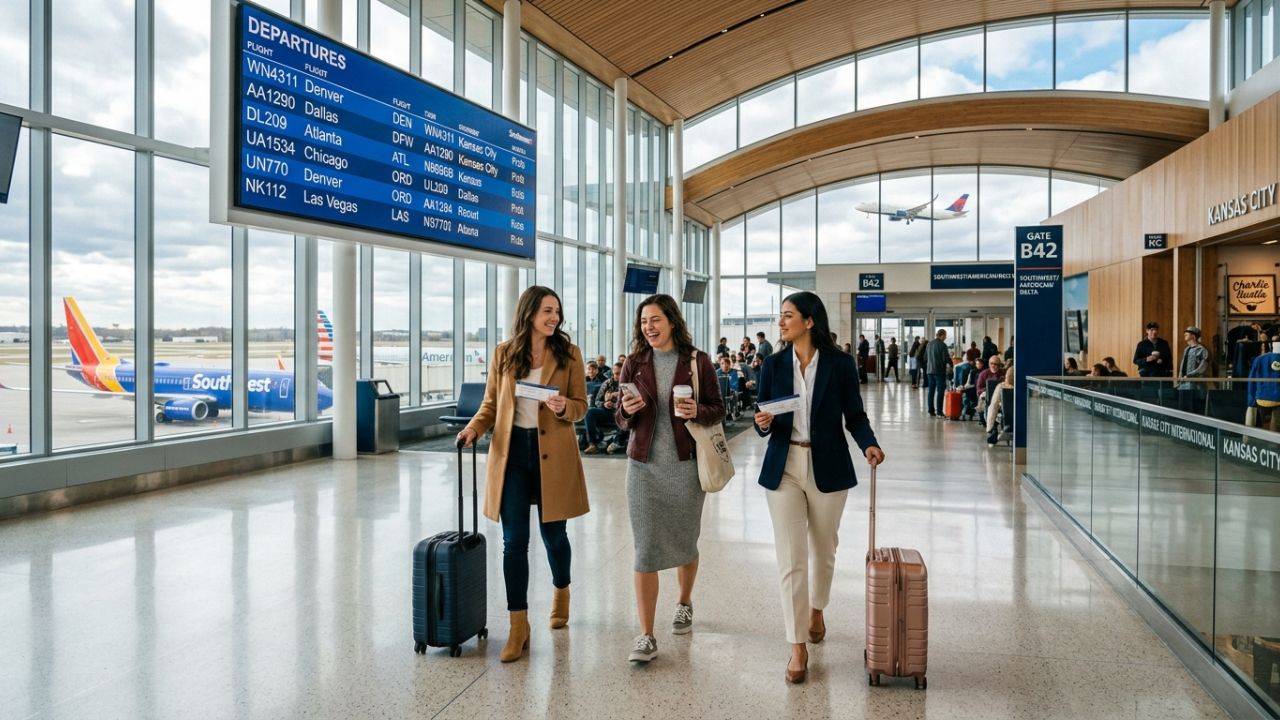
Image generated by AI
A massive wave of severe travel chaos has violently paralyzed operations at Kansas City International Airport, completely devastating the travel itineraries of thousands of passengers across the United States. In a brutal display of systemic vulnerability, major carriers including Southwest Airlines, American Airlines, and Delta Air Lines were forced to execute a catastrophic series of flight cancellations and extensive delays. Processing over 30 percent of its normal operational capacity under extreme duress, the critical Midwestern aviation hub officially recorded 9 cancelled flights and an agonizing 46 delays. The severe airport disruptions instantly created a massive ripple effect, aggressively stranding passengers bound for mega-hubs like Dallas, Chicago, Denver, and Atlanta. This breaking airline news and aviation updates report provides an in-depth analysis of how a localized disruption quickly spiraled into a national aviation nightmare.
Expanded Overview: The Anatomy of the Kansas City Meltdown
For a facility that recently celebrated the opening of its state-of-the-art modern terminal in 2023—and which has successfully handled record passenger numbers in recent years—this massive operational collapse is a bitter pill to swallow. Kansas City International has aggressively positioned itself as a premier regional transport hub. However, its heavy reliance on connecting traffic makes it extremely susceptible to network contagion.
As the day unfolded, what began as a handful of minor scheduling adjustments rapidly deteriorated into uncontrollable travel chaos. Gate changes flashed constantly across terminal screens, and wait times for rebooking agents spiraled out of control. Because the National Airspace System is currently experiencing significantly more than its usual operational strain, local city and aviation officials issued desperate warnings, urging travelers to be exceptionally discerning with their time. The official FlyKC airport portal pleaded with passengers to physically confirm their flight statuses directly with their airlines before even attempting to travel to the airport.
Section-Wise Breakdown: The Carriers Caught in the Collapse
The operational bleeding was not distributed evenly. Specific carriers bore the absolute brunt of the airport disruptions, devastating their respective passenger bases.
Southwest Airlines: The Heaviest Operational Toll
As the dominant operator in the region, Southwest Airlines suffered the absolute largest operational impact of the day. The Dallas-based carrier accounted for nearly all of the severe delays recorded at the airport. Specifically, Southwest battled through approximately 40 delays and was forced to initiate 4 direct flight cancellations. Because Southwest operates a massive, point-to-point domestic network, aircraft and crews displaced in Kansas City immediately spread severe operational infection to multiple airports nationwide, destroying downstream itineraries.
American Airlines and Delta Air Lines: Mainline Contagion
The operational instability aggressively infected the legacy carriers. American Airlines battled severe scheduling adjustments and aircraft rotation failures, resulting in 4 outright cancellations and 3 significant delays. Simultaneously, Delta Air Lines recorded 1 complete flight cancellation. Even regional operators operating under the United Airlines banner could not escape the collapse, suffering their own share of smaller, localized delays.
The Geography of the Disruption
The sheer scale of these flight cancellations disproportionately attacked travelers attempting to reach the nation’s absolute busiest aviation hubs. Passengers destined for, or desperately attempting to connect through, Chicago O’Hare, Dallas-Fort Worth, Denver, Atlanta, and Las Vegas suffered the absolute worst of the meltdown. Because these destination hubs were already facing severe operational congestion earlier in the day, delayed aircraft arrivals from Kansas City created a vicious chain reaction that slowed entire national departure banks to a crawl.
Flight Details: The Kansas City Operational Toll
The following table explicitly details the verified cancellation and delay metrics affecting Kansas City International Airport during this massive disruption.
| Disruption Metric / Carrier | Confirmed Operational Impact Data |
|---|---|
| Total Flight Cancellations | 9 Flights Cancelled |
| Total Flight Delays | 46 Flights Delayed |
| Southwest Airlines Impact | ~40 Delays, 4 Cancellations |
| American Airlines Impact | 3 Delays, 4 Cancellations |
| Delta Air Lines Impact | 1 Flight Cancellation |
| United Airlines (Regional) | Smaller operational delays recorded |
| Most Impacted Hubs | Chicago, Dallas, Denver, Atlanta, Las Vegas |
| Terminal Capacity Strain | Processed over 30% of normal capacity |
Passenger Impact: Stranded Families and Broken Itineraries
Inside the terminals, the human cost of this travel chaos was deeply visible. Families traveling with exhausted children, elderly passengers requiring mobility assistance, and furious business executives were forced to spend excruciating extra hours trapped inside the concourses while airlines desperately attempted to recover their shattered schedules.
The immediate lack of operational aircraft meant that while some passengers were eventually rebooked on later services, thousands of others were left hopelessly searching for alternative flights in a market with virtually zero remaining seat availability. For a city that heavily depends on reliable air connectivity to support a booming tourism sector, lucrative conventions, and vital business travel, the financial and reputational damage is severe. Visitors traveling into Missouri for high-profile sporting events and major concerts experienced drastically shortened stays, directly damaging local hotels, restaurants, and transport operators.
Industry Analysis: The FAA and National Airspace Pressure
While the immediate flight cancellations occurred on the tarmac in Kansas City, the root causes are entirely systemic. According to the Federal Aviation Administration (FAA), the U.S. aviation system is currently buckling under massive external pressure.
Severe weather conditions and aggressive traffic management initiatives across several major U.S. hubs are heavily restricting airspace capacity. The FAA’s daily traffic advisory explicitly cited powerful thunderstorms, dangerous low cloud cover, and strict air traffic flow restrictions in major aviation corridors as the primary culprits contributing to delays nationwide. Aviation analysts warn that airports like Kansas City are inherently vulnerable to these specific ripple effects; when an aircraft arrives hours late from Dallas or Chicago due to ATC holding patterns, its subsequent departure from Kansas City is unavoidably delayed, destroying crew scheduling and gate availability.
Conclusion: A Fragile Aviation Network
The catastrophic disruption at Kansas City International Airport serves as yet another terrifying reminder of the extreme fragility of the U.S. aviation system. In the span of a single day, the operational failures of Southwest, American, and Delta completely devastated the travel plans of thousands, proving that modern airline networks lack the physical capacity to absorb localized shocks. As the lucrative holiday travel season rapidly approaches and passenger demand violently spikes, travelers must mentally prepare for the very real threat of repeated travel chaos. Remaining obsessively alert to real-time airline news and maintaining absolute flexibility are no longer just travel tips—they are vital survival strategies in an era defined by constant airport disruptions.
Key Takeaways
- Kansas City International Airport suffered a massive operational collapse processing over 30% of normal capacity.
- The meltdown forced 9 flight cancellations and an agonizing 46 flight delays.
- Southwest Airlines took the heaviest damage, recording ~40 delays and 4 cancellations.
- American Airlines suffered 4 cancellations and 3 delays, while Delta Air Lines recorded 1 cancellation.
- Travelers connecting through Dallas, Chicago, Denver, Atlanta, and Las Vegas were the hardest hit.
- The FAA attributed the nationwide delays to thunderstorms, low cloud cover, and strict traffic management initiatives.
- Passengers were desperately advised via the FlyKC portal to check statuses before arriving at the terminal.
Related Travel Guides
- Las Vegas Airport Travel Chaos: 124 Flights Delayed, 7 Cancelled as Southwest, Delta, United Disrupt New York, Chicago Routes
- Breaking Airline News: Severe Travel Chaos Cripples the UK as 26 Massive Flight Cancellations Devastate Heathrow, Gatwick, and Scottish Hubs
- India Grants 30-Day Visa Extension, Waives Penalties for West Asia Stranded Travelers
Disclaimer
This article is for informational and educational purposes only. It does not constitute legal, financial, or professional advice. While we strive to provide accurate and up-to-date information, travel policies, regulations, and conditions change rapidly. Always verify information with official sources before making travel decisions. Nomad Lawyer makes no representations about the accuracy, reliability, completeness, or suitability of the information provided. Readers should consult qualified professionals for advice specific to their circumstances. The views expressed in this article are those of the author and do not necessarily reflect the views of Nomad Lawyer.
Kunal K Choudhary
Co-Founder & Contributor
A passionate traveller and tech enthusiast. Kunal contributes to the vision and growth of Nomad Lawyer, bringing fresh perspectives and driving the community forward.
Learn more about our team →