
Canada’s Manulife Transforms Travel Insurance With ChatGPT App To Deliver Faster Digital Protection For Travellers
Canada’s Manulife Transforms Travel Insurance With ChatGPT App To Deliver Faster Digital Protection For Travellers

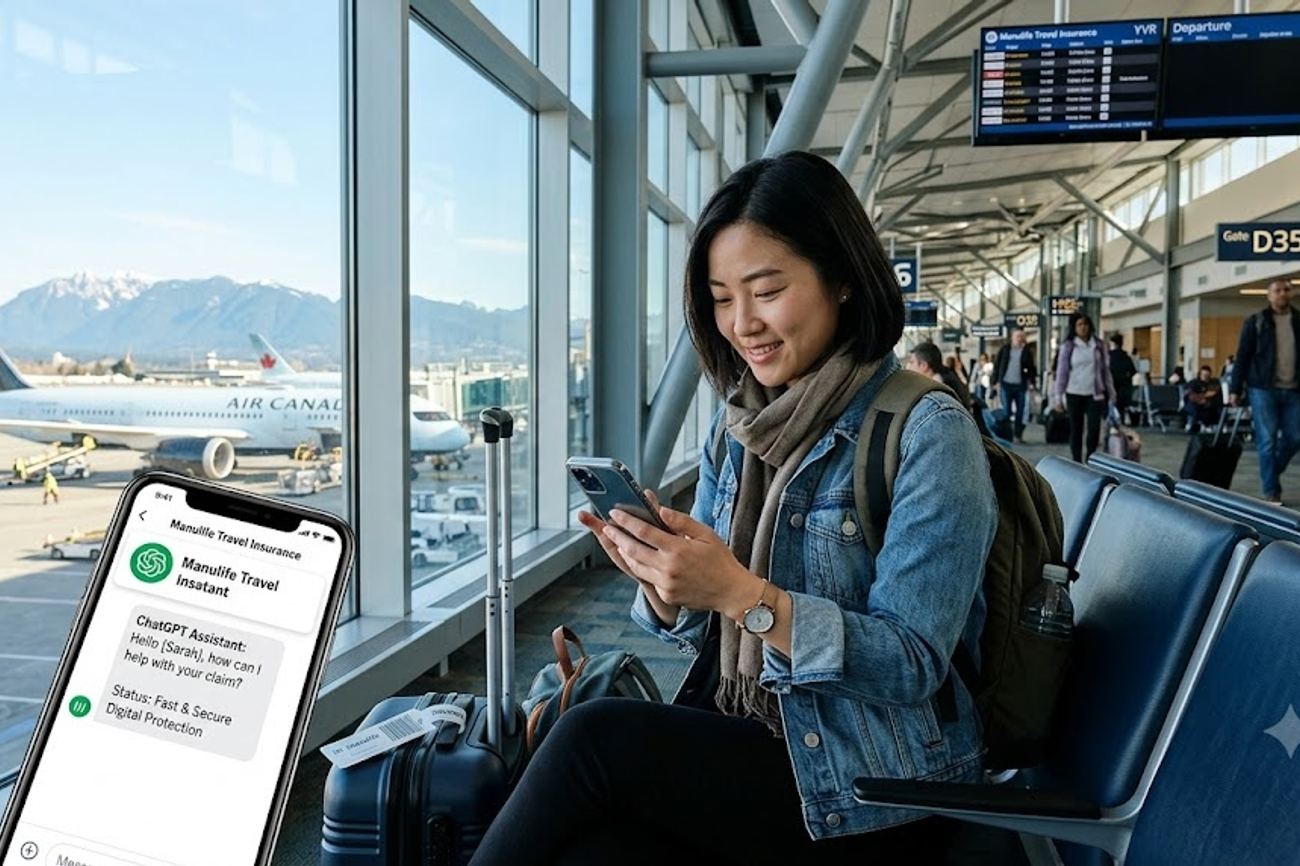
Image generated by AI
[Toronto, October 2024] — Manulife has launched a new travel insurance quotation platform in Canada powered by OpenAI technology to streamline how travelers select and purchase coverage. The system replaces traditional, manual policy comparisons with an AI-driven chatbot designed to guide users through complex insurance options via a conversational interface.
The deployment marks a strategic shift for the Canadian insurer, moving away from static questionnaires and dense policy documentation toward an interactive digital experience. By integrating ChatGPT-based technology, Manulife aims to lower the barrier to entry for travel protection, allowing users to input trip details—including destinations, dates, and specific coverage preferences—through a natural dialogue. This initiative aligns with a broader trend across the global aviation and tourism sectors to adopt "smart" solutions that mirror the seamless experience of modern flight and hotel booking engines.
The Shift to Conversational Underwriting
The immediate trigger for this rollout is the growing consumer demand for immediate, personalized digital interactions. For years, the travel insurance procurement process has remained stagnant, requiring customers to independently parse through medical protection clauses, trip cancellation benefits, and emergency assistance terms. Many travelers, unfamiliar with industry jargon, often find this process prohibitive or confusing.
By utilizing an AI chatbot, Manulife is effectively translating corporate insurance terminology into plain language. The system functions as a digital consultant, collecting essential trip data and matching it against available policy tiers. This reduces the cognitive load on the traveler, who no longer needs to cross-reference multiple PDF documents or web pages to determine if a specific activity—such as adventure sports or high-risk destination travel—is covered under a standard plan.
This move follows a pattern of digital acceleration seen in other sectors of the travel ecosystem. Just as the International Air Transport Association (IATA) promotes the digitalization of travel credentials and identity, insurance providers are now seeking to integrate their services directly into the digital planning phase of a journey. The goal is to move insurance from a "last-minute afterthought" to an integrated component of the itinerary planning process.
Affected Travelers, Airlines and Logistics
The rollout specifically targets the Canadian travel market, impacting various demographics of outbound travelers. The AI platform is designed to handle diverse risk profiles through personalized questioning:
- International Vacationers: Families requiring comprehensive medical coverage and high-value trip cancellation protections.
- Corporate Travelers: Business professionals prioritizing flexibility, rapid emergency support, and minimal administrative friction.
- Adventure Tourists: Individuals needing specialized riders for high-risk activities that are typically excluded from basic policies.
- First-Time Insured: Travelers who previously avoided insurance due to the complexity of traditional application forms.
The impact is primarily felt at the "top of the funnel"—the quoting and selection phase. While the actual underwriting and legal contracts remain bound by Office of the Superintendent of Financial Institutions (OSFI) regulations in Canada, the interface through which those products are discovered has been entirely reimagined.
Practical Traveler Advisory and Strategic Insights
For the average person booking a trip, this technology removes the "research fatigue" associated with travel protection. Instead of spending hours on a comparison website, a traveler can now describe their trip in a few sentences and receive a tailored recommendation.
Practical Passenger Impact:
- Reduced Time-to-Quote: The time spent navigating drop-down menus and checkboxes is replaced by a chat interface, significantly accelerating the quoting process.
- Simplified Terminology: AI acts as a translator, explaining what "emergency medical evacuation" or "trip interruption" actually means in the context of the user's specific destination.
- Personalized Filtering: The bot can proactively suggest coverage based on the destination's risk profile, ensuring travelers don't accidentally under-insure themselves for high-cost healthcare regions.
- Integration with Planning: Because the tool is web-based and conversational, it fits more naturally into the mobile-first workflow of modern travelers who manage their entire trip via smartphone.
The Future of Intelligent Travel Protection
The Manulife rollout is viewed as a foundational step toward a more proactive insurance model. The industry is moving toward a future where insurance is not a static product purchased once, but a dynamic service that evolves during the trip.
Future iterations of this technology are expected to integrate real-time data feeds. For example, if a traveler is in a region experiencing a sudden natural disaster or political unrest, an AI-integrated policy could push real-time safety updates and automated claims guidance to the user's device. This shifts the insurance provider's role from a passive payer of claims to an active travel assistant.
Furthermore, the integration of AI into the quoting process paves the way for automated claims processing. If the initial intake was conversational and digital, the subsequent claim process can leverage the same AI to verify trip details and expedite payouts, reducing the weeks-long waiting periods currently common in the industry.
As more providers adopt these tools, we can expect a "race to the bottom" regarding friction. The competitive advantage will no longer be just the price of the premium, but the ease with which a traveler can understand and acquire the protection. This digital transformation is mirroring trends seen in airport operations, where Toronto Pearson International Airport and other global hubs are using AI to manage passenger flow and baggage handling.
FAQ: Manulife AI Travel Insurance 2024
How does the AI chatbot differ from a standard online form? Unlike a form, which requires you to find the right category for your needs, the chatbot allows you to explain your trip in natural language. It asks follow-up questions based on your answers to suggest the most relevant coverage.
Is the insurance quote provided by the AI legally binding? The AI provides a quotation and guidance based on the information you provide. Final coverage is subject to the terms and conditions of the policy and the formal underwriting process upon purchase.
Can the AI handle specialized requests, like extreme sports coverage? Yes. The system is designed to identify specific travel requirements. By describing your planned activities in the chat, the AI can guide you toward policies that include adventure or sports riders.
Do I need to create an account to use the AI quoting tool? The platform is designed for quick accessibility, allowing travelers to explore options and receive quotes efficiently, though a formal account is typically required to finalize the purchase and issue the policy.
The era of the insurance brochure is over; the era of the insurance conversation has begun.
Related Travel Guides
- Qatar Teams Up With Saudi Arabia And More As GCC AI Tourism Gains Momentum With Nearly 30% New Tech Innovations For Travellers
- Japan Tourism Gains New Attraction with Edo Tokyo Open Air Museum Historic Buildings
- Baltimore Links Washington DC, Philadelphia and New York as Northeast Corridor Holiday Turns Four Cities Into One Journey
Disclaimer
This article is for informational and educational purposes only. It does not constitute legal, financial, or professional advice. While we strive to provide accurate and up-to-date information, travel policies, regulations, and conditions change rapidly. Always verify information with official sources before making travel decisions. Nomad Lawyer makes no representations about the accuracy, reliability, completeness, or suitability of the information provided. Readers should consult qualified professionals for advice specific to their circumstances. The views expressed in this article are those of the author and do not necessarily reflect the views of Nomad Lawyer.
Preeti Gunjan
Contributor & Community Manager
A passionate traveller and community builder. Preeti helps grow the Nomad Lawyer community, fostering engagement and bringing the reader experience to life.
Learn more about our team →