
Jammu Railways Ticket Crackdown Nets Rs 56.46 Lakh in Fines During August 2026 Enforcement Drive
Northern Railway's Jammu division collected Rs 56.46 lakh in penalties after detecting 8,106 ticketless travel and luggage violations during a month-long August crackdown.
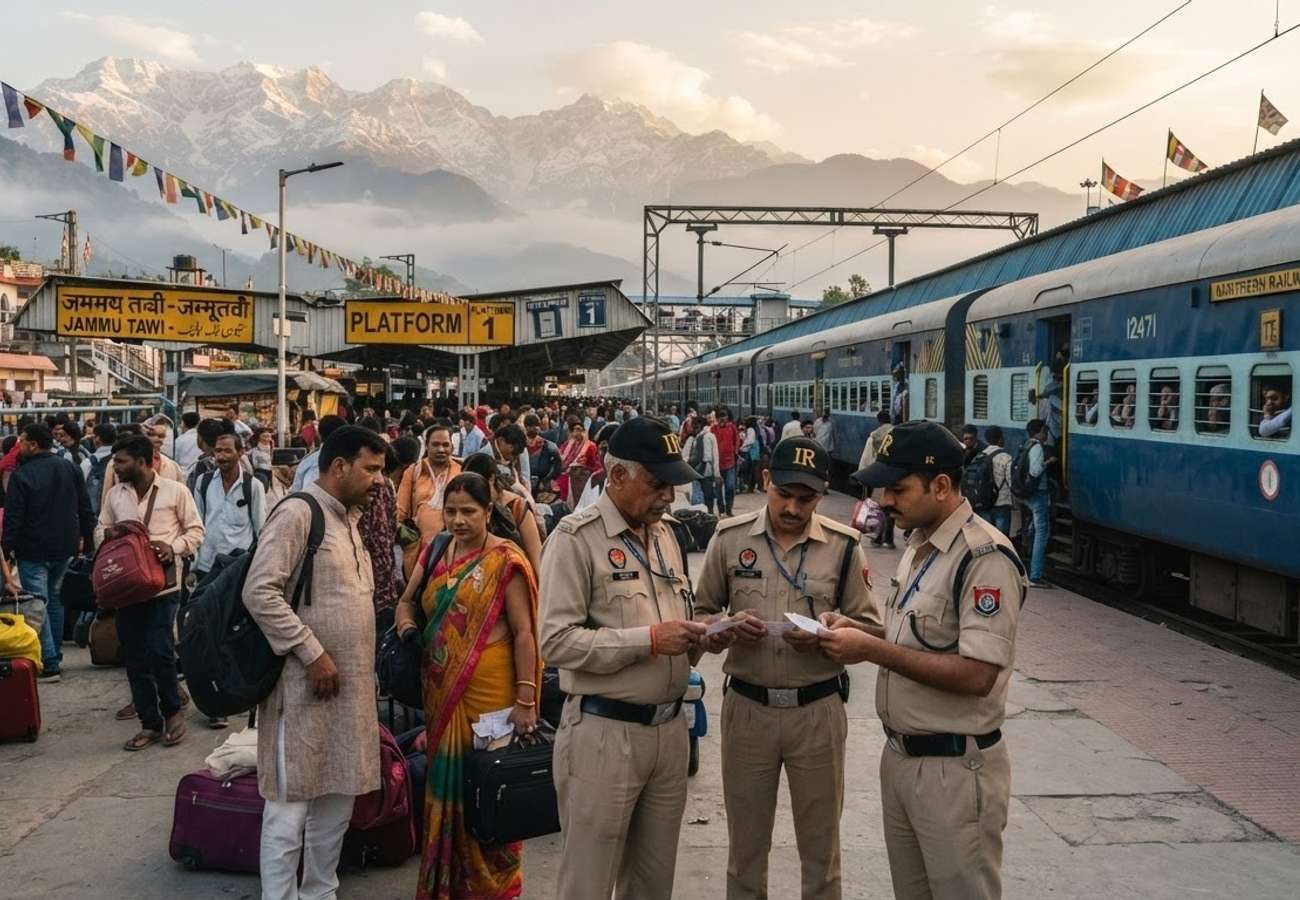
Image generated by AI
Northern Railway's Jammu division has seized Rs 56.46 lakh in penalties following a rigorous month-long enforcement operation in August 2026 aimed at eradicating ticketless travel and luggage violations.
The intensive campaign, which spanned the entire month of August, targeted passengers across a variety of rail services, including Mail, Express, and special trains. By deploying coordinated teams at both major transit hubs and onboard moving carriages, officials successfully identified 8,106 distinct violations. These infractions ranged from traveling entirely without a valid ticket to occupying reserved berths without authorization and transporting unbooked excess luggage.
The total financial recovery from these penalties amounted to exactly Rs 56,46,615. This surge in enforcement reflects a strategic shift by the railway administration to move away from sporadic "surprise" raids toward a model of consistent, visible presence to deter non-compliance.
High-Traffic Hubs and Pilgrimage Corridors Targeted
The enforcement drive focused heavily on the region's most critical infrastructure, ensuring that the gateways between the plains and the Himalayan highlands remained orderly. Key locations under strict scrutiny included:
- Jammu Tawi
- Shri Mata Vaishno Devi Katra
- Shaheed Captain Tushar Mahajan (Udhampur)
- Kathua
- Pathankot Cantt
- Budgam
- Srinagar
Industry observers note that the Shri Mata Vaishno Devi Katra corridor was a primary focal point. Due to the high seasonal volume of pilgrims, this route frequently attracts a surge of short-notice travelers, making it a high-risk zone for ticketless boarding and unauthorized seat upgrades. By intensifying checks on special trains and high-footfall stations, the Jammu division sought to eliminate the perception that crowding provides a shield against inspection.
Prioritizing Passenger Discipline Over Revenue
While the financial figures are substantial, official reports indicate that the primary objective of the August operation was the restoration of passenger discipline and safety. The initiative was framed not as a revenue-generation exercise, but as a necessary step to ensure the basic requirements of rail travel are met by all users.
Inspection teams were reportedly instructed to pair enforcement with education. This involved providing on-the-spot guidance to passengers regarding the specific rules governing reserved and unreserved accommodations, the necessity of platform tickets, and the legal requirements for booking heavy luggage. This dual approach aims to reduce the number of inadvertent violations by first-time travelers or those unfamiliar with current railway protocols.
This current drive is part of a sustained trend. Similar operations conducted in late 2025 and early 2026 also resulted in fines totaling tens of lakhs of rupees, suggesting that ticketless travel remains a persistent challenge for the Northern Railway in this specific division.
Alignment With National Railway Enforcement Trends
The crackdown in Jammu is a localized reflection of a broader national mandate by Indian Railways to tighten ticketing enforcement. National data from the 2023–24 financial year reveals that millions of passengers were penalized across the country, resulting in hundreds of crores of rupees in total fines.
From a logistical standpoint, these campaigns are essential for managing capacity. By removing unauthorized passengers, the railway frees up critical space for legitimate ticket-holders, particularly in the heavily congested general and sleeper coaches. In the Jammu and Kashmir region, this is especially vital; when road networks are severed by security concerns or extreme weather, the rail network becomes the primary lifeline for the population, making coach stability and order a matter of public necessity.
Financial Impact of August 2026 Enforcement
The following data summarizes the outcomes of the month-long operation:
| Metric | Detail |
|---|---|
| Total Fines Collected | Rs 56,46,615 |
| Total Violations Detected | 8,106 cases |
| Primary Offenses | Ticketless travel, irregular journeys, excess luggage |
| Operational Period | August 2026 |
| Key Targeted Routes | Jammu-Kashmir Valley, Katra Pilgrimage Corridor |
Why This Matters: The Impact on the Modern Traveler
For the traveler, these developments signal a transition toward a "zero-tolerance" environment for ticketing irregularities in Northern India. The era of relying on the chaos of a crowded platform to board without a ticket is effectively ending.
From a legal and logistical perspective, this creates a higher risk profile for those attempting last-minute boarding on popular long-distance services. Travelers who board without a confirmed ticket—even if they intend to pay the fare later—now face a significant probability of being fined and forcibly relocated to appropriate accommodation.
However, for the law-abiding passenger, this is a positive development. Stricter enforcement directly correlates to a reduction in overcrowding and a higher likelihood that reserved berths will actually be available to those who paid for them. As the Jammu division integrates these checks into its routine operations, the "traveler experience" is shifting from one of unpredictability to one of structured compliance.
Passengers are strongly advised to secure all bookings via official channels prior to arrival at the station to avoid steep on-board penalties.
Related Travel Guides
Disclaimer
This article is for informational and educational purposes only. It does not constitute legal, financial, or professional advice. While we strive to provide accurate and up-to-date information, travel policies, regulations, and conditions change rapidly. Always verify information with official sources before making travel decisions. Nomad Lawyer makes no representations about the accuracy, reliability, completeness, or suitability of the information provided. Readers should consult qualified professionals for advice specific to their circumstances. The views expressed in this article are those of the author and do not necessarily reflect the views of Nomad Lawyer.