
AirAsia and Pegasus Airlines Launch First-Ever Codeshare Connecting Southeast Asia to Europe via Istanbul 2026
AirAsia and Pegasus Airlines establish a landmark codeshare agreement, linking ASEAN markets to Europe via Istanbul Sabiha Gökçen with integrated ticketing and baggage transfers.

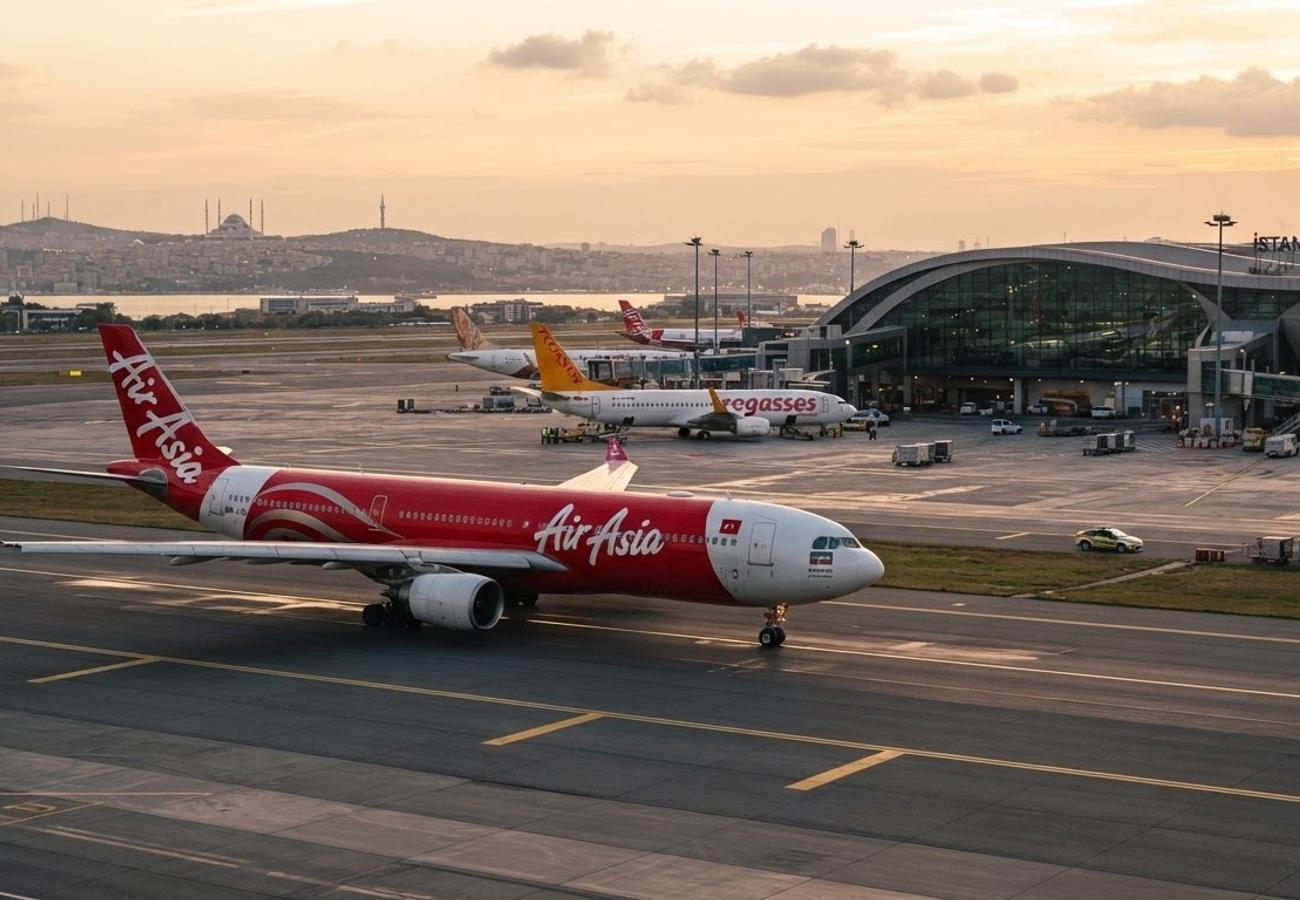
Image generated by AI
AirAsia has entered its first-ever codeshare agreement with Türkiye’s Pegasus Airlines, creating a streamlined, one-stop transit corridor between Southeast Asia and Europe via Istanbul Sabiha Gökçen Airport.
This strategic shift marks AirAsia's transition from a strict point-to-point low-cost carrier (LCC) model toward an integrated network carrier. By leveraging AirAsia X’s long-haul capacity and Pegasus’ extensive European footprint, the partnership introduces through-ticketing and baggage transfers—conveniences typically reserved for full-service carriers—while maintaining budget-friendly pricing.
Expanded Connectivity and Route Specifications
The partnership initially focuses on five key European destinations accessible from Kuala Lumpur. Travelers can now book a single ticket that combines AirAsia X’s flight into Istanbul with a Pegasus-operated leg to the final destination.
The airlines have indicated plans to scale this arrangement to cover over 100 potential city pairs as schedules align. A primary draw for price-sensitive travelers is London Stansted, which offers lower landing charges than Heathrow or Gatwick, keeping ticket prices competitive.
Initial Codeshare Route Matrix
| Origin | Transit Hub | Destination | Primary Operator (Leg 2) | Key Market Appeal |
|---|---|---|---|---|
| Kuala Lumpur | Istanbul (SAW) | London Stansted | Pegasus | Budget-conscious UK travel |
| Kuala Lumpur | Istanbul (SAW) | Zurich | Pegasus | Swiss leisure & business |
| Kuala Lumpur | Istanbul (SAW) | Athens | Pegasus | Mediterranean tourism |
| Kuala Lumpur | Istanbul (SAW) | Moscow Vnukovo | Pegasus | Regional capital access |
| Kuala Lumpur | Istanbul (SAW) | Ankara Esenboga | Pegasus | Turkish administrative hub |
Transit Logistics Guide: Navigating Sabiha Gökçen (SAW)
From a ground-level perspective, the best way to navigate this new corridor is to understand the specific operational nature of Istanbul Sabiha Gökçen (SAW). Unlike the massive Istanbul Airport (IST) on the European side, SAW is the primary stronghold for Pegasus and is generally more efficient for LCC transfers.
Booking and Connections To maximize the benefit of this codeshare, ensure your itinerary is booked under a single PNR (Passenger Name Record). This guarantees that your baggage is checked through to the final destination, eliminating the need to clear customs and re-check bags in Istanbul—a significant risk reduction compared to "self-transfer" budget itineraries.
Optimal Layover Times While SAW offers shorter minimum connection times than larger hubs, long-haul arrivals from Kuala Lumpur are subject to wind and traffic delays. We recommend a minimum layover of 3 to 4 hours to account for security screenings and terminal navigation.
Digital Transit and Visas Travelers must verify Türkiye’s current transit visa requirements. While through-ticketed passengers in the international transit area typically do not require a visa, any traveler wishing to exit the airport to explore Istanbul or change terminals must hold a valid e-Visa or passport-visa.
Infrastructure Impact and Regional Connectivity
The center of this operation is Istanbul Sabiha Gökçen International Airport. By funneling traffic through this secondary hub, AirAsia and Pegasus are optimizing for lower operating costs and faster turnaround times.
The frequency of the Kuala Lumpur-Istanbul route is set for a significant ramp-up. Currently operating four flights per week, the service is scheduled to increase to a daily operation by February 2027. This increase in frequency will create more robust "banks" of arrivals and departures, making the one-stop connection more viable for business travelers who cannot afford multi-day layovers.
For Pegasus, the agreement effectively expands its reach into the ASEAN region—including high-demand destinations like Bali, Phuket, and Jakarta—without the capital expenditure of launching its own long-haul fleet. For AirAsia, it provides an asset-light entry into the European market, using Istanbul as a bridge to reach Southern and Eastern Europe.
Competitive Market Dynamics
This partnership disrupts the traditional Asia-Europe transit market, which has long been dominated by Gulf carriers. By combining long-haul LCC flights with short-haul European hops, AirAsia and Pegasus are targeting a demographic that prioritizes cost over luxury. This is expected to put downward pressure on fares for city pairs connecting Southeast Asia to the Mediterranean and Eastern Europe.
A new era of budget long-haul travel has arrived, turning Istanbul into the primary gateway for the budget-conscious Asian traveler.
Related Travel Guides
Disclaimer
This article is for informational and educational purposes only. It does not constitute legal, financial, or professional advice. While we strive to provide accurate and up-to-date information, travel policies, regulations, and conditions change rapidly. Always verify information with official sources before making travel decisions. Nomad Lawyer makes no representations about the accuracy, reliability, completeness, or suitability of the information provided. Readers should consult qualified professionals for advice specific to their circumstances. The views expressed in this article are those of the author and do not necessarily reflect the views of Nomad Lawyer.
Kunal K Choudhary
Co-Founder & Contributor
A passionate traveller and tech enthusiast. Kunal contributes to the vision and growth of Nomad Lawyer, bringing fresh perspectives and driving the community forward.
Learn more about our team →