
Italy Tourism Travel Guide 2026: 141 Million Visitor Surge, 93 Visa-Free Gateways, and Sacred Art

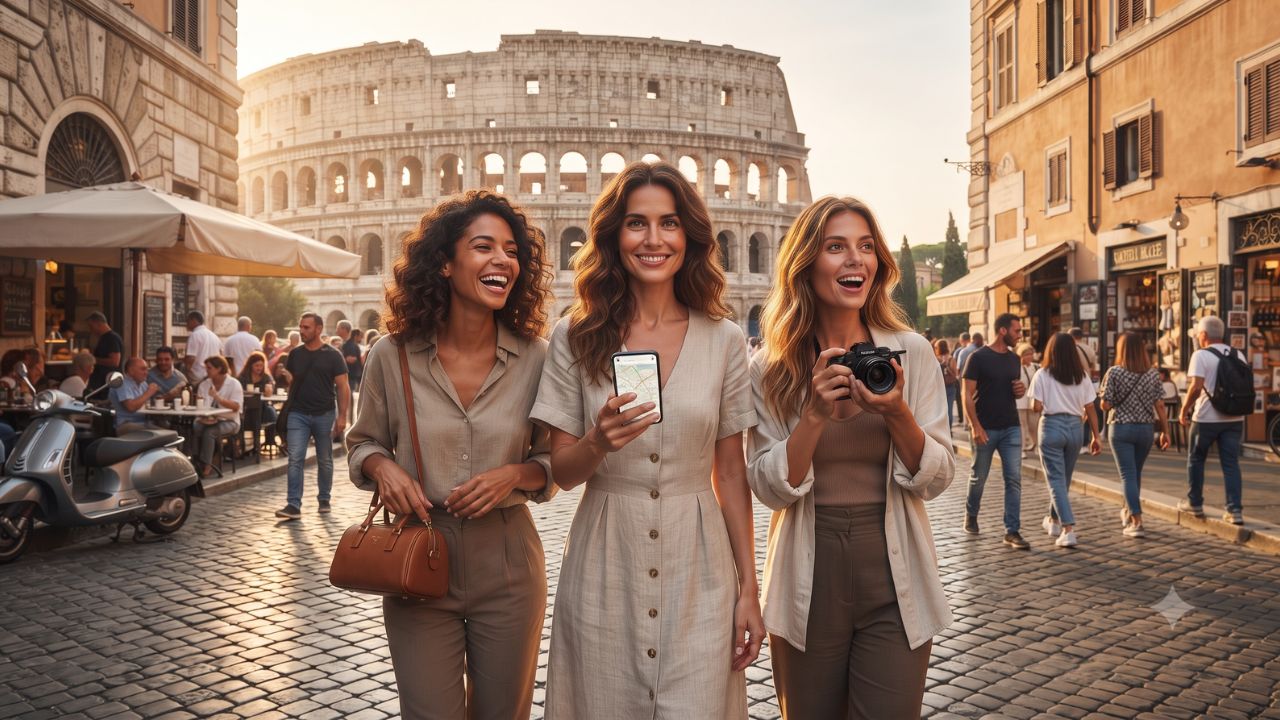
Supported by seamless visa-free access across 93 global jurisdictions and a 6.45 percent surge in international arrivals during the first half of the year, Italy's tourism economy is projected to achieve an extraordinary 141.2 million inbound visits and 478.6 million overnight stays in 2026. Annual economic indicators released by the Italian National Tourist Board (ENIT / Italia.it) confirm that foreign travelers represent the primary engine of this growth, with international visits surpassing 76 million alongside a 7.46 percent increase in alternative and boutique heritage stays.
Underpinned by national real GDP expansion projected between 0.5% and 1.0% (with nominal GDP estimated at US$2.71 trillion to US$2.74 trillion and GDP per capita reaching US$45,178 to US$46,505), Italy pairs fiscal stability with unmatched artistic, architectural, and spiritual treasures.
Gateway Connectivity: Italy’s Top Aviation Hubs and Airline Networks
Handling the massive influx of international arrivals requires a robust national airport network. In 2025, Italy’s five busiest international airports processed record passenger volumes:
- Rome Fiumicino Airport (FCO): Italy’s premier intercontinental gateway processed approximately 51.3 million passengers, connecting Rome with global hubs across North America, Asia, Europe, and the Middle East, managed by Aeroporti di Roma.
- Milan Malpensa Airport (MXP): Handled 31.4 million passengers, anchoring long-haul commerce, design, and Alpine leisure travel across Lombardy.
- Milan Bergamo Airport (BGY): Served 16.9 million passengers as Northern Italy’s leading point-to-point and low-cost gateway.
- Naples International Airport (NAP): Recorded 13.3 million passengers, providing direct access to the Amalfi Coast, Capri, and Pompeii.
- Catania Fontanarossa Airport (CTA): Welcomed 12.4 million passengers in eastern Sicily, serving travelers visiting Mount Etna, Syracuse, and Taormina.
This aviation ecosystem is powered by key carriers: low-cost leader Ryanair (generating approximately €13.95 billion in FY2025 revenue), national flag carrier ITA Airways (€3.2 billion in 2025 revenue), easyJet (£9 billion in FY2025), Wizz Air (€5.69 billion in FY2026), and regional specialist Volotea (€800 million to €1 billion revenue).
Five Masterpieces of Sacred Architecture: Beyond the Standard Tourist Path
While the Colosseum and Vatican Museums attract dense crowds, Italy’s profound spiritual and artistic history reveals itself most powerfully through five world-renowned basilicas and chapels:
1. Basilica di Santa Maria della Salute (Venice)
Rising at the dramatic entrance of the Grand Canal, this Baroque masterpiece designed by Baldassare Longhena was commissioned by the Venetian Senate in gratitude for deliverance from the devastating 1630 plague. Built atop more than 100,000 submerged timber piles driven into the lagoon bed, the octagonal basilica houses priceless Renaissance canvases by Titian and Tintoretto beneath its soaring white Istrian stone dome.
2. Basilica di Santa Maria Maggiore (Rome)
One of Rome’s four ancient patriarchal basilicas, Santa Maria Maggiore was founded in the 5th century following the legendary miraculous summer snowfall on the Esquiline Hill. The basilica showcases fifth-century Old Testament mosaics, a gilded Renaissance coffered ceiling, the opulent Borghese (Pauline) and Sistine chapels, and the tomb of Baroque sculptor Gian Lorenzo Bernini.
3. Basilica di Sant’Apollinare Nuovo (Ravenna)
Constructed in the 6th century by Ostrogothic King Theodoric and later re-consecrated under Byzantine rule, this UNESCO-listed basilica features horizontal mosaic friezes depicting a procession of white-robed martyrs and holy virgins bearing crowns toward Christ and the Virgin Mary.
4. Basilica di San Vitale (Ravenna)
Consecrated in 547 AD, San Vitale stands as Europe's greatest surviving monument of early Christian and Byzantine art. Included within the UNESCO World Heritage properties of Ravenna, its choir and apse shimmer with luminous emerald and gold glass mosaics depicting Emperor Justinian I and Empress Theodora with their imperial courts.
5. Cappella Sansevero (Naples)
Tucked within the narrow alleys of Spaccanapoli, this 18th-century Baroque jewel was created by the eccentric noble Prince Raimondo di Sangro. The chapel houses Giuseppe Sanmartino’s legendary Veiled Christ (Cristo velato), carved from a single block of translucent white marble with an impossibly delicate fabric effect, alongside Francesco Queirolo’s Disillusion and Antonio Corradini’s Modesty.
Luxury Hospitality in Historic Palaces
Discerning travelers in 2026 are increasingly choosing accommodations that preserve centuries of Italian heritage:
- Hotel Danieli (Venice): A 14th-century Gothic palazzo on the Riva degli Schiavoni overlooking the Venetian lagoon.
- Hotel Principe di Savoia (Milan): A legendary neoclassical address near Piazza della Repubblica.
- Villa San Michele, A Belmond Hotel (Florence): A converted Renaissance monastery with a facade attributed to Michelangelo, perched on the Fiesole hillside.
- Anantara Palazzo Naiadi (Rome): Set within a 19th-century neoclassical crescent above the ancient Baths of Diocletian.
- The Lake Como EDITION (Lake Como): A lakeside retreat blending 19th-century villa architecture with contemporary luxury.
Visitor Insider Tips for Touring Italy’s Sacred Sites
To experience Italy’s cultural treasures with minimal friction, follow these seasoned travel strategies:
- Reserve Cappella Sansevero Tickets Weeks in Advance: Due to strict preservation limits, Naples’ Cappella Sansevero admits only a limited number of guests per 30-minute window; tickets must be booked online well before arrival.
- Take the High-Speed Frecciarossa to Ravenna: Ravenna is easily visited as a day trip from Bologna (one hour by regional train) or Florence. Purchase combined multi-monument tickets covering San Vitale, Sant’Apollinare Nuovo, and the Mausoleum of Galla Placidia.
- Strict Modesty Dress Codes at Basilicas: Ensure shoulders, chest, and knees are fully covered before entering any Italian church; carry a lightweight linen scarf in your day bag to drape over sleeveless shirts.
- Utilize Rome Fiumicino’s Leonardo Express: Bypass highway traffic between FCO Airport and central Rome by boarding the direct Leonardo Express non-stop rail shuttle, which delivers passengers to Roma Termini in just 32 minutes.
- Visit Santa Maria della Salute at Sunset: Cross the Accademia Bridge in Venice during golden hour to admire Santa Maria della Salute from the Punta della Dogana, when fading sunlight illuminates its baroque marble volutes.
Cultural and Environmental Context: Sustainable Stewardship in Historic Centers
Welcoming over 141 million annual visitors requires careful balance between tourism vitality and delicate heritage preservation.
Venice’s entry access fees and bans on massive cruise ships entering the Giudecca Canal protect the wooden foundations supporting landmarks like Santa Maria della Salute. In Rome and Ravenna, advanced digital climate-control systems protect fragile fifth-century glass and marble tesserae from humidity generated by high visitor numbers.
By patronizing independent artisans in historic quarters, respecting ecclesiastical spaces, and exploring cultural hubs like Ravenna and Bergamo beyond the classic Venice-Florence-Rome triangle, travelers help distribute tourism economic benefits across Italy while preserving its timeless heritage.
FAQ: Visiting Italy 2026
Do citizens of the US, Canada, and the UAE need a visa for Italy?
No. Passport holders from 93 eligible countries (including Canada, the US, the UAE, and Nicaragua) can enter Italy visa-free for tourism stays up to 90 days within any 180-day period.
Which airport is best for visiting southern Italy?
Naples International Airport (NAP) provides the closest access to Naples, the Amalfi Coast, Pompeii, and Capri.
What is the best way to travel between major Italian art cities?
High-speed rail networks (Trenitalia Frecciarossa and Italo) connect Rome, Florence, Bologna, Milan, Venice, and Naples directly from city center to city center.
Are Ravenna’s Byzantine mosaics open year-round?
Yes. The UNESCO basilicas of San Vitale and Sant'Apollinare Nuovo are open daily to visitors throughout the year.
From the silent, candlelit aisles of Roman basilicas to the golden light reflecting across Venice’s lagoon, Italy remains the eternal heart of human creativity.
Related Travel Guides
Disclaimer
This article is for informational and educational purposes only. It does not constitute legal, financial, or professional advice. While we strive to provide accurate and up-to-date information, travel policies, regulations, and conditions change rapidly. Always verify information with official sources before making travel decisions. Nomad Lawyer makes no representations about the accuracy, reliability, completeness, or suitability of the information provided. Readers should consult qualified professionals for advice specific to their circumstances. The views expressed in this article are those of the author and do not necessarily reflect the views of Nomad Lawyer.
Naina Thakur
Contributor & Travel Specialist
Travel enthusiast and legal writer covering visa regulations, responsible tourism, and cultural journeys across global destinations.
Learn more about our team →