
Istanbul Airport Drives Global Travel Between Türkiye, London, and Beyond: Fourth Runway Expands 120M Passenger Vision
Following Europe's first triple independent runway system, Istanbul Airport opens its fourth runway, accelerating toward 120 million passengers and linking London to Cappadocia, Antalya, and Izmir.

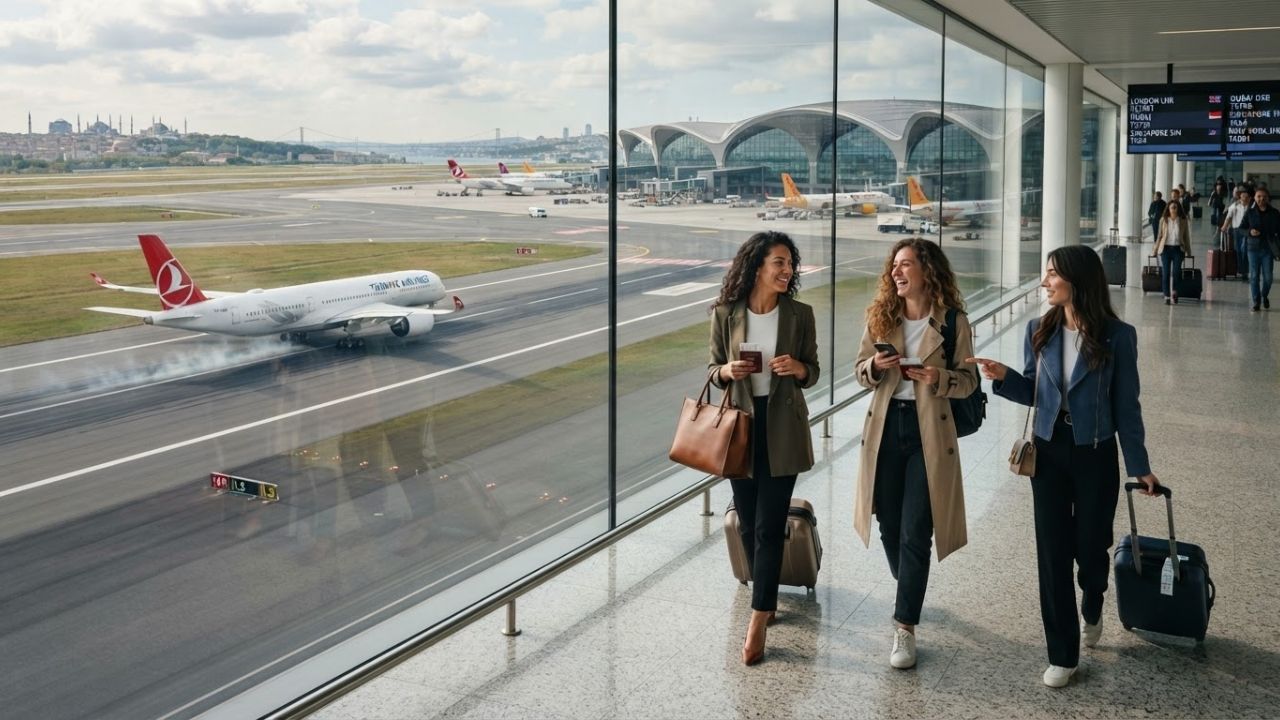
Image generated by AI
Following the landmark 2025 launch of Europe's first triple independent runway operations system, Istanbul Airport has officially opened its fourth main runway, accelerating an ambitious master expansion designed to scale terminal capacity toward 120 million passengers annually. As the Eurasian mega-hub intensifies direct competition against major European gateways—most notably London Heathrow in the United Kingdom—this operational breakthrough unlocks unprecedented aircraft movement flexibility across intercontinental corridors connecting Europe, Asia, Africa, the Middle East, and the Americas. Yet beyond raw transit statistics, the newly expanded infrastructure functions as a frictionless gateway, propelling international travelers past airport transfer desks into the imperial monuments of Istanbul, the lunar valleys of Cappadocia, the ancient Aegean ruins of İzmir, and the sun-drenched coastal harbors of Antalya.
The Eurasian Skyway: Decoding Istanbul’s Fourth Runway and London Rivalry
The commissioning of the fourth main runway marks a defining chapter in Türkiye's long-term strategy to establish Istanbul as the world's foremost intercontinental transfer crossroads. Located at the geographic nexus of major global markets, Istanbul Airport provides a natural bridge where short-haul European feeder flights intersect high-volume long-haul routes. By adding a fourth independent operational vector, the facility substantially increases hourly runway movements, mitigates congestion during peak seasonal travel rushes, and enhances schedule reliability for connecting passengers.
This expansion directly challenges traditional European transit dominance, particularly competing with London Heathrow for lucrative East-West long-haul passenger flows. While established Western European hubs often struggle with severe slot constraints, physical land boundaries, and night-flight curfews, Istanbul has built an expansive facility engineered from the ground up for continuous capacity growth. As the primary global hub for Turkish Airlines, the airport’s targeted expansion toward 120 million passengers ensures that travelers between London, Western Europe, and Asian or Middle Eastern commercial centers gain access to broader flight frequencies, competitive multi-airline options, and faster minimum connection times.
For holidaymakers and cultural explorers, this aviation upgrade delivers tangible benefits on the ground. Reduced tarmac taxi times, streamlined baggage transfers, and greater flight availability eliminate traditional travel stress, making multi-destination itineraries across Türkiye remarkably easy to execute. Promoted internationally by Go Türkiye, the airport’s operational growth serves as an engine distributing international visitors far beyond the Bosphorus into regional heritage corridors.
What Makes Istanbul and Regional Türkiye Different: The Two-Continent Crossroad
What makes traveling through Istanbul entirely unique is the extraordinary experience of standing at the literal meeting point of two continents. Spanning both Europe and Asia across the glittering Bosphorus Strait, Istanbul is an open-air archive of three successive world empires: Roman, Byzantine, and Ottoman.
In the heart of the historic peninsula, preserved globally on the UNESCO World Heritage Centre register as the Historic Areas of Istanbul, the sixth-century Hagia Sophia Grand Mosque features a colossal floating dome and intricate gold mosaics that have stood for nearly fifteen hundred years. Directly opposite rise the six slender minarets of the Sultanahmet Blue Mosque, while the sprawling courtyards of Topkapı Palace overlook the convergence of the Golden Horn, the Bosphorus, and the Sea of Marmara.
Yet Istanbul’s expanded aviation connectivity is equally revolutionary for regional exploration. Within a sixty- to ninety-minute domestic flight from the main terminal, travelers can trade urban stone mosques for the fairy-chimney rock formations and cave dwellings of Cappadocia, where hot air balloons drift over volcanic tuff valleys at dawn. To the west, the coastal hub of İzmir unlocks the marble boulevards of ancient Ephesus and the terraced olive groves of the Aegean, while southern flights into Antalya deliver travelers directly to the Turquoise Coast, where pine-clad Taurus mountain cliffs meet clear Mediterranean waters.
Visitor Insider Tips: Navigating Istanbul and Beyond Like an Expert
To transform an extended transit or holiday in Istanbul into a seamless, authentic cultural exploration, follow these practical local strategies:
- Fast Metro Transit Direct From the Terminal: Avoid expensive private taxi queues and notorious highway traffic jams by taking the modern M11 Metro line directly from Istanbul Airport. The automated train connects the terminal station to Kağıthane and Gayrettepe in approximately thirty minutes, allowing easy transfers to the M2 subway line straight into Taksim Square or historical Sultanahmet. Pick up a rechargeable Istanbulkart at airport transit kiosks to pay for all subways, trams, funiculars, and public ferries.
- The Bosphorus Ferry Experience: Skip expensive private tourist excursion boats. Instead, board a municipal public Şehir Hatları ferry departing from Eminönü or Karaköy docks across to Kadıköy on the Asian side for less than €1. Sit on the open-air wooden deck, order a hot glass of black tea (çay) served in a classic tulip glass, and feed sesame-crusted simit bread to swooping seagulls as the sun sets behind the historic minarets of the Golden Horn.
- Time Your Imperial Monument Visits: Beat the dense crowds disembarking from Mediterranean cruise ships by arriving at the Hagia Sophia and the Basilica Cistern at 08:30 when doors open, or visit during early evening hours when interior ambient lighting illuminates ancient brick vaults in serene quietude.
- Neighborhood Bases for Character: Steer clear of sterile business hotel strips along the northern outer highways. Base yourself in historic Sultanahmet for walking access to Byzantine and Ottoman architectural wonders, or choose the bohemian streets of Galata, Karaköy, or Cihangir, where historic nineteenth-century stone townhouses house contemporary art spaces, artisan roasteries, and lively evening meyhanes.
- Savor True Ottoman Culinary Heritage: Look beyond standard street food kebabs to savor authentic culinary diversity. In the coastal district of Karaköy, order a fresh balık ekmek (grilled seasoned mackerel fillet served inside crusty bread with fresh onions and lemon juice), followed by flaky pistachio baklava from master pastry shops in Karaköy. In Kadıköy’s open-air market, sample regional mezes, stuffed grape leaves (sarma), and slow-simmered lamb stewed with dried fruits.
Cultural and Environmental Context: Sustainable Aviation and Heritage Protection
Accommodating up to 120 million passengers annually places profound responsibilities on environmental sustainability and heritage preservation. Situated along the forested Black Sea coast of Thrace, iGA Istanbul Airport integrates advanced environmental infrastructure, including extensive rooftop solar energy systems, comprehensive zero-waste recycling protocols, and treated rainwater harvesting to offset operational carbon footprints.
Along the urban shoreline, maritime conservation remains paramount. The narrow Bosphorus Strait is one of the world's most congested natural shipping channels, requiring strict environmental regulations to protect fragile marine life and centuries-old wooden waterfront mansions (yalılar) from commercial tanker wakes and pollution.
In the historic core, cultural preservation focuses on structural longevity. With Istanbul situated near active seismic fault lines, authorities have undertaken meticulous structural stabilization at the Hagia Sophia and the Blue Mosque, utilizing non-invasive laser monitoring and traditional lime-based mortars to protect ancient domes and Iznik ceramic wall tiles. By balancing mega-hub transit efficiency with respectful cultural stewardship, Istanbul ensures that its rise as a premier aviation crossroads enriches local communities while safeguarding the architectural wonders that have enchanted travelers for millennia.
FAQ: Visiting and Transiting Istanbul in 2026
How long of a layover is needed to leave Istanbul Airport and explore the city?
A minimum layover of eight hours is recommended to comfortably clear immigration, take the M11 Metro into central Istanbul, explore Sultanahmet or Galata for three hours, and return through security.
What is the fastest public transportation from Istanbul Airport into downtown?
The M11 Metro line connects Istanbul Airport directly to Kağıthane and Gayrettepe in about 30 minutes, offering quick connections to the M2 subway into Taksim and the historic peninsula.
Do international travelers need a visa to enter Türkiye?
Citizens of many nations, including the European Union, the UK, and the US, enjoy visa-free entry or can easily obtain an electronic visa (e-Visa) online prior to arrival for tourism stays up to 90 days.
Can travelers connect easily from Istanbul Airport to regional destinations?
Yes. Istanbul Airport operates extensive daily domestic flights on Turkish Airlines and regional carriers, reaching Cappadocia (Nevşehir/Kayseri), Antalya, and İzmir in approximately one hour.
Standing where two continents gaze across the Bosphorus waters, Istanbul proves that the greatest journeys are not measured in runway miles, but in the timeless hospitality that greets every arriving traveler.
Related Travel Guides
- Istanbul Airport Commissions Fourth Runway as Eurasian Mega-Hub Closes the Gap with London Heathrow
- Kosovo's European Travel Breakthrough: Wizz Air Opens Pristina Base, Connecting the Balkans to Western Europe
- Dubai Leads the Global Aviation Comeback: Emirates Route Restorations and Insider Stopover Guide 2026
Disclaimer
This article is for informational and educational purposes only. It does not constitute legal, financial, or professional advice. While we strive to provide accurate and up-to-date information, travel policies, regulations, and conditions change rapidly. Always verify information with official sources before making travel decisions. Nomad Lawyer makes no representations about the accuracy, reliability, completeness, or suitability of the information provided. Readers should consult qualified professionals for advice specific to their circumstances. The views expressed in this article are those of the author and do not necessarily reflect the views of Nomad Lawyer.
Raushan Kumar
Founder & Lead Developer
Full-stack developer with 11+ years of experience and a passionate traveller. Raushan built Nomad Lawyer from the ground up with a vision to create the best travel and law experience on the web.
Learn more about our team →